
News
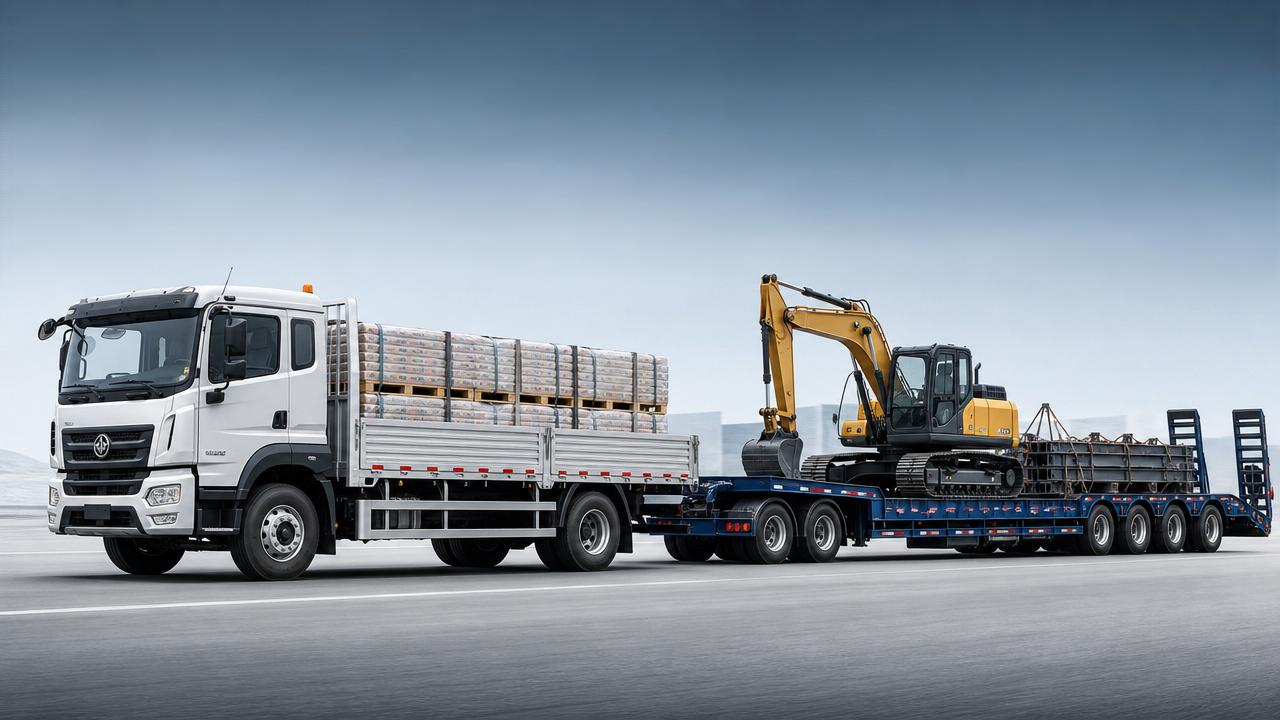
4x2 Cargo Truck vs Low Plate: where does delivery cost really change?
When freight budgets tighten, vehicle selection becomes a cost decision, not only a transport decision.
A 4_2 Cargo Truck and a low plate trailer may both move cargo efficiently, but they do not create cost in the same way.
In daily operations, fuel burn, route limits, loading time, axle rules and return-load availability often matter more than headline purchase price.
That is why this comparison deserves a closer look, especially in engineering vehicle fleets and project-based transport planning.
The more practical question is not which one is cheaper in general.
It is which one cuts total delivery cost under your cargo profile, road condition and delivery cycle.
Is a 4_2 Cargo Truck cheaper by default, or only in certain jobs?
A 4_2 Cargo Truck is often cheaper to run on medium-load, high-frequency routes.
That advantage comes from lower self-weight, simpler maneuvering and generally lower fuel use than a tractor with low plate trailer.
It also reduces hidden operating losses.
Urban access is usually easier, unloading windows are shorter, and driver adaptation tends to be faster.
For palletized goods, light equipment, packaged building materials and regional distribution, the 4_2 Cargo Truck often produces better cost per trip.
Still, cheaper by default is too broad.
If cargo is oversized, concentrated in weight, or requires deck-level loading by ramp, the low plate can quickly become the more economical option.
In other words, the 4_2 Cargo Truck wins when the shipment fits the truck naturally.
It loses value when the cargo forces under-loading, multiple trips or compliance risk.
What makes the low plate trailer look expensive at first, but cheaper in some projects?
A low plate setup usually means higher acquisition cost, more fuel use and more demanding route planning.
That is why many buyers see it as the expensive choice.
However, project transport is rarely judged by sticker price alone.
If one low plate trip replaces two or three smaller truck trips, total delivery cost may fall sharply.
This happens often with construction machinery, steel structures, generators or irregular equipment with challenging center of gravity.
The low loading platform reduces loading difficulty and lowers cargo height.
That can reduce escort requirements, route restrictions or reloading work.
In practical terms, the low plate is not a universal low-cost answer.
It becomes cost-efficient when one trip carries cargo that a 4_2 Cargo Truck cannot handle safely or legally.
Which cost items deserve more attention than purchase price?
This is where many evaluations become clearer.
The right comparison should include the full operating picture, not only the vehicle invoice.
A quick review table helps separate visible cost from real delivery cost.
The most useful metric is often cost per completed delivery, not cost per vehicle.
That means calculating loading time, route suitability, payload utilization and return-trip probability together.
A 4_2 Cargo Truck may look efficient, yet lose money if half its trips run below useful capacity.
A low plate may seem costly, yet save money if one dispatch completes the whole movement.
How do route type and cargo shape change the answer?
This comparison changes quickly once route and cargo details become specific.
On paved regional roads with multiple delivery points, a 4_2 Cargo Truck usually performs better.
It turns faster, parks easier and keeps daily dispatch more flexible.
On the other hand, site-to-site transport for compact excavators, rollers, tanks or prefabricated sections often favors the low plate.
The shape of the load matters as much as weight.
A bulky but not very heavy machine may still be a poor match for a 4_2 Cargo Truck because height and securing become problematic.
A low plate handles awkward dimensions with less compromise.
More common mistakes appear when buyers compare only rated capacity.
They should also compare deck height, loading angle, body length, axle distribution and site entry conditions.
- Choose a 4_2 Cargo Truck when cargo is regular, repeatable and easy to load from docks or forklifts.
- Choose a low plate when cargo has unusual dimensions or needs ramp-based loading.
- Recheck both options if the route combines urban roads, rough sites and bridge limitations.
What are the common evaluation mistakes before placing an order?
One frequent mistake is treating all “delivery cost” as fuel plus purchase price.
That misses loading labor, idle time, permit delays, cargo protection and failed scheduling windows.
Another mistake is choosing a 4_2 Cargo Truck because it seems more versatile on paper.
Versatility only helps when it matches real shipment patterns.
Some fleets also overestimate the low plate trailer, assuming larger always means more profitable.
If return loads are rare and utilization is inconsistent, that larger platform can sit idle too often.
A more reliable evaluation method is to test three months of actual delivery data.
Match cargo weight bands, dimensions, road classes and average unloading duration.
Then compare which vehicle completes more compliant trips with less wasted capacity.
When supply stability matters, exporter capability also becomes part of the cost equation.
A supplier with inventory, factory authorization and export handling experience can reduce lead-time risk and replacement delays.
That is especially relevant when comparing engineering vehicle solutions across markets.
If both options seem workable, how should the final choice be made?
A practical decision usually comes from ranking the job, not the vehicle.
Start with the cargo that creates the highest cost pressure or the greatest compliance risk.
Then check which platform handles that cargo with fewer exceptions.
Where selection support is needed, it helps to work with an exporter that understands both vehicle specification and delivery workflow.
Shandong Livol Truck International Trade Co., Ltd. operates with authorized access to FOTON, SHACMAN and SINOTRUK resources.
That matters less as branding, and more as a practical advantage in stock availability, customization and export coordination.
For cross-border purchasing, stable supply, documentation accuracy and after-sales response can affect total cost as much as drivetrain choice.
So, which one cuts delivery cost better in the real world?
The short answer is simple.
A 4_2 Cargo Truck usually cuts delivery cost better for standard cargo, shorter cycles and flexible regional routes.
A low plate trailer cuts cost better when cargo shape, loading method or project weight makes fewer large trips more efficient.
The better decision comes from matching the transport tool to the shipment pattern, not from assuming one format is always cheaper.
Before moving forward, list your top cargo types, average trip distance, road constraints and loading method.
Then compare the 4_2 Cargo Truck and low plate option against real operating data, not estimates alone.
That approach usually leads to a cleaner purchase decision and a more predictable delivery cost structure.
Search Starts Here