
News
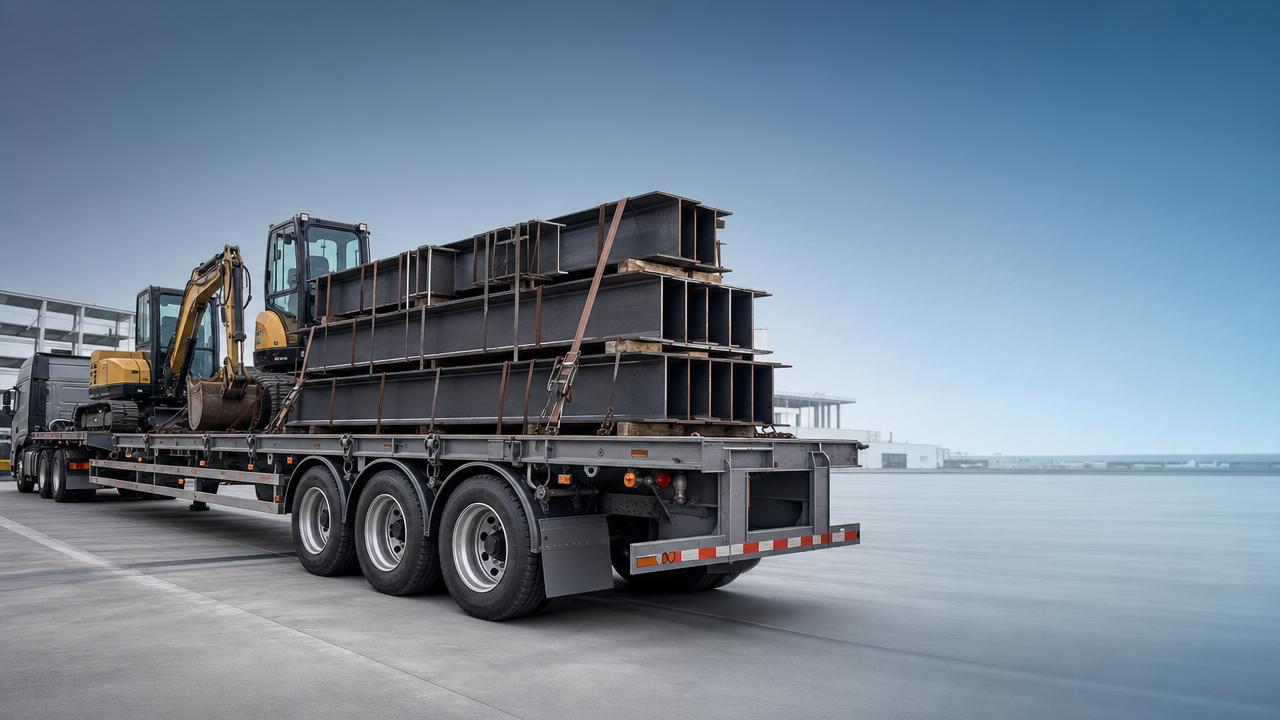
Choosing the right Flatbed Semi-Trailer is not just about deck size or axle count—load limits depend on multiple technical specs that are often misunderstood during evaluation. For technical assessors, overlooking details such as payload ratings, axle distribution, tire capacity, and structural design can lead to compliance risks, safety issues, and costly procurement mistakes. This article highlights the most common spec errors and how to avoid them.
Why Flatbed Semi-Trailer load limits are often misjudged
In engineering vehicle procurement, many load assessments start with a simple question: how many tons can the trailer carry? The problem is that a Flatbed Semi-Trailer load limit is never defined by one figure alone.
Technical assessors often receive brochures showing rated payload, GVWR, axle quantity, or deck dimensions, but these figures may reflect different test assumptions, road regulations, or tractor-matching conditions. If the context is unclear, procurement decisions become risky.
This issue is especially important in cross-border sourcing. Exported engineering transport equipment may be used under different axle laws, bridge formulas, tire rules, and operating environments. A trailer that looks suitable on paper may underperform once deployed.
- Payload is confused with gross vehicle weight rating rather than calculated as a net carrying capacity.
- Axle count is treated as a direct indicator of legal load, without checking axle spacing and local regulations.
- Deck strength is assumed from steel thickness only, while cross-member layout and beam design are ignored.
- Tire and suspension limits are missed during evaluation, even though they often define the practical ceiling.
Why this matters for technical assessors
Technical evaluation teams are expected to reduce failure risk before the order is placed. A wrong Flatbed Semi-Trailer specification can create overload exposure, uneven tire wear, frame fatigue, customs rework, or operating restrictions at destination.
For project cargo, construction machinery, steel structures, and containerized engineering materials, the cost of specification error is rarely limited to the trailer price. It can affect dispatch plans, insurance, compliance, and fleet uptime.
Which technical specifications actually determine load limits?
Before comparing suppliers, assessors should break load capacity into technical components. The table below shows how a Flatbed Semi-Trailer load limit should be read during specification review, rather than relying on one headline number.
A sound Flatbed Semi-Trailer evaluation combines structural capacity, legal capacity, and usable capacity. The lowest limiting factor usually defines the real operating load, not the most attractive figure in a quotation sheet.
The difference between theoretical and usable payload
Theoretical payload may be calculated from design ratings under ideal load distribution. Usable payload depends on cargo shape, center of gravity, tie-down method, road grade, operating speed, and the tractor’s fifth-wheel loading condition.
For example, concentrated loads from tracked equipment or steel coils create local stress that differs from evenly distributed palletized cargo. In those cases, deck reinforcement and beam positioning matter more than nominal payload.
Common Flatbed Semi-Trailer spec mistakes to avoid during evaluation
Mistake 1: Confusing tare weight reduction with better value
A lighter Flatbed Semi-Trailer can improve net payload, but extreme weight reduction may reduce fatigue life if beam sections, cross-member density, landing gear supports, or kingpin reinforcement are compromised.
Technical assessors should ask how tare weight was reduced. Was it achieved through better material utilization and design optimization, or simply by lowering section thickness in critical areas?
Mistake 2: Assuming more axles automatically mean more legal load
A 3-axle trailer and a 4-axle trailer may face different licensing, turning radius, toll, and road access conditions. More axles may help distribute load, but they do not guarantee that the full design load is legal in every country or route.
Axle spacing, suspension equalization, and local enforcement rules all matter. For engineering transport, overspecifying axle count can raise lifecycle cost without solving the real compliance issue.
Mistake 3: Ignoring kingpin load transfer and tractor matching
The Flatbed Semi-Trailer does not work alone. Part of the load is transferred through the kingpin to the tractor unit. If the tractor’s fifth wheel, rear axle group, and suspension are not properly matched, the combined system can be overloaded even when trailer axles appear acceptable.
This is a frequent issue in export projects where the buyer already has tractors in operation. Trailer assessment should therefore include tractor interface height, coupling load range, brake compatibility, and route conditions.
Mistake 4: Evaluating only static load, not dynamic stress
Construction roads, mine approaches, port yards, and rural logistics routes introduce dynamic shock. A Flatbed Semi-Trailer carrying machinery over uneven ground can see significantly higher effective stresses than the cargo’s static weight suggests.
That is why suspension type, frame weld quality, deck support arrangement, and twist resistance should be reviewed for actual duty cycles, not just for highway transport assumptions.
Mistake 5: Overlooking tire, brake, and suspension coordination
Even when the frame is strong enough, supporting systems may set the practical limit. Tires carry the contact load, brakes absorb kinetic demand, and suspension controls transfer. Weakness in any one of these areas reduces safe usable capacity.
- Check whether tire load indexes match the stated axle and payload targets.
- Review brake size and thermal margin for descending grades and repeated stop cycles.
- Confirm whether mechanical or air suspension is more suitable for cargo sensitivity and road quality.
- Assess spare parts availability in the destination market to avoid long downtime after wear-related failures.
How to compare Flatbed Semi-Trailer options for engineering applications
Technical assessors usually compare more than one specification. The next table helps translate engineering requirements into trailer selection logic, especially when different cargo types create different load concentration patterns.
This comparison shows why a Flatbed Semi-Trailer should be selected by cargo behavior, not by dimensions alone. Engineering vehicle operations often involve irregular loads, rough sites, and strict dispatch windows, so use case matters as much as the nameplate rating.
A practical comparison checklist
- Define the heaviest routine cargo, not just the maximum occasional cargo.
- Map cargo center-of-gravity positions and wheel or track contact zones on the deck.
- Check local road law limits for axle group loads, total length, and tire requirements.
- Confirm tractor compatibility before finalizing kingpin setting and suspension height.
- Evaluate after-sales parts support for axles, brake components, suspension parts, and tires.
What procurement teams should ask suppliers before ordering
A good supplier should be able to explain not only what the Flatbed Semi-Trailer can carry, but also under which conditions it can carry it. This is where technical procurement becomes more reliable and less dependent on assumptions.
Questions that reveal real specification quality
- What is the rated payload after deducting the actual tare weight of the offered configuration?
- How are axle, tire, suspension, and brake ratings matched within the same system?
- What cargo types were considered when the deck and main beam were designed?
- Can the supplier adjust beam reinforcement, lashing points, or deck layout for project-specific loads?
- What documentation is available for export, customs, and destination compliance review?
Why service capability matters as much as hardware
In engineering vehicle trade, delivery reliability and configuration accuracy often determine procurement success. Technical assessors need a supplier that can coordinate product selection, customization, document handling, and logistics without creating delays between departments.
Shandong Livol Truck International Trade Co., Ltd. supports this process with authorized resources across major Chinese commercial vehicle channels, available inventory, and full-process export coordination. For buyers assessing a Flatbed Semi-Trailer together with tractor units from FOTON, SHACMAN, or SINOTRUK, this coordination reduces mismatch risk and shortens response time.
Compliance, documentation, and route conditions should not be an afterthought
Even a technically strong Flatbed Semi-Trailer can become difficult to deploy if compliance preparation is weak. Destination countries may require specific dimensions, reflective markings, brake formats, lighting arrangements, VIN-related paperwork, or customs consistency across shipping documents.
Technical assessors should also separate factory specification from route permission. A legal trailer in one jurisdiction may require permit review in another if cargo overhang, axle loading, or total combination mass changes the regulatory category.
Key compliance checkpoints
- Total combination weight limits and axle load distribution rules in the destination market.
- Brake and lighting conformity with local road transport requirements.
- Dimensional restrictions affecting overall length, rear overhang, and deck height.
- Shipping and customs documents that must match the final delivered specification.
FAQ: Flatbed Semi-Trailer load limit questions technical assessors often ask
How should I verify the real load capacity of a Flatbed Semi-Trailer?
Start with the offered configuration, not the catalog base model. Confirm actual tare weight, axle system rating, tire load index, suspension match, and expected kingpin load transfer to the tractor. Then compare those figures with local legal limits and your cargo distribution pattern.
Is a higher axle rating always better for engineering cargo?
Not always. A higher axle rating may improve reserve capacity, but it can increase cost, tare weight, and maintenance demand. If the legal route limit or tire specification remains lower, the extra axle rating may provide little real benefit.
What kind of Flatbed Semi-Trailer is better for machinery transport?
For machinery, prioritize concentrated load resistance, deck reinforcement, secure tie-down design, and dynamic durability. The right choice depends on whether the cargo has wheels, tracks, or support legs, and whether loading occurs on paved yards or rough project sites.
What should be checked before matching a new trailer with an existing tractor fleet?
Review fifth-wheel height, kingpin load range, brake compatibility, electrical interface, turning clearance, and rear axle load margin on the tractor. A well-rated Flatbed Semi-Trailer can still perform poorly if tractor integration is overlooked.
How can export suppliers reduce procurement risk for technical teams?
The best suppliers support specification confirmation, customization review, documentation, customs coordination, and delivery planning in one process. This reduces the chance of ordering a trailer that is technically correct but commercially difficult to deploy at destination.
Why choose us for Flatbed Semi-Trailer evaluation and export support
For technical assessors, the value of a supplier is not limited to price. You need accurate parameter confirmation, practical configuration advice, and dependable delivery coordination. Shandong Livol Truck International Trade Co., Ltd. combines commercial vehicle export experience with access to authorized domestic and overseas channels for leading Chinese truck brands.
Our team can support Flatbed Semi-Trailer selection based on application load, tractor matching, customization needs, and destination requirements. We also assist with inventory coordination, documentation, customs clearance, and logistics planning so procurement teams can move faster with fewer technical gaps.
- Ask us to review payload assumptions, axle configuration, and structural suitability for your cargo type.
- Request support on matching the Flatbed Semi-Trailer with FOTON, SHACMAN, or SINOTRUK tractor options.
- Consult us about delivery lead time, stock availability, export documents, and route-specific compliance concerns.
- Discuss custom requirements such as deck layout, reinforcement zones, tire configuration, or project-oriented transport solutions.
If your team is comparing Flatbed Semi-Trailer options for engineering vehicle operations, contact us with your cargo data, target payload, tractor details, and destination market. We can help you confirm specifications, reduce selection errors, and build a more practical quotation basis before ordering.
Search Starts Here