
News
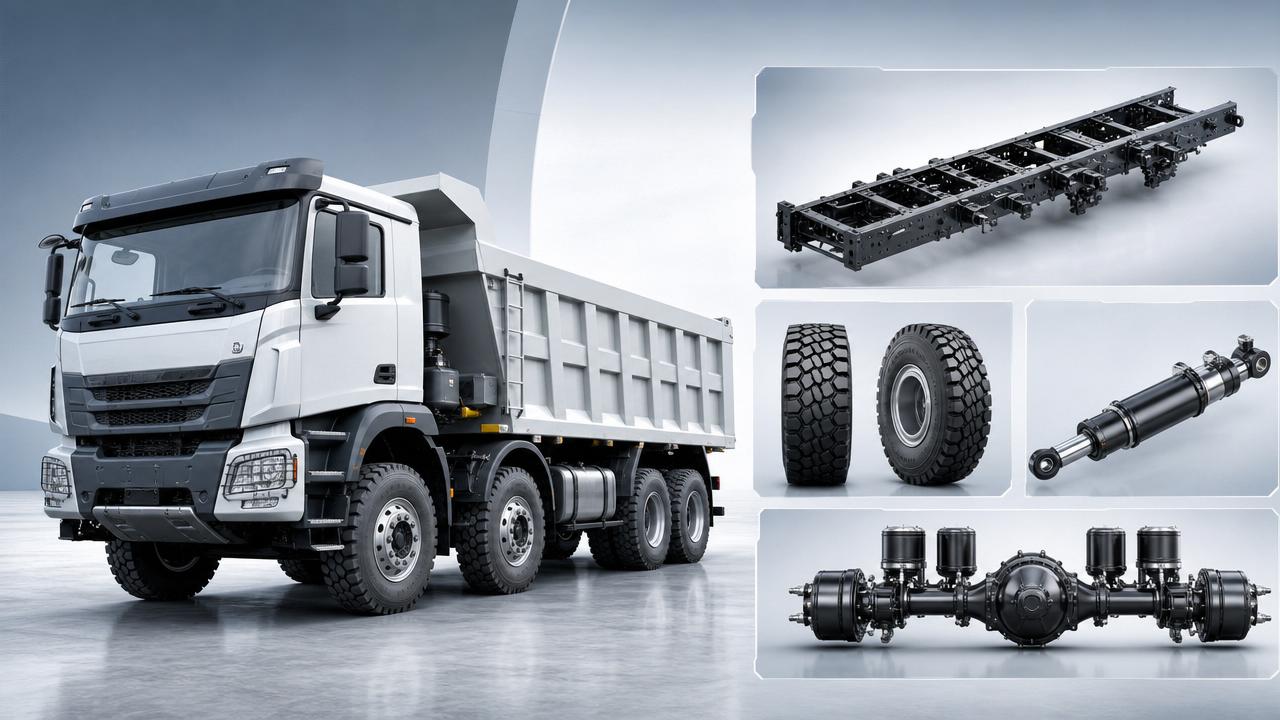
For business evaluators, the Cangshan Vehicle Configuration List is more than a technical document—it is a critical checklist for controlling procurement risk, comparing specifications, and confirming order accuracy before purchase. By reviewing key configuration items in advance, buyers can avoid costly mismatches, improve decision efficiency, and ensure the selected engineering vehicle meets project, compliance, and long-term operational requirements.
Why does the Cangshan Vehicle Configuration List matter so much before ordering?
In engineering vehicle procurement, a quotation alone never tells the full story. Two vehicles may look similar on price, payload, and appearance, yet differ significantly in axle ratio, tire specification, suspension setup, cab features, emission level, or PTO readiness. The Cangshan Vehicle Configuration List helps evaluators see those hidden variables before a purchase order is released.
For commercial buyers working on construction, mining, municipal, or infrastructure projects, configuration errors can affect total lifecycle cost far more than the initial purchase price. A vehicle with the wrong gearbox ratio may underperform on mountain roads. An incorrect suspension setup may reduce stability under heavy load. A missing compliance item may delay customs clearance or local registration.
That is why the Cangshan Vehicle Configuration List should be reviewed not only by technical staff, but also by procurement, finance, operations, and logistics teams. It acts as a shared decision document that aligns specification, budget, delivery, and operational risk.
- It clarifies whether the offered vehicle matches the actual working condition, not just the tender description.
- It reduces rework caused by incomplete option confirmation, especially for export orders with long lead times.
- It helps compare alternatives across brands such as FOTON, SHACMAN, and SINOTRUK on a like-for-like basis.
- It supports internal approval by turning technical details into a traceable commercial evaluation record.
Which key items in a Cangshan Vehicle Configuration List should business evaluators verify first?
The most efficient review approach is to start with the items that affect application fit, compliance, and delivery risk. In engineering vehicles, not every option has equal commercial importance. Some items influence fuel economy or driver comfort. Others directly determine whether the vehicle can legally operate, carry the intended load, or integrate with mounted equipment.
Primary decision items
Before approving an order, evaluators should verify the following points in the Cangshan Vehicle Configuration List with extra care.
- Vehicle type and intended use: dump truck, cargo chassis, mixer support, municipal support, or special engineering transport.
- Drive configuration: 4x2, 6x4, 8x4, or all-wheel-drive options depending on terrain, payload, and axle load rules.
- Engine output and emission level: confirm horsepower, torque curve, fuel type, and local market compliance expectations.
- Transmission and axle ratio: these determine gradeability, jobsite launch performance, and highway fuel efficiency.
- Suspension, frame, and axle capacity: critical for rough-road durability and overload resistance in engineering use.
- Tire size and pattern: important for off-road grip, replacement availability, and operating cost.
- Cab, safety, and electrical package: air conditioning, visibility, seat type, reversing support, and basic electrical compatibility.
- Body or upper-structure interface: hydraulic system, PTO, mounting points, body dimensions, and wiring outputs.
The table below turns the Cangshan Vehicle Configuration List into a practical review framework for engineering vehicle evaluation teams.
Business evaluators often find that the biggest procurement problems come from interface issues, not from headline specifications. A strong Cangshan Vehicle Configuration List review therefore focuses on fit between chassis, body, duty cycle, and local operating rules.
How should you compare engineering vehicle options using the Cangshan Vehicle Configuration List?
Comparison becomes difficult when suppliers submit different specification formats. One may highlight engine power. Another may emphasize price or delivery. A normalized Cangshan Vehicle Configuration List makes comparison easier by forcing every offer into the same decision structure.
For example, when comparing heavy engineering vehicles from different Chinese commercial vehicle platforms, the key is not to ask which brand is broadly better. The better question is which configuration is better aligned with your route profile, legal weight limit, body requirement, and service strategy.
A simple comparison logic for evaluators
- Compare operational fit first: route, terrain, and load pattern.
- Compare total cost second: fuel, tires, maintenance intervals, and parts access.
- Compare delivery feasibility third: stock availability, production lead time, and export documentation readiness.
- Compare lifecycle support fourth: after-sales communication, spare parts planning, and technical response speed.
This comparison table can be used when reviewing multiple offers against the Cangshan Vehicle Configuration List.
A lower unit price may still create a weaker procurement result if it comes with poor stock availability, non-matching axle specification, or missing body interface provisions. The Cangshan Vehicle Configuration List keeps the comparison grounded in operational reality.
What procurement risks are often missed in engineering vehicle configuration reviews?
Many evaluation teams focus on major specifications and overlook practical operating details. In engineering vehicle exports, these overlooked details can become expensive after the order is locked. The Cangshan Vehicle Configuration List should therefore be treated as a risk-control document, not only a technical appendix.
Common blind spots
- Ignoring local fuel quality and maintenance conditions when choosing engine and aftertreatment setup.
- Assuming a standard chassis will fit a special body without checking PTO, wheelbase, and mounting interfaces.
- Overlooking tire supply in the destination market, especially for remote project locations.
- Not confirming brake system preferences and safety features required by project owners or local regulations.
- Failing to verify what is included in the delivered scope, such as tools, spare tires, warning equipment, and manuals.
Another frequent problem is internal misalignment. Procurement may approve one version, engineering may expect another, and the end user may assume certain options are standard. A signed and version-controlled Cangshan Vehicle Configuration List reduces this risk by creating a clear reference point for all parties.
How do compliance, documentation, and export process affect the configuration decision?
For international buyers, the right engineering vehicle is not only the one that performs well on site. It must also move smoothly through production, inspection, customs, and destination registration. This is where configuration decisions and export execution become closely linked.
A Cangshan Vehicle Configuration List should be reviewed together with documentation requirements. Emission expectations, lighting configuration, VIN-related information, loading method, and packaging details may all influence the final order structure. If these are checked late, the result may be shipment delay or re-documentation work.
Typical process checkpoints
The table below shows how configuration review connects to export execution in practical engineering vehicle procurement.
This is why experienced exporters matter. Shandong Livol Truck International Trade Co., Ltd. supports customers through vehicle selection, customization, documentation, customs clearance, and logistics. For evaluators, that means configuration review is connected to delivery execution from the start, not treated as a separate task after the deal is closed.
How can Shandong Livol help evaluators make a safer and faster decision?
When buyers source engineering vehicles from China, they often need more than a catalog. They need a supplier that can translate project requirements into a workable configuration, then support stock check, order confirmation, inspection alignment, and export handling. This is where Shandong Livol offers practical value.
As an official authorized domestic and overseas dealer for FOTON, SHACMAN, and SINOTRUK, the company can help buyers compare mainstream Chinese commercial vehicle platforms in a structured way. Because it operates multiple authorized 4S stores in China and maintains sufficient vehicle inventory, lead time discussions can be based on actual supply conditions rather than assumptions alone.
For business evaluators, this matters in three ways. First, model selection can be narrowed faster. Second, specification confirmation becomes more traceable. Third, export coordination is easier because the same team supports documentation, customs, and logistics along the process.
What support is most useful during evaluation?
- Cross-checking the Cangshan Vehicle Configuration List against route condition, payload target, and body application.
- Comparing available configurations across FOTON, SHACMAN, and SINOTRUK for commercial fit rather than generic brand preference.
- Clarifying stock status, production timing, and feasible customization scope before internal approval.
- Aligning vehicle specification with export documents and shipment planning to reduce downstream delay.
FAQ: practical questions evaluators ask about the Cangshan Vehicle Configuration List
How detailed should a Cangshan Vehicle Configuration List be for an engineering vehicle order?
It should be detailed enough to identify the exact vehicle that will be built or delivered. At minimum, it should cover chassis type, drive layout, engine, gearbox, axle ratio, tire specification, suspension, cab package, body interface, and key accessories. If the project involves a dump body, crane, mixer, or other mounted equipment, PTO and hydraulic provisions should also be clearly stated.
Which item creates the highest hidden risk if overlooked?
In many engineering applications, the biggest hidden risk is the mismatch between drivetrain setup and actual operating conditions. A vehicle may have adequate engine power on paper, but if the gearbox and axle ratio do not suit the terrain and load profile, fuel cost, wear, and jobsite productivity can all suffer. Body interface mismatch is another high-risk area for special applications.
Can the Cangshan Vehicle Configuration List help with budget control?
Yes. It helps buyers avoid paying for unnecessary options while also preventing under-specification that leads to retrofit or maintenance cost later. For evaluators, this means the list supports total cost review, not just purchase price control. It also makes supplier quotations easier to compare on an equivalent basis.
What should be confirmed before final payment or shipment?
The physical vehicle should be checked against the final approved Cangshan Vehicle Configuration List. That includes major assemblies, visible options, tire model, accessories, and any application-specific provisions. The documentation should also match the confirmed configuration to avoid customs or registration issues after arrival.
Why choose us for engineering vehicle configuration review and export support?
If you are evaluating a Cangshan Vehicle Configuration List for an engineering vehicle purchase, the most useful partner is one that can connect specification review with supply reality and export execution. Shandong Livol Truck International Trade Co., Ltd. offers that combination through authorized brand access, available inventory, practical configuration support, and full-process export coordination.
You can consult our team for configuration confirmation, product selection across FOTON, SHACMAN, and SINOTRUK platforms, estimated delivery timing, customization feasibility, export documentation preparation, and destination-oriented compliance discussion. If you need to compare several quotations, we can also help translate each offer into a clear engineering vehicle evaluation checklist.
For buyers under time pressure, this shortens the path from inquiry to verified order. For buyers managing risk, it reduces the chance of receiving a vehicle that looks correct on paper but performs poorly in the field. Contact us to discuss your required parameters, operating scenario, preferred brand range, body application, and shipment timeline before placing the order.
Search Starts Here