
News
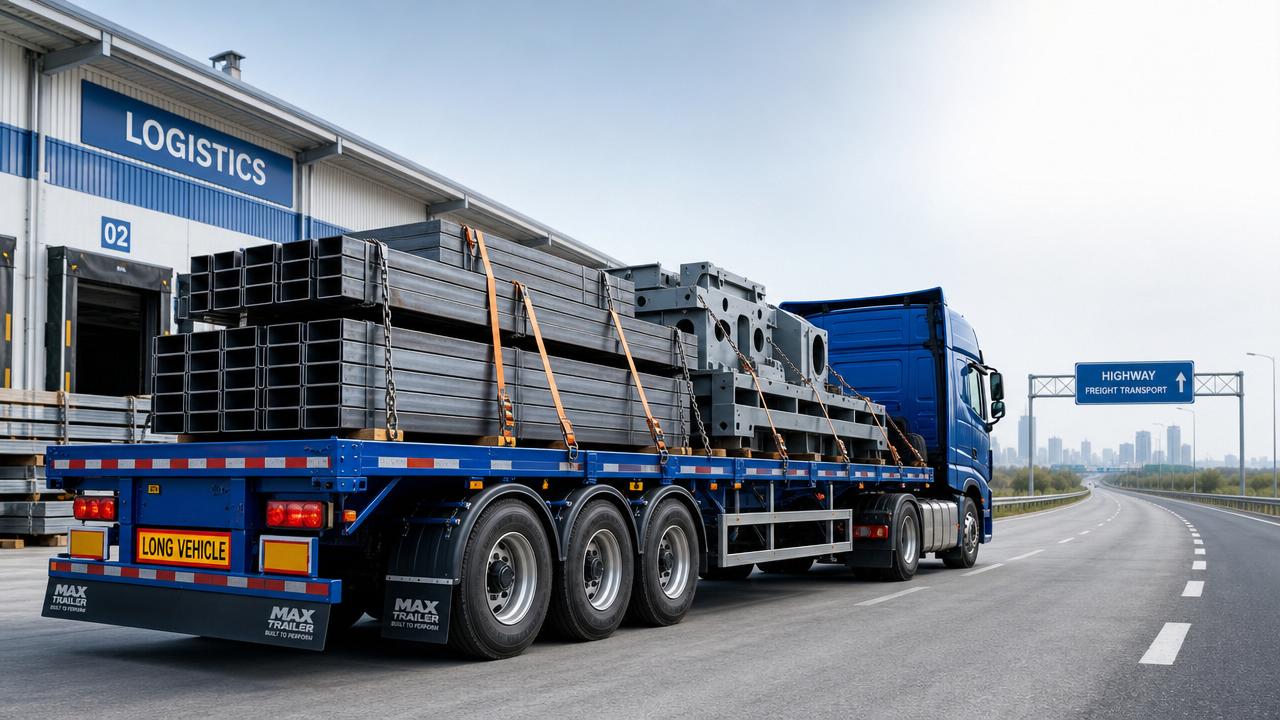
Why does load capacity never tell the full Flatbed Semi-Trailer story?
A Flatbed Semi-Trailer is often compared by payload first. That is understandable, but it is rarely enough for a sound purchase decision.
In real transport operations, profit comes from usable payload, route fit, loading speed, maintenance frequency, and fuel impact over time.
A heavier trailer may support a higher rated load. Yet it can also reduce net cargo weight and increase tractor fuel consumption.
A lighter Flatbed Semi-Trailer may improve payload efficiency. Still, it must match axle limits, road quality, and cargo securing demands.
That is why operating cost matters as much as load capacity. The better question is not only “How much can it carry?”
A more useful question is “How much does each productive ton cost across the trailer’s service life?”
For engineering vehicle logistics, this balance becomes even more important. Equipment, steel sections, machinery parts, and project materials create very different loading patterns.
The practical value of a Flatbed Semi-Trailer depends on whether it keeps moving reliably, legally, and efficiently under those conditions.
How should load capacity be evaluated beyond the brochure number?
Rated capacity is the starting point, not the conclusion. In practice, usable capacity is shaped by both trailer design and transport rules.
The first issue is tare weight. If two trailers share the same legal gross limit, the lighter one usually leaves more room for cargo.
The second issue is cargo type. Dense steel coils, long beams, palletized machinery, and mixed construction materials stress the deck differently.
The third issue is axle distribution. A Flatbed Semi-Trailer can appear strong on paper, yet perform poorly if the load concentrates too much weight on one area.
More common evaluation points include:
- Deck length and width versus actual cargo dimensions
- Main beam design and cross-member spacing
- Axle count, suspension type, and tire specification
- Legal payload under target country regulations
- Ease of lashing, side access, and loading equipment compatibility
A Flatbed Semi-Trailer used for regional construction supply may need rugged suspension more than the highest possible rated payload.
For longer highway runs, lower tare weight and better rolling efficiency can create a stronger business case than extra structural mass.
Where do operating costs usually rise faster than expected?
The hidden cost side of a Flatbed Semi-Trailer usually appears after delivery, not during quotation review.
Fuel impact is one of the largest factors. Trailer weight, tire resistance, and aerodynamic drag all affect tractor fuel use.
Maintenance is another area often underestimated. Poor road conditions can accelerate wear on suspension parts, tires, kingpins, brake systems, and deck fixtures.
Downtime is even more expensive. A trailer that waits for spare parts or repeated welding repairs can erase any benefit from a lower purchase price.
The table below helps connect common operating questions with cost impact.
Simple purchase comparisons often miss these points. A cheaper Flatbed Semi-Trailer can become the more expensive asset over three to five years.
Is a higher-capacity Flatbed Semi-Trailer always the smarter choice?
Not necessarily. Higher capacity only creates value when the operation can use it regularly and legally.
If most loads are volume-limited, not weight-limited, extra structural capacity may sit unused for most trips.
If roads include rough project access routes, a durable setup may matter more than maximum load figures.
If border transport is involved, axle regulations and paperwork accuracy can influence profitability as much as payload.
A practical way to decide is to compare the trailer against the dominant load profile, not against occasional peak loads.
That means checking average shipment weight, trip distance, loading method, road condition, and annual utilization.
When supply continuity matters, working with an exporter that has stable inventory and coordinated logistics also reduces risk.
Shandong Livol Truck International Trade Co., Ltd. supports this process through vehicle selection, customization, export documentation, customs coordination, and delivery planning.
That kind of support is useful because a Flatbed Semi-Trailer decision is rarely isolated from tractor matching, route planning, and local compliance.
Which specification details usually separate a cost-efficient trailer from a risky one?
The answer is often in the details buyers skip during early comparison.
Steel grade matters, but beam structure and weld consistency matter just as much. A strong material claim is not enough by itself.
Suspension choice changes service cost. Mechanical suspension may be simpler for harsh roads, while other setups may improve ride and cargo protection.
Brake system reliability is another key point. Repeated stop-and-go work and mountainous routes can expose weak components quickly.
Deck layout should also support real operations. Cargo lashing points, side clearance, and forklift access affect loading time every day.
A useful screening list includes:
- Whether axle brand and brake parts are available in the target market
- Whether tire specification supports the real duty cycle
- Whether paint and anti-corrosion treatment fit coastal or humid environments
- Whether the deck handles concentrated equipment loads without deformation risk
- Whether after-sales response is clear before shipment
These factors do not just improve technical confidence. They directly influence lifecycle cost and resale confidence.
How can total cost be compared before placing an order?
A useful comparison model does not need to be complicated. It only needs to reflect how the Flatbed Semi-Trailer will actually be used.
Start with purchase price, but do not stop there. Add expected fuel effect, tire life, maintenance intervals, spare parts lead time, and annual working days.
Then compare cost per productive trip or cost per ton-kilometer. That usually gives a clearer answer than price alone.
Where several trailer options look similar, this quick judgment table can help.
In actual sourcing, integrated support can reduce evaluation gaps. That includes stock visibility, brand authorization, configuration confirmation, and export execution.
With authorized access to FOTON, SHACMAN, and SINOTRUK resources, plus 4S network support and export experience, coordination becomes more predictable.
This does not replace technical review, but it helps keep the final Flatbed Semi-Trailer solution aligned with supply, service, and delivery realities.
What is the most practical next step before final selection?
The best next step is to convert assumptions into a short decision checklist.
List the average cargo type, annual transport volume, route quality, legal limits, unloading method, and acceptable downtime window.
Then compare each Flatbed Semi-Trailer option against those conditions, not against generic market claims.
If two choices remain close, focus on lifecycle cost drivers: tare weight, service access, parts support, and failure risk.
A well-chosen Flatbed Semi-Trailer should not only carry more. It should keep operations steadier, costs clearer, and planning more reliable.
That is usually where the strongest value appears over time. Review the real operating profile, confirm technical details, and compare total ownership cost before moving forward.
Search Starts Here