
News
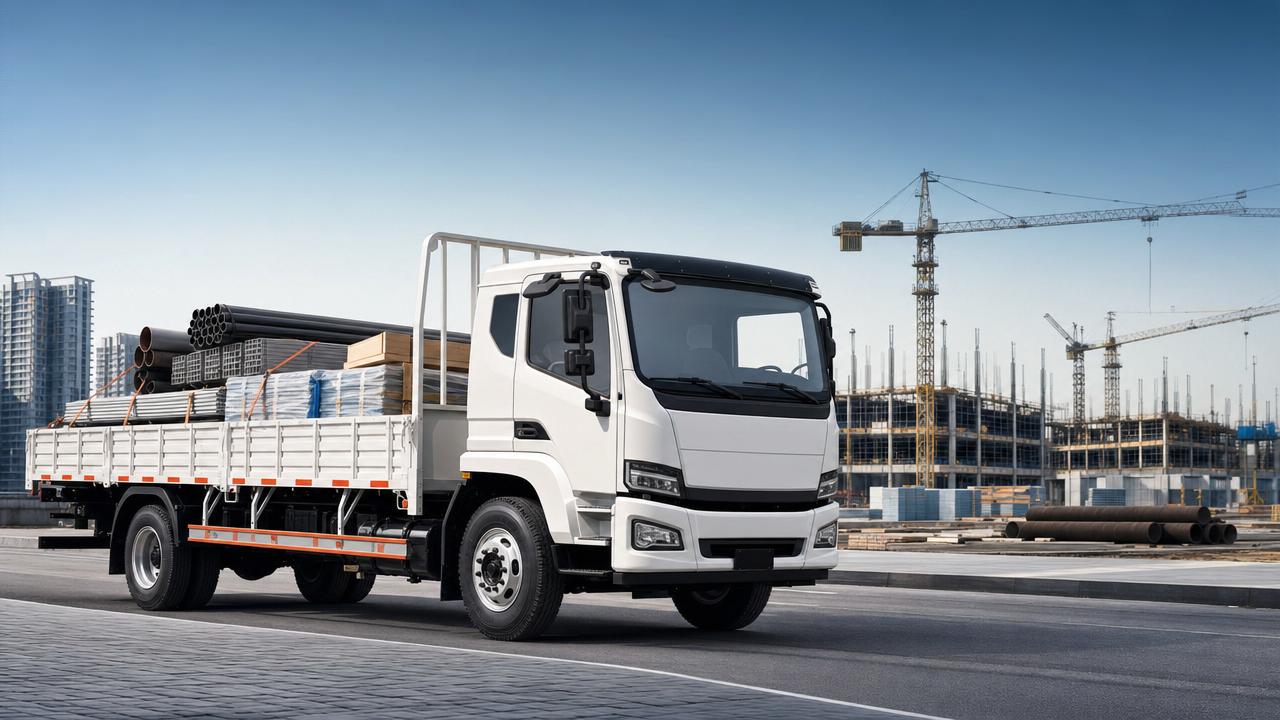
4x2 Cargo Truck: Best Uses and Road Limitations
A 4x2 Cargo Truck is a practical choice for moving materials, tools, and light equipment between warehouses, suppliers, and active job sites.
For many engineering projects, it offers a smart balance of payload, fuel economy, purchase cost, and daily road flexibility.
Still, the 4x2 Cargo Truck is not the right answer for every route, weather pattern, or site condition.
Understanding its strengths and limits helps reduce delays, protect cargo, and improve transport planning across the whole project cycle.
This guide explains where a 4x2 Cargo Truck performs best, what road limitations matter most, and how to choose the right setup for engineering use.
Why the 4x2 Cargo Truck Works Well for Engineering Logistics
A 4x2 Cargo Truck sends drive power to one rear axle.
That simple drivetrain lowers vehicle weight, reduces mechanical complexity, and often cuts maintenance costs compared with heavier multi-axle options.
In actual operations, this means faster turnaround on paved roads and easier cost control for recurring transport jobs.
It is especially useful when routes are predictable and cargo does not require extreme off-road traction.
- Lower fuel consumption on regional and urban delivery routes
- Easier maneuvering in tight construction entrances
- Lower purchase price than many larger transport platforms
- Suitable for stable, high-frequency site supply work
- Good fit for mixed use between warehouse and project location
Best Uses of a 4x2 Cargo Truck
The best use of a 4x2 Cargo Truck depends on road quality, load profile, trip distance, and unloading frequency.
From recent project trends, the strongest demand comes from jobs that need fast road transport rather than deep off-road capability.
Building Material Delivery
A 4x2 Cargo Truck is widely used to carry cement bags, steel parts, pipes, insulation panels, cable trays, and packaged fittings.
It performs well when loading points and unloading points are connected by highways, ring roads, or compacted access roads.
Equipment and Tool Transport
Daily site work often depends on generators, pumps, welding sets, scaffolding parts, and maintenance tools arriving on time.
A 4x2 Cargo Truck supports this routine movement efficiently, especially when the load must be protected and delivered on schedule.
Intercity and Suburban Supply Runs
Many engineering projects operate from central yards outside cities.
A 4x2 Cargo Truck is a strong option for repeated intercity routes where delivery speed and road compliance matter more than extreme axle capacity.
Last-Mile Site Logistics
When site roads are firm and dry, a 4x2 Cargo Truck can handle last-mile movement from staging areas to work fronts.
This is common in industrial parks, infrastructure upgrades, factory expansion projects, and municipal construction zones.
Where a 4x2 Cargo Truck Has Clear Road Limitations
The main limitation of a 4x2 Cargo Truck is traction.
Because only one rear axle is driven, grip can drop quickly on unstable surfaces or under poor weather conditions.
This does not make the truck weak.
It simply means route selection must match the vehicle’s real working environment.
Soft Mud and Loose Ground
Fresh earthworks, muddy access lanes, and sandy site roads can reduce tire grip very fast.
In these conditions, a loaded 4x2 Cargo Truck may struggle to start, climb, or recover once stopped.
Steep Gradients
Mountain access roads, quarry approaches, and sharp temporary ramps can be difficult for a 4x2 Cargo Truck, especially under full load.
The issue is not just climbing ability.
Brake control, restart safety, and surface grip all become more critical on slopes.
Heavy Rain, Snow, and Slippery Surfaces
A 4x2 Cargo Truck can run safely in normal bad weather when roads are maintained.
However, standing water, icy roads, or greasy construction exits increase wheel slip and braking distance.
Overloading and Poor Load Distribution
One of the most common mistakes is using a 4x2 Cargo Truck beyond its legal or practical payload range.
Even on good roads, overload stress affects tires, suspension, braking, fuel use, and vehicle life.
How to Decide if a 4x2 Cargo Truck Fits the Job
A good selection process starts with route mapping, not just price comparison.
This is where many transport problems can be prevented early.
- Check the percentage of paved road versus temporary site road.
- Measure average cargo weight, volume, and loading frequency.
- Review seasonal weather risks along the route.
- Confirm bridge limits, city access rules, and axle restrictions.
- Match body type to cargo, such as van, flatbed, or fence cargo body.
- Evaluate unloading conditions, including forklifts, cranes, and manual handling.
If most of the route is stable road and only the final short section is rough, a 4x2 Cargo Truck often remains a cost-effective solution.
If difficult ground is frequent and unavoidable, moving to a more traction-focused platform may be the safer long-term decision.
Practical Ways to Reduce 4x2 Cargo Truck Limitations
In actual business, the right operating method can expand the value of a 4x2 Cargo Truck without changing the whole fleet structure.
- Schedule deliveries during dry weather for unfinished site roads.
- Use proper tires based on season, load, and road surface.
- Keep axle loads balanced to improve stability and traction.
- Prepare compacted unloading zones near work areas.
- Avoid unnecessary idling and stop-start movement on loose ground.
- Train drivers for slope control, wet-road handling, and cargo securing.
These steps improve uptime and reduce the risk of small route issues becoming major project delays.
Key Comparison: 4x2 Cargo Truck Strengths and Limits
Choosing a Reliable Supply Partner Matters Too
Even the right 4x2 Cargo Truck can underperform if specification support is weak.
That is why exporter capability matters alongside the truck itself.
Shandong Livol Truck International Trade Co., Ltd. is a professional commercial vehicle exporter based in Shandong, China.
As an authorized domestic and overseas dealer for FOTON, SHACMAN, and SINOTRUK, the company supports customers with stable supply and practical model selection.
Its network of authorized 4S stores and available inventory helps shorten delivery time for urgent transport needs.
More importantly, the export team can assist with customization, documents, customs clearance, logistics coordination, and after-sales support.
For buyers comparing several 4x2 Cargo Truck options, this kind of end-to-end support reduces risk and speeds up procurement decisions.
Final Takeaway
A 4x2 Cargo Truck is best used for road-focused engineering logistics, medium-load distribution, and routine project supply work.
Its biggest advantages are efficiency, lower operating cost, and flexible daily transport performance.
Its main road limitations appear on muddy ground, steep access roads, slippery surfaces, and overloaded operations.
When route conditions, load planning, and body configuration are matched correctly, the 4x2 Cargo Truck can deliver strong value across many engineering projects.
If you are reviewing fleet options, start with the route, the surface, the load pattern, and the weather risk.
That approach makes it much easier to decide whether a 4x2 Cargo Truck is the right solution for your next project transport plan.
Search Starts Here