
News
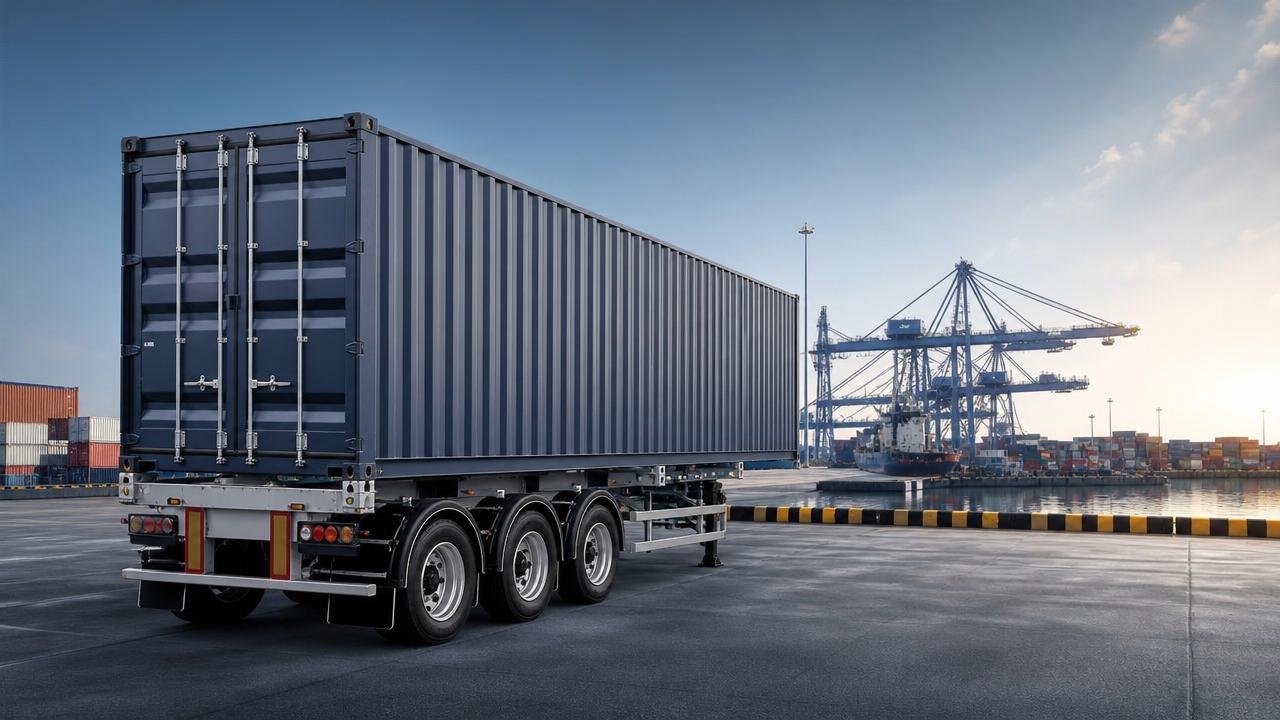
Choosing a trailer for container transport is rarely a simple equipment decision. A Skeleton (Container) Semi-Trailer affects loading efficiency, road safety, maintenance cost, route flexibility, and fleet utilization across the entire transport cycle.
That is why selection should start with operating reality rather than catalog specifications alone. Container size, cargo density, axle limits, terminal conditions, and delivery distance all shape what the right configuration actually looks like.
In engineering vehicle operations, this matters even more. Container movements often connect ports, industrial zones, construction supply chains, and inland logistics routes where trailer strength and reliability directly influence uptime.
A practical buying decision comes from matching the Skeleton (Container) Semi-Trailer to the load profile, local regulations, and long-term service plan. When those factors align, cost control becomes much more predictable.
What a Skeleton (Container) Semi-Trailer is really designed to do
A Skeleton (Container) Semi-Trailer is built to carry ISO containers through a simplified, weight-efficient frame structure. Unlike a flatbed, it does not need a full deck to support general cargo.
Its core task is to secure containers with twist locks while keeping tare weight under control. That lighter structure can improve payload efficiency, especially on long-haul routes and high-frequency port operations.
The design may look straightforward, but specification differences are significant. Chassis beam strength, cross-member layout, axle arrangement, suspension type, and lock position all influence actual performance.
In other words, one trailer may suit repetitive 40-foot port runs, while another is better for mixed container sizes or rough inland roads. The visual similarity between models can hide major practical differences.
Why trailer selection has become a closer procurement issue
Container logistics has become more demanding in recent years. Operators now face tighter delivery schedules, stricter axle-weight enforcement, and stronger pressure to reduce downtime caused by preventable equipment failure.
At the same time, cargo patterns are less uniform. A fleet may move 20-foot containers one day, 40-foot high cubes the next, and then return to heavier industrial loads on regional roads.
This change makes a generic specification less useful. The better approach is to define the operating envelope first, then select a Skeleton (Container) Semi-Trailer that fits those recurring conditions without overbuilding or underbuilding.
The most successful buyers usually look beyond unit price. They pay attention to frame fatigue risk, parts availability, service access, and compatibility with the tractors already in use.
Start with the container mix and route profile
The first filter is simple. What containers will move most often, and where will they travel?
A trailer dedicated to 40-foot containers may not be the best choice for regular mixed operations. If 20-foot, 40-foot, and occasional 45-foot transport is expected, lock layout and frame balance deserve careful review.
Route profile is just as important. Port roads, highways, mining-adjacent logistics roads, and underdeveloped regional corridors place very different stress on the same chassis.
- Short port shuttle routes often prioritize fast loading, tight turning, and efficient weight distribution.
- Long-distance highway transport usually values low tare weight, stable tracking, and lower fuel impact.
- Mixed or uneven roads call for stronger suspension, reinforced beams, and better anti-torsion performance.
- Cross-border routes require attention to local compliance, spare parts support, and documentation alignment.
If these conditions are not clear at the start, the selected Skeleton (Container) Semi-Trailer may perform well on paper but create avoidable operating compromises in the field.
Key specification points that deserve closer attention
Axle configuration and load distribution
Two-axle and three-axle layouts remain the most common. The right option depends on payload, legal axle limits, and the stability needed for the expected transport environment.
A heavier container program often benefits from a three-axle Skeleton (Container) Semi-Trailer. It can improve load sharing and reduce the chance of local overloading penalties.
Frame material and structural strength
High-strength steel can reduce tare weight without sacrificing structural integrity, but material grade alone is not enough. Welding quality, beam section design, and reinforcement points matter just as much.
Repeated corner loading and poor road surfaces can accelerate fatigue if the structure is not designed for real duty cycles. This is one area where low upfront cost can lead to expensive downtime later.
Suspension and braking system
Mechanical suspension is widely used because it is durable and relatively easy to service. Air suspension may improve ride stability and cargo protection in some operations, but support conditions should be evaluated first.
Braking performance should be reviewed with equal care. Reliable brake chambers, valves, ABS compatibility, and durable air lines help reduce operating risk during high-frequency transport.
Twist locks and container compatibility
Lock positioning affects both efficiency and safety. A Skeleton (Container) Semi-Trailer should match the container sizes moved most often without requiring awkward loading adjustments or unsafe improvisation.
Think beyond purchase price
A lower-priced trailer may look attractive during quotation review. Still, the real cost of a Skeleton (Container) Semi-Trailer is spread across years of tire wear, brake maintenance, structural repairs, and lost operating time.
This is why total lifecycle value matters more than the cheapest entry point. Better steel quality, proven axle brands, and stable welding standards usually show their value after months of continuous use.
It also helps to evaluate delivery reliability. In many transport projects, delayed equipment arrival can cost more than a small difference in trailer price, especially when a fleet expansion is time-sensitive.
The supplier side matters as much as the hardware
The trailer itself is only part of the decision. Export coordination, specification confirmation, inspection control, shipping documents, and after-sales follow-up can all influence whether the purchase runs smoothly.
That is where an experienced commercial vehicle exporter adds practical value. Shandong Livol Truck International Trade Co., Ltd. operates from Shandong, China, with established export experience and a strong industry base.
Its position as an authorized domestic and overseas dealer for FOTON, SHACMAN, and SINOTRUK reflects broader capability in commercial vehicle coordination. A wide 4S network and sufficient inventory also support more stable delivery planning.
For buyers comparing trailer programs with tractor compatibility, that kind of support can simplify matching, customization, paperwork, customs clearance, and logistics. The result is a more controlled procurement process, not just a product transaction.
A practical checklist before confirming an order
Before final approval, it helps to convert general requirements into a short decision framework. That keeps discussion focused on operating fit rather than broad assumptions.
- Confirm the dominant container sizes and the percentage of mixed loads.
- Check local axle-load rules and overall transport compliance requirements.
- Review the actual road profile, not only the planned route map.
- Verify frame material, lock layout, suspension details, and brake components.
- Assess spare parts availability and service response after delivery.
- Compare delivery time, export process support, and customization accuracy.
A well-chosen Skeleton (Container) Semi-Trailer should not require constant operational workarounds. It should fit the route, support the container mix, and remain economical throughout daily use.
The next step is usually straightforward. Clarify the load pattern, list the non-negotiable specifications, and compare options against real operating conditions rather than brochure language alone.
When that evaluation is done carefully, the right Skeleton (Container) Semi-Trailer becomes easier to identify, and the purchase decision stands on much stronger ground.
Search Starts Here