
News
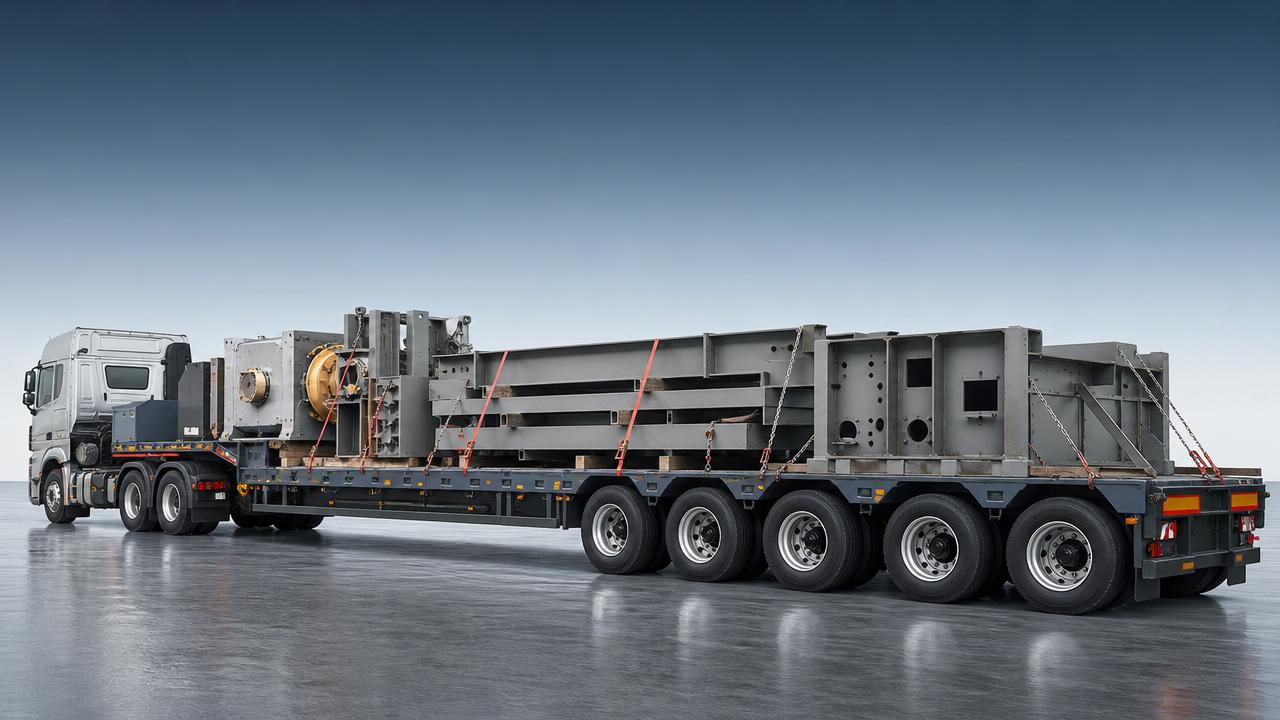
When evaluating a Flatbed Semi-Trailer, deck length is often the first visible number. It feels simple, direct, and easy to compare across models.
But in real engineering transport, load capacity usually affects more critical outcomes. It shapes axle loading, cargo stability, legal compliance, tire stress, and route flexibility.
That does not mean deck length is secondary in every case. It means the right Flatbed Semi-Trailer choice comes from understanding how capacity and usable deck space work together.
For technical evaluation work, the most reliable approach is practical: start with payload reality, then verify dimensional fit, axle distribution, and operating conditions.
Why load capacity usually decides performance first
A longer deck may carry larger items, but it does not automatically mean a better transport result. If the structure, axles, suspension, or tires cannot support the real load, the extra length adds little value.
In many project cargo applications, overloading creates the fastest path to brake wear, uneven tire heat, frame fatigue, and compliance trouble. That is why load capacity often deserves first review.
- Check rated payload against actual cargo mass, including pallets, blocking, chains, and accessories. Many selection errors come from comparing trailer tare weight but ignoring real operating weight.
- Confirm axle group rating and suspension match the load pattern. A Flatbed Semi-Trailer carrying concentrated machinery needs different support from evenly distributed building materials.
- Review tire load index and wheel specification early. Strong frame design means little if the tire package becomes the first limitation during heavy-duty road operations.
- Verify kingpin load transfer with the intended tractor. Capacity on paper may still cause poor balance if tractor fifth-wheel limits are lower than trailer loading demands.
- Compare legal road limits by region, not just factory rating. In cross-border transport, the usable payload of a Flatbed Semi-Trailer can be lower than its structural maximum.
- Assess braking configuration under full load, especially for downhill routes. Payload decisions should always connect with stopping distance, heat fade resistance, and service interval expectations.
Where deck length still becomes critical
Deck length matters when cargo cannot be broken down, rotated, or safely overhung. Steel coils, pipes, rebar bundles, formwork assemblies, and large fabricated parts often depend on usable deck geometry.
Still, the useful question is not “How long is the trailer?” It is “How much of that deck is usable after headboard clearance, axle position, lashing zones, and turning requirements?”
What to measure before comparing deck length
A Flatbed Semi-Trailer can look ideal by overall length and still perform poorly if the cargo footprint does not align with weight distribution rules.
This is especially true in engineering vehicle support fleets, where loads vary between dense equipment, long fabricated members, and mixed jobsite materials.
- Measure cargo contact length, not only total cargo length. A machine with short ground contact may load heavily on one deck section and reduce effective trailer capacity.
- Map cargo center of gravity before choosing deck size. Longer trailers can worsen balance if the load cannot sit in the optimal position between kingpin and axle group.
- Check lashing point spacing and deck strength per zone. A longer platform is useful only when tie-down positions support the real securing plan.
- Review loading equipment limitations at the worksite. Ramp angle, forklift reach, and crane swing can all reduce the practical benefit of added deck length.
- Allow margin for front and rear clearance during transport. Tight dimensional planning often fails once dunnage, edge protection, and securing hardware are added.
- Confirm turning radius and yard maneuverability. A longer Flatbed Semi-Trailer may fit the cargo but slow down loading cycles in plants, depots, or project sites.
Capacity and length should be reviewed together
The best specification work rarely treats payload and deck size as separate topics. They interact through frame design, axle layout, suspension type, and the nature of the transported equipment.
For example, dense machine parts may demand higher payload with moderate deck length. Long but lighter fabricated sections may shift the decision toward platform length and securing flexibility.
A simple way to rank priorities
- If cargo is heavy and compact, rank capacity first. Then verify deck length only after confirming legal axle loads and safe weight transfer conditions.
- If cargo is long and relatively light, rank usable deck length first. Then confirm that structure and lashing points still support repeated transport cycles.
- If cargo mix changes weekly, choose a balanced Flatbed Semi-Trailer specification. Operational versatility usually outperforms extreme sizing in one direction only.
Common mistakes that distort trailer selection
A surprising number of specification issues come from focusing on brochure numbers without simulating real loading conditions.
That risk grows when the trailer will serve multiple engineering transport tasks across mixed road conditions.
- Using maximum cargo length as the main filter. This often leads to oversized deck selection while payload, axle legality, and maneuverability receive too little attention.
- Ignoring tare weight when comparing models. Two Flatbed Semi-Trailer units may share similar ratings, yet the lighter one can offer better legal payload efficiency.
- Treating distributed load and point load as the same thing. Concentrated machine weight can exceed local deck stress limits long before total payload is reached.
- Skipping route review during technical evaluation. Bridge restrictions, incline frequency, and road surface quality directly affect the practical trailer specification.
- Overlooking service support and parts access. A well-specified trailer still loses value if suspension, brake, or axle components are slow to source.
How this plays out in engineering transport scenarios
For construction steel and general materials, deck length often matters because load dimensions vary. Even so, the trailer still needs enough capacity margin for mixed bundles and uneven loading sequences.
For compact machinery or heavy equipment attachments, capacity becomes the controlling factor. A shorter but stronger Flatbed Semi-Trailer may deliver safer balance, better braking, and lower long-term maintenance cost.
For export-oriented fleet planning, specification should also reflect destination regulations and service conditions. What works domestically may not remain optimal after customs, road rules, and local maintenance realities are considered.
This is where an experienced supply partner adds value. Shandong Livol Truck International Trade Co., Ltd. supports vehicle selection, customization, documentation, logistics coordination, and after-sales follow-up across global commercial vehicle projects.
With authorized access to FOTON, SHACMAN, and SINOTRUK resources, plus broad inventory and export experience, matching the right Flatbed Semi-Trailer setup becomes faster and more practical.
What to confirm before making the final decision
A strong evaluation process should end with real operating checks, not just a specification sheet review.
- List the top three cargo types by weight, length, and loading method. This quickly shows whether capacity or deck length should lead the decision.
- Match trailer specification with tractor capability and route limits. The best Flatbed Semi-Trailer choice always works as part of the full transport combination.
- Request confirmation on frame structure, axle brand, suspension type, and tire specification. These details reveal whether brochure capacity is truly usable in field conditions.
- Check customization options for deck layout, lashing points, and support accessories. Small configuration changes often improve loading safety more than extra deck length does.
- Review delivery stability and after-sales support before finalizing. Reliable supply and service matter just as much as technical fit for long-term fleet performance.
In short, deck length matters, but load capacity usually decides whether a Flatbed Semi-Trailer will perform safely, legally, and efficiently. Start with real payload demands, then confirm the deck works for cargo geometry and route conditions.
That sequence leads to better engineering decisions, fewer operating compromises, and a trailer specification that keeps working long after delivery.
Search Starts Here