
News
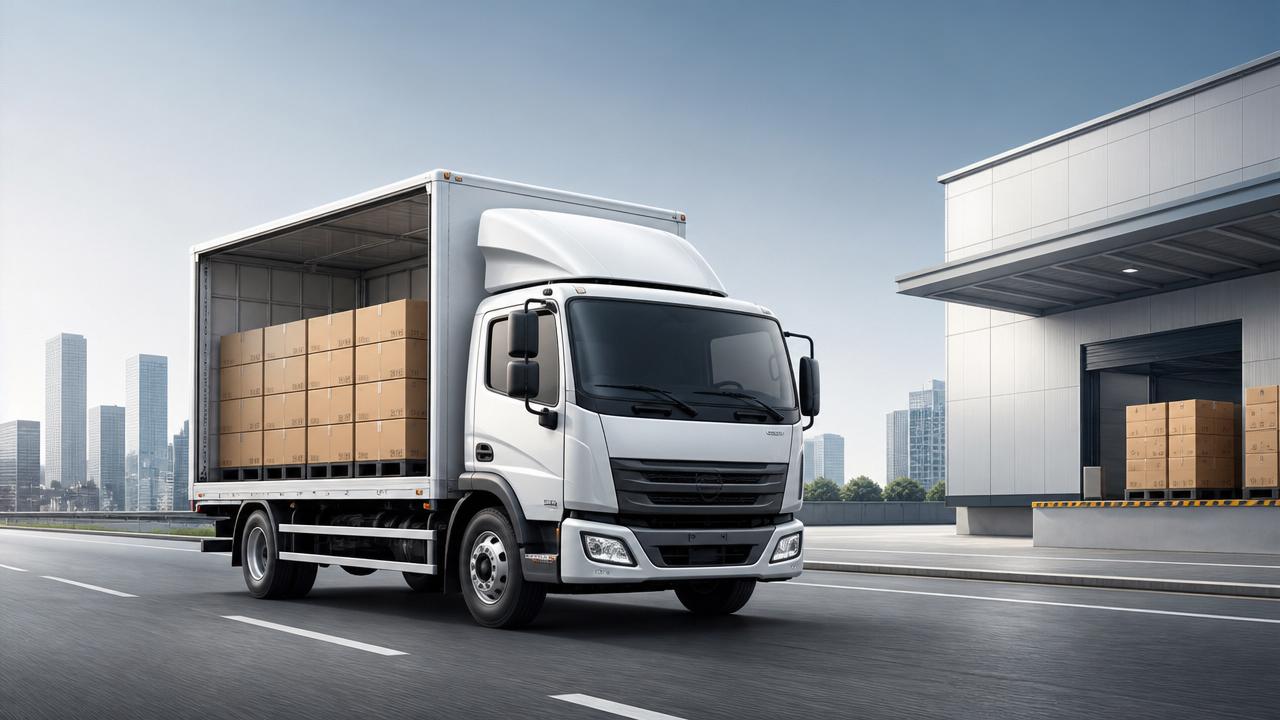
For finance decision-makers evaluating urban fleet efficiency, understanding 4_2 Cargo Truck fuel costs and payload limits is essential to controlling total delivery expenses. The right vehicle can improve route profitability, reduce operating risk, and support stable last-mile performance. This article explores the key cost and capacity factors behind urban delivery planning, helping buyers make more accurate and investment-focused decisions.
In urban delivery, the numbers often look simple at first. Fuel, payload, route count, and maintenance seem easy to compare. In reality, small differences in truck specification can change monthly operating cost much more than expected.
That is why a 4_2 Cargo Truck should not be judged only by purchase price. The better question is how it performs under city traffic, stop-start conditions, loading restrictions, and real delivery frequency.
Why fuel cost and payload limit matter together
A low fuel bill means little if the truck carries too little. At the same time, a high payload rating means little if fuel consumption rises sharply in dense urban traffic.
For a 4_2 Cargo Truck, the most useful measure is cost per effective delivery ton or cost per completed route. This helps connect engineering data with actual operating return.
Urban delivery also creates a special challenge. Trucks rarely run in ideal highway conditions. They idle, brake often, and carry mixed loads. That makes fuel cost and legal payload limit closely linked.
- Start with average daily mileage, not brochure mileage. Urban stop-start driving changes fuel use significantly, so real route data gives a more dependable cost baseline for each 4_2 Cargo Truck.
- Check legal payload after body configuration. Refrigerated boxes, reinforced floors, and liftgates reduce usable cargo weight, which directly affects route efficiency and cost recovery.
- Measure cost per delivered ton, not fuel cost alone. A truck with slightly higher fuel use may still lower total cost if it completes more deliveries legally.
- Review engine and transmission matching carefully. Poor matching often increases fuel burn in traffic and reduces acceleration efficiency when the 4_2 Cargo Truck runs near payload limit.
Key numbers worth checking before any fleet decision
The fastest way to avoid a weak investment is to compare operating numbers in one view. A good review should combine truck weight, usable payload, fuel use, route type, and downtime expectations.
This is where supplier strength matters. Shandong Livol Truck International Trade Co., Ltd. works as an authorized dealer for FOTON, SHACMAN, and SINOTRUK, with broad 4S network coverage and ready inventory support.
That combination helps buyers confirm specification details faster and reduce delays between selection, customization, export documentation, and delivery. For cost-focused projects, that speed matters almost as much as unit price.
- Ask for tested fuel data under partial and full load. One fuel figure is not enough, because urban delivery performance changes sharply with congestion and loading ratio.
- Confirm body dimensions against route restrictions. A larger cargo box may look attractive, but height and turning radius can reduce delivery access in older city zones.
- Calculate downtime cost per day before comparing suppliers. A cheaper truck can become more expensive if parts supply or service response is slow.
- Review export and logistics handling early. Delays in documentation, customs, or shipping can affect project cash flow and postpone revenue from new fleet deployment.
Where a 4_2 Cargo Truck performs best in urban delivery
A 4_2 Cargo Truck is often the practical middle point for city logistics. It balances payload, body length, maneuverability, and purchase cost better than many larger distribution vehicles.
Retail and supermarket replenishment
For frequent deliveries to supermarkets, convenience stores, and urban retail points, route timing matters more than maximum gross weight. The truck must unload quickly and enter tight service areas without wasting fuel.
In this case, usable payload should match average order density. Overbuying capacity often increases fixed cost without adding route value.
Building materials and light engineering supply
For light engineering materials, tools, fittings, or packaged construction supplies, a 4_2 Cargo Truck can work well if axle load is monitored closely. Dense cargo reaches legal limits much faster than high-volume consumer goods.
This is a common area where buyers focus on box volume and miss payload risk. A strong chassis and proper body selection are more important than visual size alone.
Cold chain and mixed urban distribution
Refrigerated applications need extra caution. Cooling units, insulated panels, and reinforced structure increase curb weight. That reduces net cargo allowance and changes fuel consumption.
For these operations, the right 4_2 Cargo Truck is the one that keeps temperature stability without cutting delivery volume too much. The cost model must include both diesel use and refrigeration load.
Common cost traps that are easy to miss
Many fleet decisions lose money for predictable reasons. The truck itself is usually not the only issue. The bigger problem is incomplete cost comparison.
- Do not compare empty-vehicle fuel figures with loaded-route demand. Urban delivery rarely operates under ideal test conditions, so benchmark data must reflect actual cargo patterns.
- Avoid ignoring body weight during specification approval. Every added feature reduces payload, and reduced payload can force extra trips or additional fleet units.
- Do not treat purchase price as the main savings indicator. Tire wear, brake wear, idle time, and maintenance intervals often create larger lifetime differences.
- Watch local road access rules carefully. A 4_2 Cargo Truck that fits one district may face time-window or axle restrictions in another operating area.
Another overlooked point is supply stability. When fleet expansion depends on phased delivery, authorized stock availability matters. Shandong Livol Truck International Trade Co., Ltd. supports this with sufficient inventory and coordinated export service.
That matters when a business needs more than just a vehicle. It needs customization, documentation, customs clearance, logistics coordination, and after-sales continuity without creating extra internal workload.
A practical way to compare options before approval
A clear comparison model usually makes the final decision easier. Instead of starting with brand preference, start with route economics and compliance requirements.
- List average route distance, stop frequency, and cargo density first. These three items shape the right engine, axle, and body choice more than catalog descriptions.
- Estimate monthly fuel spend using loaded city routes. Then divide by expected delivery volume to compare true operating efficiency between truck options.
- Check legal payload after all modifications are installed. Final approval should be based on usable capacity, not bare chassis specification.
- Rate supplier support on documentation, lead time, and after-sales response. For imported fleet assets, process reliability protects both schedule and cash flow.
If the goal is long-term urban delivery efficiency, the best 4_2 Cargo Truck is usually the one that keeps cost predictable. Stable fuel performance, legal payload, and reliable support often beat the lowest headline price.
With authorized access to FOTON, SHACMAN, and SINOTRUK models, plus full-process export support, Shandong Livol Truck International Trade Co., Ltd. offers a practical base for comparing vehicle choices against actual delivery economics.
The next useful step is simple: match one real urban route set with two or three candidate specifications, then compare fuel use, payload, service access, and total monthly cost side by side. That approach usually reveals the right 4_2 Cargo Truck much faster than price comparison alone.
Search Starts Here