
News
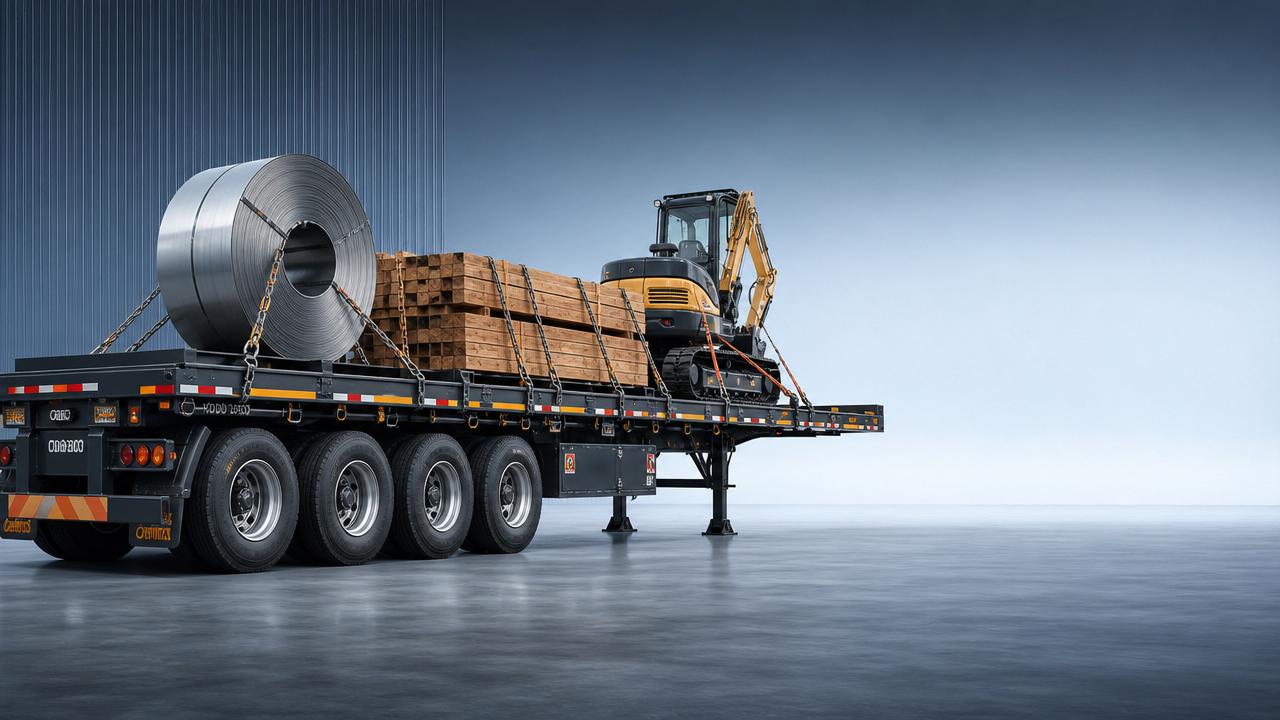
Choosing the right Flatbed Semi-Trailer is essential for safe, efficient transport of steel, timber, and machinery. The right trailer improves loading flexibility, cargo stability, and operating costs while meeting the demands of different road and jobsite conditions. For operators and fleet users, understanding key factors such as load capacity, deck design, axle configuration, and durability can make daily transport more reliable and profitable.
Why does Flatbed Semi-Trailer selection matter so much in heavy cargo transport?
A Flatbed Semi-Trailer looks simple at first glance, but cargo type changes everything. Steel coils, timber bundles, and construction machinery create very different loading pressure, center-of-gravity behavior, and securing requirements.
For operators, the wrong trailer often causes slow loading, uneven axle loads, deck damage, poor maneuverability, and higher maintenance cost. In demanding engineering vehicle operations, these issues directly affect uptime and transport safety.
A well-matched Flatbed Semi-Trailer should help you do four things consistently:
- Carry the required payload without overstressing the frame, suspension, or tires.
- Support safe loading and unloading by crane, forklift, or ramp according to cargo shape.
- Provide enough lashing points, deck strength, and stability for long-distance road transport.
- Match local road limits, operating terrain, and maintenance capability in your market.
Different loads create different trailer priorities
Steel usually demands concentrated load strength and reliable anti-slip securing. Timber often needs a long usable deck, easy side access, and resistance to repeated forklift loading. Machinery transport may require reinforced structure, lower deck height, and better load distribution for point loads.
That is why a buying decision should not start with price alone. It should start with your real operating pattern.
Which Flatbed Semi-Trailer features are most important for steel, timber, and machinery?
Before comparing suppliers, operators should define the cargo profile. The table below helps connect typical cargo types with key Flatbed Semi-Trailer requirements in engineering vehicle applications.
This comparison shows why one standard flatbed design cannot serve every job equally well. A suitable Flatbed Semi-Trailer balances structure, deck geometry, and daily operating convenience.
Key technical points to check
- Frame design: Check beam section, reinforcement strategy, and how the frame handles concentrated or uneven loads.
- Deck material: Timber decking, steel flooring, or combined layouts should match cargo friction, wear, and maintenance habits.
- Axle and suspension: Mechanical suspension may fit rough use and simple maintenance, while air suspension can improve ride quality and cargo protection.
- Brake system: Reliable braking performance matters even more when the load is dense and compact, such as steel or machinery.
- Lashing arrangement: The quantity and location of tie-down points should support different cargo lengths and securing methods.
How should operators match deck design and axle configuration to real working conditions?
Deck length and axle count are not just catalog items. They affect legal loading, turning radius, tire wear, and how quickly a Flatbed Semi-Trailer can be loaded at site.
If your routes include port roads, industrial zones, mining access roads, or uneven construction sites, the trailer should be specified for those realities, not only for highway travel.
Practical selection logic
- Start with maximum legal payload and typical cargo dimensions, not occasional extreme loads.
- Confirm whether your cargo creates distributed load or concentrated load on limited deck areas.
- Review road conditions, bridge restrictions, turning space, and loading equipment available at both ends.
- Check whether maintenance teams can support the chosen suspension, axle brand standard, and brake components.
- Consider whether future business may include different cargo categories that require flexible trailer use.
The following table provides a practical Flatbed Semi-Trailer selection view based on operating conditions, cargo, and usage frequency.
In daily operation, the best configuration is usually the one that minimizes compromise. It should be strong enough for your heaviest normal load and flexible enough for your most common loading method.
What mistakes do buyers often make when choosing a Flatbed Semi-Trailer?
Many fleets focus too much on headline payload or initial purchase cost. That can create hidden costs later through deck repairs, suspension problems, cargo damage, and inefficient loading.
Common selection mistakes
- Ignoring cargo density: Steel may fit within weight limits but still overload a local section of the deck.
- Choosing only by deck length: A longer trailer is not always better if the turning environment is tight or loads are compact and heavy.
- Underestimating securing needs: Insufficient tie-down points can slow operations and increase safety risk.
- Overlooking maintenance realities: Sophisticated configurations are not ideal if parts supply or service capability is limited locally.
- Skipping compliance review: Legal dimensions, axle load rules, and braking requirements vary by destination market.
Why early specification review saves money
A careful review before order confirmation usually saves more than negotiating a small unit discount. It reduces rework, avoids under-specification, and helps the trailer perform as expected from the first delivery cycle.
This is especially important for export procurement, where changes after production or shipment can delay projects and increase landed cost.
How to evaluate cost, durability, and long-term operating value?
The cheapest Flatbed Semi-Trailer on paper may become expensive after a year of hard use. Operators should compare lifetime value, not only purchase price.
A realistic cost review should include maintenance frequency, tire wear, deck repair, downtime, and how easily the trailer can switch between cargo categories.
Useful cost evaluation checklist
- How many loaded trips per month will the trailer complete?
- Will the deck face sharp steel edges, wet timber, or tracked machinery?
- Are spare parts and service consumables easy to source in your country?
- Does the design reduce loading time enough to improve fleet turnover?
- Can one Flatbed Semi-Trailer cover multiple tasks without frequent modification?
For many users, the best value comes from a robust mid-to-heavy-duty specification with practical reinforcements rather than an extreme custom design for only one rare load type.
What compliance and export details should not be ignored?
When sourcing a Flatbed Semi-Trailer internationally, product suitability includes more than structure. Buyers also need clarity on documentation, destination regulations, and compatibility with local operating standards.
Important compliance review points
- Overall dimensions and axle configuration should align with local road regulations.
- Lighting, reflective markings, braking arrangements, and coupling systems should be confirmed for the destination market.
- Packing, shipping method, and customs document requirements should be checked before production release.
- If the trailer will be paired with existing tractors, kingpin height and compatibility details should be verified early.
Shandong Livol Truck International Trade Co., Ltd. supports buyers through vehicle selection, configuration confirmation, documentation, customs clearance, and logistics coordination. For users who need a commercial vehicle and trailer procurement plan rather than a single product quote, this full-process support helps reduce operational uncertainty.
As an official authorized domestic and overseas dealer for FOTON, SHACMAN, and SINOTRUK, and with a network of authorized 4S stores and available inventory in China, the company is positioned to support stable supply, faster response, and coordinated export handling for engineering vehicle customers.
Flatbed Semi-Trailer FAQ for operators and fleet users
How do I choose a Flatbed Semi-Trailer for both steel and timber?
Choose a balanced design with a strong frame, durable deck, sufficient tie-down points, and a usable deck length suited to your most frequent timber loads. If steel is dense and heavy, ask for reinforcement details and confirm how concentrated loads are handled across the deck and axle group.
Is a standard flatbed suitable for machinery transport?
It depends on machine size, point-load intensity, and loading method. Compact machinery may fit a standard Flatbed Semi-Trailer if the deck and frame are properly reinforced. Heavier or taller equipment may require a lower deck concept or a more specialized transport solution.
What should operators check before placing an order?
Confirm payload target, cargo dimensions, axle arrangement, deck material, suspension type, tie-down layout, road regulations, and tractor compatibility. Also check expected delivery timing, spare parts planning, and export documentation requirements.
How important is customization in Flatbed Semi-Trailer purchasing?
Customization is important when your cargo shape, loading equipment, or destination rules differ from standard assumptions. Reasonable customization can improve daily efficiency and safety, but it should remain practical to maintain and compliant for the target market.
Why choose us for Flatbed Semi-Trailer sourcing and export support?
For buyers in the engineering vehicle sector, choosing a supplier is not only about product availability. It is about whether the supplier can help match the trailer to cargo, route, tractor, compliance needs, and delivery schedule.
Shandong Livol Truck International Trade Co., Ltd. combines commercial vehicle export experience with practical supply capability. Our team can help you review Flatbed Semi-Trailer requirements for steel, timber, and machinery transport, then coordinate suitable configurations together with tractor head options when needed.
- Parameter confirmation: payload, deck length, axle layout, suspension, and cargo securing points.
- Selection support: matching trailer configuration to operating roads, cargo type, and fleet usage.
- Customization discussion: deck reinforcement, practical layout adjustments, and compatibility planning.
- Delivery planning: inventory coordination, production scheduling, shipping, and customs documents.
- After-sales communication: spare parts planning and service support coordination for export customers.
If you are comparing Flatbed Semi-Trailer options, contact us with your cargo type, target payload, route conditions, local regulation requirements, and expected delivery timeline. We can support product selection, quotation discussion, configuration confirmation, and export process planning based on your actual transport task.
Search Starts Here