
News
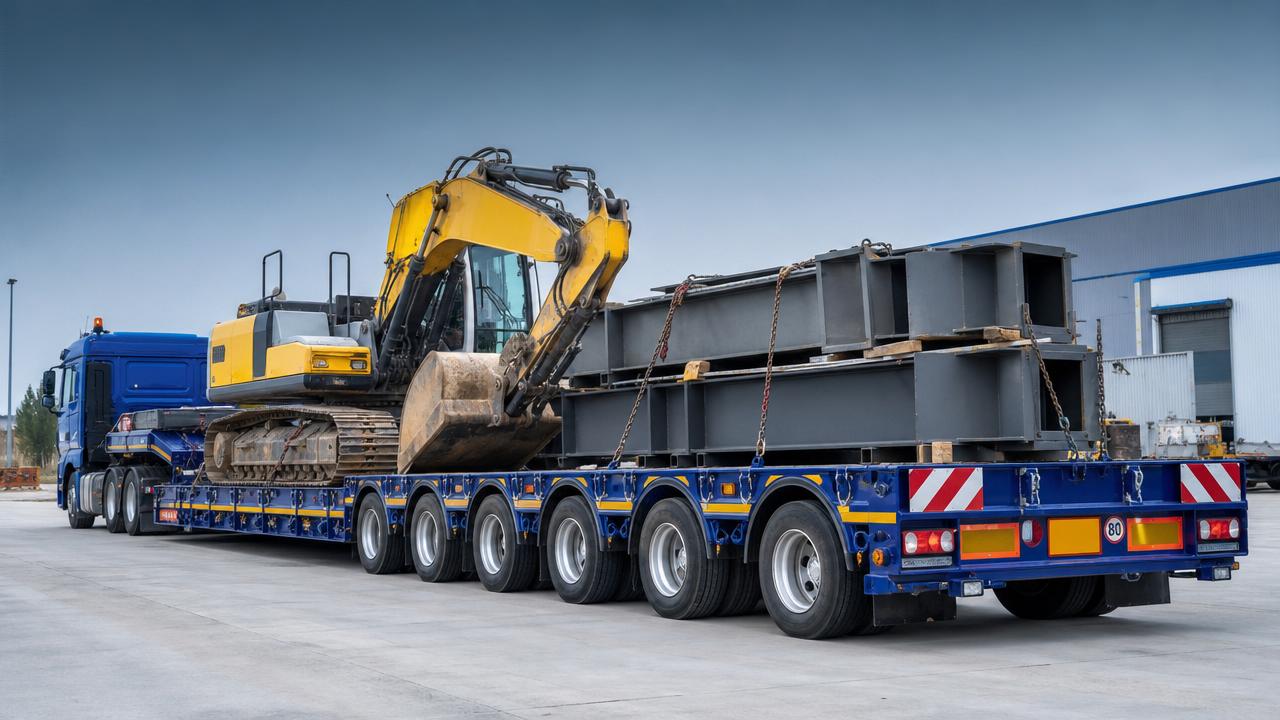
Flatbed Semi-Trailer load capacity is more than a catalog figure. In engineering transport, it shapes route planning, fuel use, loading speed, tire life, and jobsite safety.
That is why transport efficiency cannot be judged by payload alone. A trailer that looks strong on paper may underperform if its structure, axle layout, or deck design does not match the cargo profile.
For projects involving machinery, steel sections, precast components, or mixed construction loads, the right Flatbed Semi-Trailer must balance legal compliance with practical durability.
This balance matters even more in cross-border sourcing. Exporters with stable supply, technical coordination, and after-sales support help reduce selection risk when buyers compare different engineering transport solutions.
Why load capacity matters beyond maximum payload
In simple terms, load capacity is the trailer’s ability to carry cargo safely under real operating conditions. It includes structural strength, axle support, suspension response, and weight distribution.
A Flatbed Semi-Trailer used for engineering vehicles often faces uneven surfaces, frequent loading cycles, and concentrated point loads. These conditions can reduce usable capacity compared with nominal ratings.
Transport efficiency improves when the trailer carries the intended load without overdesign or underdesign. Overdesign adds dead weight and cost. Underdesign increases maintenance, downtime, and safety exposure.
The practical question is not only “How many tons can it carry?” It is also “How consistently can it carry that load on the routes, surfaces, and loading patterns that the operation actually uses?”
The main factors that determine Flatbed Semi-Trailer capacity
Several variables work together. Looking at one parameter in isolation often leads to a poor technical judgment.
Axle configuration and load sharing
Axle count strongly affects how weight is distributed. A two-axle trailer may suit lighter, more frequent transport, while three or four axles support heavier engineering cargo.
More axles do not automatically mean better efficiency. They add tare weight, increase tire and brake maintenance, and may reduce maneuverability on restricted sites.
The key is load sharing. Poor axle balance can overload one group even when gross weight remains within limits.
Chassis material and frame design
High-strength steel allows a Flatbed Semi-Trailer to retain structural rigidity while reducing self-weight. That usually improves payload efficiency, especially on long-haul construction routes.
Still, material grade alone is not enough. Cross-member spacing, main beam height, welding quality, and reinforcement around stress zones determine how the frame behaves over time.
Trailers carrying excavators, rollers, or modular site equipment need stronger support in concentrated load areas than trailers carrying evenly distributed steel coils or pallets.
Deck length, width, and cargo contact pattern
A long deck increases loading flexibility, but it also changes bending stress and turning behavior. Capacity must be reviewed together with deck geometry, not treated as a separate number.
Contact pattern matters just as much. Tracks, outriggers, or narrow support points can create intense local pressure. In that case, the deck and substructure need extra reinforcement.
Suspension, tires, and braking system
Mechanical suspension is often chosen for robustness and simplicity. Air suspension may improve ride stability for sensitive cargo, but suitability depends on route conditions and maintenance capability.
Tire load rating and brake performance directly affect safe operating capacity. A strong frame cannot compensate for underspecified running gear.
What the industry is paying closer attention to
Engineering transport has become less tolerant of generic trailer selection. Project schedules are tighter, regulatory enforcement is stricter, and cargo values are rising.
As a result, buyers increasingly compare the real transport envelope of a Flatbed Semi-Trailer, including legal gross combination weight, axle-by-axle limits, and loading method compatibility.
There is also more attention on lifecycle cost. A trailer with slightly higher purchase cost may deliver better long-term value if it reduces tire wear, structural fatigue, and unplanned workshop time.
For international procurement, documentation quality has become a technical issue as well. Clear specifications, compliant export paperwork, and accurate configuration records reduce handover problems.
How capacity should be judged in engineering transport
In actual business, a Flatbed Semi-Trailer is rarely used in a perfect test environment. Capacity evaluation should begin with the load profile, not with the brochure headline.
Match the trailer to the cargo shape
Construction machines, generators, pipe bundles, and fabricated steel sections impose different stresses. Weight alone does not define transport difficulty.
A heavy but balanced load may be easier to carry than a lighter load with a high center of gravity or irregular support points.
Check route and regulatory limits early
Bridge rules, axle limits, road category restrictions, and cross-border regulations may cut usable payload before the trailer reaches its structural limit.
That is why technical selection should combine trailer data with operating geography. A compliant load plan often matters more than a higher nominal rating.
Consider the tractor and the full combination
A Flatbed Semi-Trailer does not work alone. Fifth-wheel load, tractor power, gear ratio, braking coordination, and suspension compatibility all affect real transport performance.
This is especially relevant when pairing trailers with FOTON, SHACMAN, or SINOTRUK tractors in engineering fleets. The best result comes from reviewing the full vehicle combination.
Selection signals that deserve closer review
A technical review becomes more reliable when it goes beyond headline specifications. Several details often reveal whether a Flatbed Semi-Trailer is suited to demanding use.
- Main beam dimensions and reinforcement at high-stress zones.
- Axle brand, rated capacity, and spare parts availability.
- Deck thickness and anti-slip treatment for machinery loading.
- Suspension type based on route roughness and maintenance conditions.
- Brake system specification for loaded downhill control.
- Quality records, inspection process, and export configuration accuracy.
These points become even more useful when the supplier can support customization, documentation, and logistics coordination instead of only quoting a basic unit price.
Why supply capability and service support also affect efficiency
Trailer selection is technical, but delivery execution also matters. A well-specified Flatbed Semi-Trailer loses value if configuration errors delay shipment or create mismatch on arrival.
This is where a supplier with inventory depth, brand authorization, and export experience brings practical value. Stable sourcing shortens lead time and reduces replacement risk.
Shandong Livol Truck International Trade Co., Ltd. operates with this wider supply perspective. Its access to FOTON, SHACMAN, and SINOTRUK resources supports coordinated trailer and tractor planning.
Its export service scope, including selection support, customization, paperwork, customs handling, and logistics, is relevant because transport efficiency starts before the trailer enters service.
A practical way to move from comparison to decision
A useful next step is to build a capacity checklist around actual operating conditions. Start with cargo weight, footprint, center of gravity, loading frequency, and route restrictions.
Then compare Flatbed Semi-Trailer options by axle arrangement, frame design, deck strength, running gear quality, and combination compatibility with the intended tractor.
When the review is grounded in real engineering transport demands, capacity becomes a measurable performance factor rather than a marketing number. That is usually where better efficiency decisions begin.
Search Starts Here