
News
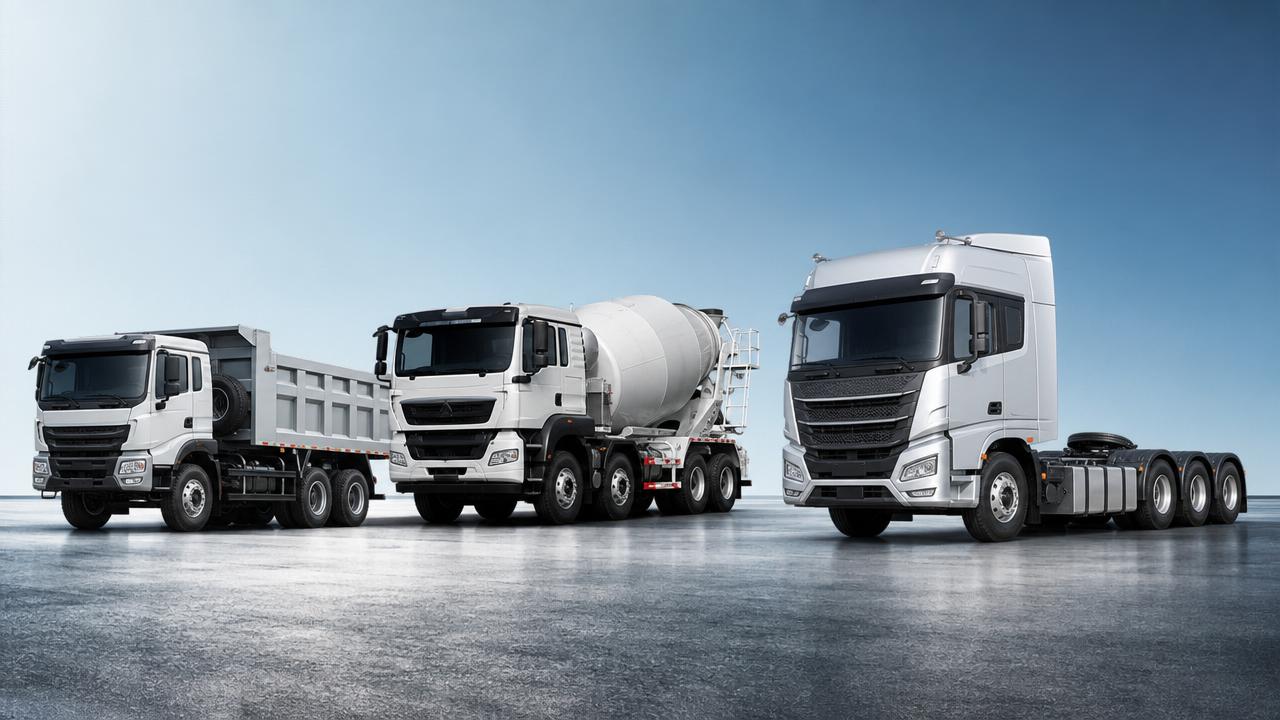
Comparing truck specs should not slow down your sourcing process. With the Cangshan Vehicle Configuration List, buyers can quickly review key data such as engine, payload, dimensions, axle setup and application fit before making a decision. For researchers exploring engineering vehicles, this guide shows how to compare configurations faster, reduce confusion and identify the most suitable commercial vehicle options with greater confidence.
In the engineering vehicle sector, small specification differences can create large operational consequences. A 20-ton payload class truck with the wrong axle ratio, a mixer with limited ground clearance, or a dump truck body that does not match local material density can affect uptime, fuel use, tire wear, and project efficiency within the first 30 to 90 days of use.
That is why the Cangshan Vehicle Configuration List matters for information researchers, fleet planners, and import buyers. It turns scattered technical sheets into a structured comparison tool. Instead of checking 10 separate brochures, you can review engine power bands, cab options, wheelbase ranges, loading dimensions, and intended applications in one place.
For buyers working with Chinese commercial vehicle exporters, speed and clarity also influence commercial decisions. Shandong Livol Truck International Trade Co., Ltd., based in Shandong, China, supports overseas customers with vehicle selection, customization, documentation, customs clearance, logistics coordination, and after-sales communication across multiple engineering vehicle categories from FOTON, SHACMAN, and SINOTRUK.
Why the Cangshan Vehicle Configuration List Is Useful for Fast Engineering Vehicle Evaluation
A well-built Cangshan Vehicle Configuration List does more than display technical data. It creates a decision framework. For engineering vehicles, buyers typically compare at least 6 core variables: engine output, transmission type, axle configuration, gross vehicle weight, body dimensions, and application suitability. When these items are presented in a uniform format, comparison time can drop from several hours to less than 30 minutes for a short list of 3 to 5 vehicles.
What researchers usually need to confirm first
Most information-stage buyers are not ready to request a final quote on day one. They usually want to verify whether the truck fits road conditions, legal load limits, terrain, and work cycle requirements. For example, a construction contractor may first filter vehicles by 4x2, 6x4, or 8x4 layout, then narrow the list by engine power such as 240–340 hp or 340–460 hp, depending on hauling distance and gradeability requirements.
- Identify the truck category: dump truck, concrete mixer, cargo chassis, tractor head, or special engineering support vehicle.
- Check operating environment: urban roads, quarry routes, mining access roads, port yards, or mixed terrain.
- Match legal and practical load needs: payload target, cubic volume, and axle load limits.
- Review serviceability factors: parts availability, standard engine family, and maintenance access points.
How a configuration list reduces sourcing errors
Without a structured comparison method, buyers often focus only on price and horsepower. That creates risk. Two trucks may both use 375 hp engines, yet one may be better for highway aggregate transport while the other is better for heavy off-road movement because of suspension type, reduction axle design, or frame reinforcement. The Cangshan Vehicle Configuration List helps isolate these less obvious but critical differences.
The table below shows a practical way to organize quick comparison criteria for engineering vehicle research.
The key takeaway is simple: a fast comparison is only useful if the fields are relevant to actual engineering work. A strong Cangshan Vehicle Configuration List should show not only what the truck is, but also where it fits best.
How to Compare Specs Fast Without Missing Important Details
Fast evaluation does not mean superficial evaluation. The best approach is to compare in layers. Start with 4 or 5 primary filters, remove non-matching units, then move to the second layer of application details. In most engineering vehicle procurements, this 2-step method can eliminate 50% to 70% of unsuitable options before pricing discussions begin.
Step 1: Filter by mission profile
Ask what the vehicle will do for 70% to 80% of its working hours. A dump truck serving municipal debris transport needs different suspension tuning and body configuration than one moving stone from a quarry. A concrete mixer in dense urban delivery may prioritize compact turning and compliant dimensions, while a remote site mixer may require a stronger chassis and better road adaptability.
Use these first-pass filters
- Application type: hauling, mixing, construction support, or chassis conversion.
- Load pattern: light-medium, heavy, or repeated overload risk.
- Road condition: paved, broken pavement, mud, gravel, or off-road incline.
- Distance band: below 50 km, 50–150 km, or long-haul mixed operation.
- Local compliance: axle count, emission level, and body size restriction.
Step 2: Compare technical fields that affect cost of operation
After mission filtering, focus on fields with direct operating impact. For many engineering vehicles, the highest long-term cost drivers are fuel consumption, tire wear, service intervals, and downtime linked to poor configuration matching. That means transmission ratios, rear axle rating, suspension layout, and chassis reinforcement deserve as much attention as engine power.
The following table can be used as a quick-read checklist when working through a Cangshan Vehicle Configuration List.
If a buyer compares only brochure headline data, the wrong unit may still appear competitive. If the same buyer reviews these technical fields in sequence, the list becomes much more practical and reliable for shortlisting.
What to Look for in Engineering Vehicle Configurations by Application
Different engineering tasks reward different configurations. This is where the Cangshan Vehicle Configuration List becomes especially valuable, because it helps connect technical data to actual work conditions rather than treating all trucks as generic transport equipment.
Dump trucks for construction, quarry, and earthmoving
Dump trucks usually require the closest review of frame strength, axle durability, body material, and tipping support. For short-haul heavy material movement, 6x4 and 8x4 layouts are common. Buyers should compare body volume with material density, because sand, gravel, and rock produce very different practical loading results even in the same box size.
A useful rule is to review 3 dimensions together: nominal payload, cargo body volume, and route condition. A truck that looks efficient on paper may underperform if the route includes steep grades, unstable site roads, or sharp turning points that reduce cycle speed.
Concrete mixers and site supply vehicles
For mixers, drum capacity is important, but it should not be the only comparison point. Buyers should also check wheelbase, chassis balance, water tank arrangement, and engine reserve power. On urban delivery routes, a smaller turning radius and compliant overall dimensions can be more valuable than maximum drum volume.
Service planning also matters. If a mixer works 2 to 3 shifts during peak project months, maintenance access and spare part consistency can affect productivity more than a small difference in rated power.
Tractor heads and chassis for conversion projects
Some engineering buyers need chassis platforms for tank, crane, municipal, or special body conversion. In these cases, the Cangshan Vehicle Configuration List should include frame length, axle spacing, PTO compatibility, cab style, and available electrical interfaces. These details reduce the risk of modification delays after shipment or after the vehicle reaches the body builder.
- Check whether the base chassis supports intended body mounting dimensions.
- Confirm suspension and frame suitability for auxiliary equipment weight.
- Review documentation needs for export, customs, and local registration.
- Align spare parts strategy before the first batch of 1 to 10 units arrives.
Common Risks When Reading a Configuration List Too Quickly
Speed is useful, but oversimplified reading creates risk. Buyers often assume that one specification sheet tells the full story. In reality, engineering vehicles can differ in hidden durability factors, local compliance suitability, and adaptation requirements even when the visible dimensions are similar.
Risk 1: Focusing on headline specs only
Horsepower, payload, and cab appearance are easy to compare, but they do not fully define field performance. A 340 hp truck with proper axle matching may outperform a 380 hp truck in daily site work if the second vehicle uses a less suitable gear ratio or carries unnecessary dead weight.
Risk 2: Ignoring export and market-entry details
Engineering vehicle selection is not only about product data. Documentation, packing method, shipping schedule, and customs readiness also shape project timing. A typical export cycle may include 3 stages: configuration confirmation, paperwork preparation, and logistics execution. Delays often happen when technical options change late or when compliance requirements are checked too late.
Risk 3: Missing service implications
Parts support, repair accessibility, and after-sales communication should be considered during specification comparison, not after delivery. For fleets running 5, 20, or 50 units, even a 1-day maintenance delay per vehicle can affect contract fulfillment. Buyers should therefore compare not only the truck itself, but also the export partner’s operational support capacity.
This is one reason many overseas buyers work with exporters that maintain authorized dealership resources, stable inventory, and multi-brand supply options. A broader supply base can shorten response cycles and improve flexibility when configurations need adjustment.
How to Build a Better Shortlist with Supplier Support
A good configuration list becomes more powerful when paired with a supplier that can explain trade-offs clearly. Information researchers usually move through 4 stages: initial screening, technical clarification, commercial comparison, and final adaptation review. At each stage, the right supplier should help refine the list rather than push one fixed model too early.
Questions to ask before requesting a final quotation
Before asking for CIF, FOB, or delivered pricing, buyers should confirm the exact technical baseline. That includes axle layout, cab type, emission level, tire configuration, and any body or chassis changes. If 5 items remain unclear, price comparison can become misleading because different sellers may be quoting different specifications.
The table below outlines a practical buyer-side review process.
This process is especially useful for cross-border engineering vehicle procurement, where technical mismatches can be expensive to correct after loading, shipping, or customs release.
Why multi-brand export capability matters
When buyers compare engineering vehicles from FOTON, SHACMAN, and SINOTRUK, they often find different strengths across chassis classes, cab formats, and heavy-duty configurations. Working with an exporter that can coordinate multiple authorized brand options gives researchers a more balanced basis for comparison, especially when supply timing, specification availability, and destination market preferences vary.
Shandong Livol Truck International Trade Co., Ltd. supports this process through authorized dealership resources, broad inventory access, and full-process export coordination. For many buyers, that means fewer gaps between technical selection and shipment execution, particularly when project timelines require stable supply and quick documentation handling.
Final Thoughts for Researchers Comparing Engineering Vehicle Specs
The Cangshan Vehicle Configuration List is most valuable when used as a practical decision tool rather than a simple spec sheet. It helps buyers compare engines, payload classes, axle layouts, dimensions, and application fit in a structured way, making it easier to identify the right engineering vehicle for real operating conditions.
For information researchers, the fastest path is usually a 3-part method: filter by application, compare the technical fields that affect operating cost, and confirm export readiness before final quotation review. This reduces confusion, improves shortlist quality, and supports more confident procurement planning.
If you are evaluating engineering vehicles for construction, transport, site supply, or conversion projects, Shandong Livol Truck International Trade Co., Ltd. can help you review configuration options across FOTON, SHACMAN, and SINOTRUK, while also supporting customization, documentation, logistics, and after-sales coordination. Contact us now to get a tailored vehicle selection proposal, discuss product details, and explore the most suitable commercial vehicle solutions for your market.
Search Starts Here