
News
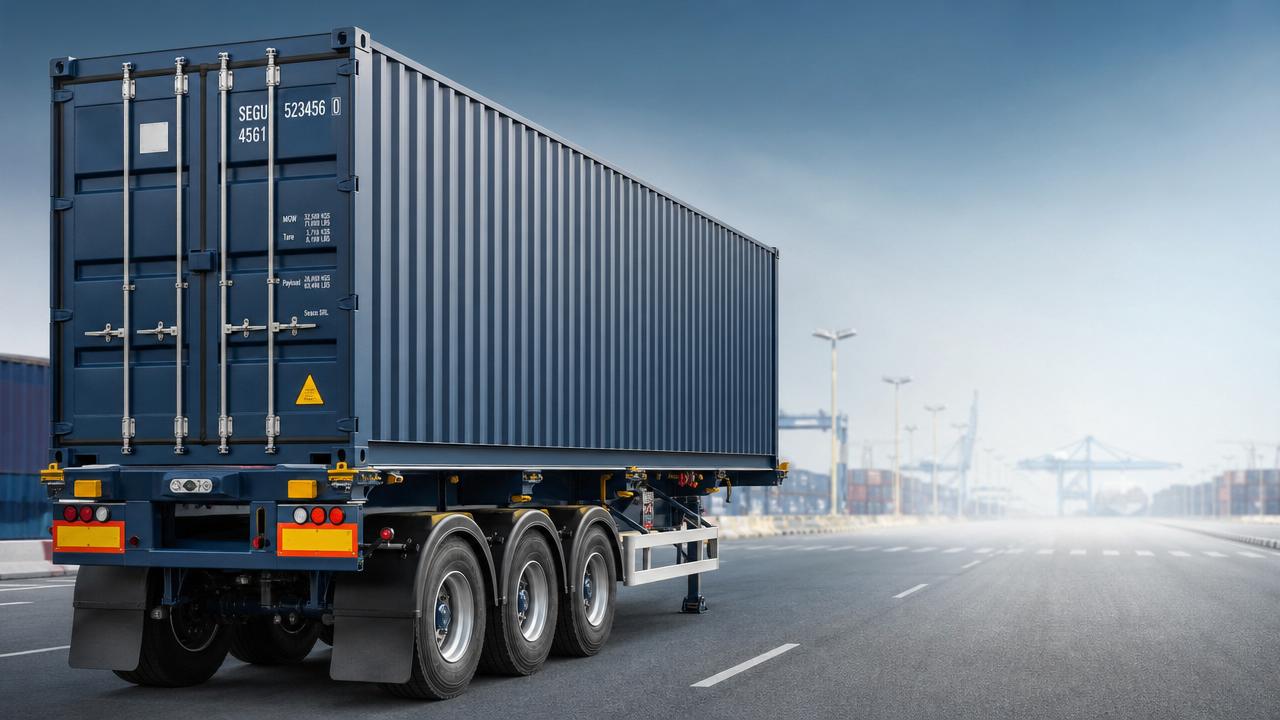
For quality control and safety managers, every Skeleton (Container) Semi-Trailer must be inspected with a clear, repeatable load safety checklist before dispatch. Container locking points, frame integrity, braking performance, suspension condition, tire pressure, and weight distribution all directly affect road safety and cargo security. This guide highlights the essential checks that help reduce transport risks, prevent costly downtime, and support compliance in container logistics operations.
Why Load Safety Checks Matter Before Every Dispatch
A Skeleton (Container) Semi-Trailer works under concentrated load, repeated twist, road vibration, and frequent coupling operations. Small inspection gaps can become severe transport risks.
For safety managers, the key issue is not only whether the trailer looks acceptable, but whether each load-bearing point performs reliably under real operating conditions.
- Incorrect locking may cause container movement during cornering, braking, port transfer, or uneven road operation.
- Frame cracks, corrosion, or deformation may reduce structural strength and increase accident probability.
- Uneven tire pressure or worn suspension components can create unstable load distribution and abnormal tire wear.
- Poor brake synchronization may extend stopping distance, especially when the trailer carries a loaded container.
A practical checklist helps quality control teams standardize decisions, reduce subjective judgment, and create traceable records for internal audits and customer delivery.
What Should Be Checked on a Skeleton (Container) Semi-Trailer?
The following inspection areas are closely linked to load safety. They are suitable for pre-delivery inspection, incoming vehicle acceptance, and daily fleet dispatch control.
This table should not replace local regulations or manufacturer instructions. It provides a practical framework for teams managing container transport quality.
Start with the container interface
On a Skeleton (Container) Semi-Trailer, the container interface is the first load security checkpoint. If twist locks do not sit correctly, other systems cannot compensate.
Inspectors should verify that locking points match the intended container size, including 20-foot, 40-foot, or 45-foot container configurations where applicable.
How to Judge Frame Integrity and Load Distribution
Frame inspection requires both visual review and operational thinking. A trailer may look straight when unloaded, yet behave differently under a full container.
Quality control teams should pay close attention to high-stress positions around kingpin areas, gooseneck sections, cross members, suspension mounting points, and rear locking zones.
- Look for paint cracking near welds, because it may indicate frame flexing or early structural fatigue.
- Check whether cross members are consistent, secure, and free from obvious impact deformation.
- Confirm that the kingpin plate is clean, properly lubricated, and without abnormal wear or looseness.
- Review loading records to avoid overloading, eccentric loading, or repeated use outside the trailer design scope.
Load distribution is not only a driver issue. Procurement specifications, container type, axle configuration, and suspension selection all influence operational safety.
Warning signs that require immediate action
If inspectors find visible cracks, abnormal tire wear on one side, repeated loose fasteners, or uneven ride height, dispatch should be delayed for further evaluation.
A Skeleton (Container) Semi-Trailer used in port, mining support, construction material transfer, or cross-border logistics may require more frequent structural inspection.
Brake, Suspension, and Tire Checks for Safer Container Transport
Braking, suspension, and tires create the active safety foundation of a Skeleton (Container) Semi-Trailer. These parts must be checked together, not separately.
A brake system can meet basic function requirements, yet still perform poorly if tire pressure is incorrect or suspension geometry has shifted after long service.
- Conduct a static air pressure review and listen for leakage around hoses, couplings, valves, and brake chambers.
- Check brake lining wear and confirm that left and right wheels respond consistently during test movement.
- Measure tire pressure when tires are cold, then compare values against the tire manufacturer’s recommendation.
- Inspect suspension fasteners, spring seats, airbags, and shock absorbers for looseness, cracks, or oil leakage.
For fleets operating in hot climates, mountainous routes, or long-distance corridors, tire and brake temperature management deserves special attention.
Procurement Checklist: Selecting the Right Skeleton (Container) Semi-Trailer
Many safety problems begin at the purchasing stage. If the trailer configuration does not match the route, cargo type, and operating frequency, inspection pressure increases later.
Before ordering a Skeleton (Container) Semi-Trailer, buyers should define container size, payload requirement, road conditions, axle preference, suspension type, brake standard, and export compliance needs.
This procurement table is useful for buyers comparing suppliers, but it should be adapted to local road law, gross combination weight limits, and operating climate.
Low purchase price is not always low total cost
A cheaper Skeleton (Container) Semi-Trailer may create higher long-term cost if the frame coating, brake components, axle quality, or after-sales support is insufficient.
Safety managers should include downtime, roadside rescue, tire replacement, inspection labor, and delayed delivery penalties in their total ownership cost analysis.
Common Inspection Mistakes in Container Trailer Operations
Even experienced teams may overlook basic items when dispatch pressure is high. A short checklist is useful only when inspectors apply it consistently.
- Checking twist locks visually but not confirming full engagement after the container is positioned.
- Ignoring small frame cracks because the trailer has not yet shown obvious deformation.
- Using the same tire pressure practice for loaded and unloaded routes without considering heat, distance, and axle load.
- Replacing individual suspension parts without checking axle alignment and load balance.
- Failing to keep inspection records, making it difficult to identify repeated defects or supplier-related quality issues.
The best approach is to combine visual inspection, driver feedback, maintenance history, and quality control sign-off before the trailer leaves the yard.
Compliance and Documentation Points for Export Buyers
International buyers often face different road rules, port requirements, and customs documentation procedures. Safety checks should therefore connect with compliance preparation.
A Skeleton (Container) Semi-Trailer may require destination-specific review related to dimensions, axle load, lighting, reflective marking, braking equipment, and vehicle identification documents.
Compliance preparation is not only paperwork. It helps ensure that the trailer can be registered, operated, maintained, and inspected in the destination market.
FAQ for Quality Control and Safety Managers
How often should a Skeleton (Container) Semi-Trailer be inspected?
A quick safety check should be completed before each dispatch. A more detailed inspection should be scheduled according to mileage, operating intensity, road conditions, and maintenance history.
High-frequency port shuttle operations, rough road routes, and heavy container transport normally require shorter inspection intervals than occasional highway use.
What is the most critical load safety point?
The container locking system is the first critical point because it directly secures the cargo unit. However, it cannot be separated from frame, brake, suspension, and tire condition.
A safe Skeleton (Container) Semi-Trailer depends on the combined performance of structural support, locking reliability, and stable road behavior.
How can buyers reduce the risk of wrong trailer selection?
Buyers should prepare a clear operating profile, including container size, typical payload, road type, climate, tractor model, local rules, and expected delivery schedule.
With this information, suppliers can recommend suitable axle, suspension, frame, brake, and locking configurations instead of offering a generic trailer.
Can one trailer handle all container transport scenarios?
A multi-purpose trailer may support several container sizes, but it still has limits. Overloading, poor route matching, or unsuitable suspension can increase maintenance and safety risks.
For mixed operations, buyers should balance flexibility with structural strength, loading frequency, road conditions, and total cost of ownership.
Why Choose Shandong Livol Truck for Trailer Procurement Support
Shandong Livol Truck International Trade Co., Ltd., based in Shandong, China, supports global customers with commercial vehicle export experience and practical vehicle selection capability.
As an official authorized domestic and overseas dealer for FOTON, SHACMAN, and SINOTRUK, we understand tractor-trailer matching, fleet operation, and export delivery requirements.
Our authorized 4S store network and sufficient vehicle inventory help customers improve supply stability, compare suitable configurations, and plan faster dispatch when schedules are tight.
- Consult us for Skeleton (Container) Semi-Trailer parameter confirmation, including container compatibility, axle configuration, suspension type, and brake matching.
- Share your destination market requirements so our team can support documentation, customs clearance coordination, and logistics planning.
- Request configuration comparison, delivery cycle discussion, quotation communication, and customization suggestions based on your actual operating routes.
- Discuss after-sales support needs, spare parts planning, and inspection priorities before confirming bulk procurement.
If your team needs a reliable Skeleton (Container) Semi-Trailer solution for container logistics, engineering transport, or cross-border fleet expansion, contact Shandong Livol Truck for a focused procurement discussion.
Search Starts Here