News
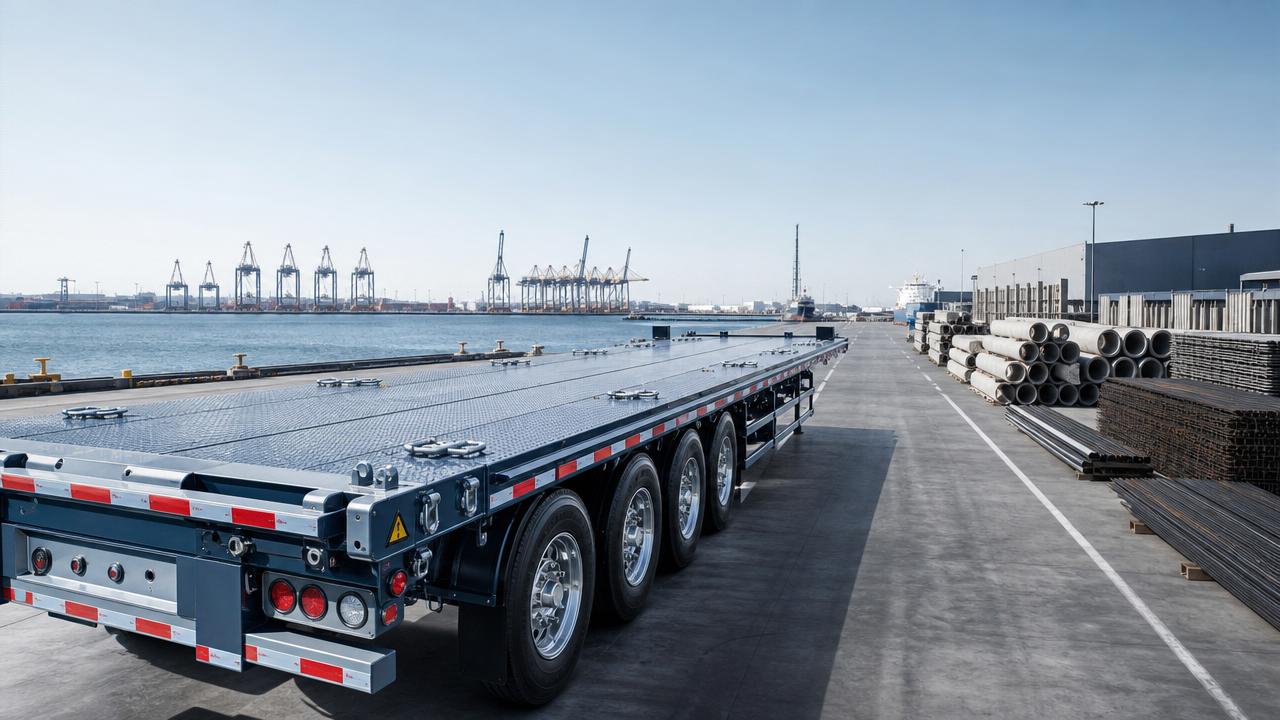
Flatbed Semi-Trailer Cost Factors to Check Before Ordering
Before ordering a Flatbed Semi-Trailer, the quoted price is only one part of the real investment.
Specifications, loading tasks, materials, axle layout, compliance, customization, shipping, and support all shape long-term operating cost.
Shandong Livol Truck helps compare these factors clearly, using authorized resources from FOTON, SHACMAN, and SINOTRUK channels.
With export experience and stable vehicle inventory, we support practical trailer selection, documentation, logistics, and after-sales coordination.
Start with the Transport Scenario, Not Only the Trailer Price
A Flatbed Semi-Trailer used for construction steel faces different stresses than one carrying containers or machinery.
The working scenario decides the needed frame strength, platform length, tire choice, suspension type, and loading accessories.
If these details are ignored, a low initial cost can become higher repair cost, downtime, or poor resale value.
A reliable order should match road conditions, cargo weight, loading frequency, and destination regulations.
Why Scenario Matching Changes the Final Cost
A heavy-duty Flatbed Semi-Trailer needs stronger steel, reinforced cross members, and suitable axles for repeated over-road loads.
A lighter model may save money when carrying moderate cargo on stable highways.
However, under-specification increases tire wear, frame fatigue, brake stress, and maintenance risk.
Over-specification also wastes budget through unnecessary tare weight, fuel consumption, and higher purchase cost.
Construction Material Transport: Check Frame and Load Margin
Construction sites often need trailers for steel bars, pipes, timber, cement boards, and prefabricated components.
In this scenario, the Flatbed Semi-Trailer must handle uneven loads, rough access roads, and frequent loading cycles.
The main cost factor is structural strength, especially the main beam material and welding quality.
High-strength steel can raise the purchase price, but it improves durability under demanding construction operations.
Side posts, rope hooks, toolboxes, and reinforced floor plates also affect the final configuration.
For construction use, it is wise to reserve load margin instead of ordering close to the maximum required weight.
Container and Port Transport: Focus on Locks, Height, and Compliance
When a Flatbed Semi-Trailer is used around ports, container locks become a key cost consideration.
Twist locks, platform height, and chassis layout must match container sizes and local loading equipment.
A cheaper trailer without suitable lock positions may require later modification.
That modification can delay operation and reduce structural reliability if not designed from the beginning.
Port roads are usually smoother, so extreme frame reinforcement may not always be necessary.
The better cost balance comes from accurate container compatibility, dependable braking, and legal axle load distribution.
Machinery Transport: Evaluate Deck Strength and Securing Points
Engineering machinery creates concentrated loads that differ from evenly distributed cargo.
Excavator parts, generators, compressors, and industrial equipment can stress small deck areas.
For this use, the Flatbed Semi-Trailer needs strong floor plates, enough cross members, and reliable lashing points.
The number and position of tie-down rings may look minor, but they affect cargo safety.
Ramps, anti-slip surfaces, and widened decks can also increase cost when loading equipment directly.
If machinery has irregular dimensions, customization should be planned before production confirmation.
Long-Distance Highway Use: Calculate Tires, Suspension, and Fuel Impact
A Flatbed Semi-Trailer running long distances needs stable handling, low rolling resistance, and serviceable components.
Tires, suspension, kingpin quality, landing gear, and braking systems all influence lifetime cost.
Air suspension may cost more than mechanical suspension, but it can protect cargo and improve ride stability.
For some markets, mechanical suspension remains preferred because parts are simple and widely available.
The right answer depends on route distance, road quality, cargo sensitivity, and maintenance resources.
Mining and Rough Road Work: Do Not Underestimate Reinforcement Cost
Rough road operations are hard on every Flatbed Semi-Trailer component.
The frame, suspension brackets, axles, tires, and weld areas must resist vibration and impact.
In such conditions, saving on steel thickness or axle quality can create expensive failures.
Reinforced structures, heavy-duty leaf springs, durable tires, and protected air pipelines may increase order price.
Yet these upgrades often reduce downtime and improve safety in remote engineering vehicle operations.
Cost Differences by Scenario
Specification Choices That Usually Change the Quotation
A Flatbed Semi-Trailer quotation changes when technical details become clearer.
Length, loading capacity, axle number, suspension, tires, brake system, and paint process are common cost items.
- Platform length affects steel usage, weight, and container compatibility.
- Rated payload decides beam size, axle specification, and braking capacity.
- Axle brand and quantity influence safety, compliance, and maintenance cost.
- Suspension type changes ride quality, repair convenience, and initial investment.
- Tire size and brand affect fuel consumption, availability, and replacement cost.
- Surface treatment improves corrosion resistance in humid or coastal regions.
These items should be compared as a full configuration, not as separate price lines.
Compliance and Export Requirements Can Affect Delivered Cost
Every destination market may have rules for dimensions, axle load, lighting, reflectors, braking, and registration documents.
A Flatbed Semi-Trailer that meets one market may need adjustments for another country.
Compliance-related changes can include side guards, ABS, electrical connectors, mudguards, or specific lighting standards.
Ignoring these requirements may cause customs delays, inspection problems, or extra modification after arrival.
Shandong Livol Truck supports documentation, customs clearance coordination, and logistics planning for international vehicle export.
Customization: Useful Upgrade or Unnecessary Expense?
Customization should solve a real operating problem, not only make the Flatbed Semi-Trailer look different.
Useful customization may include extra toolboxes, removable stakes, container locks, widened boards, or stronger lashing points.
For humid regions, better painting and anti-rust treatment can protect the frame for longer service.
For mixed cargo operations, flexible securing accessories may improve trailer utilization.
However, unnecessary upgrades add weight, cost, and possible maintenance complexity.
Scenario-Based Ordering Suggestions
- List the top three cargo types before confirming the Flatbed Semi-Trailer specification.
- Confirm maximum cargo weight, not only average operating weight.
- Check whether loading is done by crane, forklift, ramp, or container equipment.
- Match axle configuration with local legal road limits.
- Compare delivered cost, including shipping, duties, inland transport, and inspection needs.
- Ask for drawings or technical confirmation before final production.
These steps help avoid buying a Flatbed Semi-Trailer that is either too weak or unnecessarily expensive.
Common Misjudgments That Increase Total Cost
The first mistake is comparing only the trailer price, while ignoring component quality and service support.
The second mistake is choosing payload capacity without checking axle load distribution.
The third mistake is using highway specifications for mining roads or difficult construction access.
The fourth mistake is forgetting spare parts availability in the operating region.
The fifth mistake is confirming an order without checking export documents and destination compliance.
Each mistake can turn a low-cost Flatbed Semi-Trailer into a high-cost ownership experience.
Why Work with Shandong Livol Truck
Shandong Livol Truck International Trade Co., Ltd. is based in Shandong, China.
We are an authorized domestic and overseas dealer for FOTON, SHACMAN, and SINOTRUK commercial vehicles.
Our authorized 4S store network and vehicle inventory help ensure stable supply and faster delivery arrangements.
For each Flatbed Semi-Trailer inquiry, we help clarify operating scenario, technical configuration, export process, and delivery plan.
Our team also supports customization communication, documentation, customs clearance, logistics, and after-sales coordination.
Next Step: Build a Cost Checklist Before Ordering
Before confirming a Flatbed Semi-Trailer order, prepare cargo details, route conditions, target payload, and destination regulations.
Then compare configurations by total delivered value, not only factory price.
A well-matched Flatbed Semi-Trailer can improve loading efficiency, reduce maintenance pressure, and support safer engineering transport.
Contact Shandong Livol Truck to review specifications, customization options, shipping plans, and practical cost factors before ordering.
Search Starts Here