
News
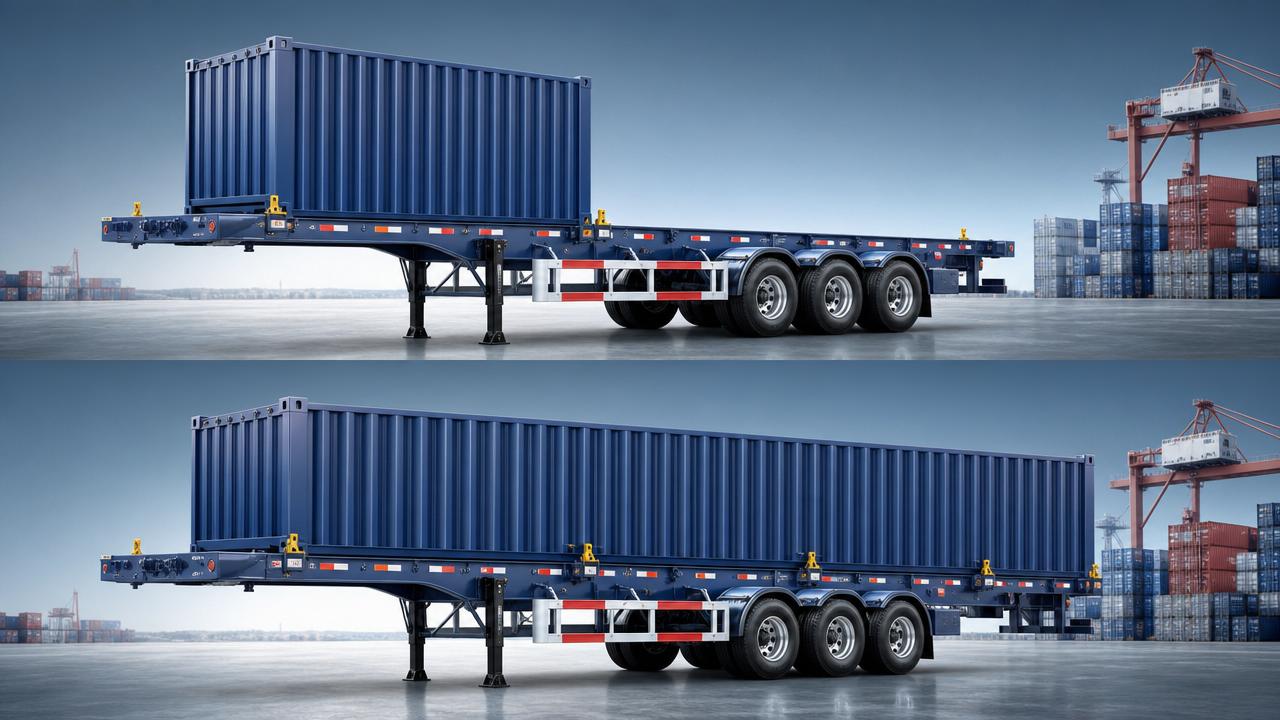
Choosing the right Skeleton (Container) Semi-Trailer for different container types is critical to transport safety, loading efficiency, and long-term operating cost. For technical evaluators, overlooking key matching factors such as container size, lock configuration, axle layout, and load capacity can lead to costly mistakes. This article highlights the most common mismatches and helps you assess trailer compatibility with greater precision.
Why does container-to-trailer matching fail so often in real projects?
A Skeleton (Container) Semi-Trailer may look simple, but its actual compatibility depends on a chain of technical decisions. Many errors happen because evaluators focus on headline payload or price, while ignoring twist lock spacing, rear overhang, neck structure, axle distribution, and local road rules.
In engineering vehicle operations, the trailer is not working in isolation. It must match the tractor, the container fleet, loading equipment, route conditions, port handling practice, and maintenance capacity. A mismatch in one link can reduce fleet efficiency across the whole transport cycle.
Technical assessment becomes more difficult when one trailer is expected to serve multiple container lengths. A flexible Skeleton (Container) Semi-Trailer can be valuable, but only if the extension mechanism, locking positions, and frame strength are designed for the intended combination of 20ft, 40ft, or other container formats.
- Procurement teams may compare quotations without aligning the actual container dimensions and operating weights.
- Operators may request a universal trailer, but the route may include weight-restricted bridges or uneven construction roads.
- Importers may overlook local homologation or axle regulations, leading to costly rework after arrival.
This is why technical evaluators need a structured review method, not just a specification sheet. A reliable exporter can support that process by checking application details before production and shipment.
What technical evaluators should verify first
Start with the transport task. Confirm whether the main operation is port transfer, inland hauling, construction project logistics, or mixed regional transport. The same Skeleton (Container) Semi-Trailer may perform very differently under these scenarios because suspension durability, chassis clearance, and tare weight priorities change.
Which container types create the highest risk of mismatch?
Before selecting a Skeleton (Container) Semi-Trailer, it is useful to compare container formats against key trailer design points. The table below highlights where mismatches typically occur during technical evaluation and purchasing.
The key insight is that container length alone is not enough. A 20ft tank container can generate a more demanding load profile than a 40ft dry container. For that reason, a Skeleton (Container) Semi-Trailer should be assessed by cargo density, center of gravity, and route restrictions together.
High cube and tank containers deserve separate attention
High cube units increase total transport height. Tank containers often create concentrated heavy loads. Both cases expose weaknesses that may not appear during ordinary dry container hauling. Evaluators should request actual operating scenarios instead of relying on generic trailer descriptions.
Common mistakes when selecting a Skeleton (Container) Semi-Trailer
1. Treating all 20ft containers as the same load case
This is one of the most frequent errors. A 20ft dry container and a 20ft tank container may share external dimensions, but they do not impose the same stress pattern on the trailer. Concentrated cargo weight affects axle loads, kingpin load, and chassis fatigue differently.
2. Choosing adjustable length without checking locking logic
An extendable Skeleton (Container) Semi-Trailer can improve flexibility, but poor lock arrangement creates operating risk. If the locking points do not align precisely with the intended container combinations, loading time increases and misuse becomes more likely in busy yards.
3. Focusing on rated payload but not tare weight
A heavier trailer may offer robust construction, but it also reduces legal payload under gross vehicle limits. In markets with tight axle restrictions, tare weight matters as much as nominal capacity. Technical evaluators should compare structural reserve against usable payload, not just maximum rating.
4. Ignoring suspension and road quality interaction
Port shuttles on paved roads and engineering project routes on rough surfaces require different priorities. Suspension type, equalization behavior, and frame reinforcement affect long-term durability. A trailer suitable for container terminals may wear quickly on construction supply routes.
5. Overlooking local compliance dimensions
Even if a Skeleton (Container) Semi-Trailer can physically carry the container, it may not comply with local regulations on overall length, axle spacing, or kingpin setting. This issue often appears in cross-border supply programs and creates delays in registration or operation.
6. Assuming one trailer design fits every tractor head
Tractor fifth wheel height and wheelbase affect trailer levelness, swing clearance, and turning behavior. If the trailer and tractor are not reviewed as a combined system, there can be uneven loading, landing gear stress, or clearance conflicts during maneuvering.
What should be included in a technical evaluation checklist?
A practical evaluation checklist helps technical teams avoid subjective decisions. For a Skeleton (Container) Semi-Trailer, the review should cover structure, operation, legal compliance, and serviceability. The goal is not only to buy a trailer that works on day one, but one that remains stable across repeated duty cycles.
- Confirm the exact container mix: 20ft, 40ft, high cube, tank, or mixed fleet ratios.
- Check twist lock quantity, layout, operation mode, and protection against misalignment or wear.
- Review axle number, axle spacing, suspension type, tire specification, and brake configuration for legal and operational fit.
- Assess chassis material thickness, cross-member design, critical reinforcement points, and corrosion protection.
- Verify tractor matching, including fifth wheel height, electrical interface, air line routing, and turning clearance.
- Evaluate maintenance access for locks, brake parts, wiring, and landing gear under local workshop conditions.
For export projects, evaluators should also ask whether spare parts support, pre-shipment inspection records, and packaging or transport arrangements are clearly defined. These practical details matter when delivery deadlines are tight.
How to compare trailer options for mixed container operations
When the fleet handles multiple container formats, technical evaluators usually compare fixed-length and extendable solutions. The following table can support a clearer selection process for a Skeleton (Container) Semi-Trailer in mixed engineering and logistics environments.
The right choice depends on actual fleet behavior. If container sizes are stable and route conditions are harsh, a fixed configuration may deliver better lifecycle control. If business volume changes by season or by project, an extendable Skeleton (Container) Semi-Trailer may justify its added complexity.
Do not compare price without operating assumptions
A cheaper option can become expensive if it increases lock damage, tire wear, or non-compliance risk. Technical evaluation should translate structure into operating consequences. That is the real basis for a sound purchasing recommendation.
How compliance, safety, and durability affect the final decision
In export-oriented commercial vehicle projects, compliance is not a paperwork detail. A Skeleton (Container) Semi-Trailer must be reviewed against destination market requirements related to dimensions, axle loading, lighting, braking, reflectors, and sometimes documentation language or inspection procedures.
From a durability perspective, the frame should be judged by expected duty cycle. Frequent heavy container turns, rough site entrances, and repeated curb impacts accelerate fatigue in cross-members, locking areas, and suspension mounting points. Protective coating quality also matters in coastal or humid environments.
- Check whether braking and lighting specifications can be adapted to destination regulations.
- Confirm that the trailer drawing and lock layout match the intended ISO container corner casting positions.
- Ask for inspection focus on weld quality, alignment, and functional testing of locking components before shipment.
These steps reduce the risk of rework and support smoother import clearance. For technical evaluators, this is often the difference between a successful procurement cycle and a delayed fleet launch.
What support from the supplier actually matters?
The quality of a Skeleton (Container) Semi-Trailer decision depends not only on the trailer itself, but also on the supplier’s ability to support technical clarification. This is particularly important for buyers managing compressed schedules, multiple brands, and export documentation requirements.
Shandong Livol Truck International Trade Co., Ltd. brings value by combining commercial vehicle export experience with practical supply coordination. As the official authorized domestic and overseas dealer for FOTON, SHACMAN and SINOTRUK, the company understands how tractor-trailer matching affects real transport performance.
Its network of authorized 4S stores across China and available inventory support stable supply and fast delivery planning. For technical evaluators, that means discussions can move beyond basic availability and focus on configuration details, compatibility checks, documentation handling, and shipment readiness.
Useful support areas during evaluation
- Trailer and tractor parameter confirmation for combined operational fit.
- Customization discussion for lock positions, axle layout, and application-specific reinforcement.
- Documentation coordination for export procedures, customs, and logistics planning.
- After-sales communication for spare parts planning and maintenance concerns in overseas markets.
FAQ: practical questions technical evaluators often ask
How do I know whether one Skeleton (Container) Semi-Trailer can handle both 20ft and 40ft containers?
Check more than the stated compatibility. Review lock positions, frame length logic, extension structure if applicable, and axle load behavior under both container lengths. If your 20ft usage includes dense cargo or tank containers, verify that concentrated load conditions have been considered in the design.
What is the most overlooked specification during procurement?
Axle load distribution is often underestimated. Buyers may focus on total payload while ignoring how the weight sits across axles and kingpin. This mistake can create legal issues, poor braking stability, and faster structural wear even when the total load appears acceptable.
Is an extendable Skeleton (Container) Semi-Trailer always the better choice for mixed fleets?
Not always. It improves flexibility, but it also introduces more moving parts, stricter operating requirements, and usually a higher purchase cost. If your container pattern is stable, a fixed solution may provide lower maintenance burden and easier operator control.
What should I ask the supplier before confirming an order?
Ask for dimensional drawings, lock configuration details, axle and suspension specification, brake setup, tractor matching assumptions, surface protection method, inspection items, and destination-market documentation support. These questions are far more useful than asking only for price and lead time.
Why choose us for Skeleton (Container) Semi-Trailer evaluation and supply support?
If you are assessing a Skeleton (Container) Semi-Trailer for port haulage, inland container transport, or engineering project logistics, the key is to confirm compatibility before order placement. Shandong Livol Truck International Trade Co., Ltd. can support that process with practical coordination across vehicle selection, customization, documentation, customs clearance, and logistics.
You can consult us on container type matching, axle layout selection, tractor-trailer parameter confirmation, delivery schedule planning, export documentation, and customization scope. If your project also involves FOTON, SHACMAN, or SINOTRUK tractors, we can help review the combined transport solution instead of evaluating the trailer in isolation.
For technical teams working under budget pressure, short delivery windows, or strict compliance requirements, early communication reduces rework and purchasing risk. Share your target container sizes, operating routes, expected payload range, and destination market requirements, and we can help you narrow the suitable Skeleton (Container) Semi-Trailer configuration for quotation and project planning.
Search Starts Here