
News
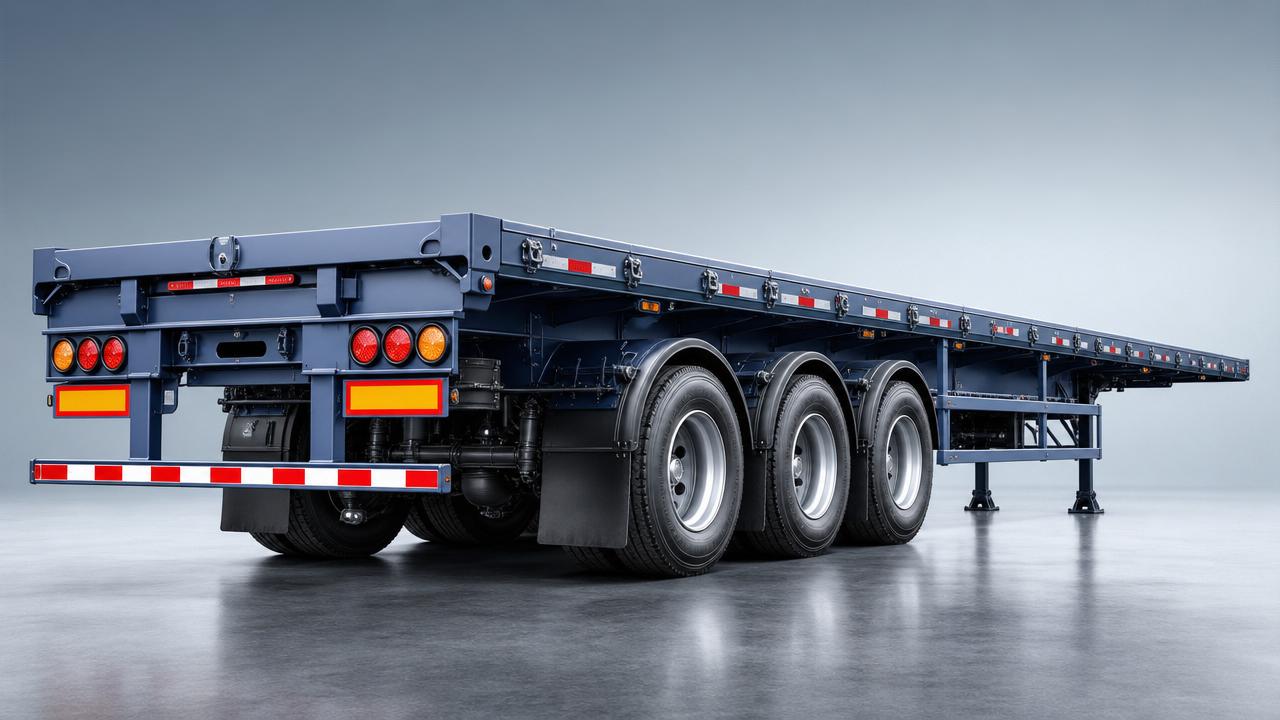
Keeping a Flatbed Semi-Trailer in peak condition is essential for after-sales maintenance teams aiming to reduce downtime, improve road safety, and extend service life.
From routine inspections to timely replacement of critical components, the right maintenance approach prevents costly failures and supports stable fleet operation.
This guide answers common questions about Flatbed Semi-Trailer maintenance, focusing on practical checks, risk points, repair timing, and service planning.
What are the most important daily inspection points on a Flatbed Semi-Trailer?
Daily inspection is the fastest way to reduce downtime on a Flatbed Semi-Trailer. Small defects often become major stoppages when ignored.
Start with tires, wheels, brake lines, suspension, lighting, reflective markings, the fifth wheel contact area, and cargo securing equipment.
Check tire pressure and tread wear every day. Uneven wear may indicate axle misalignment, overload, suspension trouble, or poor inflation control.
Inspect wheel nuts for looseness and look for cracks around rims. Heat marks near hubs may suggest bearing friction or lubrication failure.
Brake hoses should be free from abrasion, leaks, and kinks. Air loss in a parked trailer often points to valve leakage or damaged lines.
Examine the trailer deck for bends, corrosion, and cracked welds. On engineering vehicle routes, rough surfaces accelerate structural fatigue.
Locks, lashing rings, stakes, and side accessories must remain secure. Loose securing devices create cargo risk and can damage the trailer frame.
A short inspection checklist improves consistency:
- Tire pressure, tread, and sidewall cuts
- Wheel nuts, hubs, and bearing temperature signs
- Brake chamber, hoses, valves, and air leaks
- Suspension bolts, leaf springs, air bags, and bushings
- Lighting system and electrical connector condition
- Deck surface, cross members, and weld integrity
How does preventive maintenance reduce Flatbed Semi-Trailer downtime?
Preventive maintenance finds wear before it causes a breakdown. This matters even more for a Flatbed Semi-Trailer working in heavy engineering transport.
Unplanned repairs usually cost more than scheduled service. They interrupt routes, delay loading, and increase tire, brake, and suspension replacement expenses.
A preventive plan should follow mileage, operating hours, road conditions, and load intensity. Harsh construction routes require shorter service intervals.
Lubrication is a key example. Dry landing gear, worn kingpins, and neglected pivot points create friction, noise, and accelerated metal wear.
Brake adjustment also affects uptime. Delayed response, uneven braking, or excessive lining wear can stop a trailer from returning to service quickly.
Planned service records improve diagnosis. When technicians know past part changes and inspection results, they identify failure patterns much faster.
For fleets handling machinery, steel, or oversized cargo, preventive maintenance also protects deck strength and tie-down reliability during repeated heavy loading.
Suggested preventive service rhythm
A practical rhythm can be organized by operating frequency and route severity:
- Daily: tires, lights, air leaks, cargo securing parts, visible cracks
- Weekly: brake function, suspension fasteners, hub condition, deck damage
- Monthly: alignment review, lubrication, electrical testing, corrosion treatment
- Quarterly: detailed structural inspection and brake component measurement
Which components on a Flatbed Semi-Trailer fail most often in real working conditions?
The most common failure areas on a Flatbed Semi-Trailer are usually tires, suspension parts, braking components, lighting circuits, and structural connection points.
Tires fail from overload, underinflation, impact damage, and poor alignment. Construction roads with stones and edges increase puncture and sidewall risks.
Leaf springs, air suspension bags, torque rods, and bushings wear under vibration. Once looseness appears, handling and tire wear worsen quickly.
Brake linings, drums, discs, chambers, and valves are critical wear parts. Moisture, dirt, and heat reduce braking consistency over time.
Electrical faults often come from damaged connectors, poor grounding, or cable abrasion near the chassis. These failures affect lighting and safety compliance.
Structural fatigue appears around cross members, gooseneck areas, landing gear mounts, and lashing points. Heavy machinery transport increases stress concentration.
Knowing these patterns helps prioritize spare parts and workshop attention. Fast access to common items directly lowers repair time.
Warning signs that should not be ignored
- Trailer pulls to one side during braking
- Abnormal tire shoulder wear
- Repeated air pressure drop after parking
- Deck vibration or metal noise under load
- Landing gear feels stiff or unstable
- Lights fail intermittently on rough roads
How can maintenance teams judge repair timing versus replacement timing?
Not every worn part on a Flatbed Semi-Trailer should be repaired. Some items are safer and more economical to replace immediately.
Repair is suitable when wear is limited, structure remains sound, and the restored component can meet service standards without repeated downtime risk.
Replacement is better when cracks spread, dimensions exceed tolerance, corrosion affects strength, or labor cost approaches the price of a new part.
Brake linings, hoses, bushings, damaged lamps, and worn fasteners are often better replaced than repeatedly patched.
Structural members need careful judgment. Surface rust may be treatable, but deep corrosion and weld cracking require professional reinforcement or section replacement.
Downtime planning matters too. If a component is near the end of life, replacing it during scheduled maintenance prevents route interruption later.
Quick decision table for common maintenance choices
What maintenance mistakes increase Flatbed Semi-Trailer operating costs?
Several avoidable mistakes quietly raise the life-cycle cost of a Flatbed Semi-Trailer. Most are related to delayed action or incomplete inspection.
One common mistake is focusing only on visible damage. Hidden air leaks, alignment issues, and early weld fatigue often go unnoticed until failure occurs.
Another mistake is mixing unmatched parts. Low-quality brake components, bushings, or electrical fittings may shorten service intervals and create repeat repairs.
Improper tightening torque is also costly. Over-tightened fasteners damage threads, while loose fasteners create vibration, structural movement, and safety hazards.
Skipping cleaning is a hidden problem. Mud, cement dust, salt, and water trap corrosion around the chassis, landing gear, and wiring harness.
Poor maintenance records lead to repeated diagnostics. Without clear history, technicians may replace the wrong parts or miss recurring root causes.
A cost-aware maintenance culture combines inspection discipline, proper parts selection, and timely corrective action.
How can service support and parts supply improve long-term Flatbed Semi-Trailer reliability?
Reliable operation depends not only on workshop skill but also on stable parts supply and responsive service coordination.
For engineering vehicle applications, service delays often come from waiting for approved parts, technical confirmation, or export documentation support.
Working with an experienced commercial vehicle partner helps shorten these delays. It also improves access to compatible parts and maintenance guidance.
Shandong Livol Truck International Trade Co., Ltd. provides integrated support across vehicle selection, customization, documentation, logistics, and after-sales coordination.
Based in Shandong, China, the company is an authorized dealer for FOTON, SHACMAN, and SINOTRUK, with strong inventory and wide 4S store coverage.
This supply strength is valuable when maintaining transport equipment used in demanding construction, infrastructure, and heavy cargo operations.
Consistent support reduces waiting time for parts, improves maintenance planning, and helps keep each Flatbed Semi-Trailer available for work.
FAQ summary table
Effective Flatbed Semi-Trailer maintenance is built on routine checks, preventive planning, accurate repair decisions, and dependable parts support.
When these points are managed well, downtime falls, safety improves, and trailer service life becomes more predictable.
For long-term engineering transport performance, review maintenance intervals, prepare common spare parts, and strengthen inspection records across every trailer in service.
Search Starts Here