
News
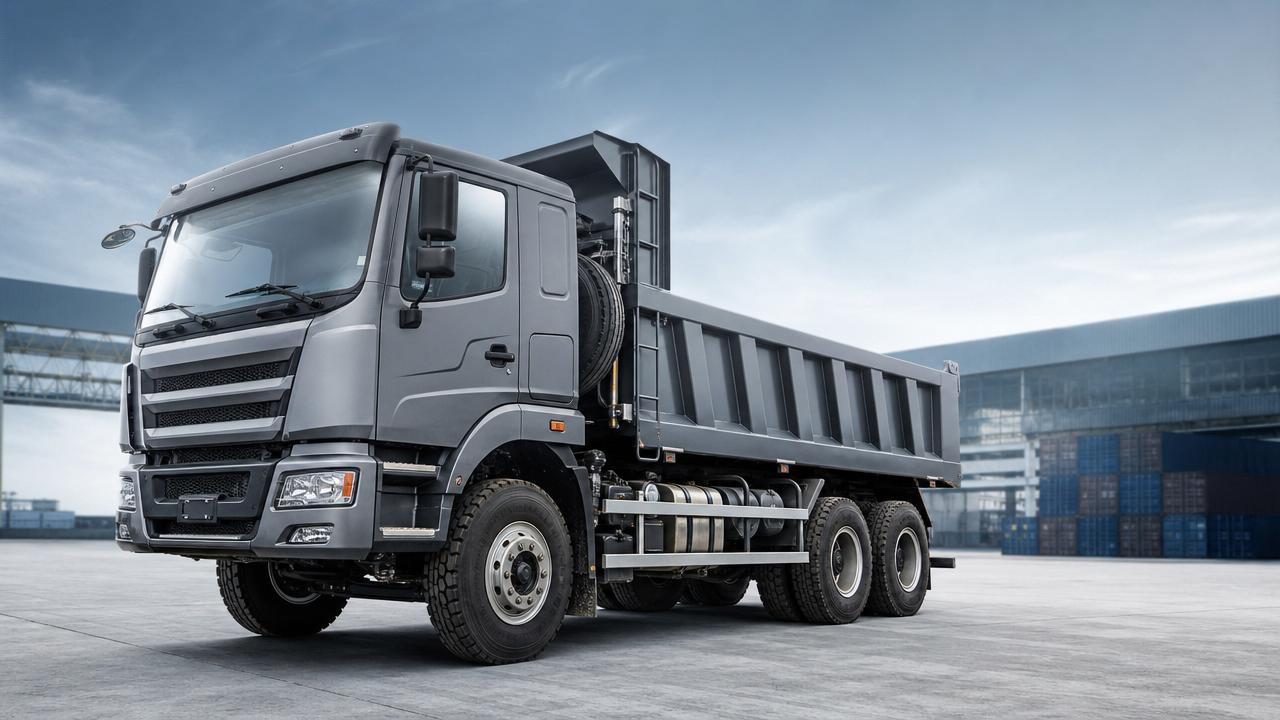
Before committing to a commercial vehicle purchase, the Cangshan Vehicle Configuration List helps business evaluators verify core specifications, compliance details, available options and overall cost-value alignment. For buyers comparing export-ready trucks from trusted suppliers, this list offers a practical basis for risk assessment and procurement planning, especially when working with experienced exporters capable of stable supply, customization and full-process international delivery support.
Understanding the role of the Cangshan Vehicle Configuration List
In the engineering vehicle sector, purchase decisions are rarely based on appearance, brochure claims or a single quoted price. Business evaluators need a structured document that shows what is actually included in a vehicle, which technical standards it follows, what optional equipment is available and how the unit fits the intended operating environment. That is where the Cangshan Vehicle Configuration List becomes important. It acts as a technical and commercial reference point before contract confirmation.
A well-prepared Cangshan Vehicle Configuration List typically summarizes the vehicle’s engine model, horsepower range, emission level, transmission type, axle ratio, suspension, tire specification, cargo body arrangement, cabin features, safety items and any market-specific adjustments. For commercial truck exports, this level of clarity reduces misunderstandings between the supplier, the buyer, the final end user and even the financing or inspection side of the transaction.
For engineering vehicles in particular, small configuration differences can have a large operational impact. A mismatch in axle capacity, tire pattern, fuel tank size or PTO arrangement may affect payload, fuel economy, site access, maintenance cost or legal road use. Because of that, the Cangshan Vehicle Configuration List should not be treated as a routine appendix. It should be treated as a decision document.
Why the industry pays close attention to configuration accuracy
Engineering vehicle procurement often involves cross-border delivery, multiple approval stages and a longer service life than ordinary passenger transport assets. Buyers may be sourcing dump trucks, cargo trucks, tractor heads or specialized site-support units for mining, construction, municipal projects or infrastructure logistics. In these environments, the wrong specification can create direct financial loss through downtime, rework, delayed deployment or non-compliance with local operating requirements.
This is also why professional exporters with strong manufacturer access matter. Shandong Livol Truck International Trade Co., Ltd., based in Shandong, China, operates as an official authorized domestic and overseas dealer for FOTON, SHACMAN and SINOTRUK, supported by authorized 4S store networks and sufficient inventory. In practical terms, this matters because a reliable exporter is better positioned to align the Cangshan Vehicle Configuration List with actual factory build conditions, supply stability, customization feasibility and export documentation accuracy.
From an evaluation standpoint, the market now expects more than a generic product sheet. Buyers want precise configuration visibility because global transport projects have become more cost-sensitive, compliance-driven and schedule-dependent. A detailed list helps evaluators connect vehicle specification with route conditions, fuel standards, local service capability and whole-life operating economics.
What information should be reviewed first
When assessing a Cangshan Vehicle Configuration List, business evaluators should begin with the items that most strongly influence performance, legal usability and future maintenance. These are not always the most visible features, but they are the most decision-critical. In most engineering vehicle projects, the first review layer should include powertrain, chassis capability, load structure, safety equipment and export conformity.
Reviewing these categories first allows evaluators to move from general interest to measurable suitability. If the Cangshan Vehicle Configuration List is incomplete in these areas, the purchase assessment should not advance to final commercial approval.
Business value for evaluators, fleet managers and project buyers
The value of the Cangshan Vehicle Configuration List goes beyond technical understanding. For business evaluators, it supports internal reporting and decision justification. A procurement team can compare competing offers on a normalized basis rather than relying on headline pricing. A finance department can better judge whether the proposed vehicle specification reflects durable value or hidden cost exposure. A project operations team can confirm whether the truck can be deployed immediately or will require modification after arrival.
This is especially relevant in export trade, where the cost of correction is much higher once the vehicle has shipped. If the wrong tires, incorrect cabin orientation, unsuitable emission level or missing hydraulic arrangement are discovered after delivery, the buyer may face delays, local retrofitting cost and warranty complexity. The Cangshan Vehicle Configuration List helps prevent such issues before they become contract disputes.
For organizations handling multiple vehicle categories, the list also supports standardization. It makes it easier to align procurement across different sites, compare units from FOTON, SHACMAN and SINOTRUK platforms where relevant, and establish a repeatable approval method for future orders.
Typical application scenarios in the engineering vehicle industry
The practical meaning of a Cangshan Vehicle Configuration List changes slightly depending on how the vehicle will be used. In engineering transport, no single specification suits every project. Buyers should read the list in relation to terrain, climate, distance, material type and local road conditions.
In each case, the Cangshan Vehicle Configuration List serves as a translation tool between intended use and final product structure. Without that translation, decisions may rely too heavily on assumptions made by sales teams or end users, which can introduce procurement risk.
How to read the list beyond the headline specifications
One common mistake is to read only the top-line figures such as horsepower, payload or body size. These are important, but they do not tell the full story. Skilled evaluators read the Cangshan Vehicle Configuration List in layers. The first layer is visible performance. The second layer is component compatibility. The third layer is long-term service practicality.
For example, two trucks may show similar engine power, yet one may be better suited for mountainous operation because of its transmission ratio and rear axle setup. Two dump trucks may have the same body volume, but one may offer better service life because of steel grade, hydraulic brand and frame reinforcement. A configuration list can reveal such distinctions when reviewed carefully.
Evaluators should also check whether the list reflects optional versus standard equipment clearly. Ambiguity here often leads to commercial misunderstanding. If air suspension, reverse camera systems, spare tire setup, additional filters or export tool kits are not explicitly marked, the final delivered unit may differ from procurement expectations.
Practical checkpoints before order confirmation
Before issuing a purchase order, business evaluators should convert the Cangshan Vehicle Configuration List into a practical approval checklist. This makes the evaluation process more disciplined and improves communication with suppliers. The most effective approach is to confirm not only what the vehicle is, but also how the supplier will deliver, document and support it.
A dependable exporter can add significant value at this stage. With a professional export team, experience in vehicle selection, customization, customs documentation, logistics coordination and after-sales support, the supplier helps ensure that the configuration list is not isolated from execution. This is one reason experienced companies such as Shandong Livol Truck International Trade Co., Ltd. are relevant to international buyers evaluating engineering vehicles. The technical list and the export process should work together.
- Confirm whether all mandatory project specifications appear in writing.
- Verify that local compliance or market-entry requirements are matched.
- Check whether optional items affect lead time, price or spare parts planning.
- Request consistency between quotation, proforma invoice and final configuration record.
- Review packaging, shipment, inspection and after-sales commitments alongside the list.
Common evaluation risks to avoid
Even experienced teams can overlook risk if they treat the Cangshan Vehicle Configuration List as purely technical paperwork. The first risk is assuming model names guarantee identical builds. In reality, the same base model can be configured differently for domestic use, export destinations, climate zones or sector-specific applications. The second risk is focusing on acquisition cost without considering maintenance implications. A lower initial price may hide future cost if the configuration uses uncommon components or lacks local service compatibility.
Another risk is weak document alignment. The technical list, commercial quotation, packing list and contract appendix should describe the same vehicle. If these documents differ, disputes become more likely. Finally, buyers should avoid approving a list without clarifying the exact boundary between standard supply and customization. Clear written confirmation is essential.
A practical foundation for informed export vehicle decisions
The Cangshan Vehicle Configuration List is more than a specification sheet. For business evaluators in the engineering vehicle industry, it is a structured decision tool that links technical suitability, compliance confidence, operational value and procurement control. It helps transform a truck order from a price discussion into a fact-based commercial assessment.
When used properly, the Cangshan Vehicle Configuration List reduces uncertainty before order placement, supports more accurate supplier comparison and improves alignment between project requirements and delivered equipment. Buyers working with experienced, authorized exporters that can provide stable inventory, customization support, documentation handling and international logistics coordination gain an additional advantage: the configuration list is more likely to translate into a reliable final delivery.
For companies assessing export-ready trucks from established Chinese commercial vehicle brands, careful review of the Cangshan Vehicle Configuration List should be a standard step in procurement planning. It is one of the clearest ways to protect value before commitment and to build a stronger foundation for long-term fleet performance.
Search Starts Here