
News
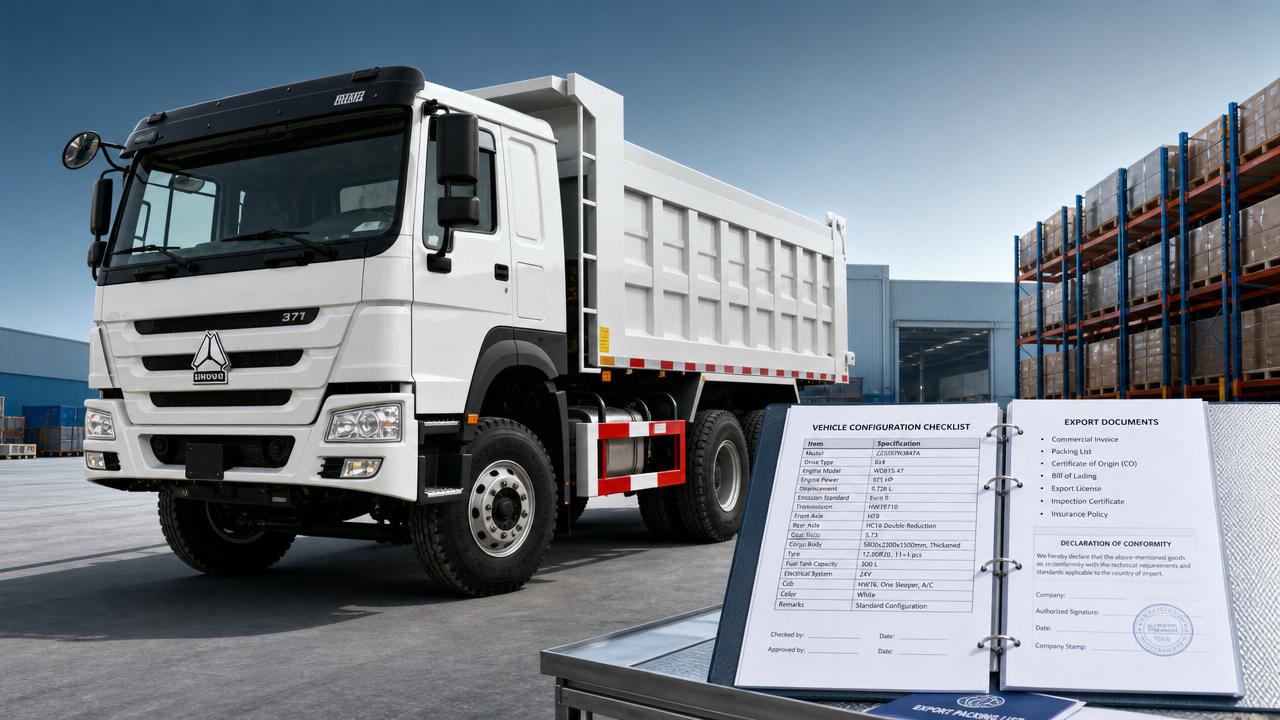
Why does the Cangshan Vehicle Configuration List matter before you place an order?
Before any engineering vehicle order is confirmed, the Cangshan Vehicle Configuration List deserves a careful review. It is not a formality. It is the document that links project demand, vehicle capability, budget and delivery expectations.
In practical terms, this list shows whether the vehicle you plan to buy is actually suited to the road conditions, payload pattern, climate and compliance requirements of the destination market.
A mismatch often starts small. The axle ratio looks acceptable. The tire specification seems close enough. The fuel tank appears generous. Later, those small assumptions turn into weak climbing ability, higher fuel use or difficult parts replacement.
That is why the Cangshan Vehicle Configuration List should be read as a decision tool, not just a technical attachment. It helps clarify what is standard, what is optional and what must be confirmed before production or dispatch.
For cross-border orders, this review becomes even more important. Vehicle export involves specification matching, documentation, customs preparation and delivery scheduling. A reliable supplier with inventory, brand authorization and export experience can reduce those risks significantly.
Companies such as Shandong Livol Truck International Trade Co., Ltd. typically support this process by combining vehicle selection, customization review, logistics coordination and after-sales preparation into one workflow. That makes the Cangshan Vehicle Configuration List easier to verify against real operating needs.
What should you read first on the Cangshan Vehicle Configuration List?
The first pass should focus on the core structure of the vehicle. Start with the model code, drive type, engine, transmission and axle arrangement. These define the vehicle’s working character far more than appearance or trim.
For engineering vehicles, the drive layout matters immediately. A 4x2, 6x4 or 8x4 configuration changes traction, payload behavior and turning performance. The right answer depends on terrain, not preference.
Engine output should be checked together with torque, emission level and fuel type. A higher horsepower number alone does not guarantee better field performance. In construction and heavy-haul work, torque delivery and durability usually matter more.
Transmission details are often overlooked. Manual, AMT or special gear ratios can affect driver adaptation, maintenance planning and fuel economy. If the vehicle will work in hilly zones or soft ground, gear matching becomes especially important.
After that, move to dimensions and weight ratings. Wheelbase, cargo body size, curb weight and GVW should all match the actual loading task. A vehicle can be legally compliant on paper and still perform poorly if body length or axle load distribution is wrong.
A useful way to screen the Cangshan Vehicle Configuration List is to ask one question repeatedly: does this specification support the project environment, or does it only look acceptable in a catalog?
Which configuration details usually decide whether the vehicle fits the job?
The answer usually lies in a few operating details rather than in the headline model name. The Cangshan Vehicle Configuration List becomes valuable when you connect each item to a work scenario.
For example, if the vehicle will be used on quarry roads, mine access tracks or temporary project routes, suspension strength, ground clearance and tire pattern need close attention. These are not secondary items.
If the vehicle is expected to travel between paved roads and job sites, a more balanced setup may be better. In that case, axle ratio, fuel tank volume and cab comfort start to influence productivity more directly.
Hydraulic systems and body design are another decision point. Dump body thickness, lifting mechanism, PTO compatibility and material choice should be matched to the actual material being transported, whether sand, stone, soil or mixed construction debris.
- Heavy stone or dense aggregate usually requires stronger body reinforcement and careful payload calculation.
- Urban project transport may need lower noise, easier maneuvering and tighter size control.
- Long-distance site supply often depends more on fuel range, service access and parts standardization.
More experienced buyers often compare the Cangshan Vehicle Configuration List against maintenance reality, not only purchase cost. A cheaper setup can become expensive if filters, tires or drivetrain parts are uncommon in the target market.
How do you compare standard configuration and optional features without overbuying?
This is where many orders become less efficient. Optional features can improve safety, uptime and operator comfort, but they can also increase procurement cost without adding real project value.
A practical approach is to divide options into three groups: operational essentials, market-specific requirements and nice-to-have upgrades. That makes the Cangshan Vehicle Configuration List easier to evaluate.
Operational essentials may include reinforced suspension, differential locks, larger tires, stronger cooling systems or fuel preheating, depending on climate and terrain. These items protect uptime.
Market-specific requirements often include left-hand or right-hand drive, local lighting standards, warning devices, emission level, language labels and conformity documents. Missing these can delay registration or import release.
Nice-to-have upgrades are different. Premium interior trim, entertainment functions or cosmetic additions may not improve project output. They should be selected only when there is a clear use case or resale reason.
When working with authorized suppliers of FOTON, SHACMAN or SINOTRUK, it is usually easier to distinguish factory-supported options from aftermarket changes. That distinction matters because it affects warranty handling, spare parts compatibility and documentation accuracy.
What compliance and delivery points should be checked before confirming the order?
Even a well-matched engineering vehicle can create problems if paperwork and delivery terms are not aligned. This part of the Cangshan Vehicle Configuration List review is often underestimated.
Check whether the listed configuration matches the documents that will support export and local clearance. Engine number format, chassis identification, emission declaration and body description should be consistent across records.
Lead time also needs attention. If a vehicle is available from existing inventory, delivery can move much faster. If it requires factory customization, the configuration freeze point should be confirmed early to avoid production changes later.
This is one reason buyers often prefer exporters with broad 4S store networks, available stock and a dedicated export team. Those strengths reduce uncertainty between selection, inspection, shipping and handover.
You should also confirm after-sales scope before the order is locked. Ask how spare parts are supported, which wear items are recommended for first shipment and whether technical guidance is available for commissioning and maintenance.
Where do buyers most often make mistakes with the Cangshan Vehicle Configuration List?
The most common mistake is assuming that one successful vehicle setup can be copied across all projects. Engineering conditions vary too much for that shortcut to work consistently.
Another issue is focusing too heavily on purchase price while ignoring total operating cost. Fuel consumption, tire life, service intervals and component durability usually shape the real economics.
Some orders also fail because the body specification and chassis specification are reviewed separately. In reality, they must be evaluated together. A strong chassis can still underperform if the upper structure is poorly matched.
Documentation gaps are another preventable problem. If the Cangshan Vehicle Configuration List is not aligned with export documents, inspection records and commercial terms, delays become much more likely.
More careful teams usually reduce these risks by preparing a short confirmation sheet before approval. It does not need to be complicated. It simply needs to connect specification, application, compliance and delivery.
- Confirm the working condition and average load profile.
- Match drivetrain and axle ratio to terrain.
- Check body design against transported material.
- Verify local compliance and document consistency.
- Review service support and initial spare parts needs.
What is the best next step before final approval?
The best next step is to turn the Cangshan Vehicle Configuration List into a practical decision checklist. That means comparing the listed setup with the real site environment, local legal requirements and expected lifecycle cost.
If there are still open questions, clarify them before the vehicle enters production or shipment planning. This is especially important for customized engineering vehicles, because late changes often affect timing and documentation.
A dependable export partner can help by reviewing specifications, confirming option logic, checking stock status and preparing the delivery process around customs and logistics. That support becomes more valuable when multiple brands or configurations are under consideration.
In short, the Cangshan Vehicle Configuration List is not only about equipment details. It is a practical filter for judging fitness, risk and long-term cost. Review it carefully, compare it with the project reality and confirm every item that could affect operation after delivery.
A better order usually starts with better questions. Once those questions are clear, the final specification becomes easier to approve with confidence.
Search Starts Here