
News
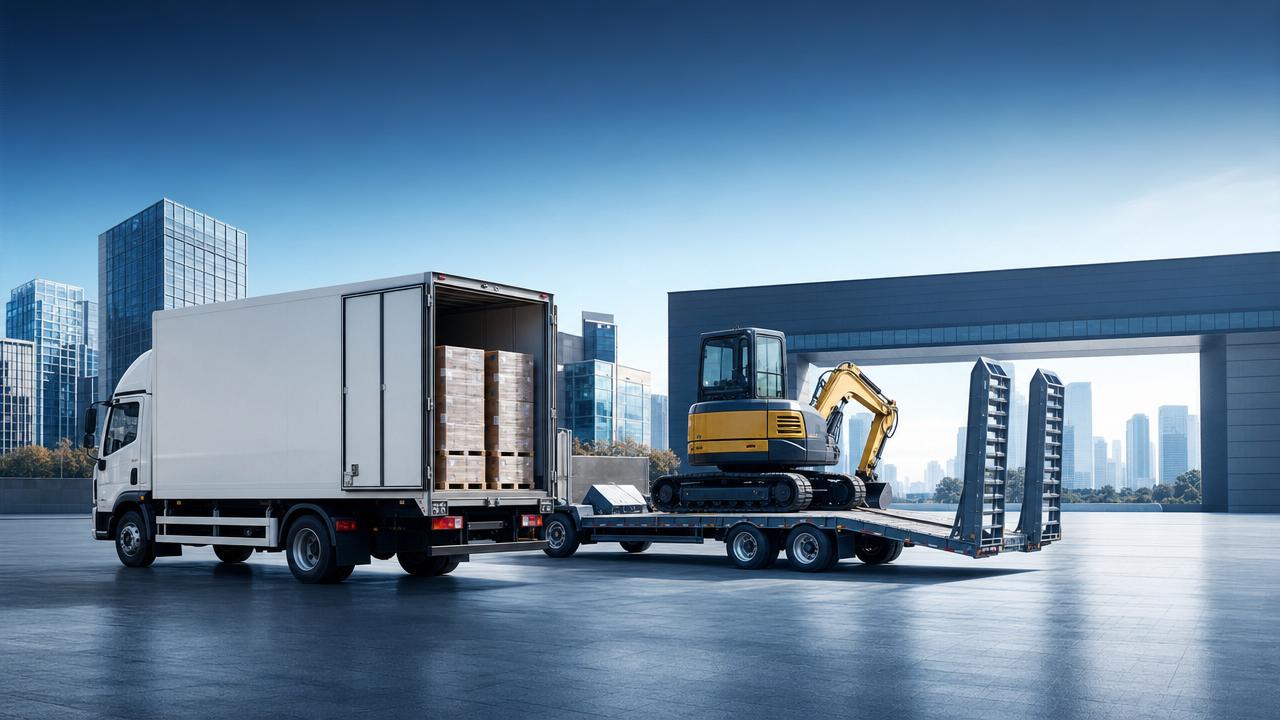
Urban delivery works on tight margins and even tighter roads. The choice between a 4_2 Cargo Truck and a low plate vehicle affects route access, loading speed, cargo safety, driver productivity, and daily cost control. In engineering vehicle logistics and city distribution, that choice matters most when fleets handle mixed cargo, frequent stops, and changing municipal restrictions. A practical comparison helps turn vehicle selection from a purchase decision into an operating advantage.
Why this comparison matters in city logistics
Urban delivery is no longer defined only by payload. It is shaped by low-emission zones, height limits, loading dock conditions, neighborhood delivery windows, and pressure to shorten turnaround time.
That is why the debate around a 4_2 Cargo Truck versus a low plate vehicle keeps returning. Both can support city operations, yet they solve different problems.
A 4_2 Cargo Truck usually offers a balanced platform for general cargo transport. A low plate vehicle often becomes more attractive when loading convenience or low center of gravity matters more than enclosed cargo flexibility.
For companies moving equipment, packaged goods, spare parts, or site materials, the wrong body type may create hidden losses. Those losses appear in labor time, damaged cargo, underused capacity, and route limitations.
Understanding the two vehicle types
A 4_2 Cargo Truck is a two-axle truck with one driven rear axle. In urban fleets, it is commonly used for box cargo, palletized goods, retail replenishment, and medium-duty distribution.
Its strength is versatility. It can be configured with van bodies, stake sides, refrigerated units, or curtain sides depending on delivery needs.
A low plate vehicle is different in purpose. Its deck sits lower to the ground, which simplifies loading and unloading, especially for heavy equipment, wheeled machines, dense cargo, or oversized items requiring better stability.
In the engineering vehicle field, low plate units are often linked with construction support, machinery transfer, and industrial cargo. Yet some urban operators also use them for special deliveries where dock compatibility is poor.
The real difference is operational fit
On paper, the two may seem close if payload appears similar. In practice, the body structure changes how fast the truck works and what type of cargo it handles well.
A 4_2 Cargo Truck favors repeatable delivery routes with protected goods and frequent urban stops. A low plate vehicle favors awkward loads, faster ground-level handling, and stable transport for heavier or irregular items.
Where a 4_2 Cargo Truck usually performs better
For mainstream urban delivery, the 4_2 Cargo Truck often has the advantage because it matches the structure of city distribution networks.
- It protects cargo from weather, dust, and theft when configured as a box truck.
- It suits palletized freight, parcel batches, consumer goods, spare parts, and store replenishment.
- It supports branding, route standardization, and easier compliance with urban transport requirements.
- It generally offers better body options for temperature control or compartmentalized delivery.
Another benefit is fleet consistency. When a company runs several routes with similar cargo, the 4_2 Cargo Truck is easier to standardize across drivers, maintenance plans, spare parts, and body repairs.
This matters when uptime is more important than maximum flexibility. Standardization lowers training needs and reduces vehicle mismatch across branches.
When a low plate vehicle becomes the smarter choice
A low plate vehicle is often the better tool when cargo handling creates the main bottleneck. That happens more often than many fleets expect.
If goods are loaded by forklift from uneven surfaces, moved without a dock, or delivered to industrial yards, the lower deck can save time on every trip.
It is also useful for short-haul urban transfers of compact machinery, generators, steel components, fabrication materials, and other dense freight with unusual dimensions.
- Loading is easier where ramps are limited.
- The low center of gravity improves stability for heavy cargo.
- Ground-level operations can reduce loading labor and waiting time.
- It adapts well to engineering support tasks inside urban project zones.
The trade-off is that a low plate vehicle may be less ideal for weather-sensitive goods, multi-drop retail distribution, or operations needing secure enclosed transport.
Key decision factors beyond basic specifications
A smarter comparison looks beyond payload and engine output. The better question is how each vehicle performs in the actual delivery chain.
What deserves attention is not only the truck itself, but also the time spent around the truck. Loading delay, route detours, and cargo securing often cost more than fuel differences.
How current market conditions influence the choice
Across many regions, urban fleets are expected to do more with fewer assets. That increases the value of vehicles that stay productive across multiple operating scenarios.
For that reason, the 4_2 Cargo Truck remains a preferred base vehicle in many city fleets. It balances road adaptability, body flexibility, and maintenance familiarity.
At the same time, infrastructure and project-based delivery patterns are creating a stronger role for low plate vehicles. Industrial parks, utility work, renovation projects, and equipment servicing all demand easier loading access.
This does not mean one vehicle replaces the other. It means urban delivery is fragmenting into more specific job types, and vehicle selection is becoming more data-driven.
What to evaluate before choosing either model
The most reliable decision usually comes from reviewing real operating patterns over several weeks rather than relying on a single peak-day requirement.
- Measure average load dimensions, not only maximum weight.
- Check how many stops require docks, forklifts, or manual loading.
- Review route restrictions on height, turning radius, and delivery time windows.
- Estimate downtime caused by difficult loading conditions.
- Compare body durability, tire wear, and maintenance access.
- Consider whether one model must cover both daily delivery and occasional engineering transport.
In many cases, a 4_2 Cargo Truck is the right answer for the main fleet, while a low plate vehicle fills a specialized support role. That mixed strategy can improve utilization without forcing one truck to do every job poorly.
Supply, customization, and lifecycle support also matter
Vehicle fit is not only about design. It also depends on how quickly the unit can be sourced, configured, delivered, and supported after handover.
That is where experienced exporters can reduce selection risk. Shandong Livol Truck International Trade Co., Ltd. works with FOTON, SHACMAN, and SINOTRUK as an authorized dealer and supports both domestic and overseas demand.
Because inventory availability, body customization, export documentation, customs coordination, and logistics planning influence total project timing, supply capability becomes part of the purchasing decision.
For buyers comparing a 4_2 Cargo Truck with a low plate solution, access to multiple brands and full-process service helps narrow the gap between technical preference and real deployment conditions.
That is especially useful when fleets operate across different regulations or require tailored axle, body, and cargo-handling configurations.
A practical way to move forward
If the cargo is standardized, protected, and delivered on repeat city routes, a 4_2 Cargo Truck will usually fit urban delivery better. If loading conditions are inconsistent and the cargo is heavier, lower, or less conventional, a low plate vehicle may create more value.
The better next step is to compare actual trips, loading conditions, and cargo profiles before locking in a body type. A short operational review often reveals whether the priority is cargo protection, loading speed, route access, or fleet versatility.
Once those priorities are clear, evaluating the right 4_2 Cargo Truck configuration or a low plate alternative becomes far more precise, and the vehicle investment is more likely to support long-term urban logistics performance.
Search Starts Here