
News
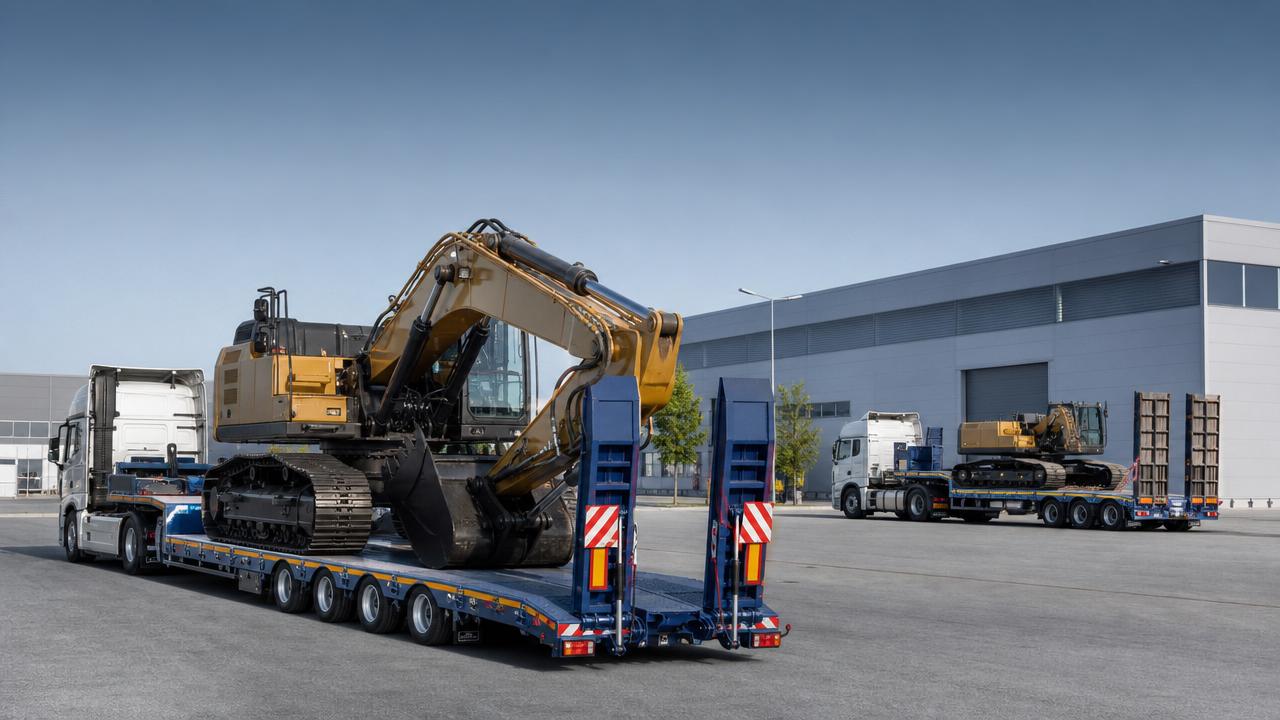
When transporting tall machinery, the choice between a flatbed and a Low Plate trailer directly affects height compliance, loading stability, and operational safety. For technical evaluators, understanding these differences is essential to avoid route restrictions and equipment damage. This article compares both trailer types from a practical engineering and transport perspective, helping you identify which option delivers better performance for oversized machinery.
In engineering vehicle logistics, this decision is rarely based on deck shape alone. It involves overall loaded height, axle load distribution, ramp angle, center of gravity, road regulation thresholds, and the loading method available at site. A trailer that works well for a 2.8 m machine may become non-compliant when the cargo height rises beyond 3.4 m.
For technical assessment teams, the most useful comparison is not “which trailer is stronger,” but “which trailer reduces transport risk for a given machine profile.” That is why Low Plate configurations are often evaluated against standard flatbeds when moving excavators, milling machines, drilling rigs, compact cranes, or other tall equipment with fixed upper structures.
Why Trailer Geometry Matters for Tall Machinery
A flatbed trailer typically has a straight deck built above the wheel set. In common commercial use, deck height often falls in the range of 1,350 mm to 1,550 mm, depending on tire size, suspension, and frame design. For tall machinery, that extra 200 mm to 450 mm of deck height can determine whether a route permit is required.
A Low Plate trailer lowers the cargo platform relative to the axle line. In practical engineering transport, deck height may be reduced to around 900 mm to 1,200 mm in the main loading zone. That difference can lower total transport height by 10% to 25%, which is significant when passing under bridges, power lines, or plant entrances.
Height Compliance Is Usually the First Filter
Many transport evaluations fail at the first checkpoint: legal or practical height clearance. A machine with a body height of 3,250 mm loaded on a 1,450 mm flatbed reaches about 4,700 mm before accounting for blocking and tire compression. The same machine on a 1,050 mm Low Plate reaches about 4,300 mm, often changing the route options completely.
In many markets, the difference between 4.3 m and 4.7 m can affect escort requirements, permit processing time, and nighttime movement restrictions. Technical evaluators therefore need to calculate loaded height as a primary transport parameter, not as a final check after trailer selection.
Center of Gravity and Lateral Stability
Tall machinery often has a high center of gravity due to cabs, booms, towers, or enclosed power units. Raising that load by even 300 mm increases rollover sensitivity during cornering, emergency lane changes, or uneven road transitions. A Low Plate trailer helps reduce this risk by keeping the machine closer to the road surface.
This is especially relevant when transport speeds vary between 20 km/h in plant zones and 60 km/h to 80 km/h on permitted road sections. The lower the load sits, the better the dynamic stability margin, especially on roundabouts, ramps, and rural roads with side camber.
Three Technical Effects of a Lower Deck
- Reduced total vehicle height, often by 200 mm to 450 mm.
- Lower center of gravity, improving handling stability.
- Shallower loading angle, reducing undercarriage contact risk.
The table below compares the core physical differences that matter most when evaluating flatbed versus Low Plate performance for tall machinery.
The key conclusion is straightforward: if the machinery is tall enough that route height becomes a planning constraint, the Low Plate usually provides a measurable operational advantage. Flatbeds remain useful, but they are less forgiving when height, balance, and loading angle all need to be controlled at the same time.
Where Flatbeds Still Make Sense
A flatbed should not be treated as the wrong choice in every case. For many engineering vehicle applications, it remains practical, accessible, and cost-efficient, especially when the machinery is wide rather than tall, or when loading equipment from the side is necessary.
In projects with repeated short-haul movements under 50 km, operators may prefer flatbeds because they are widely available, easier to allocate, and simpler to integrate into mixed fleet dispatching. If loaded height remains within local limits, the flatbed can still be the rational solution.
Best Use Cases for Flatbeds
Flatbeds are often suitable for compact loaders, attachments, steel components, pipe racks, and machinery that can be partially disassembled. If removing the mast, guard frame, or boom head reduces machine height by 300 mm to 700 mm, a flatbed may become fully compliant without requiring a specialized trailer.
They also work well where loading docks, forklifts, or cranes are available, since deck height is less critical when the machine is not self-loading by ramp. In that case, the operational focus shifts toward load securing points, axle capacity, and deck length rather than low-profile geometry.
Flatbed Advantages in Technical Terms
- Simpler structure and broad market availability.
- Efficient for standard cargo mixed with machinery loads.
- Useful when side loading or crane lifting is part of the process.
- Often easier to replace quickly during peak dispatch periods.
However, these advantages weaken once machine height approaches transport limits or when field loading conditions are uneven. A flatbed that is easy to book may still create delays if permit review adds 2 to 5 working days or if route changes become necessary after site measurement.
When a Low Plate Trailer Is the Better Engineering Choice
A Low Plate trailer becomes the stronger option when tall machinery cannot be disassembled easily, when the route includes strict overhead constraints, or when the machine’s weight distribution requires a lower and more stable loading platform. In these cases, the trailer is not just a transport tool; it is part of the safety solution.
Technical evaluators typically prefer the Low Plate for machines with body heights above about 3.2 m, for tracked equipment with low ground clearance, and for wheeled equipment with a top-heavy configuration. It is particularly useful in cross-border or multi-province transport where route flexibility saves time.
Application Scenarios That Favor Low Plate Designs
- Excavators with enclosed cabs and transport heights near 3.3 m to 3.6 m.
- Road milling machines with heavy upper structures and low front clearance.
- Compact drilling rigs and pavers where ramp angle affects loading safety.
- Plant machinery that must pass under gates with limited headroom.
Loading Safety and Contact Risk
One often overlooked factor is breakover angle during loading. Tall machinery can still be vulnerable underneath, especially if it has long wheelbase geometry, support legs, or low-mounted hydraulic elements. A Low Plate trailer usually offers a smaller transition angle, reducing contact between the machine underside and the rear loading section.
This matters in real operations, because a loading incident can cause more than physical damage. It may lead to hydraulic line deformation, chain guard cracking, or frame scraping, followed by downtime and inspection delays. Even a minor loading strike can add 1 to 2 days to project mobilization.
The following table shows a decision-oriented comparison for technical teams assessing tall machinery transport requirements.
For tall machinery, the Low Plate usually wins not because it is universally superior, but because it removes several risks at once: excess height, unstable posture, steep loading angle, and route inflexibility. When those four factors are present together, it is often the more defensible engineering decision.
A Practical Evaluation Framework for Technical Teams
To avoid selection errors, technical evaluators can use a 5-step review process before approving either a flatbed or a Low Plate trailer. This approach is useful for procurement, fleet planning, and export coordination, especially when machinery is shipped across different jurisdictions.
Step 1: Confirm Transport Envelope
Measure overall machine height, width, operating weight, and wheelbase or track length. Include removable items such as mirrors, beacon lights, handrails, and attachments. A difference of 80 mm to 120 mm can change whether special route checks are triggered.
Step 2: Review Site Loading Conditions
Check whether the machine loads by ramp, crane, forklift support, or assisted winching. Uneven ground, soft shoulders, and narrow site access can affect whether a flatbed remains workable. On remote construction sites, the Low Plate often reduces operational dependence on ideal loading conditions.
Step 3: Analyze Route Constraints
Map the route for bridge clearance, utility lines, toll station geometry, and turning radius. For medium-distance movements of 200 km to 800 km, even one low crossing can force a detour that adds fuel use, escort cost, and 4 to 12 hours of transit time.
Step 4: Verify Load Securing Points
Securement is not only about chain quantity. The tie-down angle, anchor location, and machine contact points must suit the trailer deck geometry. A Low Plate may offer a more favorable lashing posture for tall equipment because the chain angles can be lower and more balanced.
Step 5: Compare Dispatch Efficiency
If both trailer types are technically feasible, compare total movement efficiency. Include permit lead time, loading duration, escort requirements, route flexibility, and unloading conditions. A flatbed may appear simpler at booking stage, but a Low Plate can reduce total project friction over the full transport cycle.
Five Common Mistakes in Trailer Assessment
- Using machine operating height instead of transport height.
- Ignoring suspension effect on final loaded deck level.
- Checking weight but not loaded center of gravity.
- Focusing on trailer availability before route clearance review.
- Assuming all Low Plate trailers have the same deck profile.
Procurement and Export Considerations for Engineering Vehicle Buyers
For buyers sourcing transport solutions together with commercial vehicles or engineering equipment, trailer selection also affects procurement efficiency. Technical teams do not just need a trailer category; they need a supplier that can coordinate specification review, loading compatibility, documentation, and delivery timing across the full export chain.
Shandong Livol Truck International Trade Co., Ltd., based in Shandong, China, supports global buyers with integrated commercial vehicle export services. As an authorized domestic and overseas dealer for FOTON, SHACMAN, and SINOTRUK, the company combines vehicle supply capability with practical export coordination, including customization, documentation, customs clearance, and logistics support.
Why This Matters to Technical Evaluators
In many projects, the evaluation team is responsible not only for machine fit but also for delivery reliability. If a supplier can align truck head specification, trailer suitability, lead time, and shipping documents within 1 coordinated process, the risk of mismatch falls significantly. This is especially important for export orders with tight mobilization schedules.
A capable exporter should be able to support at least 4 operational layers: vehicle selection, configuration confirmation, trade documentation, and logistics planning. For buyers moving engineering vehicles internationally, this integrated approach shortens communication loops and reduces the likelihood of specification errors before shipment.
Checklist Before You Finalize a Low Plate or Flatbed Order
Before purchase or dispatch approval, technical teams should confirm the points below with the supplier or exporter.
This checklist helps buyers move from a general trailer preference to a verifiable transport decision. In technical procurement, the better choice is the one that remains compliant, stable, and executable from loading point to final destination.
Final Decision: Which Fits Tall Machinery Better?
For tall machinery, a Low Plate trailer is usually the better fit because it lowers total transport height, improves stability, and reduces loading angle risk. These three factors directly affect route access, handling safety, and equipment protection. If the machine has a high superstructure or limited clearance margin, the Low Plate should be the first option evaluated.
A flatbed still has value for standard-height equipment, shorter routes, crane-assisted loading, and mixed cargo operations. But when technical evaluators are dealing with oversized engineering machinery, the Low Plate often provides the stronger margin of safety and compliance.
If you are assessing transport equipment, truck-trailer matching, or export-ready engineering vehicle solutions, Shandong Livol Truck International Trade Co., Ltd. can support your project with professional vehicle selection, customization, documentation, customs clearance, and logistics coordination. Contact us now to discuss your machinery dimensions, route conditions, and delivery requirements, and get a tailored solution for your next transport task.
Search Starts Here