
News
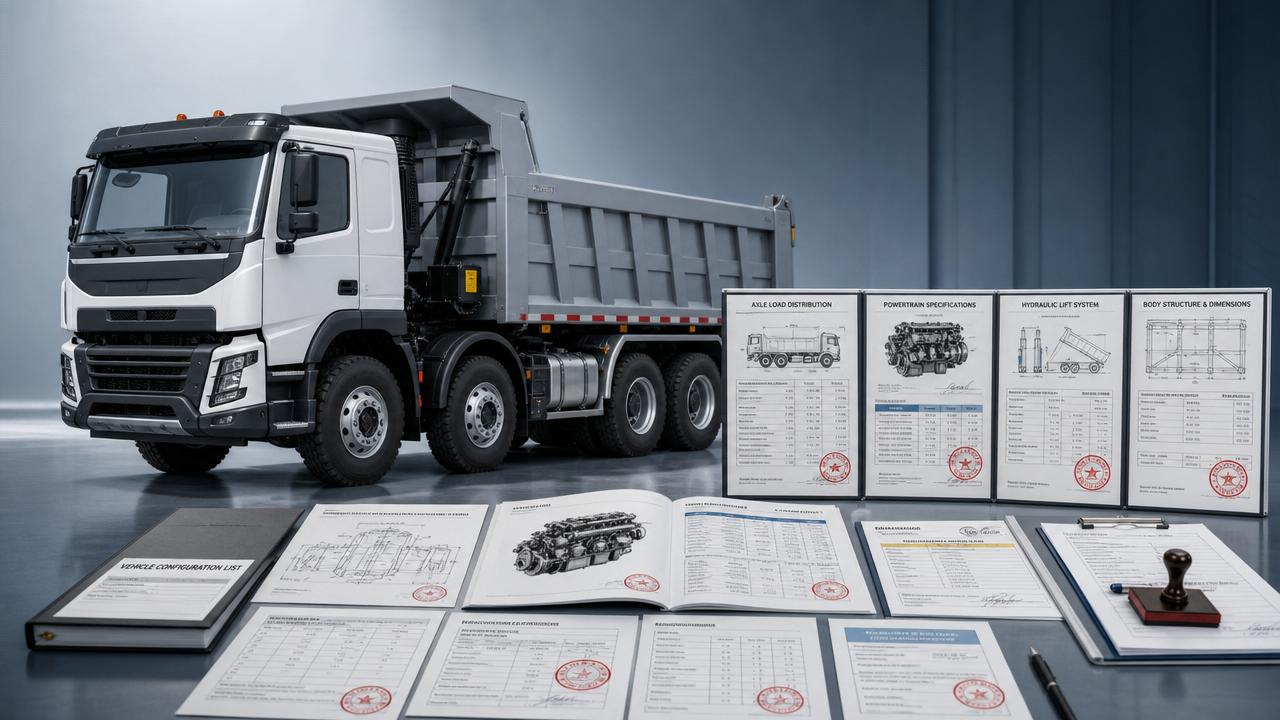
Before giving final approval, business buyers need more than a quick review—they need a clear understanding of the Cangshan Vehicle Configuration List and how each specification affects performance, compliance, cost, and delivery. For enterprise decision-makers, checking the right configuration details in advance helps reduce procurement risks, avoid mismatched vehicle setups, and ensure the selected commercial vehicle fully supports operational goals.
Why does the Cangshan Vehicle Configuration List matter before approval?
In engineering vehicle procurement, the Cangshan Vehicle Configuration List is not just a technical sheet. It is the document that connects operating conditions, legal compliance, budget control, and delivery feasibility.
For decision-makers, final approval often fails when key details are reviewed too late. A truck may look suitable on paper, yet axle load, engine output, body dimensions, hydraulic options, or documentation scope may not match the actual project.
That is why the Cangshan Vehicle Configuration List should be checked as a risk-control tool. It helps purchasing teams verify whether the vehicle can carry the required payload, operate on local roads, meet import rules, and fit service expectations after delivery.
- It confirms core technical parameters before contract signing or production release.
- It reduces the chance of rework caused by wrong body type, cab option, or drivetrain selection.
- It supports clearer communication between procurement teams, end users, fleet managers, and exporters.
- It helps compare multiple brands or variants under the same project requirements.
What enterprise buyers usually overlook
Many buyers focus first on price and engine power. In engineering vehicle projects, that is rarely enough. Tire specification, suspension type, PTO readiness, fuel tank capacity, and emission configuration can directly affect site performance and total operating cost.
A complete review of the Cangshan Vehicle Configuration List should therefore involve procurement, operations, maintenance, and compliance teams, especially when vehicles will be used across different countries or harsh work environments.
Which items on the Cangshan Vehicle Configuration List should be checked first?
The fastest way to review the Cangshan Vehicle Configuration List is to prioritize the fields that affect legal use, jobsite capability, and lifecycle cost. Start with the basic structure, then move to operational options and export documents.
The table below highlights the most important review points for engineering vehicle approval. It can be used by purchasing managers and technical approvers as a quick screening framework.
This table shows that the Cangshan Vehicle Configuration List should be reviewed as an integrated package. A strong engine cannot solve an under-rated axle, and a low purchase price cannot offset a configuration that causes import or operation delays.
A practical approval sequence
- Confirm application scenario: mining haulage, municipal work, infrastructure projects, or mixed-duty operation.
- Check legal limits: axle load, vehicle dimensions, emission stage, and local registration rules.
- Verify power matching: engine, transmission, differential ratio, and braking system.
- Review body and special equipment details required by the end user.
- Confirm delivery scope: spare parts, tools, manuals, and export documentation.
How should buyers match configuration with engineering work scenarios?
The right Cangshan Vehicle Configuration List depends on where and how the vehicle will be used. Engineering vehicles face uneven roads, high dust, overloading risk, frequent stop-start operation, and seasonal climate changes. A generic configuration may create avoidable downtime.
The following scenario comparison helps enterprise buyers link configuration choices to real operating conditions instead of selecting by catalog habit alone.
This comparison makes one point clear: the Cangshan Vehicle Configuration List should always be tested against site conditions. A vehicle approved for urban hauling may not survive quarry duty economically, while a heavy mining setup may be too costly for routine municipal work.
Scenario-based questions decision-makers should ask
- Will the truck run mostly on paved roads, mixed terrain, or off-road sections?
- Does the payload requirement reflect legal limits or only target transport volume?
- Is the duty cycle short-haul and high-frequency, or long-distance and fuel-sensitive?
- Will the vehicle need body customization, hydraulic functions, or special attachments?
Which technical details create the biggest procurement risks?
When reviewing the Cangshan Vehicle Configuration List, several technical details often create hidden procurement risks. These are not always obvious in a quotation sheet, but they have a direct impact on uptime, maintenance cost, and jobsite suitability.
Powertrain matching
Engine horsepower alone can mislead buyers. Torque output, transmission ratios, and rear axle matching determine how the vehicle behaves under full load. In engineering projects with slopes or loose ground, poor matching reduces effective hauling efficiency.
Chassis durability and load structure
The frame, suspension, and axle capacity should be checked against the real load profile, not just brochure payload figures. Continuous heavy-duty cycles require stronger structural reserves and often a different setup from standard logistics trucks.
Hydraulic and body compatibility
If the vehicle uses a tipper body, mixer, or other specialized engineering function, the Cangshan Vehicle Configuration List must confirm PTO support, hydraulic interfaces, and body integration details. Missing this step often causes retrofit delay after shipment.
Serviceability and spare parts planning
A configuration is only practical if routine service items and common replacement parts are manageable in the destination market. Enterprise buyers should ask whether filters, brake parts, suspension items, and body-related components can be planned in advance.
How can enterprises compare options without slowing down delivery?
One challenge in reviewing a Cangshan Vehicle Configuration List is balancing precision with delivery speed. Customization improves fit, but every additional change can affect lead time, production scheduling, and export coordination.
A practical approach is to divide configurations into three groups: mandatory, preferred, and optional. This allows the buyer to protect critical specifications while keeping the supply chain flexible.
Suggested decision framework
- Mandatory items: legal compliance, axle rating, body dimensions, emission setup, and safety requirements.
- Preferred items: fuel tank size, cabin comfort, tire brand preference, optional protection parts.
- Optional items: appearance details, non-essential accessories, or market-specific convenience features.
This method makes approval meetings more efficient. Procurement teams can move quickly on inventory-based or near-standard units while reserving customization only for business-critical features.
What compliance and export checks should be linked to the configuration list?
For international buyers, the Cangshan Vehicle Configuration List should never be separated from document review. A technically correct vehicle can still face delivery or registration issues if data on the invoice, packing list, chassis information, and destination requirements do not align.
In engineering vehicle exports, common checkpoints include emission stage alignment, vehicle dimensions, declared gross weight, country-specific import conditions, and consistency across core trade documents.
Key compliance checkpoints
- Verify whether the selected configuration matches local road and registration requirements.
- Confirm that weight, dimensions, and axle information are consistent across commercial and technical documents.
- Review whether any destination market requires additional labeling, inspection, or pre-shipment confirmation.
- Check whether the after-sales plan supports the selected specification in the target region.
This is where an experienced exporter adds value. Shandong Livol Truck International Trade Co., Ltd. supports customers through vehicle selection, customization, documentation, customs clearance, and logistics, helping reduce the gap between specification approval and actual delivery execution.
Why do global buyers work with a supplier that understands configuration and export together?
The Cangshan Vehicle Configuration List becomes much more useful when reviewed by a team that understands both engineering vehicle application and international trade execution. This reduces the common disconnect between what is ordered and what is finally shipped.
Shandong Livol Truck International Trade Co., Ltd., based in Shandong, China, operates as an authorized domestic and overseas dealer for FOTON, SHACMAN, and SINOTRUK. With authorized 4S store resources, available inventory, and export process experience, the company is positioned to help enterprise buyers move from specification review to delivery planning more smoothly.
What this means for decision-makers
- Faster confirmation of whether a requested specification can be supplied from stock or requires customization.
- Better coordination between vehicle selection, export documents, customs processes, and shipping schedules.
- More practical advice on aligning engineering duty needs with available commercial vehicle platforms.
- Clearer support for spare parts planning and after-sales expectations before final approval.
FAQ about the Cangshan Vehicle Configuration List
How detailed should the Cangshan Vehicle Configuration List be before approval?
It should be detailed enough to confirm chassis structure, powertrain, body function, tire and axle setup, legal dimensions, and document-related data. If any item can change operating capability, compliance, or delivery scope, it should appear clearly before approval.
Is a standard configuration always the safest choice?
Not always. Standard configurations can shorten lead time and control budget, but they may not fit harsh engineering conditions. The safest choice is the one that balances jobsite demand, compliance, and supply practicality.
What causes the most expensive mistakes in configuration approval?
Common high-cost mistakes include wrong axle capacity, missing hydraulic compatibility, unsuitable emission configuration, incorrect body dimensions, and inconsistent export documentation. These issues can trigger rework, customs delay, or poor on-site performance.
How can buyers shorten approval time without missing key checks?
Use a structured checklist, classify requirements by priority, and review the Cangshan Vehicle Configuration List jointly with technical and export teams. This approach helps isolate critical points quickly and avoids repeated approval cycles.
Why choose us for configuration confirmation and export support?
If your team is reviewing a Cangshan Vehicle Configuration List for final approval, the most useful partner is one that can support both technical matching and export execution. Shandong Livol Truck International Trade Co., Ltd. helps enterprise buyers assess vehicle parameters, compare suitable truck platforms, confirm customization scope, and coordinate documentation, customs clearance, and logistics in one process.
You can contact us to discuss specific configuration confirmation, engineering vehicle selection, delivery lead time, destination compliance concerns, spare parts planning, and quotation details for FOTON, SHACMAN, or SINOTRUK solutions. If your project has tight schedules or complex operating conditions, we can also help you evaluate whether inventory-based units or custom-built options are more practical.
A clear Cangshan Vehicle Configuration List is the foundation of a safer procurement decision. The earlier key specifications are verified, the easier it becomes to control cost, reduce risk, and keep the project moving on schedule.
Search Starts Here