
News
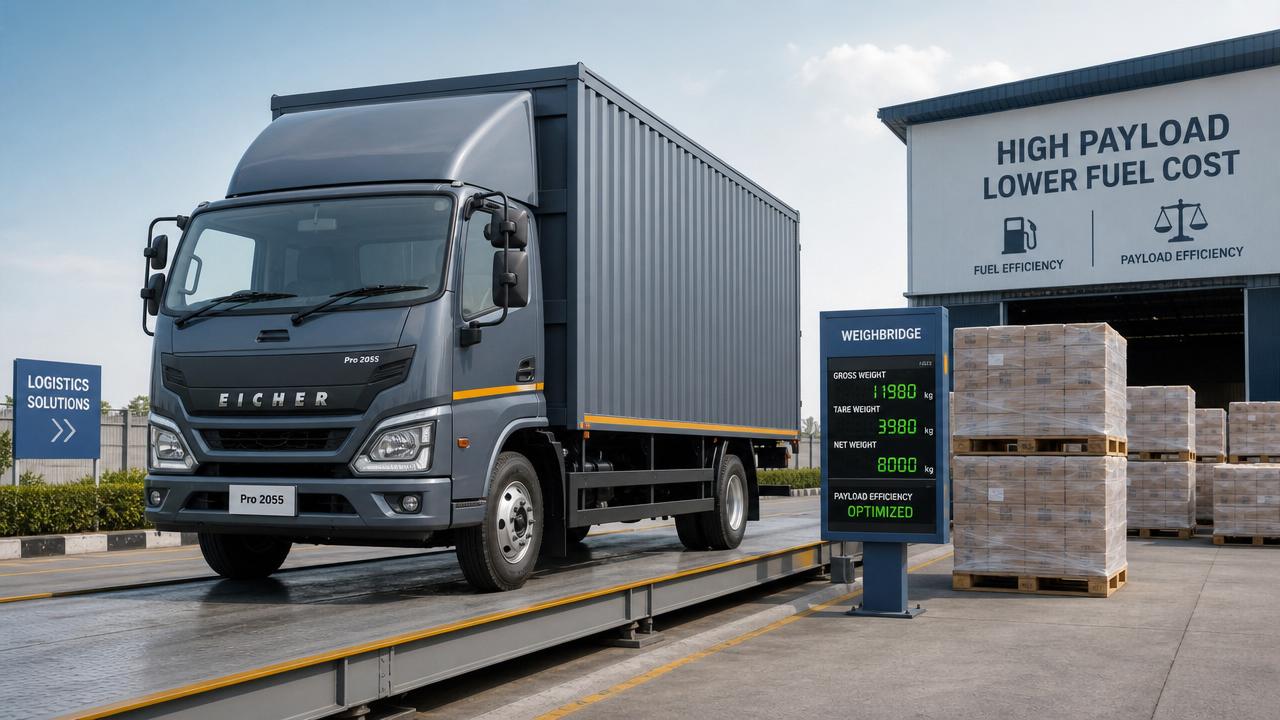
When evaluating a 4x2 Cargo Truck, financial decision-makers often focus on fuel cost first, but payload efficiency can have a greater impact on long-term profitability.
The real question is not just how much the truck consumes, but how much revenue each trip can generate.
For most buyers, payload matters most when routes, compliance limits, and utilization are stable, while fuel cost becomes decisive only when mileage is extremely high or cargo is relatively light.
In other words, a cheaper-to-run truck is not automatically the better investment if it carries less billable load, needs more trips, or reduces operational flexibility.
What Financial Approvers Really Need to Compare
If you approve vehicle purchases, your decision should go beyond liters per 100 kilometers.
The stronger financial question is: which 4x2 Cargo Truck delivers lower cost per ton delivered, higher annual revenue potential, and lower operating risk over its service life?
This shifts the evaluation from a narrow fuel discussion to a full productivity model.
A truck with slightly higher fuel consumption may still create better returns if it offers higher legal payload, better body configuration flexibility, and stronger uptime performance.
That is why payload and fuel cost should never be reviewed separately.
They are linked through route economics, delivery frequency, driver behavior, local axle regulations, and loading efficiency.
Fuel Cost Is Visible, but Payload Drives Revenue
Fuel cost is easy to see on monthly reports, so it often dominates internal discussions.
However, payload determines how much cargo each trip can move, and that directly influences earning capacity.
For finance teams, this distinction is critical.
Fuel is a cost line, but payload is a revenue lever.
If one truck carries 8% more legal cargo on each trip, the business may need fewer trips, fewer driver hours, and less scheduling pressure to move the same volume.
That improvement can outweigh a small difference in fuel economy very quickly.
Consider two trucks on similar routes.
Truck A saves fuel, but Truck B legally carries more goods and reduces total trip count across the month.
In many real operating environments, Truck B produces better total profit, even with slightly higher fuel spend.
For cargo operators, especially those serving regional distribution, construction supply, agricultural transport, or packaged goods delivery, payload efficiency often creates more meaningful financial impact than fuel consumption alone.
Use Cost per Ton-Kilometer, Not Fuel Consumption Alone
The most useful comparison metric is not simply fuel use per 100 kilometers.
It is cost per ton-kilometer, or more broadly, operating cost relative to billable payload moved.
This approach gives finance approvers a better basis for capital decisions.
It connects fuel, maintenance, payload, route distance, and utilization into one measurable business outcome.
For example, if a truck consumes less fuel but transports fewer tons per trip, its unit transport cost may actually be worse.
On the other hand, a truck with good engine efficiency and optimized curb weight can improve both fuel economy and payload economics.
When comparing 4x2 Cargo Truck options, ask for these numbers from suppliers or internal fleet managers.
Review empty vehicle weight, rated payload, average fuel use on actual routes, monthly mileage, average load factor, and expected annual working days.
With these figures, you can model the true transport cost instead of relying on brochure-level efficiency claims.
Why Curb Weight and Chassis Design Matter More Than Many Buyers Expect
Payload is not only about gross vehicle rating.
It is strongly affected by the truck’s own weight, body structure, axle arrangement, and chassis configuration.
For financial buyers, this is where hidden value often appears.
A well-designed 4x2 Cargo Truck with a lighter but durable chassis can increase legal payload without requiring a larger vehicle class.
That means the operator can move more goods while keeping acquisition cost, registration burden, and route access relatively manageable.
Body type also matters.
A stake body, van body, refrigerated body, or dropside configuration changes tare weight and therefore changes usable payload.
If the truck will be customized, the final payload after upfitting may differ significantly from base specifications.
This is why procurement teams should evaluate the complete working vehicle, not just the catalog chassis.
Experienced exporters and authorized dealers can help buyers estimate actual delivered configuration weight before purchase, which reduces budgeting errors and compliance risks.
Route Type Changes the Fuel vs Payload Decision
There is no universal answer for every operation.
The importance of fuel cost versus payload depends heavily on route structure.
For long-distance, high-mileage, relatively light-load distribution, fuel economy has greater influence because the truck spends more time driving than loading near its weight limit.
For short-to-medium regional delivery with dense cargo, repeated loading cycles, or weight-sensitive freight, payload often becomes the stronger economic factor.
Urban delivery adds another layer.
Stop-and-go traffic can worsen fuel efficiency, but urban weight restrictions, loading windows, and time pressure may make trip reduction more valuable than small fuel savings.
In construction-related transport, road conditions, body strength, and legal load margin may be more important than chasing the lowest theoretical fuel number.
Finance approvers should therefore ask one practical question first: what operating pattern will this truck spend most of its life performing?
That answer should guide the weighting of fuel cost and payload in the investment model.
Annual Utilization Often Decides Which Factor Matters Most
A truck running 120,000 kilometers per year is financially different from one running 35,000 kilometers per year.
High annual mileage magnifies fuel cost differences.
High load utilization magnifies payload differences.
The key is understanding which multiplier is stronger in your operation.
If the truck is expected to run nearly every day with stable backhaul and strong load rates, small payload improvements can create substantial annual revenue gains.
If utilization is inconsistent and loads are frequently partial, a premium paid for extra payload capacity may not be fully recovered.
This is where finance teams should model best case, expected case, and conservative case scenarios.
Do not assume peak utilization all year.
Stress-test the numbers against seasonality, route changes, fuel price fluctuation, and local freight rate pressure.
The best procurement decisions are usually based on realistic average operating conditions, not ideal assumptions.
Compliance Risk Can Erase the Value of Higher Payload
Payload only creates value when it remains legal and practical.
A truck that appears profitable on paper but regularly approaches overload risk can create fines, downtime, insurance issues, and accelerated wear.
That turns a perceived advantage into financial leakage.
For this reason, financial approvers should verify local regulations on axle loads, gross vehicle weight limits, body dimensions, and commodity-specific restrictions.
Some markets also apply stricter enforcement on regional roads, ports, or urban zones.
A compliant, properly matched 4x2 Cargo Truck is usually a better investment than an over-ambitious specification that creates operational friction.
Suppliers with export experience can help align truck specification to destination market rules, which is particularly important for overseas buyers.
This reduces the chance of buying a unit that looks efficient in theory but underperforms due to regulatory mismatch.
Do Not Ignore Uptime, Engine Match, and Parts Support
Fuel and payload are not the only numbers that affect total return.
Vehicle uptime may have a bigger financial effect than either if the truck is used intensively.
A truck that carries more and burns less fuel still fails the investment test if it spends too much time waiting for repairs or parts.
Engine and transmission matching also influence the real outcome.
A powertrain suited to actual load and terrain can improve drivability, fuel use, and component life.
An underpowered specification may look economical initially but can increase trip time, driver fatigue, and maintenance burden.
Likewise, aftermarket support matters for cash flow planning.
Reliable parts supply, trained service networks, and practical warranty handling reduce disruption and protect asset productivity.
This is one reason buyers often prefer established brands with stronger dealer systems and stock availability rather than choosing only by purchase price.
How to Build a Better Procurement Model for a 4x2 Cargo Truck
For financial decision-makers, the smartest method is to compare trucks through a structured business case.
Start with acquisition cost, financing terms, expected body customization cost, and import or delivery expenses.
Then estimate annual fuel cost based on actual route mileage, not ideal road conditions.
Next, calculate legal payload after body installation and estimate average real-world load factor.
From there, model revenue or transport output per trip, per month, and per year.
Add maintenance expectations, tire cost, downtime assumptions, and residual value.
Finally, compare the cost per ton moved and payback period across candidate trucks.
This framework helps answer the question that matters most in boardroom or procurement review: which truck improves transport economics with acceptable operating risk?
It also creates a clearer discussion with suppliers because you can request data that supports real decision criteria instead of general sales claims.
Where an Experienced Export Partner Adds Financial Value
When importing commercial vehicles, buyers are not only selecting a truck.
They are selecting a supply partner who can reduce uncertainty.
That matters greatly for finance approvers responsible for capital efficiency and execution risk.
Shandong Livol Truck International Trade Co., Ltd. works as an official authorized domestic and overseas dealer for FOTON, SHACMAN, and SINOTRUK.
With authorized 4S store resources across China, available inventory, and export experience, the company can support buyers with vehicle selection, customization, documentation, customs coordination, and logistics planning.
For purchasers of a 4x2 Cargo Truck, this can improve cost transparency before ordering and reduce delays after commitment.
It also helps align vehicle specification with actual payload needs, body requirements, and destination market conditions.
For finance teams, that means fewer hidden costs, more reliable delivery planning, and better confidence in the final total investment outcome.
So, What Matters Most: Fuel Cost or Payload?
For most commercial applications, payload matters more if the truck regularly operates near its legal carrying limit and revenue depends on moving dense or high-volume cargo efficiently.
Fuel cost matters more when annual mileage is very high, loads are lighter, or route structure reduces the value of extra carrying capacity.
But in serious procurement decisions, the right answer is rarely one or the other in isolation.
The better metric is transport profitability.
That includes fuel cost, legal payload, utilization, compliance, uptime, and support quality.
A financially sound truck purchase is the one that delivers the lowest real cost per unit of freight moved while supporting stable operations over time.
If you evaluate a 4x2 Cargo Truck through that lens, you are far more likely to choose an asset that strengthens both operational performance and long-term return.
Search Starts Here