News
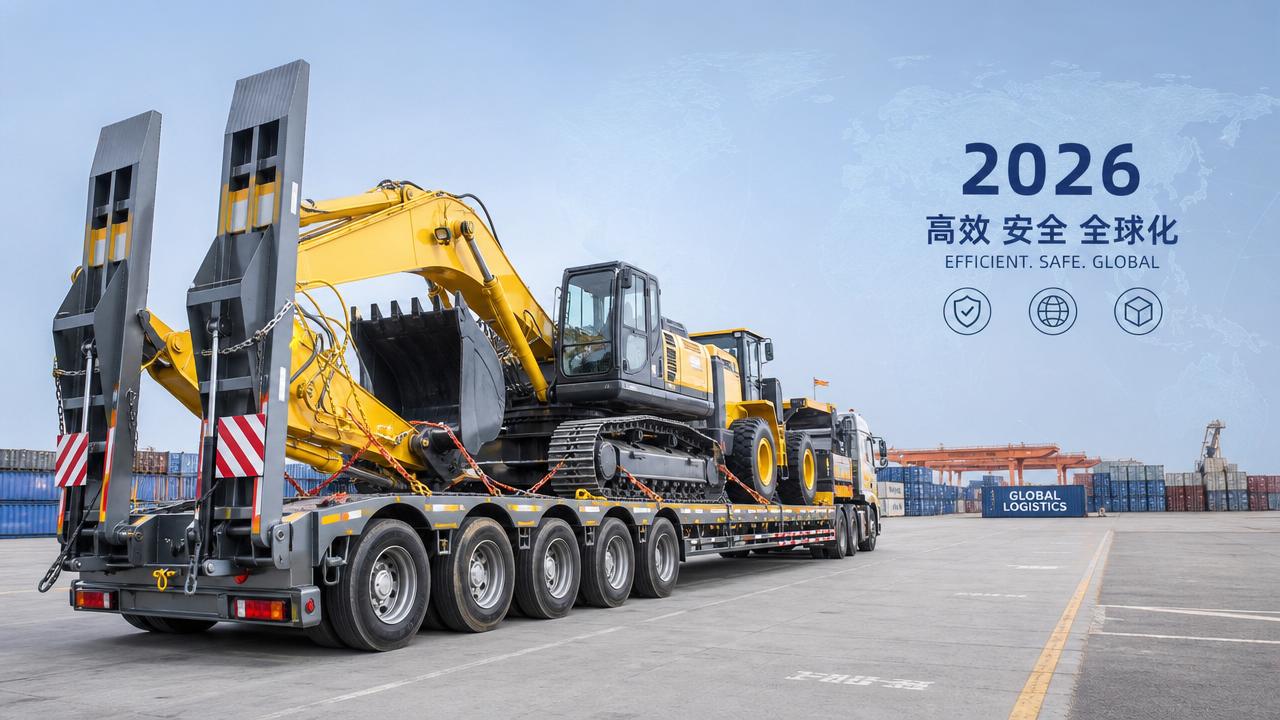
As heavy equipment logistics evolves, the Flatbed Semi-Trailer is becoming a strategic asset for companies seeking higher efficiency, safety, and cross-border transport flexibility in 2026. For business decision-makers, understanding the latest trailer trends is essential to reducing operating costs, improving load performance, and ensuring reliable fleet investment in a highly competitive engineering vehicle market.
For contractors, fleet owners, mining suppliers, and project logistics managers, trailer selection is no longer a routine purchasing task. It directly affects loading time, route compliance, cargo safety, turnaround cycles, and total transport cost over 3 to 5 years.
In engineering vehicle operations, the right Flatbed Semi-Trailer must match excavators, wheel loaders, road machinery, steel structures, and oversized equipment with different axle loads, deck lengths, and border documentation requirements. In 2026, buyers are prioritizing durability, modularity, and service support as much as initial purchase price.
For international buyers, especially those sourcing from China, stable supply, practical customization, and export execution are equally important. Companies such as Shandong Livol Truck International Trade Co., Ltd. support this demand with authorized commercial vehicle resources, nationwide inventory access, and full-process export services covering selection, customization, customs documents, and logistics coordination.
Why the Flatbed Semi-Trailer Is a Strategic Asset in 2026
Heavy equipment transport is under pressure from tighter delivery windows, rising fuel costs, and stricter road compliance rules. A well-matched Flatbed Semi-Trailer can reduce non-productive loading time by 10% to 20% in many routine project movements, especially when loading points change frequently.
Compared with unsuitable trailer configurations, a properly specified flatbed unit improves load distribution, reduces deck damage, and lowers the risk of tire overload. These factors matter when equipment weights range from 15 tons to more than 60 tons across regional and cross-border routes.
Core Demand Shifts Among B2B Buyers
Business decision-makers are evaluating trailers through a broader lens. Instead of focusing only on purchase cost, they now compare service life, maintenance intervals, adaptability to different cargo types, and lead time reliability. In many tenders, the review period includes 4 to 6 technical checkpoints before approval.
- Higher payload stability for machinery with uneven weight centers
- Deck and axle configurations compatible with local road limits
- Faster loading and unloading at construction, port, and yard locations
- Lower maintenance frequency over annual operating cycles of 30,000 to 80,000 km
- Export-ready documentation and spare parts planning
Why 2026 Is Different
The 2026 market is shaped by two parallel realities. First, heavy equipment fleets are becoming more diverse, with mixed transport needs for excavators, rollers, cranes, and prefabricated structures. Second, procurement teams are under pressure to justify capital spending with measurable utilization and risk control.
As a result, many buyers prefer Flatbed Semi-Trailer platforms that can serve at least 2 or 3 equipment categories rather than a single narrow application. This flexibility improves utilization rates and reduces idle assets in multi-project operations.
Key Application Scenarios
The following comparison shows where trailer specifications create operational value in engineering vehicle logistics.
The table highlights a simple point: a Flatbed Semi-Trailer must be specified by route, cargo, and operating intensity. A one-size-fits-all choice often creates hidden costs through underutilization, repair frequency, or permit complications.
Top Flatbed Semi-Trailer Trends Reshaping Heavy Equipment Transport
The most important 2026 trends are not cosmetic. They reflect real changes in fleet economics, equipment size diversity, and international delivery expectations. Buyers looking for long-term value should focus on the following technical and operational developments.
1. Stronger Focus on Payload-to-Tare Balance
Operators increasingly want trailers that keep tare weight under control without sacrificing frame integrity. In practical terms, every unnecessary 500 to 800 kg of trailer mass can reduce payload flexibility or increase fuel consumption over repeated routes.
This has pushed demand toward optimized steel structures, better beam design, and deck layouts that support concentrated equipment loads. The goal is not the lightest trailer on paper, but a structure that performs consistently after 12 to 24 months of real engineering use.
2. Modular Configurations for Mixed Equipment Fleets
Fleet buyers are moving away from narrow specifications. A modular Flatbed Semi-Trailer can adapt to excavators one day, compact road machines the next, and steel or containerized project cargo later in the week. This improves asset utilization across changing project schedules.
Common modular features include adjustable lashing positions, optional side accessories, different ramp designs, and axle arrangements selected for local road rules. For businesses handling 3 or more cargo profiles each month, this flexibility can improve dispatch efficiency significantly.
3. Compliance-Driven Design for Cross-Border Transport
Cross-border heavy equipment transport depends on more than product strength. Buyers must consider overall length, axle spacing, load securing points, reflective markings, and document alignment for customs and road inspection. A non-compliant unit can trigger delays of 2 to 7 days at sensitive checkpoints.
Export-oriented suppliers that understand destination market requirements provide greater purchasing confidence. This is especially valuable when trailer delivery is tied to project startup deadlines, rental commitments, or government infrastructure contracts.
4. Faster Serviceability and Spare Parts Planning
Downtime is one of the least visible but most expensive issues in trailer ownership. In 2026, buyers are paying more attention to maintenance access, standardized components, and replacement part availability. A trailer that is difficult to service can lose value quickly in high-frequency operations.
Companies with export experience and stable inventory systems can support more predictable lead times for both complete units and selected components. This matters when transport fleets operate across multiple countries or remote project areas with limited repair windows.
Trend-to-Benefit Mapping for Procurement Teams
For procurement reviews, trend analysis is most useful when linked to operating impact. The matrix below translates market trends into practical fleet outcomes.
For executives, these trends should be assessed as business levers, not just engineering details. The right Flatbed Semi-Trailer supports higher fleet availability, lower disruption risk, and stronger return on capital over the service period.
How to Select the Right Flatbed Semi-Trailer for Engineering Vehicle Operations
Selection should begin with operating conditions, not catalog comparison. A trailer used for 150 km regional road moves has very different priorities from one deployed on mixed road, quarry, and border routes every week. Decision-makers should compare at least 4 dimensions before final approval.
Load Profile and Deck Requirements
Start with the actual equipment list. Record machine operating weight, transport dimensions, track or tire contact points, and center-of-gravity characteristics. If the fleet includes multiple machines from 12 tons to 50 tons, the deck structure must support both concentrated and distributed loading patterns.
Deck length and usable loading area should also match future demand. Many businesses make the mistake of buying for their current largest machine only, then discover 6 to 12 months later that cargo securing or axle balance is unsuitable for other project equipment.
Axle, Suspension, and Route Conditions
Axle configuration should match road regulations and real operating terrain. Highway-focused operations may prioritize tire wear control and smoother stability, while mining and rough-access jobs need stronger suspension resilience and a higher tolerance for repeated impact loading.
It is good practice to review route conditions over a 12-month cycle, including seasonal road changes, bridge limits, and weigh station frequency. This avoids buying a trailer that performs well in one corridor but causes restrictions elsewhere.
Customization and Delivery Planning
For international projects, practical customization often matters more than excessive complexity. Common requests include reinforced deck sections, extra lashing points, ramp adjustments, tool boxes, reflective safety details, and matching specifications for local operation requirements.
Typical production and delivery cycles vary by specification and destination. For standard export-oriented configurations, planning windows often fall within 3 to 8 weeks, while documentation, customs clearance, and port logistics can add another 1 to 3 weeks depending on the route.
Practical Procurement Checklist
A structured checklist helps procurement teams compare offers fairly and avoid specification gaps.
- Confirm cargo weight range, dimensions, and loading frequency.
- Verify route restrictions, axle rules, and border compliance requirements.
- Review frame, deck, axle, and suspension suitability for the job cycle.
- Check lead time, spare parts support, and after-sales communication process.
- Align trailer specification with tractor compatibility and fleet expansion plans.
This process reduces the risk of buying an under-specified or over-specified unit. Both mistakes increase cost: one through downtime and repairs, the other through unnecessary capital tied up in features that do not improve utilization.
Supply Chain Reliability, Export Execution, and After-Sales Support
In heavy equipment transport, the product and the supply chain must work together. A durable Flatbed Semi-Trailer loses business value if delivery slips, paperwork is incomplete, or after-sales communication is slow. This is why supplier capability should be reviewed as carefully as technical configuration.
What Global Buyers Should Expect from an Export Partner
An effective export partner should support the full transaction cycle, from model selection to shipment release. That includes configuration review, production coordination, inspection communication, customs documentation, and logistics scheduling. Missing any 1 of these steps can affect project launch timing.
Shandong Livol Truck International Trade Co., Ltd., based in Shandong, China, operates with this integrated approach. As an authorized domestic and overseas dealer for FOTON, SHACMAN, and SINOTRUK, with multiple authorized 4S stores and sufficient inventory resources, the company is positioned to support stable supply and faster response for commercial vehicle and transport solution buyers.
Why Process Control Matters in Trailer Procurement
For B2B buyers, process visibility reduces procurement risk. A reliable supplier should clarify specification confirmation, production status, inspection timing, document preparation, and shipping arrangements. Even a 5-step milestone schedule can greatly improve internal approval and deployment planning.
With a professional export team and overseas business experience, Livol supports customers through vehicle selection, customization, documentation, customs clearance, and logistics. This end-to-end coordination is especially important for engineering vehicle customers managing fleet arrival against construction timelines.
Supplier Evaluation Table
The table below outlines key supplier evaluation points that matter when sourcing a Flatbed Semi-Trailer for international heavy equipment transport.
A supplier with strong process discipline often creates more long-term value than a lower initial quote without service depth. For engineering vehicle businesses, continuity and execution quality directly influence asset productivity.
Common Buying Mistakes and Risk Control Recommendations
Even experienced buyers can make costly trailer decisions when project schedules are tight. Most problems come from incomplete load analysis, unclear route conditions, or weak supplier coordination rather than from the trailer concept itself.
Mistake 1: Choosing by Price Alone
A lower upfront price may hide higher operating costs through deck deformation, frequent maintenance, tire wear, or poor compatibility with actual machinery. Over a 24- to 36-month period, these issues can outweigh the original savings.
Mistake 2: Ignoring Future Fleet Changes
If your fleet will expand into new equipment categories within 1 to 2 years, buying a highly restrictive trailer may force early replacement or secondary purchases. Multi-application suitability should be part of investment review from the start.
Mistake 3: Underestimating Delivery and Documentation Risk
In cross-border engineering operations, delays are not only production-related. They can come from incomplete paperwork, specification mismatches, or shipment coordination gaps. Buyers should set clear document checkpoints before final dispatch.
Risk Control Recommendations
- Request a specification review based on actual machine list and route conditions.
- Plan procurement at least 4 to 8 weeks ahead for standard projects.
- Check lashing, axle, and deck details against local compliance requirements.
- Ask for a clear service contact process for post-delivery support.
- Evaluate total operating value, not just invoice price.
When these controls are built into procurement, the Flatbed Semi-Trailer becomes a more reliable fleet asset and a better fit for long-cycle engineering transport operations.
In 2026, the Flatbed Semi-Trailer is no longer just a basic transport platform for heavy equipment. It is a strategic tool for improving fleet utilization, protecting cargo safety, supporting cross-border movement, and controlling lifecycle cost in engineering vehicle operations.
For business decision-makers, the best results come from matching trailer design to load profile, route conditions, compliance requirements, and supply chain reliability. With strong industry resources, authorized brand channels, nationwide inventory support, and full-process export services, Shandong Livol Truck International Trade Co., Ltd. can help buyers move from product inquiry to practical deployment with greater confidence.
If you are planning to source a Flatbed Semi-Trailer for heavy equipment transport, contact us now to discuss your application, get a customized solution, and learn more about reliable export support for your next fleet investment.
Search Starts Here