
News
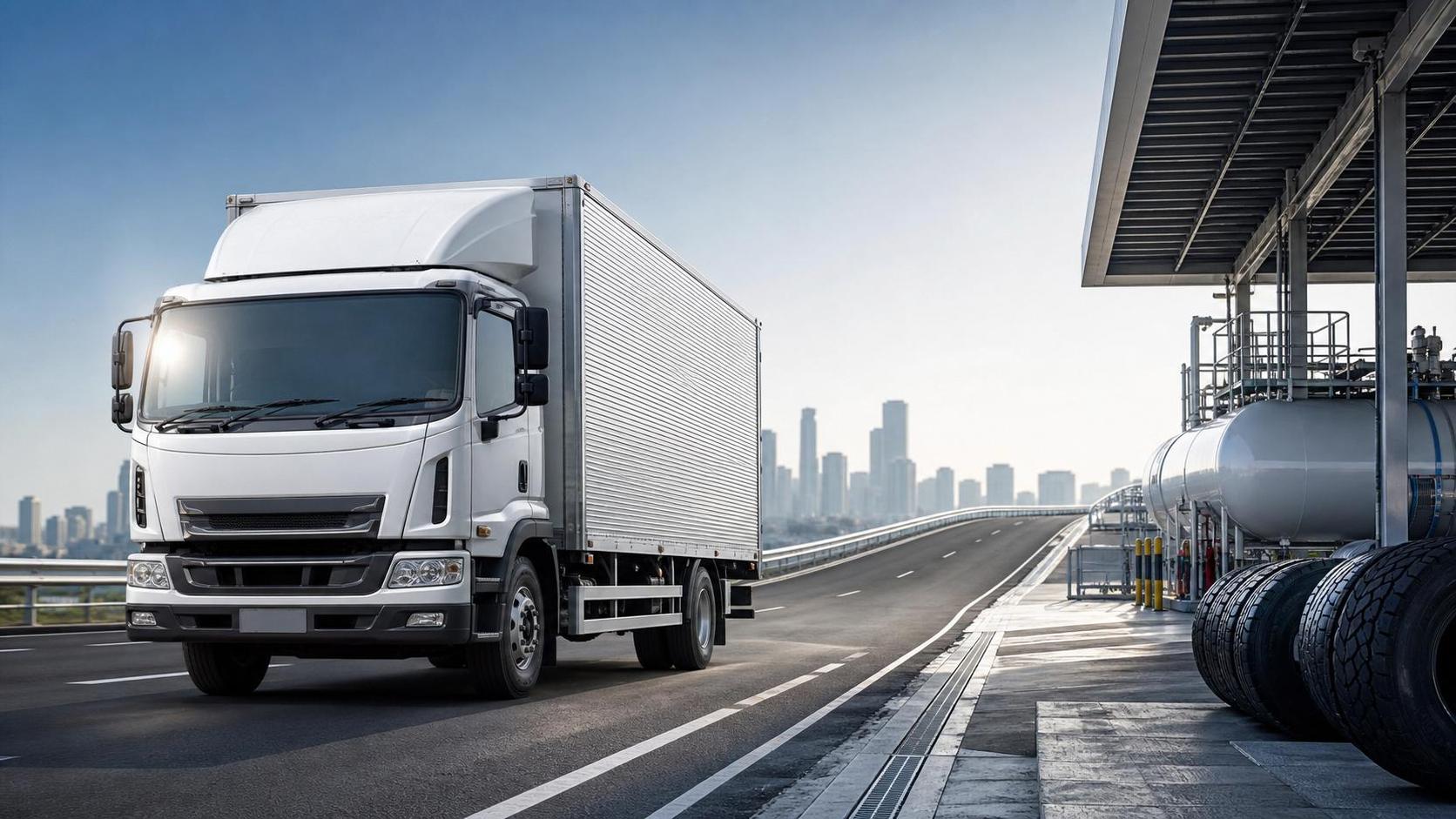
4x2 Cargo Truck Fuel Cost: What Affects Daily Operating Expense?
For finance decision-makers, fuel cost is only the visible part of daily truck spending.
The real cost of a 4_2 Cargo Truck depends on how the vehicle works every day.
Payload, route quality, driving style, engine setup, and maintenance all change fuel use.
That also means fuel expense should be reviewed as part of total operating cost, not alone.
In practical fleet planning, small differences in fuel efficiency can create large annual budget gaps.
A smarter 4_2 Cargo Truck purchase starts with understanding which factors drive daily operating expense.
Why fuel cost matters in 4_2 Cargo Truck procurement
Fuel is one of the most sensitive cost items in commercial transport.
When diesel prices move, daily cash flow changes immediately.
For a 4_2 Cargo Truck, this effect is even clearer in regional distribution work.
These trucks often run frequent trips, mixed roads, and stop-and-go delivery schedules.
As a result, fuel consumption may vary more than buyers first expect.
A lower purchase price can lose its advantage if the 4_2 Cargo Truck burns more fuel every day.
This is why cost evaluation should focus on lifecycle value.
The key question is not just what the truck costs today.
The better question is what the 4_2 Cargo Truck will cost per day, per route, and per ton delivered.
The biggest factors behind daily fuel expense
1. Payload and loading discipline
Payload has a direct effect on fuel use.
A lightly loaded 4_2 Cargo Truck will usually consume less than a fully loaded unit.
However, the issue is not only total weight.
Poor load distribution increases rolling resistance and affects driving stability.
That can push the engine to work harder and raise fuel cost over every trip.
2. Route conditions and trip profile
Not all routes treat a 4_2 Cargo Truck the same way.
Urban routes with congestion usually increase idling and repeated acceleration.
Mountain roads can force higher fuel burn because of gradients and shifting frequency.
Long, flat highway runs often produce better fuel economy.
So the right 4_2 Cargo Truck should match the route pattern, not just the rated specification.
3. Driver behavior
Driving habits create daily cost differences that are easy to overlook.
Harsh acceleration, unnecessary braking, and long idling times all waste fuel.
Two identical trucks on the same route can show very different fuel records.
This makes driver training an important part of 4_2 Cargo Truck cost control.
4. Engine, transmission, and axle matching
Vehicle configuration strongly affects fuel performance.
An engine that is too large may increase fuel use in light-duty operations.
An engine that is too small may struggle under load and consume more than expected.
Transmission ratios and rear axle matching also matter.
A well-matched 4_2 Cargo Truck runs more smoothly and keeps fuel use under better control.
5. Tire pressure and maintenance quality
Basic maintenance has a bigger financial effect than many buyers assume.
Low tire pressure increases resistance and fuel consumption.
Dirty filters, poor lubrication, and delayed service reduce engine efficiency.
A 4_2 Cargo Truck with stable maintenance records usually delivers more predictable operating expense.
How to calculate the real daily cost of a 4_2 Cargo Truck
A useful cost review starts with a simple operating formula.
Daily fuel cost equals average distance, fuel consumption rate, and local diesel price.
But a better review adds route type, payload level, idle time, and maintenance condition.
That is where a realistic 4_2 Cargo Truck budget becomes more useful for procurement.
Use this checklist during comparison:
- Estimate daily kilometers by route type, not by rough monthly averages.
- Separate loaded trips from empty return trips.
- Record expected payload range for each operating scenario.
- Check engine and gearbox matching against road conditions.
- Add an allowance for idling, congestion, and seasonal variation.
- Compare the 4_2 Cargo Truck by cost per kilometer and cost per delivered ton.
This method gives a more reliable view than comparing brochure fuel figures alone.
Common hidden costs that change fuel economics
Fuel cost does not operate in isolation.
A cheaper truck may look attractive until hidden operating costs appear.
If parts availability is weak, downtime increases and route efficiency falls.
If after-sales support is slow, maintenance intervals may be missed.
That often leads to higher fuel use and unstable operating performance from the 4_2 Cargo Truck.
Other hidden cost drivers include:
- Incorrect body configuration that adds unnecessary weight.
- Poor aerodynamics in long-distance distribution work.
- Low-quality tires with shorter life and weaker efficiency.
- Weak service documentation for export markets.
- Long delivery cycles that delay fleet replacement plans.
In real business operations, these factors can be just as important as diesel price.
What to ask before buying a 4_2 Cargo Truck
A strong purchasing decision starts with the right questions.
Ask suppliers for clear operating evidence, not just sales claims.
- What fuel consumption range does this 4_2 Cargo Truck show under similar payload and road conditions?
- Which engine and transmission combinations are recommended for city, mixed, or highway delivery?
- How quickly are spare parts supplied in the destination market?
- What service support is available after delivery?
- Can the body, axle ratio, or tank size be customized for the actual workload?
- What is the expected lead time for repeat orders?
These questions help reduce cost uncertainty before the first truck is ordered.
They also make 4_2 Cargo Truck comparison more objective across different brands and configurations.
Why supplier capability affects operating cost
Supplier strength has a direct link to cost stability.
A capable exporter can recommend the right 4_2 Cargo Truck for the target route and duty cycle.
That reduces the risk of over-specification or under-specification.
It also improves delivery speed, documentation accuracy, and spare parts planning.
All of these points affect how efficiently a 4_2 Cargo Truck performs after purchase.
Shandong Livol Truck International Trade Co., Ltd. is based in Shandong, China.
The company is a professional and reliable commercial vehicle exporter with strong industry experience.
It is the official authorized domestic and overseas dealer for FOTON, SHACMAN, and SINOTRUK.
A large network of authorized 4S stores and sufficient inventory support stable supply.
Its export team provides vehicle selection, customization, documentation, customs clearance, and logistics support.
That kind of full-process support helps buyers control 4_2 Cargo Truck procurement risk more effectively.
A practical way to lower 4_2 Cargo Truck fuel cost
The most effective approach combines procurement and operation.
- Choose a 4_2 Cargo Truck matched to real payload and route conditions.
- Avoid buying extra power or body capacity without a clear business need.
- Set driver rules for idling, speed control, and smooth acceleration.
- Track fuel data by vehicle, route, and driver every month.
- Maintain tire pressure, filters, and lubrication on schedule.
- Work with a supplier that can support parts, service, and future fleet expansion.
When these actions are combined, fuel savings become more consistent.
More importantly, the 4_2 Cargo Truck becomes easier to budget across its working life.
That supports better planning, stronger cost control, and healthier transport margins.
Before making a final purchase, compare the full operating profile of each 4_2 Cargo Truck option and choose the one that protects long-term profitability, not only the initial buying price.
Search Starts Here