
News
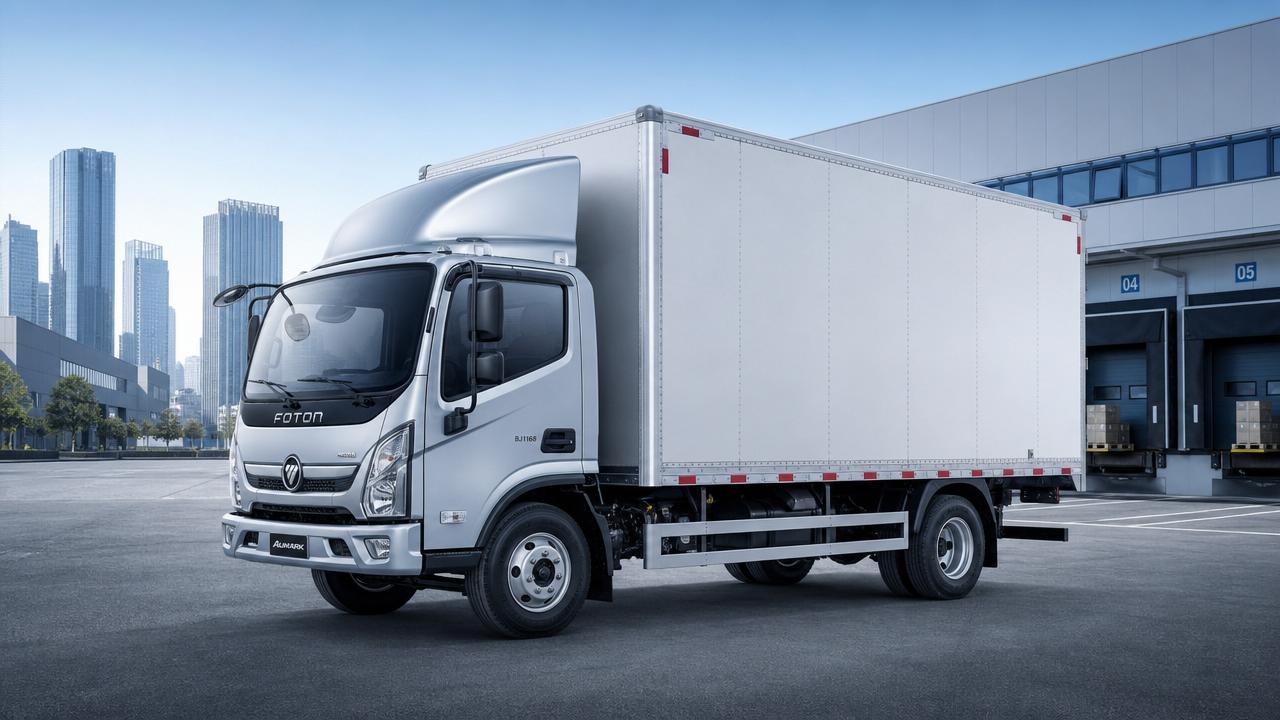
Choosing the right 4_2 Cargo Truck for urban delivery means balancing payload, fuel efficiency, reliability and operating cost. For business decision-makers, the ideal vehicle is not just about moving more goods, but about improving daily distribution performance and long-term return on investment. This guide explores how to evaluate a 4_2 Cargo Truck for city logistics and why a trusted commercial vehicle export partner can make the selection process more efficient and secure.
In urban logistics, a poor vehicle match can raise fuel spend, reduce delivery frequency, and increase downtime within the first 6 to 12 months of operation. A well-selected 4_2 Cargo Truck helps fleets maintain route efficiency, meet city access limits, and protect margins in high-frequency distribution environments.
For importers, distributors, contractors, and fleet managers, the decision is rarely based on sticker price alone. Payload rating, body size, axle configuration, engine output, maintenance intervals, and export support all affect total operating performance. That is why vehicle sourcing and execution capability should be evaluated together.
Why the 4_2 Cargo Truck Remains a Core Choice for Urban Delivery
A 4_2 Cargo Truck is widely used in city and regional distribution because it offers a practical balance between maneuverability and carrying capacity. In many markets, this configuration fits common road restrictions better than larger multi-axle trucks while still supporting daily payload needs across retail, food supply, building materials, and e-commerce delivery.
Typical urban operating patterns involve 30 to 150 km per day, 8 to 25 stops per route, and frequent idling in congested traffic. Under these conditions, truck selection should focus on route density, legal payload, turning radius, and fuel performance under stop-and-go use rather than only highway efficiency figures.
Key operational strengths in city logistics
- Better maneuverability in narrow streets, depots, and mixed commercial districts
- Suitable cargo body capacity for medium-volume, high-frequency deliveries
- Lower fuel consumption than heavier rigid trucks in many urban duty cycles
- Easier compliance with axle and gross vehicle weight limits in several import markets
- More flexible body adaptation for box cargo, stake body, van body, or refrigerated use
Why payload and fuel efficiency must be evaluated together
A truck with higher rated payload may appear more attractive, but if engine sizing, gearbox ratio, and curb weight are not well matched, fuel consumption can rise sharply in dense traffic. On the other hand, an overly light specification may save fuel per 100 km while forcing more trips per day, increasing labor cost and delivery time.
For many buyers, the better question is not “Which truck carries the most?” but “Which truck carries enough per route at the lowest cost per delivered ton or cubic meter?” That commercial perspective leads to more stable operating economics over 3 to 5 years.
The table below shows how common urban delivery priorities influence 4_2 Cargo Truck specification choices across different fleet scenarios.
The main takeaway is that the right 4_2 Cargo Truck depends on actual route economics. Urban fleets should compare delivered volume, delivered weight, fuel cost per route, and turnaround time together rather than judging a truck by one headline figure.
How to Compare Payload Against Fuel Efficiency in Real Fleet Decisions
Business buyers should assess a 4_2 Cargo Truck through a total-use model. This means combining vehicle weight, engine power, axle ratio, transmission match, body type, and route profile. In practical procurement, 5 to 7 decision variables usually affect operating cost more than purchase price differences alone.
1. Start with legal and usable payload
Rated payload is not the same as usable payload after body installation, refrigeration units, tail lifts, toolboxes, or internal shelving. A 4_2 Cargo Truck should be reviewed based on net carrying capacity after final configuration. In urban delivery, a 300 to 800 kg payload difference can change route productivity significantly.
Checklist for payload review
- Confirm gross vehicle weight and front/rear axle limits.
- Subtract body weight, optional equipment, and local mandatory accessories.
- Estimate average cargo density in kg per cubic meter.
- Compare peak-season load demand with normal daily loads.
- Leave a practical safety margin instead of planning at 100% loading every trip.
2. Evaluate fuel use by route condition, not brochure claims
Fuel efficiency in urban work is heavily influenced by traffic lights, idle time, road gradient, restart frequency, and driver behavior. Decision-makers should request expected consumption ranges for city duty cycles, not only open-road figures. In many markets, the difference between a well-matched and poorly matched truck can reach 2 to 4 liters per 100 km.
If one vehicle saves 3 liters per 100 km and runs 60,000 km annually, the yearly reduction is about 1,800 liters. Over a 4-year period, that can become a major operating advantage, especially for fleets with 10, 20, or more units.
The following comparison framework helps buyers weigh payload and fuel efficiency under common urban operating conditions.
This comparison shows that no single 4_2 Cargo Truck is ideal for every fleet. The objective is to reach the lowest cost per delivery cycle while preserving enough payload margin for peak demand, route changes, and body upgrades.
3. Look beyond the engine to the full efficiency package
Fuel performance is not determined by engine displacement alone. Transmission ratios, rear axle gearing, tire specification, aerodynamic body design, and idle management all matter. For city use, a truck with moderate horsepower and correct gearing may outperform a more powerful unit that spends most of its time in inefficient low-speed operation.
Decision-makers should also review maintenance intervals, filter replacement frequency, and parts access. A truck that saves fuel but requires excessive service downtime every few weeks may not deliver the expected operating benefit.
Specification Priorities That Matter Most in Urban Cargo Operations
Urban distribution puts unique stress on the vehicle. Frequent braking, loading dock maneuvering, and repeated door access can be more important than long-distance cruising performance. A 4_2 Cargo Truck should therefore be specified for its actual work cycle, not only for maximum theoretical capacity.
Cab and driver ergonomics
For fleets with 15 to 40 delivery stops per day, cab accessibility and visibility directly affect productivity and safety. Wide door opening, comfortable seat support, mirror coverage, and simple dashboard layout reduce fatigue and help drivers maintain consistent route pace over long shifts.
Body configuration and cargo protection
The same 4_2 Cargo Truck chassis can serve very different applications depending on the body. Box vans protect general goods, stake bodies handle mixed construction loads, and insulated or refrigerated bodies support cold chain use. Buyers should calculate internal volume, floor strength, side access, and loading equipment before confirming the chassis specification.
Suspension, braking, and durability
A vehicle used on urban roads may face potholes, repeated curb approach, and uneven loading patterns. Suspension tuning, brake durability, and frame strength should be checked carefully. Fleets expecting 5 or 6 working days per week need a truck that supports stable uptime, not just a competitive initial quote.
Common specification mistakes to avoid
- Choosing the longest body without checking route turning limits
- Ignoring body weight when calculating usable payload
- Selecting engine power based only on peak load, not average daily duty
- Overlooking after-sales parts availability in the destination market
- Failing to match tire and suspension setup to actual road conditions
Why Export Capability Matters as Much as Vehicle Specification
Even the right 4_2 Cargo Truck can become a costly purchase if export execution is weak. For overseas buyers, documentation accuracy, pre-shipment inspection, spare parts planning, and delivery coordination are essential. A supplier should not only offer vehicle options, but also reduce operational risk from inquiry to final arrival.
Shandong Livol Truck International Trade Co., Ltd., based in Shandong, China, is a professional and reliable commercial vehicle exporter with strong industry strength and rich global trade experience. As an official authorized domestic and overseas dealer for FOTON, SHACMAN and SINOTRUK, the company supports customers with practical brand choices, stable supply, and coordinated export service.
What business buyers should expect from an export partner
A capable exporter should provide more than quotations. The process often includes 5 key stages: requirement review, vehicle confirmation, customization planning, export documentation, and shipping coordination. For fleet orders or project supply, response speed and detail accuracy can save weeks in procurement time.
The table below outlines the service elements that reduce procurement risk when sourcing a 4_2 Cargo Truck for overseas urban delivery use.
This end-to-end support is especially valuable when procurement teams must balance price, delivery deadline, and technical fit at the same time. An exporter with authorized channels, 4S store resources, and sufficient inventory can often improve supply stability and shorten decision cycles.
Operational advantages of working with an experienced supplier
Shandong Livol Truck International Trade Co., Ltd. combines brand authorization, professional export handling, vehicle customization support, documentation coordination, customs clearance assistance, and logistics execution. For overseas buyers, this integrated approach reduces communication gaps and helps ensure the selected 4_2 Cargo Truck arrives aligned with the intended application.
For enterprises planning fleet renewal, distributor stocking, or project-based vehicle import, this kind of structured support can be as important as engine and payload figures. It lowers purchasing uncertainty and improves implementation speed from factory selection to local deployment.
Final Buying Recommendations for Decision-Makers
When evaluating a 4_2 Cargo Truck, start with route reality, not catalog assumptions. Define average load, peak load, daily distance, stop frequency, road quality, and body requirement. Then compare at least 3 dimensions together: usable payload, fuel efficiency under urban duty, and after-sales support practicality in your target market.
A smart procurement decision usually comes from matching the truck to the business model. If your cargo is weight-dense, payload margin may drive value. If your operation is stop-intensive and time-sensitive, efficiency, turning ability, and uptime may produce the better return. In both cases, experienced export coordination helps turn a good vehicle choice into a reliable delivered solution.
Shandong Livol Truck International Trade Co., Ltd. is positioned to support buyers looking for dependable commercial vehicle sourcing from China, including authorized brand options from FOTON, SHACMAN and SINOTRUK, stable supply, customization support, and full-process export service. If you are planning urban fleet procurement or comparing 4_2 Cargo Truck solutions for city logistics, contact us now to get a tailored recommendation, discuss product details, and explore the right configuration for your market.
Search Starts Here