
News
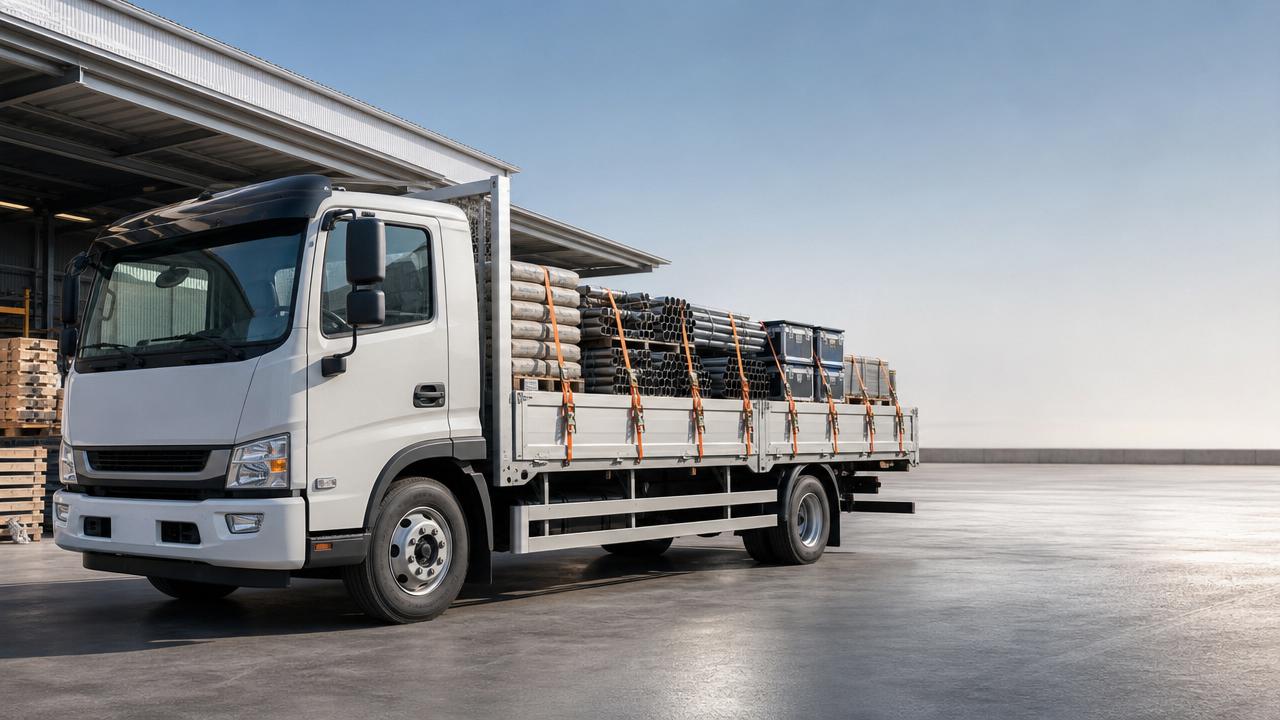
For quality control and safety managers, every 4_2 Cargo Truck loading operation directly affects vehicle stability, cargo integrity, driver safety, and delivery efficiency.
Improper weight distribution, unsecured cargo, or missed inspections can cause costly damage and serious road risks during daily engineering vehicle operations.
This guide explains common loading risks and practical safe-use tips for improving compliance, reducing downtime, and using a 4_2 Cargo Truck more reliably.
Basic Understanding of 4_2 Cargo Truck Loading
A 4_2 Cargo Truck usually refers to a two-axle cargo vehicle with one steering axle and one rear driving axle.
It is widely used for construction materials, tools, machinery parts, packaged goods, and medium-distance distribution in engineering-related transport.
Its compact size helps it enter urban roads, project sites, warehouses, and industrial parks more easily than heavier trucks.
However, the same compact structure makes correct loading especially important for braking performance, turning stability, and tire service life.
A 4_2 Cargo Truck has clear limits for payload, axle load, cargo height, and center of gravity.
Ignoring these limits can turn a routine delivery into a safety incident, even when the vehicle is technically well maintained.
Key Loading Terms Used in Daily Control
- Payload: the maximum cargo weight allowed after deducting vehicle curb weight.
- Axle load: the weight carried by each axle under loaded conditions.
- Center of gravity: the point where cargo weight is balanced vertically and horizontally.
- Load restraint: the system used to prevent movement, sliding, tipping, or falling cargo.
Understanding these terms helps teams judge whether a 4_2 Cargo Truck is being loaded within a safe and legal operating range.
Current Safety Concerns in Engineering Vehicle Transport
Engineering vehicle transport often involves uneven ground, mixed cargo shapes, changing weather, and tight delivery schedules.
These conditions increase the loading risk for a 4_2 Cargo Truck compared with ordinary light distribution routes.
Cargo may include cement bags, steel components, equipment boxes, spare parts, pipes, timber, and maintenance tools.
Different cargo densities and shapes can create hidden imbalance if loading plans are not checked before departure.
In many incidents, the truck itself is not the only problem.
The real issue is the gap between vehicle capacity, cargo planning, restraint quality, and driver operating behavior.
Main Loading Risks for a 4_2 Cargo Truck
Overloading and Axle Imbalance
Overloading is one of the most common risks for a 4_2 Cargo Truck in construction and commercial delivery tasks.
Excess weight increases braking distance, raises tire temperature, and places extra stress on suspension components.
Even when total cargo weight seems acceptable, axle imbalance can still create unsafe handling.
Too much weight behind the rear axle may reduce front-wheel grip and make steering less responsive.
Unsecured Cargo Movement
Cargo movement inside the body can damage goods, deform side panels, and change the truck’s balance suddenly.
This risk is higher when transporting steel bars, pipes, generator parts, pallets, or mixed loose materials.
A 4_2 Cargo Truck should use ropes, ratchet straps, blocks, anti-slip mats, or partitions based on cargo type.
High Center of Gravity
Stacking cargo too high may look efficient, but it reduces stability during lane changes and emergency maneuvers.
A high center of gravity is especially dangerous on ramps, curved project roads, and uneven access routes.
Poor Visibility and Body Clearance
Oversized cargo may block mirrors, extend beyond the body, or interfere with rear lighting and reflective markings.
Any 4_2 Cargo Truck carrying extended cargo needs clear marking, route checking, and secure end protection.
Operational Value of Safer Loading Control
Safe loading is not only a compliance requirement.
It improves vehicle uptime, delivery accuracy, driver confidence, and long-term asset value.
When a 4_2 Cargo Truck operates within proper load limits, tire wear becomes more predictable.
Brake systems also work under less thermal stress, helping reduce maintenance costs and unexpected roadside failures.
Stable loading also protects cargo quality, especially for fragile equipment, packaged components, and project-critical spare parts.
For engineering transport, one damaged delivery can delay installation, repair, or construction progress.
Business Benefits of Standard Loading Habits
- Lower accident exposure during site-to-site transport.
- Fewer claims caused by damaged or missing cargo.
- Better fuel efficiency from balanced load distribution.
- Longer service life for tires, suspension, and body structure.
- More consistent delivery performance across mixed routes.
These benefits become stronger when the 4_2 Cargo Truck is selected according to cargo density, route condition, and operating frequency.
Typical Loading Scenarios and Control Points
Different working scenarios require different control methods.
A single checklist cannot replace judgment based on cargo features and road conditions.
For a 4_2 Cargo Truck, the safest plan usually combines low stacking, centered weight, visible markings, and repeated restraint checks.
Practical Safe-Use Tips Before Loading
Safe use begins before the first item enters the cargo body.
A quick inspection can identify problems that become serious once the truck is moving.
- Confirm the rated payload and compare it with actual cargo weight.
- Check tire pressure, tread condition, and visible sidewall damage.
- Inspect the cargo deck for oil, water, stones, nails, or broken boards.
- Verify that side panels, tailgate locks, hinges, and latches work correctly.
- Prepare suitable straps, chains, covers, wedges, and warning signs.
The 4_2 Cargo Truck should also be parked on level ground during loading whenever possible.
Wheel chocks are useful when working on slight slopes, loading bays, or temporary jobsite surfaces.
Safe Loading Sequence and Weight Distribution
A good loading sequence prevents rework and helps maintain predictable vehicle behavior.
Heavy items should usually be placed first, low, and close to the center of the cargo platform.
Avoid concentrating heavy cargo on one side of a 4_2 Cargo Truck.
Side imbalance may cause uneven tire wear and unstable cornering, especially at roundabouts or site entrances.
Recommended Loading Principles
- Keep the heaviest cargo near the deck and between the axles.
- Distribute weight evenly from left to right.
- Place fragile goods away from direct pressure points.
- Do not exceed the side panel height without proper securing measures.
- Leave access space for final inspection and unloading safety.
After loading, the 4_2 Cargo Truck should sit level, without obvious rear sagging or side leaning.
Cargo Restraint and Road Operation Checks
Cargo restraint must match the weight, surface, shape, and movement risk of the goods.
Soft ropes may be suitable for light covers, but not for heavy machinery or dense metal parts.
Ratchet straps, chains, corner protectors, and anti-slip mats provide stronger control for demanding engineering transport.
A 4_2 Cargo Truck should be checked again after short initial movement, because straps may settle or loosen.
On-Road Operating Tips
- Accelerate smoothly to avoid sudden cargo shift.
- Increase following distance when the truck is fully loaded.
- Reduce speed before curves, ramps, and uneven construction roads.
- Avoid harsh braking unless emergency action is required.
- Stop safely if unusual noise, leaning, or cargo movement appears.
Good driving behavior is part of safe loading control, not a separate activity.
Vehicle Selection, Quality Control, and Export Support
Safe operation also depends on choosing the right vehicle specification from the beginning.
Engine power, wheelbase, cargo body type, braking system, tire configuration, and suspension should match real transport tasks.
A reliable 4_2 Cargo Truck can support daily engineering logistics when specifications are aligned with load profiles and road conditions.
Shandong Livol Truck International Trade Co., Ltd. exports commercial vehicles from Shandong, China to global markets.
The company is an authorized domestic and overseas dealer for FOTON, SHACMAN, and SINOTRUK.
Its authorized 4S store network and sufficient inventory help support stable supply and faster delivery.
Full-process services include vehicle selection, customization, documentation, customs clearance, logistics, quality control, and after-sales support.
For overseas engineering projects, this support helps align the 4_2 Cargo Truck with local regulations and practical operating needs.
Action Steps for Safer Daily Use
A safer loading system should be simple, repeatable, and easy to verify before every trip.
Start by recording common cargo types, typical weights, route conditions, and recurring loading problems.
Then build a short checklist covering payload, axle balance, cargo restraint, visibility, lighting, and final walk-around inspection.
Review the checklist after incidents, near misses, tire damage, brake complaints, or cargo claims.
When selecting or replacing a 4_2 Cargo Truck, compare vehicle capacity with actual jobsite demands instead of only purchase cost.
With proper loading habits, suitable restraint tools, and a reliable vehicle source, daily transport becomes safer and more predictable.
For professional 4_2 Cargo Truck selection, configuration support, and export service, contact Shandong Livol Truck International Trade Co., Ltd.
Search Starts Here