
News
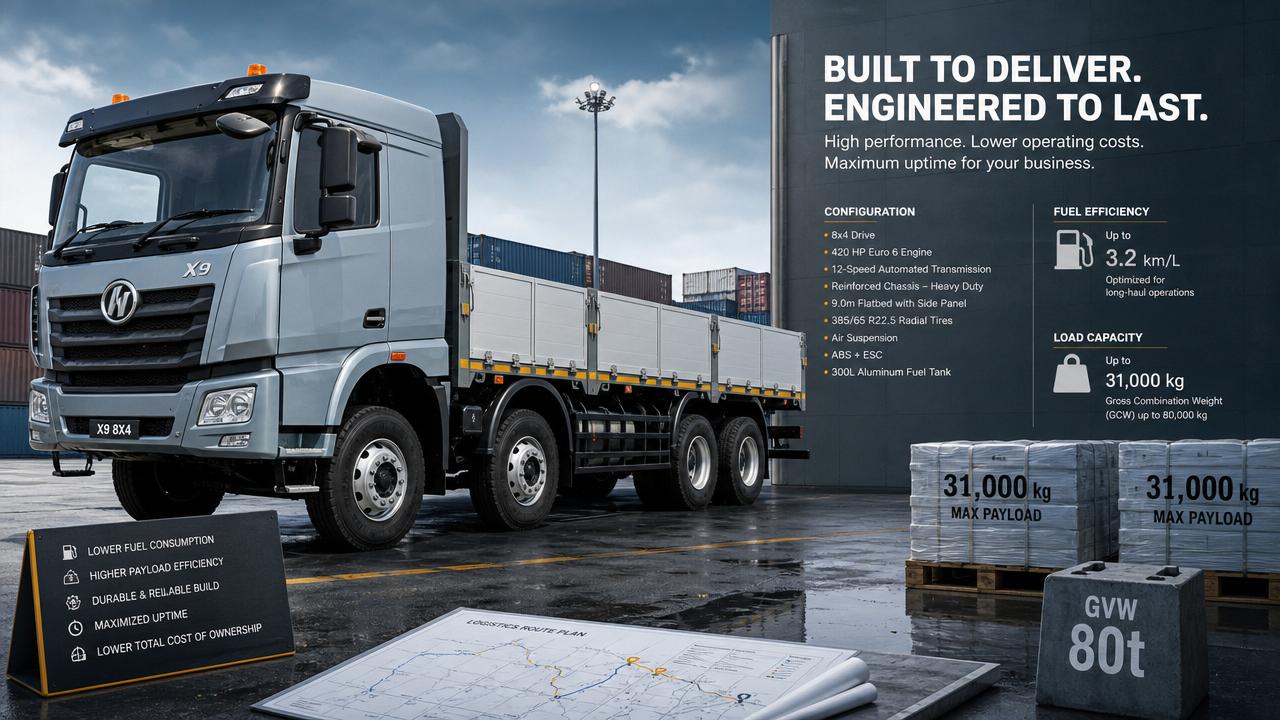
For finance decision-makers, the Cangshan Vehicle Configuration List is more than a technical document—it is a direct indicator of total fleet cost, operating efficiency, and long-term return on investment. From engine output and payload capacity to fuel economy and maintenance requirements, understanding these key specifications helps businesses control budgets, reduce risk, and choose commercial vehicles that support sustainable growth.
When buyers search for a Cangshan Vehicle Configuration List, they are rarely looking for specifications in isolation. They want to know which configurations materially affect acquisition cost, operating cost, downtime risk, and resale value.
For financial approvers, the central question is simple: which vehicle specifications improve lifecycle economics, and which ones add purchase cost without delivering measurable operational benefit. That is the lens this article uses throughout.
Why the Cangshan Vehicle Configuration List Matters to Fleet Cost Control
A configuration list is often treated as a technical checklist for procurement teams. In reality, it is one of the most important financial review documents in any commercial vehicle purchase decision.
Every line in the Cangshan Vehicle Configuration List can influence one or more cost categories. These include initial capital expenditure, fuel consumption, tire wear, preventive maintenance, repair frequency, driver productivity, compliance exposure, and vehicle lifespan.
For a finance decision-maker, this means configuration review should not stop at comparing sticker prices. A lower-priced truck may ultimately cost more if it uses more fuel, carries less payload, or requires more frequent repairs.
By contrast, a well-matched specification may cost slightly more upfront, but reduce total cost of ownership over three to five years. That is often where the strongest return on investment is found.
What Finance Decision-Makers Should Prioritize First
The most useful way to read a Cangshan Vehicle Configuration List is to separate core cost drivers from secondary features. Not all specifications have the same impact on business performance.
Finance approvers typically care most about six issues: purchase price, fuel efficiency, payload productivity, maintenance burden, service life, and operational risk. These six factors should guide the evaluation sequence.
If a configuration improves appearance or convenience but does not strengthen utilization, uptime, or cost efficiency, it should usually rank lower in budget approval discussions.
This approach helps avoid a common procurement mistake: over-specifying vehicles for occasional use cases while paying a permanent cost penalty across the entire fleet lifecycle.
Engine Output: The Balance Between Capability and Fuel Cost
Engine power is one of the first items buyers notice in a configuration list, but more horsepower is not automatically better from a financial perspective.
The right engine depends on route conditions, gross vehicle weight, terrain, duty cycle, and expected load consistency. An oversized engine can increase fuel consumption and acquisition cost without creating proportional value.
On the other hand, an underpowered vehicle may struggle under load, operate inefficiently, and suffer accelerated wear. It can also reduce average trip speed and increase delivery delays, which affects revenue productivity.
Financially, the goal is not to maximize engine specification. It is to match output to actual operating conditions closely enough to maintain efficiency, durability, and acceptable performance margins.
When reviewing the Cangshan Vehicle Configuration List, ask whether the engine rating reflects normal operating conditions or only peak-demand scenarios. Vehicles should be configured for real usage, not rare exceptions.
Payload Capacity: One of the Strongest Drivers of Revenue Efficiency
Payload capacity has a direct effect on cost per ton-kilometer and overall transport efficiency. For many fleet operations, it is one of the most important variables in the entire specification list.
If payload is too low, the business may need more trips, more drivers, more fuel, and more vehicle hours to move the same volume. That raises operating cost quickly.
If payload capability is properly aligned with legal limits and business needs, each trip can generate better asset productivity. This improves revenue yield from the same capital investment.
However, finance teams should also be careful about buying excessive structural capacity that is never used. Heavier-duty configurations can increase empty weight, fuel use, and tire wear.
The best decision is usually the one that supports the most common load profile while staying compliant with local regulations and preserving acceptable durability under repeated use.
Fuel Economy: The Specification That Compounds Over Time
Fuel efficiency is one of the clearest long-term cost multipliers in commercial vehicle operations. Even a modest difference in consumption can become significant when multiplied across years, routes, and fleet size.
That is why the Cangshan Vehicle Configuration List should be reviewed not only for engine size, but also for transmission matching, axle ratio, vehicle weight, tire choice, and aerodynamic design where relevant.
These configuration elements work together to shape real-world fuel use. Looking at engine data alone can lead to incomplete or misleading conclusions.
Finance approvers should ask procurement teams for route-based fuel estimates, not just ideal-condition figures. Stop-and-go operation, gradients, overloading, and road quality can all change actual results materially.
In many cases, a vehicle with a slightly higher purchase price but better fuel economy will outperform a cheaper option within the first years of operation, especially in high-mileage fleets.
Transmission, Axle Ratio, and Driveline Matching
Transmission type and axle ratio are often underestimated in financial reviews, yet they strongly affect both fuel efficiency and mechanical durability.
A poor driveline match can force the engine to run outside its most efficient range. This increases fuel consumption, driver fatigue, clutch wear, and long-term maintenance costs.
For heavy-duty or construction-related vehicle use, correct gearing also affects gradeability, launch performance, and load-handling stability. These factors influence uptime and operational reliability.
The key financial principle is this: drivetrain configuration should support the real route environment. Highway work, mixed-road logistics, and demanding off-road conditions require different gearing strategies.
If the Cangshan Vehicle Configuration List includes multiple transmission and axle combinations, decision-makers should compare them against expected duty cycles rather than choosing the simplest or cheapest option by default.
Chassis Strength and Suspension: Cost Protection in Tough Working Conditions
In engineering vehicle applications, chassis quality and suspension configuration are not minor technical details. They are cost-protection mechanisms.
Vehicles operating on rough roads, construction sites, quarries, or overloaded regional routes face constant structural stress. If the frame or suspension is not suited to these conditions, maintenance costs can rise rapidly.
Frequent repairs to leaf springs, bushings, mounts, or structural components do not just create parts expense. They also create downtime, disrupt delivery schedules, and reduce asset utilization.
From a finance perspective, the right question is whether the configuration can withstand the working environment consistently enough to reduce unplanned maintenance and preserve service life.
A stronger chassis may increase upfront cost, but if it cuts downtime and extends usable operating years, it often delivers clear economic value.
Brake Systems, Safety Features, and Compliance Risk
Safety-related specifications are sometimes viewed as compliance items only, but they also have direct financial implications. Better braking performance and appropriate safety systems can reduce accident frequency and liability exposure.
For fleet owners, accidents create visible and hidden costs: insurance claims, cargo loss, repair bills, regulatory penalties, driver absence, reputational damage, and idle vehicle time.
When evaluating a Cangshan Vehicle Configuration List, finance teams should review brake type, auxiliary braking options, tire specifications, visibility support, and any relevant electronic safety features.
The right configuration is especially important for heavy loads, downhill routes, congested urban areas, or cross-border operations where regulatory expectations may be stricter.
In budget terms, safety is not only a defensive expense. It is a tool for protecting operating continuity and reducing severe cost events that can erase margins quickly.
Maintenance Requirements and Parts Availability
A truck that looks attractive on paper can become expensive if service intervals are short, maintenance procedures are complex, or parts availability is unreliable.
This is why finance approvers should examine not only the vehicle itself, but also the support ecosystem behind it. Maintenance cost is shaped by design, service access, component standardization, and spare parts supply.
Vehicles from established brands with stronger dealer support often create lower lifecycle risk, even when purchase price is not the lowest. Downtime has a cost, and so does waiting for non-standard components.
For global buyers, this issue becomes even more important. Export success depends on whether spare parts, technical support, and documentation can support the vehicle after delivery.
A reliable exporter with brand authorization, stable inventory, and process experience can reduce these practical ownership risks substantially for overseas fleet operators.
How to Use the Configuration List to Compare True Total Cost
The best use of a Cangshan Vehicle Configuration List is not simple specification comparison. It is structured total cost evaluation across competing options.
Start by identifying the operating profile: average load, road condition, annual mileage, trip frequency, terrain, fuel price, and expected service life. Without this baseline, configuration analysis lacks context.
Next, compare configurations across five cost categories: purchase cost, fuel cost, routine maintenance, major repair risk, and productivity value. Productivity value includes payload efficiency, uptime, and route suitability.
Then assign estimated financial impact to major specification differences. For example, higher fuel use, lower payload efficiency, or weaker structural durability can each create measurable annual cost changes.
Finally, review non-price risks such as after-sales support, delivery stability, documentation quality, and compliance suitability. These factors often determine whether a lower quotation remains low in practice.
Questions Financial Approvers Should Ask Before Approval
Before signing off on any vehicle order, finance decision-makers should ask a short set of practical questions tied directly to the configuration list.
Is the engine sized for actual use or over-specified for occasional extremes? Does the payload configuration improve revenue productivity without unnecessary structural excess?
What is the expected fuel cost difference between shortlisted configurations over the intended service period? How does transmission and axle matching affect efficiency on the target route profile?
What components are most likely to wear under local operating conditions, and what is the expected service and parts availability after export? Are there any safety or compliance gaps that may create future cost exposure?
These questions move the review from technical description to commercial judgment, which is where finance teams add the most value.
Why Supplier Capability Also Affects Configuration Value
The value of a vehicle configuration is not determined by specifications alone. It also depends on whether the supplier can deliver the right unit, support customization, and maintain post-sale reliability.
For international buyers, an experienced commercial vehicle exporter can help align specifications with market regulations, working conditions, and budget constraints before purchase mistakes occur.
As an authorized dealer for FOTON, SHACMAN, and SINOTRUK, with broad domestic network coverage, available inventory, and export process experience, Shandong Livol Truck International Trade Co., Ltd. is positioned to support such requirement matching.
This matters to finance teams because supply stability, correct documentation, faster delivery, and professional after-sales support reduce both transactional friction and ownership uncertainty.
In other words, the right supplier helps convert a good configuration on paper into a lower-risk fleet investment in reality.
Conclusion: Read the Cangshan Vehicle Configuration List as a Cost Map
For financial decision-makers, the Cangshan Vehicle Configuration List should be read as a cost map rather than a technical attachment. Its real purpose is to reveal how a vehicle will behave economically over time.
The most important specifications are the ones that affect fuel use, payload productivity, maintenance frequency, uptime, compliance, and service life. These factors drive total fleet cost far more than headline purchase price alone.
A sound approval decision comes from matching configuration to operating reality, comparing lifecycle costs, and assessing supplier support alongside technical data. That is how fleets avoid false savings and secure better long-term returns.
When reviewed this way, the Cangshan Vehicle Configuration List becomes a practical financial tool for controlling risk, improving asset efficiency, and supporting sustainable fleet growth.
Search Starts Here