
News
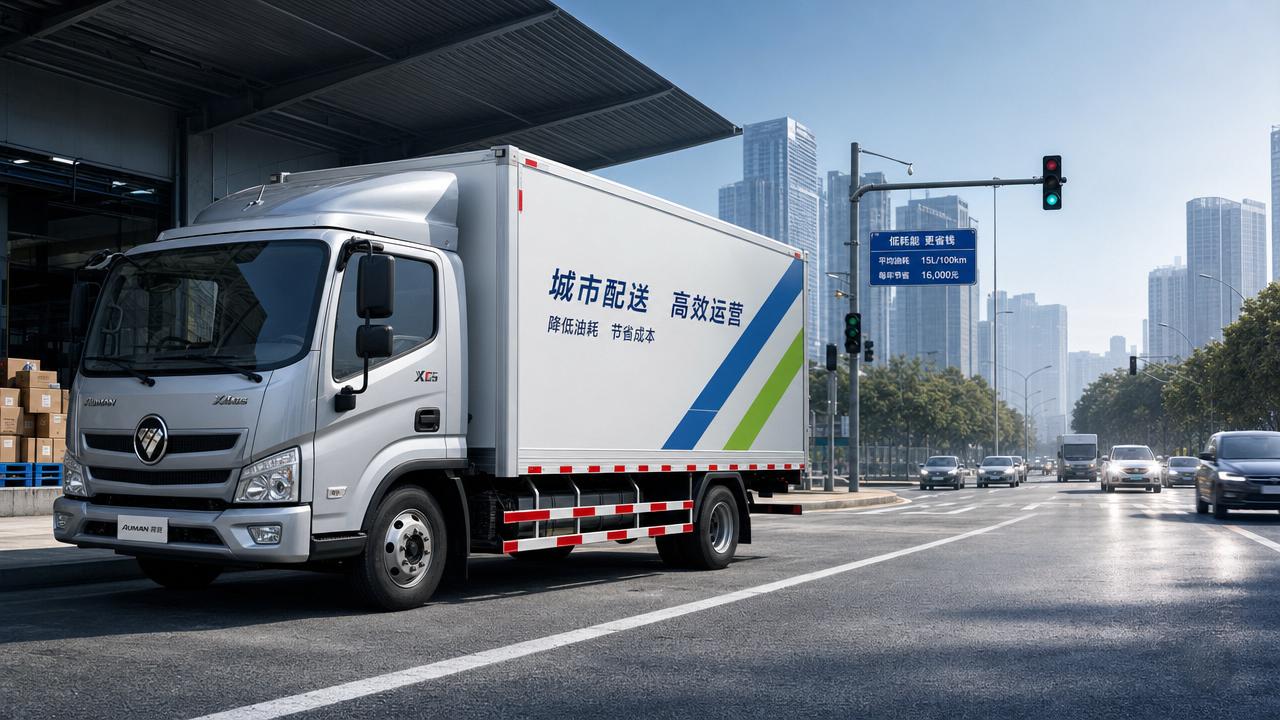
Urban delivery economics are changing for every 4_2 Cargo Truck fleet
For finance decision-makers managing urban delivery fleets, understanding the real operating costs of a 4_2 Cargo Truck is essential to protecting margins and improving fleet efficiency.
Fuel expense is no longer a simple pump-price issue. It now reflects route density, payload patterns, idle time, engine condition, and local traffic restrictions.
In engineering vehicle operations and city logistics, a 4_2 Cargo Truck often works under stop-and-go pressure. That environment magnifies small inefficiencies into major annual cost gaps.
This article examines the main fuel cost drivers, explains why they matter now, and outlines practical ways to improve total fleet economics without sacrificing delivery reliability.
Fuel cost pressure is rising as urban delivery conditions become more complex
Urban logistics has changed quickly. More deliveries happen in shorter time windows, with higher route fragmentation and tighter municipal access controls.
A 4_2 Cargo Truck that performed efficiently on stable suburban routes may consume far more fuel in dense city zones with traffic lights, frequent braking, and repeated low-speed starts.
At the same time, fleet operators face pressure to control operating expenditure while maintaining service consistency. Fuel becomes one of the fastest-moving cost variables.
This trend matters in the engineering vehicle sector because commercial transport buyers increasingly compare trucks by lifecycle cost, not only by purchase price.
That makes fuel analysis a strategic issue. Selecting the right 4_2 Cargo Truck can influence route profitability for years after delivery.
Several operating signals now have a direct impact on 4_2 Cargo Truck fuel use
The biggest fuel cost changes usually come from a mix of technical, operational, and human factors. They rarely come from one cause alone.
Key drivers behind changing fuel performance
For many fleets, the interaction between these factors matters more than any single data point shown in a brochure.
Load planning and route design are becoming as important as truck specification
A 4_2 Cargo Truck can show strong fuel performance on paper yet underperform in real city use when load planning is inconsistent.
Partial loads often look efficient operationally, but frequent return trips or unbalanced cargo distribution can raise fuel cost per delivered unit.
Route design also plays a major role. Shorter distance does not always mean lower consumption if the route includes heavy congestion or repeated stop zones.
Common route and load issues that increase fuel spending
- Overloading beyond the truck’s efficient operating range
- Underutilized cargo space causing more trips than necessary
- Poor delivery sequencing that creates detours and idle waiting
- Frequent operation on roads with steep grades or rough surfaces
- Mismatch between body type and actual cargo dimensions
In practice, buyers should assess whether the selected 4_2 Cargo Truck matches the fleet’s average load factor, route profile, and urban access window.
Maintenance quality now has a larger financial effect than many fleets expect
Urban fleets often focus on dispatch speed, while preventive maintenance receives less attention. That approach usually increases fuel use before major failures appear.
A poorly maintained 4_2 Cargo Truck may experience higher rolling resistance, weaker combustion efficiency, and unstable power output under low-speed traffic conditions.
Maintenance points linked to fuel economy
- Air filter cleanliness and intake efficiency
- Fuel injector condition and combustion quality
- Tire pressure, alignment, and tread condition
- Lubricant quality and replacement intervals
- Brake drag or drivetrain resistance
Small technical losses accumulate quickly in city duty cycles. Over a year, even a minor fuel efficiency decline can materially affect total operating margin.
This is why reliable supply, parts access, and after-sales support should be part of any 4_2 Cargo Truck investment review.
Driver behavior and real-world operating discipline are shaping cost outcomes
Even with the same route and truck model, fuel results can vary significantly between drivers. Urban conditions amplify these differences.
Rapid acceleration, unnecessary idling, late braking, and poor gear use all raise fuel burn. These habits are especially expensive for a 4_2 Cargo Truck in dense delivery work.
How operating behavior affects different business links
Higher fuel use increases daily transport cost, but the effect goes beyond fuel invoices. It changes pricing flexibility, route profitability, and replacement planning.
For cross-border vehicle buyers, it also affects specification decisions. A 4_2 Cargo Truck must be chosen not only for legal payload, but for actual driver and route behavior.
The smartest 4_2 Cargo Truck decisions now start with total cost visibility
Current market conditions reward buyers who examine fuel cost as part of a full operational system. That system includes truck configuration, support capability, and route reality.
Priority points worth close attention
- Check average urban payload, not only maximum payload
- Compare engine and transmission options against stop-and-go use
- Evaluate service network and parts availability before purchase
- Review tire, body, and axle choices for route compatibility
- Build fuel targets by route type, not one fleet average
- Use driver training to stabilize consumption performance
A dependable exporter can support this process by helping align vehicle selection, customization, documentation, logistics, and after-sales planning with real operating needs.
Shandong Livol Truck International Trade Co., Ltd. supplies commercial vehicles from FOTON, SHACMAN and SINOTRUK, supported by authorized 4S resources, stable inventory, and export experience.
That combination helps buyers evaluate the right 4_2 Cargo Truck solution with stronger confidence in supply stability, configuration accuracy, and lifecycle support.
A practical response is to benchmark, compare, and optimize before the next fleet purchase
The next step is not guesswork. It is structured comparison based on route profile, load pattern, service access, and expected fuel behavior.
Suggested evaluation approach
- Map actual delivery routes by congestion, distance, and road quality.
- Group loads by weight range and cargo frequency.
- Compare 4_2 Cargo Truck specifications against those duty cycles.
- Review maintenance support and spare parts response time.
- Set fuel benchmarks and monitor them after deployment.
When fuel cost factors are understood early, a 4_2 Cargo Truck becomes a controlled asset instead of an unpredictable expense source.
If you are reviewing urban fleet options, now is the right time to compare vehicle configurations and export support based on long-term operating efficiency.
Search Starts Here