
News
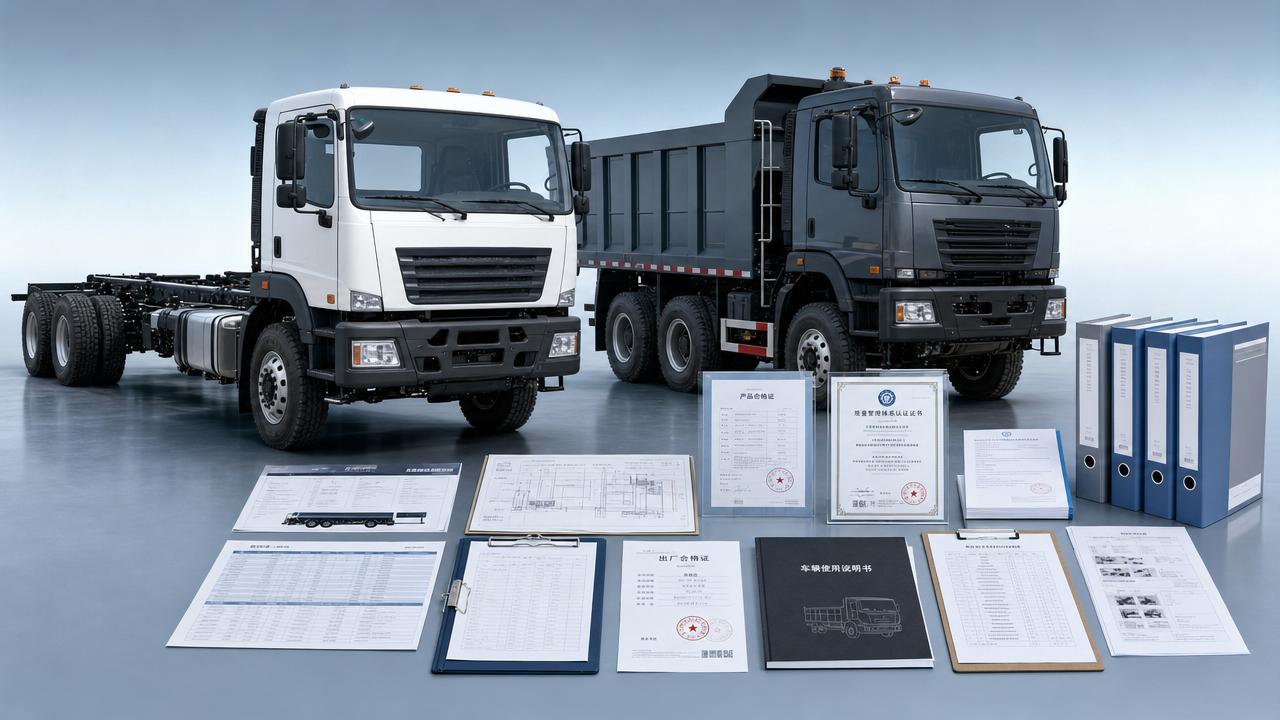
Before model approval begins, the Cangshan Vehicle Configuration List should be treated as a practical control document, not a formality. It helps verify whether an engineering vehicle matches declared specifications, legal requirements, operating conditions and export expectations. When every item is checked early, approval risks drop, technical communication becomes faster and final vehicle selection becomes more reliable.
Why the Cangshan Vehicle Configuration List matters in different approval scenarios
Model approval does not happen in one fixed environment. Engineering vehicles may face domestic filing, cross-border export review, fleet tender evaluation or special project acceptance.
In each case, the Cangshan Vehicle Configuration List supports different decisions. One scenario may focus on axle load and dimensions. Another may focus on emissions, body equipment or brake system consistency.
For commercial vehicle exporters, this list also connects technical data with customs documents, logistics planning and end-use compliance. That connection is essential for reducing delays after vehicle booking.
Scenario 1: Checking road-legal engineering vehicles before formal model approval
When a vehicle is intended for regular road operation, the Cangshan Vehicle Configuration List should first confirm legal identity consistency. VIN, chassis model, engine code and transmission data must match supporting documents.
Dimension review is another key checkpoint. Overall length, width, height, wheelbase, front overhang and rear overhang should align with declared values and body structure drawings.
Core items to verify in this scenario
- Vehicle model code and chassis identification
- Engine power, displacement and emission standard
- Cab structure, seat number and steering position
- Gross vehicle weight, curb weight and rated payload
- Tire specification, axle rating and suspension type
- Lighting, mirrors, braking and reflective safety parts
Small mismatches often create large approval problems. A tire size change, a different fuel tank capacity or an unrecorded PTO configuration may trigger rechecking.
Scenario 2: Evaluating export-ready vehicles for overseas compliance and delivery
For export business, the Cangshan Vehicle Configuration List must be reviewed beyond local production standards. It should also support destination market documentation and practical operating conditions.
Engineering vehicles shipped abroad often need region-specific lighting, warning devices, left-hand or right-hand steering, language labels and certified safety accessories.
Export-focused judgment points
- Emission level accepted in the destination country
- Axle and suspension suitability for road conditions
- Container, Ro-Ro or bulk transport size limitations
- Cabin safety features required by local regulations
- Spare parts compatibility and after-sales serviceability
A strong exporter can connect these checks with real delivery workflows. Shandong Livol Truck International Trade Co., Ltd. supports this process through vehicle selection, customization, documentation, customs clearance and logistics coordination.
As an authorized dealer for FOTON, SHACMAN and SINOTRUK, the company also benefits from broad inventory and stable sourcing, which helps keep the Cangshan Vehicle Configuration List consistent with actual supply.
Scenario 3: Matching specialized engineering tasks with the right configuration list
Not every engineering vehicle performs the same duty. Dump trucks, concrete mixers, cargo chassis and municipal support vehicles require different approval priorities.
In this scenario, the Cangshan Vehicle Configuration List is used to judge task fit. The goal is not only approval success, but also stable operation after delivery.
Typical application checks by task
For dump trucks, focus on frame strength, lifting system compatibility, rear axle ratio and body dimensions. These determine hill performance, loading efficiency and durability.
For mixer trucks, confirm drum capacity, chassis load distribution, PTO matching and braking reserve. Imbalance here may affect both approval and road safety.
For cargo or flatbed engineering transport, review platform size, tie-down structure, approach angle and multi-axle stability. Oversight may reduce transport efficiency on site.
How scenario demands differ on the Cangshan Vehicle Configuration List
Practical adaptation advice before confirming a model
The best use of the Cangshan Vehicle Configuration List is structured review. Instead of checking items randomly, sort them by approval impact and operating importance.
Recommended review sequence
- Confirm vehicle identity and document consistency first.
- Check legal dimensions, weight and axle limits.
- Review powertrain, emissions and braking systems.
- Verify body equipment and task-specific mechanisms.
- Match export labels, certificates and transport conditions.
- Finalize spare parts and after-sales configuration support.
If the vehicle will operate in harsh climates or remote projects, add checks for cooling performance, battery capacity, filtration and service access.
If multiple brands are being compared, use the same Cangshan Vehicle Configuration List format across all candidates. That makes technical differences easier to judge.
Common misjudgments when using the Cangshan Vehicle Configuration List
One frequent mistake is checking only brochure data. Brochures may describe a general model range, while the actual configuration list defines the specific approval vehicle.
Another mistake is ignoring body and chassis interaction. A compliant chassis can still face approval trouble if the mounted upper structure changes weight distribution.
Many reviews also miss small export details. Lamp color, reflective tape position, fire extinguisher specification or warning triangle supply can affect destination acceptance.
A final issue is late verification. If the Cangshan Vehicle Configuration List is checked only after production or booking, corrections become slower and more expensive.
A reliable next step for approval-ready engineering vehicle selection
A complete Cangshan Vehicle Configuration List should support both approval and operation. It should confirm what the vehicle is, what it can legally carry and where it can work effectively.
For engineering vehicle projects involving FOTON, SHACMAN or SINOTRUK, professional review support can shorten decision time and reduce hidden risks in export preparation.
Shandong Livol Truck International Trade Co., Ltd. combines authorized supply, strong inventory, export experience and full-process service to help align the Cangshan Vehicle Configuration List with real project needs.
Before confirming any model approval path, compare the configuration list against target use, destination rules and delivery conditions. That single step often prevents the most costly mistakes.
Search Starts Here