
News
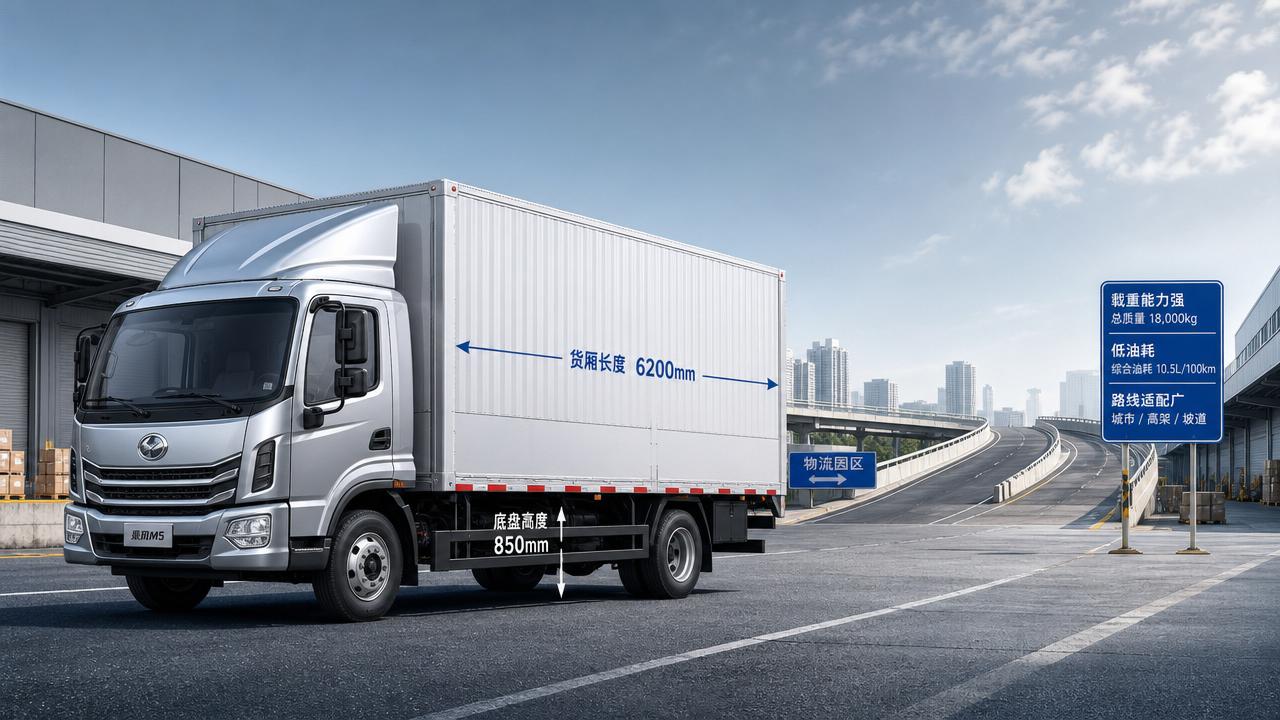
4_2 Cargo Truck buying starts with the route, not the brochure
A 4_2 Cargo Truck looks straightforward on paper, but buying the wrong specification usually shows up later in fuel bills, missed loads, and avoidable downtime.
That is why payload, fuel use, and route fit should be reviewed together, not as separate line items.
In engineering and commercial transport work, the truck must match loading patterns, road conditions, delivery radius, and service support.
A lighter body may improve efficiency, yet it can become a limitation if cargo density, axle load, or road grade is underestimated.
More common problems come from practical details: body length that does not suit the cargo, engine output that struggles on gradients, or fuel economy claims taken from ideal conditions.
For buyers comparing FOTON, SHACMAN, SINOTRUK, or similar platforms, the better approach is to treat the 4_2 Cargo Truck as an operating system, not just a unit price.
That means checking how the vehicle performs across duty cycle, maintenance access, export documentation, parts supply, and delivery timing.
With a stable exporter and authorized channel support, these checks become easier because specifications, compliance documents, and after-sales arrangements are clearer from the start.
How much payload is actually right for a 4_2 Cargo Truck?
The best payload is not the highest number available. It is the payload that stays legal, efficient, and repeatable on the routes the truck will run every week.
Start with three checks: average cargo weight, cargo volume, and axle distribution. A truck can reach body volume before it reaches legal payload, especially with packaged or low-density goods.
The opposite also happens. Dense cargo such as building materials, machinery parts, or industrial supplies can overload axles before the body is full.
In practical evaluation, ask whether the 4_2 Cargo Truck will carry full loads every trip or mixed loads with frequent part loading.
If trips are mostly full and repetitive, gross vehicle weight rating, chassis strength, suspension tuning, and tire specification deserve close attention.
If loads vary often, flexibility matters more. In that case, body design, side opening options, tail lift compatibility, and loading height may affect efficiency more than headline payload.
A useful rule is to leave room for real-world variance. Packaging, pallets, moisture, and route changes can all push actual load above planned figures.
A quick payload check before comparing offers
- Confirm legal gross weight and axle limits in the destination market.
- Measure average load density, not just total weight.
- Check body tare weight after customization.
- Review tire, suspension, and brake capacity together.
- Allow a safety margin for irregular loads and route changes.
Why do fuel use figures often differ from real operating cost?
Because fuel consumption is shaped by the job, not just by the engine. A 4_2 Cargo Truck running flat regional roads behaves very differently from one stopping every few kilometers.
Traffic, idling time, driver habits, body shape, wind resistance, and load consistency all matter. So do gearbox ratios and rear axle matching.
This is where many comparisons go wrong. Buyers compare engine displacement or catalog fuel data, but ignore whether the powertrain is tuned for urban delivery or longer intercity runs.
A truck that is underpowered may look economical unloaded, yet consume more fuel when climbing, restarting, or carrying full cargo repeatedly.
A well-matched 4_2 Cargo Truck usually balances torque, transmission ratio, and cruising speed. That balance reduces unnecessary shifting and keeps the engine in an efficient range.
It also helps to separate fuel use from total running cost. Cheaper fuel burn does not always mean lower lifecycle cost if the vehicle loses uptime or parts support is weak.
When supply continuity matters, access to authorized dealers, inventory availability, and service coordination can be just as important as one decimal point in fuel testing.
This kind of table usually reveals more than a simple price comparison, especially when the 4_2 Cargo Truck will operate across mixed routes.
Which route conditions should shape the truck specification?
Route fit is often the deciding factor between a truck that performs smoothly and one that becomes expensive to operate.
For paved urban routes, turning radius, cab visibility, braking response, and loading convenience usually rank high.
For regional or cross-border transport, fuel tank size, cruising stability, sleeper or cab comfort, and service intervals become more relevant.
If roads include construction access, rough surfaces, or steep entry points, ground clearance and suspension robustness deserve extra review, even for a 4_2 Cargo Truck used mainly on-road.
Body choice also follows the route. Box bodies support weather protection and cargo security. Stake or side-wall bodies can improve loading speed for mixed freight.
In actual export projects, route fit also includes compliance fit. Emission requirement, local registration rules, left-hand or right-hand drive, and climate adaptation must be confirmed early.
That is one reason many buyers prefer working with an experienced exporter that can coordinate vehicle selection, customization, paperwork, customs handling, and logistics in one process.
When the supplier has access to authorized 4S resources and stable inventory, lead time and configuration accuracy are easier to control.
Common route-fit signals that should not be missed
- Frequent short trips suggest focusing on maneuverability and easy loading.
- Long highway runs favor drivetrain efficiency and cab comfort.
- Mixed road quality requires stronger suspension and tire planning.
- Border or port delivery needs paperwork accuracy and predictable lead time.
What mistakes make a 4_2 Cargo Truck look cheap but cost more later?
The first mistake is buying on unit price alone. A lower purchase price can be offset by higher fuel use, weaker durability, or slower service support.
Another common mistake is treating all 4_2 Cargo Truck models as interchangeable. Similar dimensions do not mean similar frame strength, brake performance, or cabin durability.
Some buyers also underestimate body customization. Refrigerated body, van box, stake structure, tail lift, and reinforcement all change tare weight and usable payload.
After-sales planning is another blind spot. If spare parts, claim procedures, or technical support are unclear, small issues can turn into long downtime.
In cross-border purchases, documentation errors create their own cost. Model confirmation, VIN records, export files, and customs coordination need to be consistent from the beginning.
An exporter with strong industry links and experience across FOTON, SHACMAN, and SINOTRUK platforms can reduce these risks because specification review and process control are more structured.
How should offers be compared before placing an order?
A clean comparison sheet usually works better than a long specification stack. Keep the focus on operational fit, not just catalog completeness.
At minimum, compare chassis model, engine output, transmission, axle ratio, body dimensions, curb weight, rated payload, fuel tank, tire specification, and service coverage.
Then add trade factors. Delivery schedule, stock availability, customization lead time, document handling, shipment arrangement, and after-sales response should sit beside the technical data.
For many projects, the best value comes from the offer that reduces uncertainty. Stable inventory and clear export execution can protect the transport plan better than a marginally lower quote.
This is especially relevant when sourcing from China, where an experienced company such as Shandong Livol Truck International Trade can support selection, customization, customs clearance, and logistics as one coordinated workflow.
That does not replace technical evaluation. It simply makes the buying process more reliable and easier to audit.
A practical final checklist
- Match payload to legal load and cargo density.
- Check fuel use against real route conditions.
- Review body configuration and tare weight impact.
- Confirm parts supply, service path, and warranty scope.
- Verify documentation, compliance, and delivery timing.
What is the smartest next step before choosing a 4_2 Cargo Truck?
Turn the buying decision into a route-based checklist. That single step usually exposes whether a 4_2 Cargo Truck is properly matched to the operation.
List the real load profile, weekly mileage, road quality, body requirement, compliance target, and service expectation. Then compare offers against that list, not against marketing claims.
If the evaluation still feels close, give extra weight to supply stability, document accuracy, and after-sales coordination. Those factors protect long-term fleet performance more than they first appear.
A well-selected 4_2 Cargo Truck should carry the right payload legally, control fuel cost under real conditions, and fit the route without constant compromise.
That is usually the difference between a purchase that only looks competitive and one that keeps delivering value over time.
Search Starts Here