
News
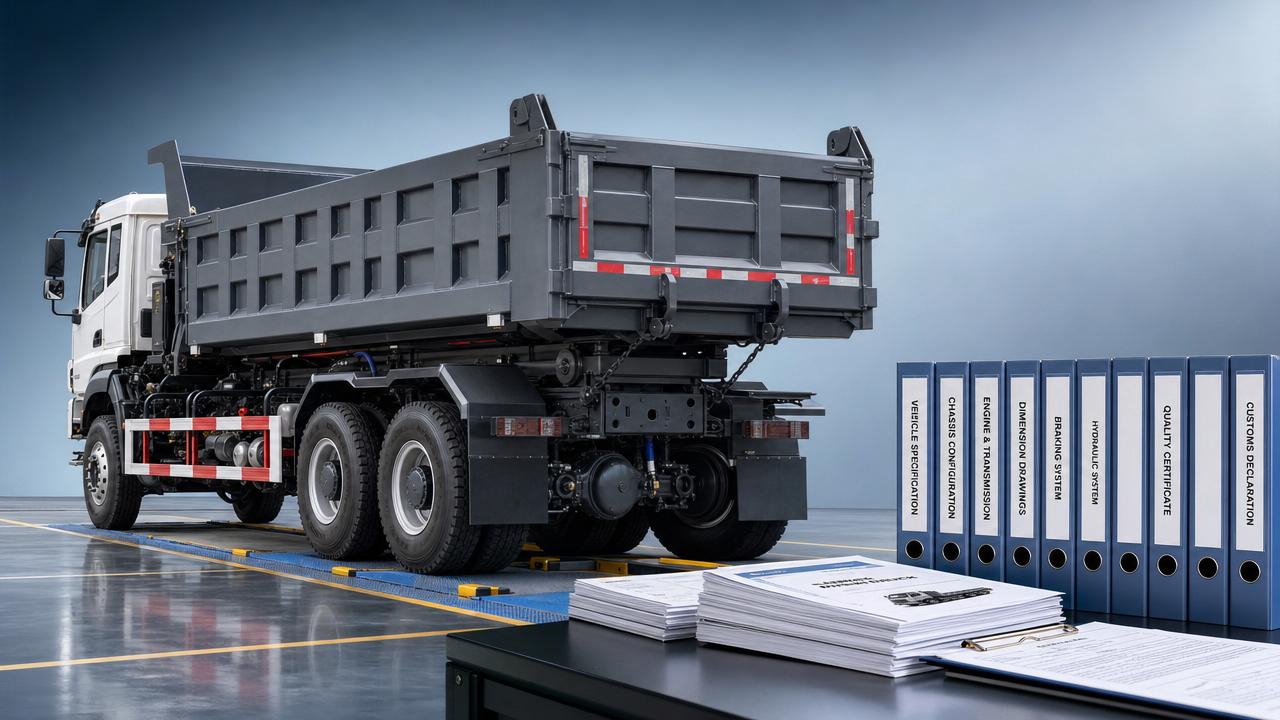
Before moving a Cangshan truck into the approval process, technical evaluators need a structured checklist that matches real operating conditions.
This article explains how to use the Cangshan Vehicle Configuration List to review configuration accuracy, compliance readiness, and field suitability before model approval begins.
In engineering vehicle export, early verification reduces correction cycles, avoids mismatched specifications, and supports smoother documentation, customs, delivery, and after-sales planning.
Shandong Livol Truck International Trade Co., Ltd. supports this process with authorized resources, stable inventory, and practical export coordination across FOTON, SHACMAN, and SINOTRUK platforms.
Why the Cangshan Vehicle Configuration List matters in different approval scenarios
The same model may perform well in one project but fail review in another because approval conditions are not identical.
A Cangshan Vehicle Configuration List is not only a technical sheet. It is a decision tool for matching vehicle capability to regulatory, environmental, and workload requirements.
Some applications focus on axle load and body dimensions. Others emphasize emissions, PTO compatibility, climbing power, or brake system confirmation.
Using the list correctly helps identify whether a proposed configuration is truly approval-ready or only commercially attractive on paper.
Scenario 1: Urban construction delivery needs tighter dimensional checks
Urban engineering transport often faces strict road access limits, turning radius constraints, and body size restrictions.
In this scenario, the Cangshan Vehicle Configuration List should be reviewed for wheelbase, overall length, cab width, cargo body size, and curb weight balance.
Engine output alone is not enough. A high-power model may still fail practical approval if the chassis layout creates poor maneuverability.
Check approach angle, departure angle, suspension type, and tire specification if the truck must enter narrow or uneven work zones.
Key judgment points for city-based approval
- Verify body dimensions against local operating limits.
- Confirm axle spacing supports turning and loading needs.
- Review emission level and noise compliance data.
- Check brake response and safety assistance availability.
Scenario 2: Mining and heavy-duty haulage require powertrain matching first
Mining roads, steep grades, and overload risk create a very different approval path.
Here, the Cangshan Vehicle Configuration List must be checked from the powertrain outward, not from appearance inward.
Start with engine horsepower, torque curve, gearbox ratio, rear axle ratio, and frame strength.
Then confirm whether the suspension, tires, and braking system match the target payload and road surface severity.
If the list shows strong engine data but light-duty axles, approval risk remains high because component balance is incomplete.
What to review under harsh-duty conditions
- Rated and actual payload alignment.
- Frame thickness and reinforcement design.
- Cooling system capacity for long climbs.
- Retarder, exhaust brake, or auxiliary braking support.
- Tire load index and traction suitability.
Scenario 3: Municipal and special-purpose work depends on interface compatibility
For tankers, mixer trucks, cranes, sanitation vehicles, and other adapted engineering vehicles, the chassis alone does not define approval success.
The Cangshan Vehicle Configuration List should be checked for PTO provisions, electrical interfaces, frame space, mounting points, and power reserve.
Hydraulic demand, body equipment weight, and center-of-gravity changes can all affect final compliance.
A chassis approved for cargo use may need a different axle rating or suspension layout after upper-body installation.
Special-use approval checks
- Confirm PTO type and output compatibility.
- Check electrical voltage and connector standards.
- Review frame clearance for body installation.
- Verify gross vehicle weight after modification.
How scenario demands change what to verify on the Cangshan Vehicle Configuration List
Practical steps to review the Cangshan Vehicle Configuration List before approval
A useful review process should move from basic identity checks to deeper operational validation.
- Confirm model code, chassis number format, drive type, and intended use.
- Check engine model, emission standard, rated power, and fuel system consistency.
- Review gearbox ratios, axle ratio, and expected speed versus gradeability.
- Verify front and rear axle ratings against planned load distribution.
- Compare tire specification with terrain, legal limits, and replacement availability.
- Validate braking configuration, ABS, air system layout, and auxiliary braking options.
- Check body dimensions, legal overhang, and turning requirements.
- Confirm document completeness for registration, export, and local inspection.
This step-by-step method makes the Cangshan Vehicle Configuration List a verification tool rather than a static sales document.
Recommended configuration matching actions by application scenario
Common approval mistakes when using the Cangshan Vehicle Configuration List
One common mistake is checking single parameters in isolation.
For example, a suitable engine rating does not guarantee approval if axle capacity, tire load index, or brake support is below demand.
Another mistake is ignoring actual body installation effects on gross weight and axle distribution.
Documentation gaps also create delays. The Cangshan Vehicle Configuration List should match certificates, invoices, technical descriptions, and shipping records.
A further oversight is failing to consider spare parts support for the selected specification in the destination market.
Approval may pass, but lifecycle reliability can still suffer if configuration choices are difficult to service locally.
Next steps for a smoother approval decision
A strong pre-approval process starts with a complete and accurate Cangshan Vehicle Configuration List and ends with scenario-based validation.
Review every key item against operating terrain, legal limits, body integration needs, and long-term service conditions.
When configuration review, compliance checks, and export documentation are aligned early, approval becomes faster and procurement risk becomes lower.
Shandong Livol Truck International Trade Co., Ltd. can support model selection, configuration confirmation, export paperwork, logistics coordination, and after-sales planning for engineering vehicle projects worldwide.
If a model is approaching approval review, organize the Cangshan Vehicle Configuration List first, then verify it against the exact application scenario before final submission.
Search Starts Here