
News
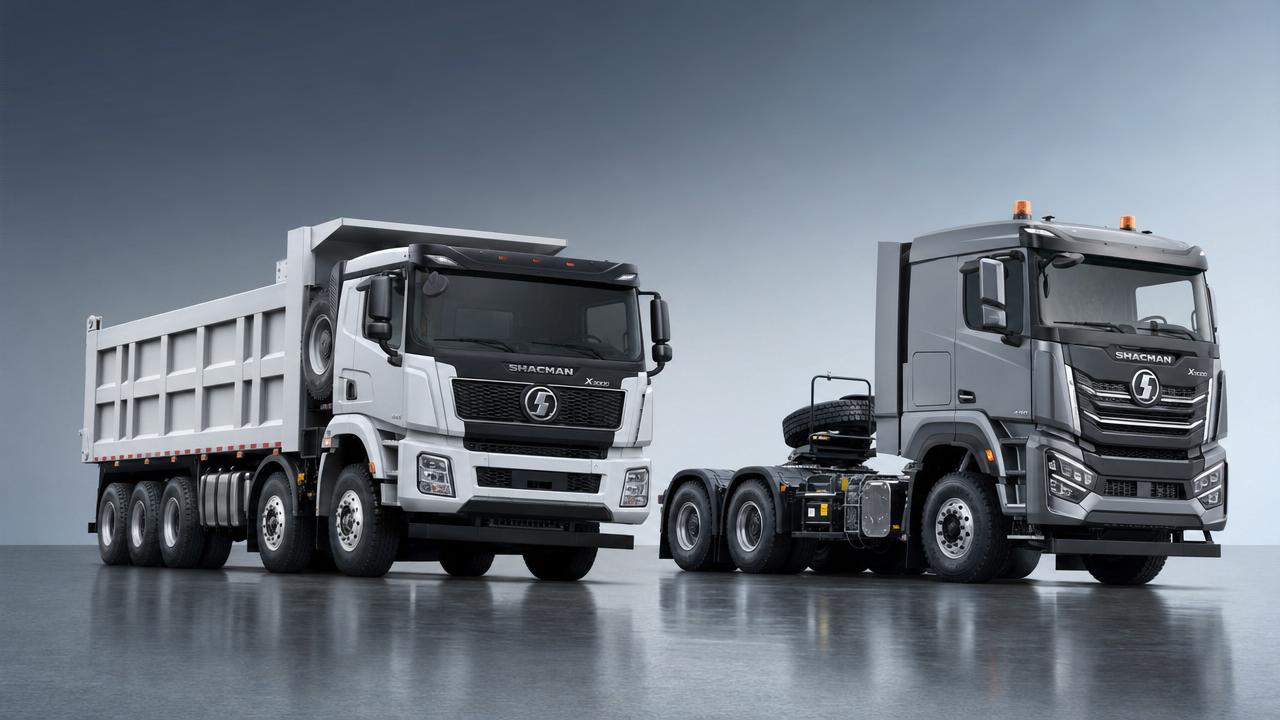
Before comparing trucks side by side, the Cangshan Vehicle Configuration List gives business evaluators a clearer view of specifications, feature differences and procurement value. It helps identify which models meet operational needs, budget expectations and compliance requirements, reducing guesswork early in the selection process. For buyers assessing Chinese commercial vehicles, this list is often the most practical starting point.
Why Scenario Differences Matter Before Any Model Comparison
For business evaluators in the engineering vehicle sector, a truck is never purchased in isolation. It is bought for a jobsite, a route type, a loading pattern, a compliance environment, and a total cost target. That is why the Cangshan Vehicle Configuration List should be read as a decision tool rather than a static specification sheet. The same chassis, engine rating, axle ratio, or body configuration can be highly efficient in one operating scenario and financially unsuitable in another.
In practical procurement work, many comparison mistakes happen too early. Buyers may focus on engine horsepower while overlooking payload efficiency, or compare upfront price without checking emission level, tire specification, cab comfort, PTO compatibility, or service access. A structured reading of the Cangshan Vehicle Configuration List helps evaluators connect each parameter to a real operating environment. This is especially important when assessing Chinese commercial vehicles for construction, municipal, logistics-support, mining-support, or mixed-use engineering tasks.
For companies sourcing from reliable exporters such as Shandong Livol Truck International Trade Co., Ltd., the configuration review stage also supports smoother discussions on customization, stock availability, export documentation, logistics planning, and after-sales expectations. In other words, the list is not only about what the vehicle is, but whether the vehicle fits the business case.
Where the Cangshan Vehicle Configuration List Is Most Useful in Real Business Scenarios
The Cangshan Vehicle Configuration List becomes most valuable when evaluators need to separate “usable” models from “best-fit” models. In engineering vehicle procurement, this usually happens in several common situations.
- Contractor fleets preparing for earthmoving, aggregate transport, or site material distribution
- Municipal service operators checking body adaptation, legal loading, and urban access requirements
- Mining or heavy-duty support teams evaluating torque, axle durability, suspension strength, and rough-road reliability
- International buyers matching Chinese vehicle specifications with destination-country regulations and local maintenance capability
- Procurement departments comparing standard stock units against customized builds for faster deployment
In each of these situations, the same list answers different questions. A contractor may care most about payload and cycle efficiency. A finance-oriented evaluator may focus on lifecycle cost and parts commonality. A cross-border buyer may prioritize homologation, emissions, and serviceability. This is why scenario-based reading is more effective than a generic model ranking.
Typical Application Scenarios and What Evaluators Should Check First
1. Urban Construction and Municipal Engineering
For urban construction work, the Cangshan Vehicle Configuration List should be reviewed with an emphasis on maneuverability, emissions level, turning radius, brake system specification, and body dimensions. Vehicles operating in dense city zones often face road restrictions, axle load enforcement, and tight access conditions. A larger engine or a longer wheelbase may not create more value if the truck loses flexibility or faces route limitations.
Evaluators in this scenario should pay close attention to cab type, gearbox ease of use, visibility support features, and compatibility with tipper bodies or municipal-purpose upper structures. Driver comfort also matters more than many buyers expect because stop-and-go operations increase fatigue and can affect productivity.
2. Quarry, Mining-Support, and Harsh Terrain Operations
In quarry or mining-support scenarios, the Cangshan Vehicle Configuration List should be interpreted from a durability-first perspective. Here, drivetrain resilience is often more important than nominal speed or standard road efficiency. Evaluators should review engine torque band, transmission matching, axle capacity, suspension reinforcement, tire specification, frame strength, and fuel tank suitability for remote work environments.
A model that looks cost-effective on paper may underperform if the axle ratio is not suitable for gradients or if the chassis is configured for paved-road use. In this scenario, a stronger configuration usually reduces downtime risk and improves total operating continuity, even if initial purchase cost is higher.
3. Mixed Fleet Use Across Construction and Road Logistics
Some businesses do not run a single-use fleet. They may move materials into job sites during the day and serve regional transport tasks during off-peak periods. In this case, the Cangshan Vehicle Configuration List helps identify balanced configurations rather than extreme ones. Evaluators should compare payload flexibility, body adaptability, fuel economy, maintenance intervals, and cabin practicality.
This scenario often benefits from mainstream, proven specifications with stable parts supply. Businesses should avoid over-customizing unless there is a clear utilization benefit. A balanced truck may deliver higher annual return than a highly specialized unit with lower utilization outside one narrow task.
4. Export Procurement for Different Regulatory Markets
For overseas buyers, the Cangshan Vehicle Configuration List is also a compliance checkpoint. Emission standards, lighting systems, tire standards, safety equipment, left-hand or right-hand drive, and documentation support can all affect whether a vehicle is practically importable and operationally legal. This is where working with an experienced exporter matters.
Shandong Livol Truck International Trade Co., Ltd. supports buyers with model selection, customization, documentation, customs clearance, and logistics coordination. For business evaluators, this means the list should not be read only for technical fit, but also for delivery feasibility and after-sales alignment in the destination market.
Scenario Comparison Table: How the Same Configuration Creates Different Value
The table below shows how the Cangshan Vehicle Configuration List should be interpreted differently depending on the operating scenario.
What Different Decision-Makers Usually Look for in the Configuration List
Another reason the Cangshan Vehicle Configuration List matters is that different stakeholders read it differently. A good evaluation process accounts for these internal priorities early.
When these viewpoints are combined, the Cangshan Vehicle Configuration List becomes a shared reference point that reduces internal disagreement and speeds up model filtering.
Common Misjudgments When Using the Cangshan Vehicle Configuration List
Even experienced buyers can misread a configuration list if they treat every item as equally important. In practice, several mistakes appear repeatedly.
- Assuming higher power always means better productivity, without checking gearing, payload pattern, and road conditions
- Focusing on purchase price while ignoring durability differences between standard-duty and heavy-duty configurations
- Overlooking destination-country requirements during export procurement
- Comparing models from different intended applications without normalizing for task type
- Ignoring after-sales support, spare parts availability, and maintenance familiarity
These issues matter because a specification sheet does not explain operational consequences by itself. Evaluators must translate each configuration item into site performance, legal usability, maintenance burden, and resale or redeployment value.
How to Use the List for Better Shortlisting and Supplier Discussions
A practical way to use the Cangshan Vehicle Configuration List is to build a three-step screening process. First, remove non-compliant models based on regulation, dimensions, or body incompatibility. Second, score remaining models by scenario-critical items such as axle strength, engine matching, payload logic, and maintenance practicality. Third, confirm supplier-side realities including inventory, lead time, customization feasibility, parts support, and export handling.
This is where established exporters add measurable value. Shandong Livol Truck International Trade Co., Ltd. is the official authorized domestic and overseas dealer for FOTON, SHACMAN, and SINOTRUK, operates authorized 4S stores across China, and maintains sufficient vehicle inventory for stable supply and fast delivery. For evaluators, that means shortlisted configurations can move more quickly from paper review to real procurement planning.
A strong supplier conversation should include the intended scenario, expected payload, road condition, annual mileage, maintenance environment, and destination compliance needs. When the Cangshan Vehicle Configuration List is discussed in this way, it becomes the basis for a solution, not just a catalog comparison.
FAQ: Business Questions Evaluators Commonly Ask
Is the Cangshan Vehicle Configuration List enough to choose a model?
It is the best starting point, but not the only step. It helps narrow options quickly, yet final decisions should also consider route conditions, body requirements, compliance details, delivery schedule, and after-sales support.
Which section of the list matters most for engineering vehicle buyers?
That depends on the scenario. For urban projects, dimensions and emissions can be decisive. For quarry support, axle, frame, and torque-related items usually matter more. For export buyers, compliance and documentation-related details may come first.
How can buyers avoid comparing the wrong models?
Define the operating scenario before reviewing the Cangshan Vehicle Configuration List. Compare only models intended for similar duty cycles, road conditions, payload levels, and regulatory environments. Otherwise, the comparison may look clear on paper but fail in operation.
Final Takeaway for Scenario-Based Vehicle Evaluation
The real value of the Cangshan Vehicle Configuration List is not that it shows technical data, but that it helps business evaluators connect technical data to operational fit. In engineering vehicle procurement, the right model is the one that performs reliably in its intended scenario, complies with required standards, supports efficient maintenance, and aligns with total procurement value.
If your team is comparing Chinese commercial vehicles for construction, municipal, mining-support, or export projects, start by mapping your actual use case to the key items on the Cangshan Vehicle Configuration List. Then discuss shortlisted configurations with a professional exporter that can support selection, customization, documentation, customs clearance, and delivery. That approach will give you a faster, more confident path from specification review to the right purchasing decision.
Search Starts Here