
News
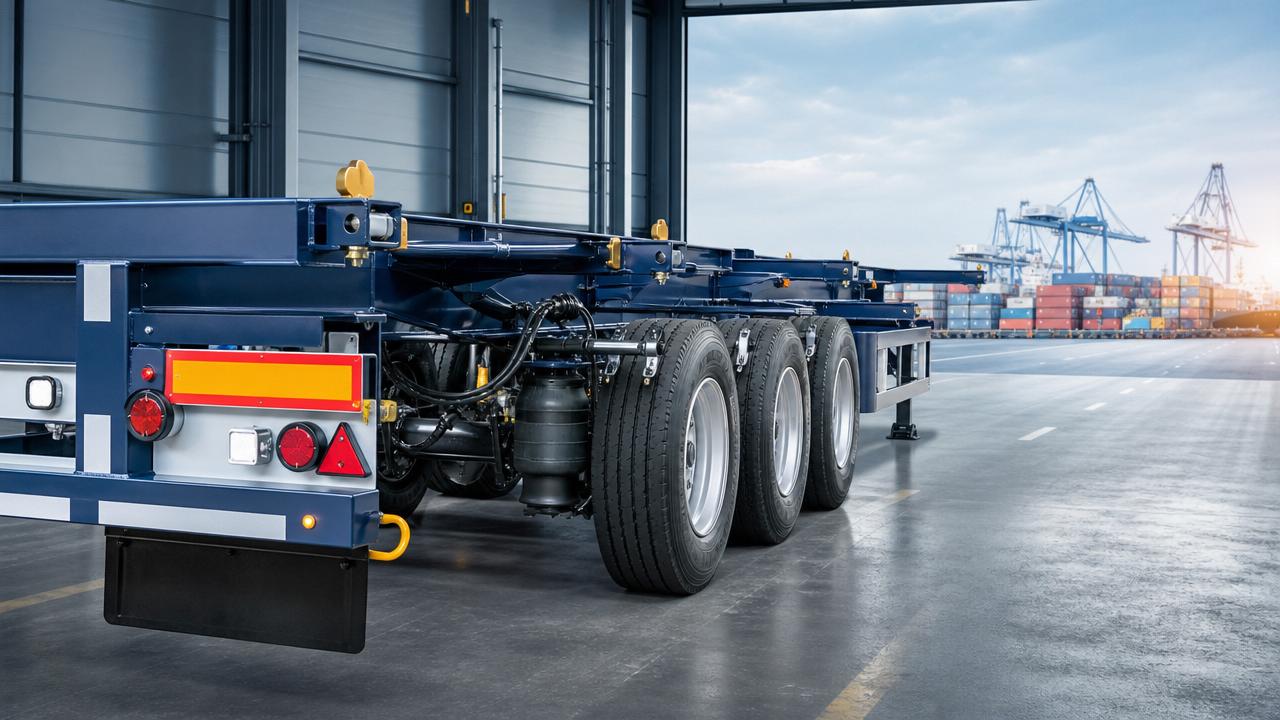
For after-sales maintenance teams, keeping a Skeleton (Container) Semi-Trailer in peak condition directly reduces downtime, protects cargo, and extends working life.
In engineering vehicle operations, small faults often become expensive delays. A loose twist lock, uneven tire wear, or air leak can stop a trailer unexpectedly.
This guide explains practical maintenance points by operating scenario, helping improve reliability, workshop planning, and service efficiency for every Skeleton (Container) Semi-Trailer.
Why maintenance priorities change by operating scenario
Not every Skeleton (Container) Semi-Trailer faces the same risks. Port shuttle work, highway transport, and rough terminal access roads create different wear patterns.
A trailer moving containers all day in a port sees frequent locking cycles. A long-haul unit sees more brake heat, tire fatigue, and lighting exposure.
When maintenance matches real use conditions, teams can inspect the right parts sooner, reduce unplanned stops, and improve spare parts control.
Scenario 1: Port and terminal shuttle operations need frequent locking checks
In port circulation, the Skeleton (Container) Semi-Trailer experiences constant loading, unloading, reversing, and docking. Twist locks become the first critical inspection point.
Check lock rotation, handle return, wear surfaces, and retaining components daily. If the lock does not seat fully, container stability and loading safety are affected.
The frame around container contact points also deserves attention. Repeated impact can create cracks, corrosion pockets, or deformation near cross members.
Inspect weld seams, landing gear brackets, and rear structure for stress marks. Early repair prevents larger structural downtime later.
Key judgment points for terminal use
- Twist locks must engage smoothly without excessive play.
- Container support areas should show even contact.
- Rear lamps and side markers must survive frequent reversing impact.
- Landing gear should raise and lower without stiffness.
Scenario 2: Long-haul container transport demands brake and tire discipline
For highway service, a Skeleton (Container) Semi-Trailer spends long periods under load at stable speed. Brake condition and tire health become major uptime factors.
Inspect brake linings, drums or discs, air chambers, slack adjusters, and hoses on schedule. Small air leaks gradually reduce braking response and increase safety risk.
Check tire pressure before dispatch and monitor shoulder wear, cuts, and irregular tread patterns. Uneven wear often signals axle alignment or suspension issues.
Wheel fasteners should also be checked carefully. Loose wheel nuts create severe failure risk and can remove a trailer from service immediately.
Highway service warning signs
- Brake pull, delayed release, or uneven temperature between wheels.
- Rapid air pressure loss after parking.
- Tire feathering, cupping, or heat buildup.
- Abnormal sway during lane change or braking.
Scenario 3: Rough industrial roads require closer frame and suspension inspection
Some Skeleton (Container) Semi-Trailer units enter construction zones, depots, mines, or uneven factory access roads. These environments create repeated shock loading.
In this scenario, inspect suspension hangers, equalizers, leaf springs, U-bolts, and axle seats more often. Loose or cracked parts can quickly damage neighboring components.
Pay close attention to the main beam and cross member connection points. Mud, standing water, and debris can hide corrosion and fatigue.
A good cleaning routine matters here. Dirt removal makes crack detection easier and prevents hidden rust from spreading beneath coatings.
Core checks for harsh road conditions
- Inspect suspension fasteners for torque loss.
- Look for bent members and impact damage under the chassis.
- Check mudguards, brackets, and wiring clamps.
- Examine protective paint for chips and exposed steel.
Scenario 4: High-frequency dispatch fleets need faster electrical inspections
A Skeleton (Container) Semi-Trailer used in dense daily dispatch faces repeated coupling, uncoupling, and exposure to vibration, dust, and weather.
Electrical faults often appear small but cause immediate operating delays. Check connectors, cable routing, plug sockets, lamp seals, and grounding points regularly.
Watch for rubbing damage near the front harness and chassis clips. A worn cable sheath can cause intermittent signal loss and difficult fault tracing.
If the trailer uses ABS or EBS, verify warning indicators and sensor wiring. Electronic braking support should never be treated as a secondary item.
How maintenance needs differ across operating scenarios
Maintenance actions that best fit each Skeleton (Container) Semi-Trailer scenario
A practical plan should match workload, road condition, and trailer age. The same checklist should not be applied with the same intensity everywhere.
- Create daily checks for locks, tires, lights, and air leaks.
- Set weekly checks for suspension fasteners and wiring retention.
- Use monthly structural inspections for welds, frame straightness, and corrosion.
- Record recurring defects by route, cargo type, and trailer number.
- Replace wear parts before failure during planned service windows.
For fleets with mixed tasks, dividing trailers by duty profile helps. It prevents over-servicing some units and under-protecting high-stress trailers.
Common maintenance mistakes that increase Skeleton (Container) Semi-Trailer downtime
One common mistake is focusing only on visible damage. Many failures begin with small alignment changes, hidden cracks, or gradual air leakage.
Another mistake is ignoring operating history. A Skeleton (Container) Semi-Trailer working short cycles in a port should not follow only long-haul intervals.
Teams also sometimes replace a failed part without checking the cause. Tire wear may come from alignment, suspension play, or overloading.
Electrical issues are often underestimated. A damaged connector can disable rear lighting, delay dispatch, and create road compliance problems.
Build a more reliable service plan with professional trailer support
Effective maintenance is not only about repair skill. It also depends on parts availability, technical knowledge, and a realistic understanding of operating conditions.
Shandong Livol Truck International Trade Co., Ltd., based in Shandong, China, provides reliable commercial vehicle export support with strong supply capability and industry experience.
As an authorized dealer for FOTON, SHACMAN, and SINOTRUK, the company supports vehicle selection, customization, documentation, customs clearance, logistics, and after-sales coordination.
If a Skeleton (Container) Semi-Trailer maintenance plan needs better uptime performance, the next step is clear: review operating scenarios, inspect failure patterns, and align service actions with real working conditions.
A structured inspection routine today can prevent expensive downtime tomorrow and keep every Skeleton (Container) Semi-Trailer working more safely and efficiently.
Search Starts Here