News
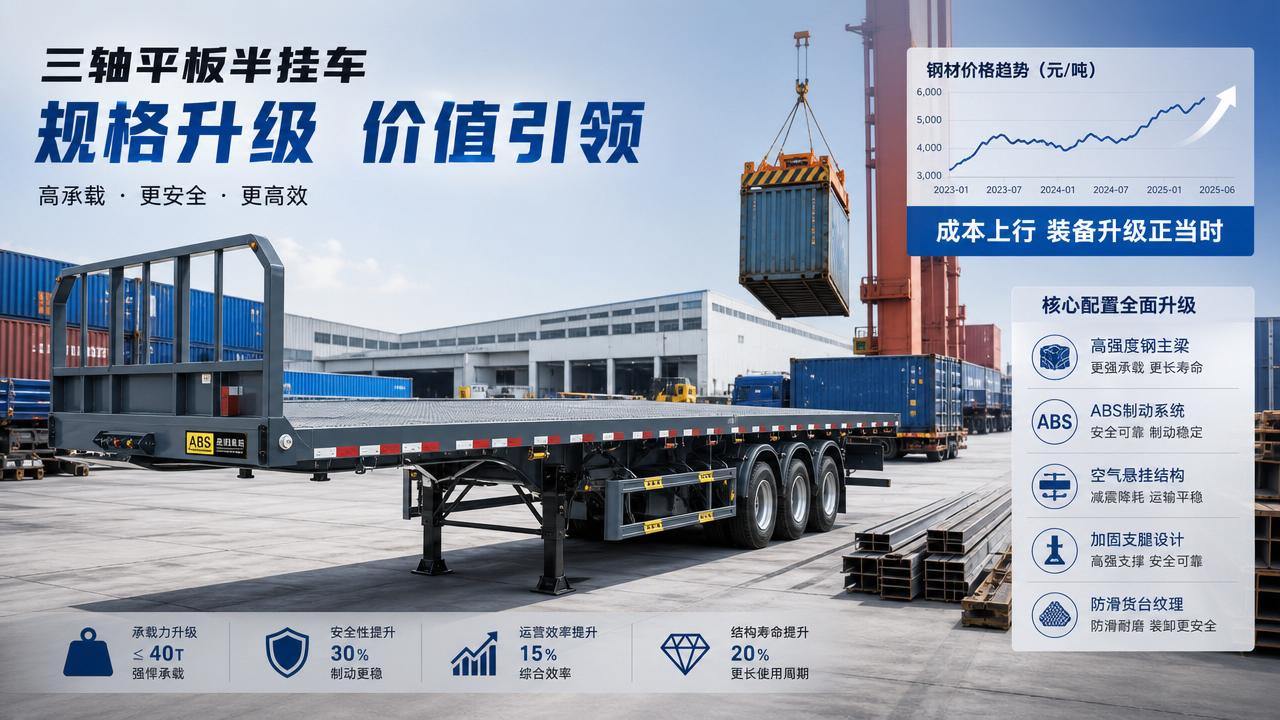
For fleet buyers and procurement leaders, understanding Flatbed Semi-Trailer price trends and specification changes in 2026 is essential for controlling total ownership costs and securing the right transport capacity.
As demand, regulations, and configuration options shift, the Flatbed Semi-Trailer market is becoming more complex. Better decisions now can reduce risk, improve utilization, and protect long-term investment value.
What is driving Flatbed Semi-Trailer price trends in 2026?
Flatbed Semi-Trailer pricing in 2026 is shaped by steel costs, axle supply, braking systems, tire specifications, and export freight conditions.
Raw material volatility remains the biggest factor. High-tensile steel improves payload efficiency, but it also raises manufacturing cost when supply tightens.
Brake and suspension upgrades also influence price. More buyers now request ABS, air suspension, and reinforced landing gear for higher reliability.
Regional compliance adds another layer. Export units often need lighting, reflective markings, underrun protection, or axle standards that differ by destination.
In many cases, the 2026 Flatbed Semi-Trailer price is not rising because of one component. It reflects combined pressure across materials, labor, and compliance.
Main price variables to watch
- Chassis steel grade and beam design
- Number and brand of axles
- Mechanical or air suspension
- Brake system specification
- Deck length, width, and rated payload
- Export packaging and delivery method
Which Flatbed Semi-Trailer spec changes matter most in 2026?
The most important spec changes in 2026 center on weight optimization, durability, safety, and application flexibility.
Many Flatbed Semi-Trailer models now use optimized main beams. This reduces tare weight while preserving structural strength for heavy engineering cargo.
Suspension choices are changing too. Mechanical suspension remains common, but air suspension is gaining attention for sensitive cargo and longer routes.
Side protection, anti-slip deck surfaces, and stronger twist-lock options are also more common. These changes improve safety and expand cargo compatibility.
Electrical systems have improved as well. Better harness routing and sealed connectors reduce failures in humid, dusty, or high-vibration conditions.
Spec upgrades with strong practical value
- High-strength steel beam structures
- ABS and improved brake response
- Reinforced king pin and landing gear
- Wider cargo securing points
- Corrosion-resistant paint systems
How do application needs change the right Flatbed Semi-Trailer configuration?
Not every Flatbed Semi-Trailer should be chosen by price alone. Cargo type, road conditions, loading equipment, and trip distance strongly affect the best specification.
For construction materials, a standard 3-axle Flatbed Semi-Trailer may be enough. For machinery transport, reinforced beams and heavier landing legs are often wiser.
Container-compatible transport may need twist locks. Long steel, timber, or precast products may require extended deck length and better cargo restraint layout.
If routes include uneven roads, stronger suspension and tire selection become more important than a lower initial purchase price.
If utilization is high, paint quality, welding consistency, and service support can influence ownership cost more than a small difference in quoted price.
Quick matching guide
How can buyers compare Flatbed Semi-Trailer quotes without hidden cost mistakes?
A low Flatbed Semi-Trailer quote can look attractive, but important components may be downgraded or excluded.
The best comparison method is line-by-line evaluation. Check axle brand, suspension type, tire count, rim specification, brake valves, and deck thickness.
Also verify whether the quote includes spare tire carrier, tool box, side guards, rear bumper, and export support documents.
Delivery terms matter too. EXW, FOB, and CIF can create large final price differences, especially for bulky engineering vehicle equipment.
After-sales capability should never be ignored. A reliable supplier can reduce downtime through documentation accuracy, spare parts support, and technical response.
Quote review checklist
- Confirm exact dimensions and payload rating.
- Check steel thickness and beam structure.
- Verify axle, tire, and suspension brands.
- Review brake and electrical specifications.
- Ask about warranty and spare parts availability.
- Confirm export documentation and shipping terms.
What risks and misconceptions should be avoided in 2026 Flatbed Semi-Trailer sourcing?
One common mistake is assuming all Flatbed Semi-Trailer units with similar dimensions perform the same. Structural details can create major differences in lifespan.
Another risk is over-specifying. Not every route needs premium suspension or maximum reinforcement. Excess configuration can increase cost without enough return.
Under-specifying is equally dangerous. Light-duty components in rough engineering transport conditions may cause repair costs, cargo delays, and safety issues.
A further misconception is focusing only on purchase price. Real ownership cost includes maintenance, tire wear, downtime, corrosion resistance, and resale value.
Lead time planning is also critical. Customized Flatbed Semi-Trailer orders may require more production and inspection time than stock models.
Risk reminder table
How should businesses prepare for Flatbed Semi-Trailer purchasing in 2026?
Preparation starts with a clear transport profile. Define payload range, cargo dimensions, route quality, and expected annual mileage before requesting quotations.
Then prioritize specifications that directly affect productivity. In many projects, frame strength, brake quality, and axle durability matter most.
Work with suppliers that can support customization and export execution. This is especially important for engineering vehicle operations with varied regional requirements.
Shandong Livol Truck International Trade Co., Ltd., based in Shandong, China, offers strong commercial vehicle export capability and practical delivery support.
As an authorized dealer for FOTON, SHACMAN, and SINOTRUK, the company benefits from strong industry resources, broad inventory, and stable supply.
Its export team supports vehicle selection, customization, documentation, customs clearance, logistics coordination, and after-sales communication across global markets.
For 2026, the best Flatbed Semi-Trailer decision will balance price, specification, compliance, and service reliability rather than focusing on one factor alone.
FAQ summary
Flatbed Semi-Trailer market changes in 2026 bring both pressure and opportunity. Better sourcing starts with accurate specification planning and transparent supplier comparison.
If a project requires dependable export support, tailored configurations, and stable commercial vehicle supply, the next step is to request a detailed technical and price consultation.
Search Starts Here