
News
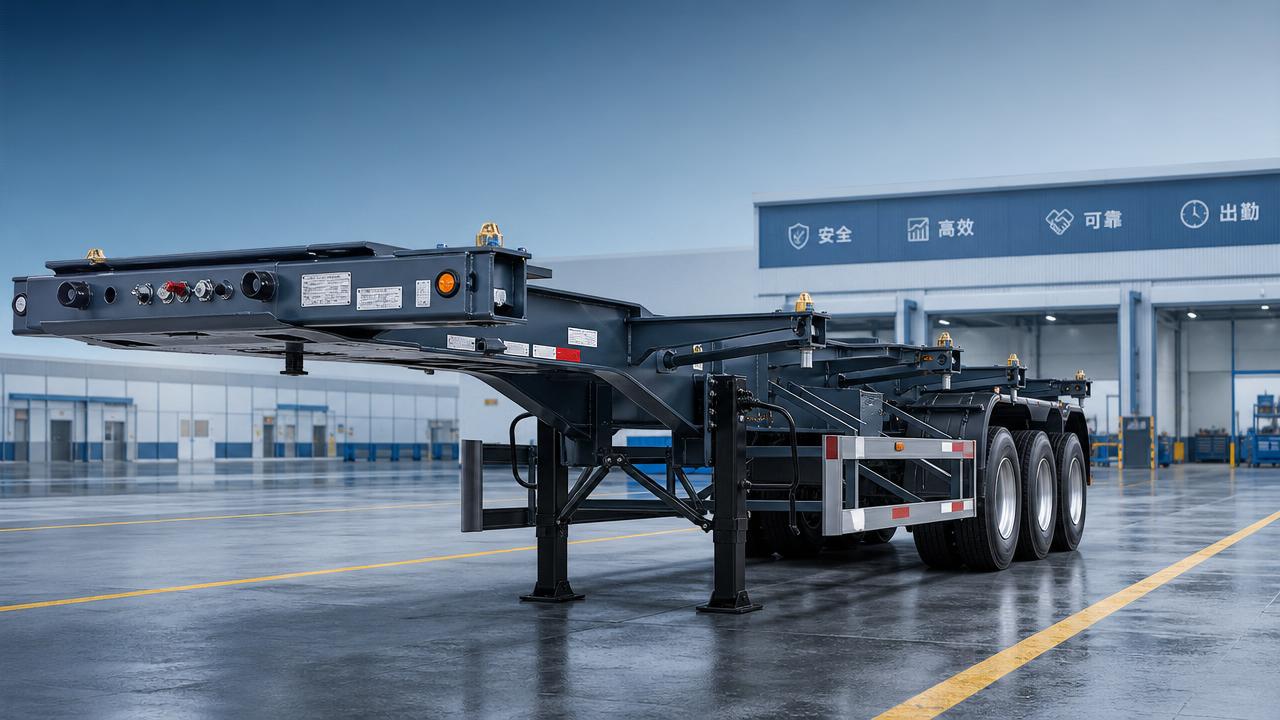
For after-sales maintenance teams, keeping a Skeleton (Container) Semi-Trailer in reliable working condition is key to reducing downtime, avoiding costly delays, and extending service life. From frame inspections and twist lock checks to axle, brake, and tire maintenance, every detail matters in daily operations. This guide highlights the essential maintenance points that help improve trailer availability, safety, and long-term performance.
Why maintenance expectations for Skeleton (Container) Semi-Trailer fleets are changing
In the engineering vehicle and commercial transport sector, maintenance is no longer treated as a basic workshop function. It is increasingly a strategic lever tied to uptime, route reliability, compliance, and total operating cost. This shift is especially visible in the Skeleton (Container) Semi-Trailer segment, where equipment often operates in demanding conditions such as ports, logistics parks, intermodal yards, construction-linked cargo routes, and high-frequency regional transport.
Several practical changes are driving this trend. Fleet utilization is becoming more intensive, delivery windows are tighter, and operators expect trailers to stay road-ready with fewer unplanned stops. At the same time, roadside inspections, load security requirements, and customer expectations around punctuality are becoming stricter. For after-sales maintenance personnel, this means a Skeleton (Container) Semi-Trailer must be serviced with a more preventive and risk-based mindset, rather than waiting for visible failure.
The result is clear: maintenance points that once seemed routine, such as twist lock wear, landing gear lubrication, brake line sealing, or chassis crack detection, now have a direct impact on business continuity. A minor defect can stop a loaded trailer, disrupt yard planning, create delivery penalties, and increase emergency repair costs.
The strongest trend signals maintenance teams should pay attention to
For after-sales teams working with a Skeleton (Container) Semi-Trailer fleet, the biggest signal is that component failure is becoming more operationally expensive than before. Even when replacement parts are available, downtime now affects scheduling, customer confidence, and driver productivity more sharply. This is why maintenance planning is shifting from interval-only servicing to condition-focused inspection.
Another important change is that operators are paying closer attention to structural durability. Since a Skeleton (Container) Semi-Trailer carries concentrated loads through the main beam, cross members, suspension areas, and container locking points, repeated stress can accumulate quietly. Corrosion, weld fatigue, and looseness around high-load joints may not appear dramatic at first, but they often become the root cause of severe downtime events.
A third trend is the rising value of standardization. Fleets increasingly want maintenance records, inspection checklists, spare parts consistency, and technician response processes to be more systematic. This helps reduce diagnostic time and improves decision-making on whether a trailer should return to service, enter scheduled repair, or undergo deeper structural assessment.
Trend change table for daily maintenance priorities
What is driving these maintenance changes
The first driver is workload intensity. A Skeleton (Container) Semi-Trailer that handles container turnover frequently experiences repeated loading impacts, yard maneuvering stress, and varying road quality. These conditions accelerate wear on twist locks, bogie components, tires, and weld zones.
The second driver is safety accountability. Failures related to locking systems, braking performance, and structural integrity are no longer seen as isolated workshop issues. They affect road safety, cargo security, and compliance exposure. Maintenance teams must therefore document inspection points more carefully and treat recurring defects as trend signals rather than one-off incidents.
The third driver is lifecycle economics. Operators are under pressure to extract more value from every trailer while controlling repair cost volatility. Timely servicing of a Skeleton (Container) Semi-Trailer reduces secondary damage. For example, early correction of axle alignment can prevent rapid tire wear, bearing overload, and unnecessary fuel loss from rolling resistance.
The fourth driver is global service expectations. Companies such as Shandong Livol Truck International Trade Co., Ltd., with broad vehicle supply capability, professional export support, and after-sales coordination experience, are part of a market environment where customers increasingly expect not only delivery of quality commercial vehicles, but also practical guidance on long-term operation, service scheduling, and parts support.
The maintenance points now most closely linked to downtime reduction
1. Frame and weld inspection has become a priority, not a formality
A Skeleton (Container) Semi-Trailer depends on its frame geometry and weld integrity to maintain safe load transfer. Maintenance personnel should inspect the main beam, gooseneck area, cross members, rear end structure, suspension brackets, and landing gear mounting points for cracks, deformation, corrosion, and paint disturbance that may indicate stress movement. Special attention should be given to trailers operating on uneven surfaces or carrying high-frequency container loads.
2. Twist lock reliability is a direct uptime issue
Twist locks are among the most operationally critical parts on a Skeleton (Container) Semi-Trailer. Wear, incomplete locking, bent mechanisms, corrosion, or poor lubrication can delay loading, cause rejection at terminals, or create dangerous cargo security problems. Maintenance teams should verify lock engagement, handle operation, return spring behavior, and mounting tightness. If lock performance feels inconsistent, replacement should be considered early rather than after a field complaint.
3. Axle, suspension, and wheel-end checks influence both safety and cost
Suspension fatigue, loose U-bolts, worn bushings, damaged shock absorbers, and hub heat abnormalities are common sources of hidden downtime. A Skeleton (Container) Semi-Trailer that appears usable can still be developing uneven load distribution and premature tire damage. Maintenance should include torque verification, bushing condition review, axle alignment observation, bearing play checks, and detection of oil leakage around hub assemblies.
4. Brake system inspection must be more systematic
With stricter operating expectations, brake checks should extend beyond lining thickness. Air hoses, couplings, chambers, slack adjusters, valves, drums or discs, and ABS-related circuits all deserve routine review. Air leaks that seem minor can grow into route failures. Brake imbalance can increase stopping distance and tire wear. For a Skeleton (Container) Semi-Trailer in intensive service, brake function testing should be scheduled more proactively.
5. Tire management is now a diagnostic tool, not just a replacement task
Tire wear patterns often reveal broader trailer issues. Shoulder wear may signal underinflation or overload behavior. One-sided wear may indicate alignment or suspension problems. Irregular wear can point to looseness or brake drag. For after-sales teams, regular tire data recording helps identify whether a Skeleton (Container) Semi-Trailer needs deeper structural or running-gear attention before breakdown occurs.
6. Landing gear and electrical systems should not be overlooked
Landing gear damage can immobilize a trailer during loading or parking operations, while lighting and wiring failures can trigger compliance issues and trip delays. Crank operation resistance, gearbox lubrication, leg synchronization, foot plate wear, cable protection, connector sealing, and lamp function should all be included in regular checks.
How these changes affect different maintenance roles
What smart maintenance teams should do next
The most effective response is to classify every Skeleton (Container) Semi-Trailer by duty intensity. A trailer running short cycles in port environments should not follow the same inspection rhythm as one used in lighter regional work. Maintenance frequency should reflect real operating stress, not only calendar intervals.
Second, create a defect history for each trailer. Repeated air line leaks, recurring tire wear, or recurring lock adjustment issues are not isolated problems. They are signals that a root cause may exist in operating practice, loading patterns, or component quality. Good records help maintenance teams move from reactive repair to informed judgment.
Third, use pre-dispatch inspections more effectively. A short, disciplined check of locks, air lines, tires, lamps, and landing gear can prevent many same-day failures. In high-turnover operations, this inspection discipline is often one of the best tools for reducing downtime on a Skeleton (Container) Semi-Trailer fleet.
Fourth, align service capability with supplier support. Reliable exporters and vehicle partners can play an important role by supporting parts availability, technical communication, and model-specific service guidance. This becomes especially valuable for fleets operating mixed brands or serving international routes.
Key signals to monitor over the coming service cycle
Maintenance teams should continue watching several indicators: increasing frequency of twist lock adjustment, unexplained tire wear acceleration, higher brake temperature differences, visible corrosion around structural joints, repeated electrical failures, and more workshop returns for the same trailer. These are practical warning signs that the Skeleton (Container) Semi-Trailer may be entering a higher-risk phase of service life.
It is also wise to monitor whether operating conditions are changing. New routes, heavier turnaround pressure, rougher surfaces, or different container handling practices often require maintenance standards to be updated. What worked last year may no longer be enough to protect uptime today.
Final judgment and action direction
The main industry direction is clear: maintenance for the Skeleton (Container) Semi-Trailer is becoming more data-aware, more preventive, and more closely tied to operational performance. For after-sales maintenance personnel, the opportunity is not simply to repair faster, but to identify failure trends earlier and reduce interruption risk before it reaches the road.
If your business wants to judge the impact of these changes on its own fleet, focus on a few practical questions: Which trailers experience the highest repeat defects? Which maintenance points cause the most route delays? Are twist locks, brake components, suspension parts, and tires being checked at the right frequency? Are inspection records detailed enough to support trend judgment? The better these questions are answered, the easier it becomes to improve availability, lower repair volatility, and extend the working life of each Skeleton (Container) Semi-Trailer.
For companies seeking dependable commercial vehicle supply and coordinated after-sales support, working with experienced partners such as Shandong Livol Truck International Trade Co., Ltd. can help strengthen not only procurement confidence, but also long-term maintenance planning, service responsiveness, and fleet reliability in demanding operating environments.
Search Starts Here