
News
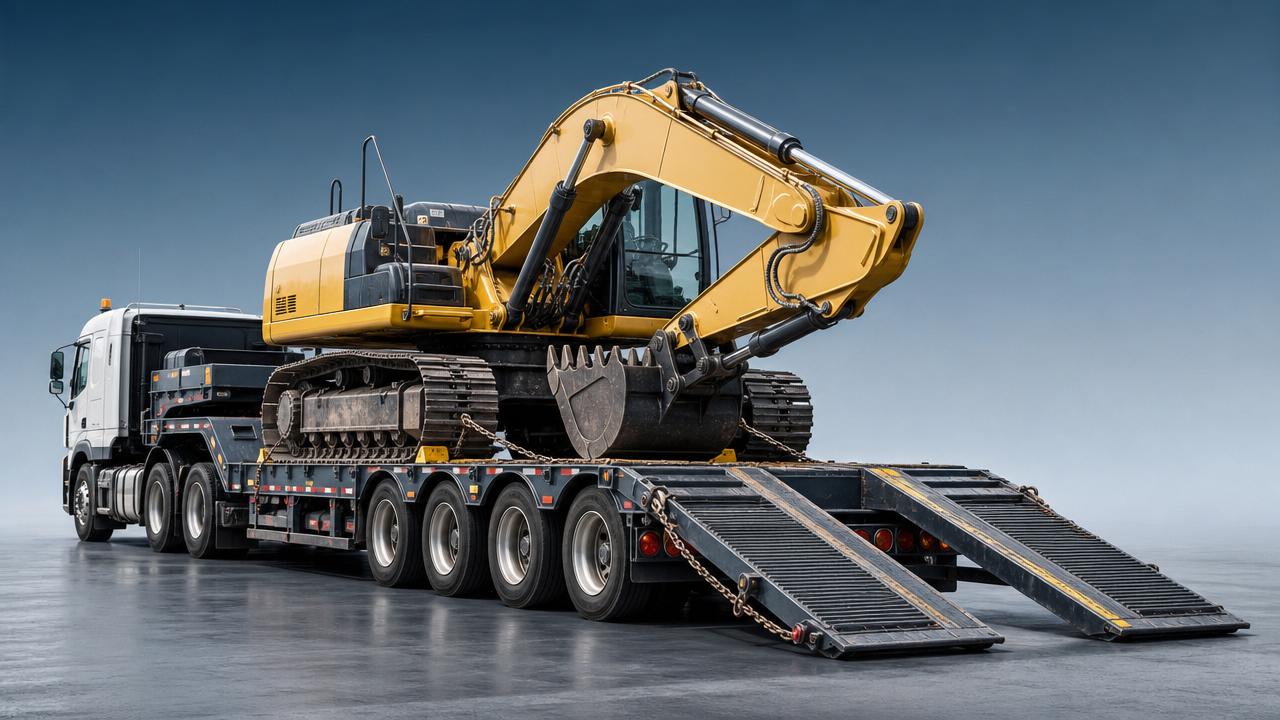
Low Plate transport can greatly improve equipment delivery efficiency, but it also brings serious safety risks if loading checks are overlooked. For quality control and safety management teams, understanding key inspection points before loading is essential to prevent cargo shifting, structural damage and compliance issues. This guide outlines the main Low Plate transport risks and the critical checks that help ensure safer, more reliable operations.
For engineering vehicle operations, a checklist-based approach is more effective than relying on experience alone. Low Plate loading often involves heavy machinery, uneven weight distribution, tight dimensional limits and multi-party coordination between yard staff, drivers, riggers and inspectors. A missed detail can turn into a rollover risk, trailer damage, road violations or delayed delivery. That is why quality control and safety management personnel should review the same core points before every shipment and document whether each item is accepted, corrected or escalated.
Why the First Checks Matter More Than the Final Tie-Down
Many Low Plate transport incidents are caused long before the vehicle leaves the yard. If the trailer is not matched to the cargo, if the deck has hidden damage, or if axle loads are misjudged, no amount of last-minute tightening will fully solve the problem. The first review should therefore focus on compatibility, condition and legal fit. These three areas define whether loading should proceed at all.
For safety managers, the practical rule is simple: confirm transport feasibility before confirming loading method. For quality teams, the same principle applies: verify equipment dimensions, lifting points, support points and securement surfaces before equipment is moved onto the Low Plate. This sequence reduces rushed decisions and helps prevent non-conforming shipments from entering the dispatch schedule.
Core Low Plate Pre-Loading Checklist
The following checklist covers the key inspection items that should be verified before loading begins. It is designed for engineering vehicles, construction equipment and other heavy cargo commonly shipped on a Low Plate trailer.
- Trailer suitability: Confirm the Low Plate trailer rated payload, deck length, deck height, gooseneck clearance, ramp capacity and axle configuration match the cargo weight and geometry.
- Cargo dimensions: Measure actual length, width, height and ground clearance rather than relying only on catalog data. Attachments, folded booms, buckets and protective frames can change the loaded profile.
- Actual operating weight: Verify net machine weight, accessory weight, fuel level and any mounted tools. Differences between dry specification weight and transport weight are a common source of overload.
- Center of gravity: Identify whether the equipment is front-heavy, rear-heavy or side-biased. Uneven balance directly affects axle load, steering stability and tie-down strategy.
- Trailer condition: Inspect the Low Plate deck for cracks, deformation, worn timber, oil contamination, damaged lashing points, tire defects, brake condition and suspension irregularities.
- Loading path and ground condition: Check whether the loading area is level, compact and free of hidden settlement. Soft ground or slope can destabilize the trailer during boarding.
- Ramp and boarding angle: Confirm that equipment can climb onto the Low Plate without bottoming out, slipping or striking the deck edge, especially for long-wheelbase or low-clearance units.
- Securement equipment: Prepare chains, binders, straps, wheel chocks, blocking materials and edge protection with valid condition checks and adequate working load limit.
- Regulatory compliance: Review route restrictions, gross vehicle weight limits, axle load rules, over-width or over-height permit requirements and escort requirements where applicable.
- Personnel roles: Assign one loading supervisor, one signal person and one final inspection authority to avoid conflicting commands during Low Plate loading.
How to Judge Whether the Low Plate and Cargo Are Properly Matched
A major safety risk in Low Plate transport is not obvious overload but poor matching. A trailer may appear large enough while still creating unsafe stress concentration. The following judgment points help teams decide whether the planned combination is acceptable.
1. Weight Distribution Across Axles
Check how the cargo weight will sit across the tractor, trailer axles and deck structure. The machine should not place excessive force on one axle group or a limited section of the Low Plate deck. Equipment with tracked undercarriages, concentrated rear counterweights or offset superstructures requires special attention. If estimated axle loads cannot be validated, the shipment should be paused for recalculation.
2. Contact Points and Deck Pressure
Contact pressure matters as much as gross weight. Steel tracks, narrow solid tires or support legs can create localized loading far above deck design assumptions. Quality teams should inspect whether timber mats, load spreaders or steel plates are needed to distribute force on the Low Plate surface and prevent structural damage.
3. Clearance During Loading and Transit
The cargo must clear ramps, neck sections, fenders and road obstacles. A machine that barely fits the Low Plate may still scrape during slope transitions or while passing uneven roads. Minimum travel clearance should be confirmed before loading, not discovered during departure.
Critical Inspection Points Before the Machine Moves Onto the Deck
Before boarding starts, safety and quality teams should complete a short but strict release check. This step is especially important in export logistics and multi-yard operations, where documentation and actual cargo condition may differ.
- Verify identification: Match serial number, model, attachment type and shipping documents.
- Inspect the machine for leaks: Hydraulic oil, fuel or coolant leaks can reduce braking traction on the Low Plate deck and create fire or slip hazards.
- Secure movable parts: Lock booms, arms, buckets, blades, cabs and articulated sections according to manufacturer guidance.
- Check tire or track condition: Worn tracks, muddy pads or damaged tires may slip on ramps during loading.
- Confirm braking and steering response: Self-propelled equipment should be function-tested before boarding.
- Remove loose accessories: Toolboxes, detachable covers and unsecured spare parts should not remain on the machine during Low Plate transport.
- Confirm communication method: Use standard hand signals or radio procedures with one command source.
Scenario-Based Risk Differences Quality Teams Should Not Ignore
Not every Low Plate operation carries the same risk profile. The checks should be adjusted based on equipment type, travel distance and road environment.
Tracked Construction Equipment
Excavators, bulldozers and pavers often generate high deck pressure and can damage the Low Plate surface if support is inadequate. Track cleanliness is also critical. Mud, stones and steel-on-steel contact reduce friction and can shift under braking.
Wheeled Engineering Vehicles
Loaders, cranes or special trucks may seem easier to load, but tire pressure, suspension travel and parking brake effectiveness become key variables. These units may also bounce more during transit, increasing tie-down loosening risk on a Low Plate trailer.
Oversized or Export Cargo
When the Low Plate shipment is part of a port delivery or cross-border movement, documentation and compliance checks become as important as physical loading. Export teams should confirm declared dimensions, packing list alignment, permit requirements and route access restrictions in advance to avoid detention and reloading.
Commonly Missed Low Plate Risks
Some of the most expensive failures are tied to items that are easy to overlook because they seem minor at the loading stage.
- Fuel level not considered: A full tank can materially increase transport weight and alter balance.
- Deck contamination ignored: Oil, ice, standing water or loose gravel reduce friction on the Low Plate.
- Worn lashing points accepted: Corroded or deformed anchor points may fail under emergency braking.
- Ramp hinge condition skipped: A damaged ramp connection can collapse under concentrated load.
- Attachment movement underestimated: Buckets, arms and booms can oscillate unless independently secured.
- No re-check plan after departure: Initial securement may loosen after the first kilometers due to settling.
A Practical Approval Standard Before Dispatch
For better consistency, many companies use a simple release standard for Low Plate transport: load only when equipment, trailer, securement and compliance all pass. If any one of these four categories fails, dispatch should be blocked until correction is verified. This standard is easy to train, audit and apply across multiple branches or subcontracted yards.
In practice, the final approval should include a documented sign-off showing measured cargo dimensions, estimated total weight, securement count, inspection of anchor points and route suitability. Photo records taken before departure are also useful for traceability, especially when engineering vehicles are shipped to overseas buyers or dealer networks.
Execution Tips for Safer and More Reliable Low Plate Operations
To strengthen daily execution, quality control and safety managers can standardize the process around a few high-value actions. First, create a one-page Low Plate inspection form that separates “must stop” defects from “correct before departure” items. Second, use measured data instead of assumptions for weight and dimensions. Third, train loading staff on machine-specific securement methods rather than using a single generic approach for all equipment. Fourth, require a secondary tie-down inspection after a short travel interval or before highway entry.
Businesses involved in commercial vehicle export can also improve consistency by working with suppliers that understand both equipment handling and transport compliance. Shandong Livol Truck International Trade Co., Ltd., based in Shandong, China, supports global customers with commercial vehicle supply, coordinated export services and professional process control. As an official authorized domestic and overseas dealer for FOTON, SHACMAN and SINOTRUK, and with extensive 4S store resources, inventory support and export experience, the company helps customers improve delivery coordination from vehicle selection and customization to documentation, customs clearance and logistics execution.
What to Prepare Before Requesting a Transport or Vehicle Solution
If your team needs to confirm Low Plate suitability, transport risk or equipment export planning, prepare the following information first: cargo type, actual gross weight, transport dimensions, photos from four sides, loading method, route limitations, destination country requirements, preferred delivery schedule and any special securement concerns. With this information, suppliers and logistics partners can give faster and more accurate recommendations.
The key takeaway is clear: safe Low Plate transport starts before loading begins. When teams inspect trailer fit, cargo condition, securement readiness and route compliance in a structured way, they reduce preventable incidents and improve delivery reliability. If you need support evaluating commercial vehicle options, export procedures, transport compatibility or project-based delivery plans, it is best to discuss your operating conditions, cargo parameters, compliance targets and timeline at the start of the process.
Search Starts Here