
News
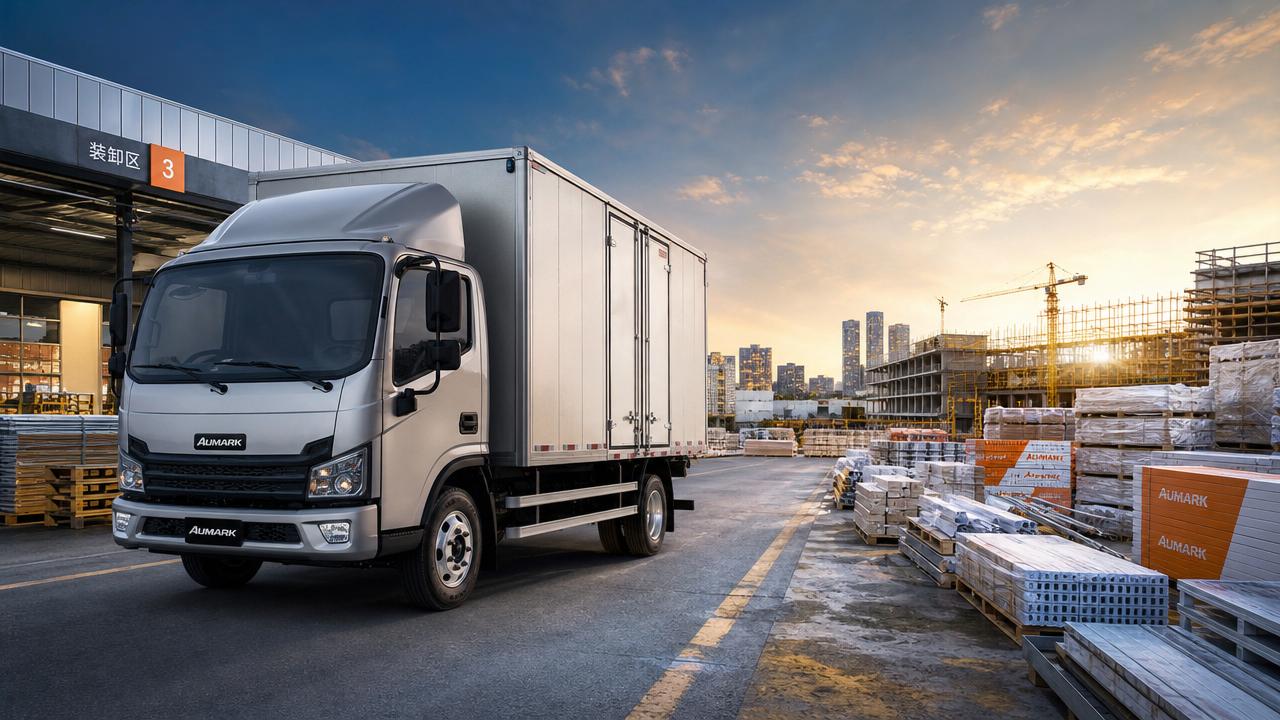
For many transport tasks, a 4_2 Cargo Truck offers a smarter balance of payload, maneuverability and operating cost than a larger commercial vehicle. Whether you are comparing options for urban delivery, regional distribution or project-based hauling, understanding where this truck configuration performs best can help you make a more efficient investment decision. This article explores the key scenarios where a 4_2 Cargo Truck becomes the better choice.
Why Scenario-Based Evaluation Matters Before Choosing a Truck
Many buyers first compare trucks by engine size, cargo body length or price. In real operations, however, vehicle value is shaped more by route type, loading frequency, road access, turnaround time and local transport rules. A larger truck may appear to promise more carrying power, but if it spends more time waiting, struggles in narrow streets or runs underloaded, it can become the less efficient option.
This is why the 4_2 Cargo Truck remains highly relevant across the engineering vehicle and commercial transport sector. For many information researchers, fleet planners and project buyers, the better question is not “Which truck is bigger?” but “Which truck fits the daily job with the least waste?” In many practical business scenarios, a 4_2 Cargo Truck delivers enough payload while lowering fuel use, reducing tire wear, improving accessibility and simplifying dispatch.
Especially in markets where delivery speed, route flexibility and cost control are critical, right-sizing the vehicle can create a stronger return than simply buying more capacity. That makes scenario matching a key step in truck selection.
Core Situations Where a 4_2 Cargo Truck Often Outperforms Larger Vehicles
A 4_2 Cargo Truck is often the better choice when the operation involves moderate payloads, frequent stops, mixed road conditions or loading locations with space limitations. It is particularly well suited to businesses that need a dependable transport tool rather than maximum theoretical tonnage.
- Urban and peri-urban delivery routes with limited turning space
- Regional distribution runs that require daily reliability and quick turnaround
- Construction support transport for tools, packaged materials and equipment parts
- Retail, wholesale and FMCG supply chains with frequent loading cycles
- Operations where axle limits, road access or toll cost affect larger trucks
- Growing fleets that need lower entry cost and broader route flexibility
In these use cases, the 4_2 Cargo Truck often provides a more practical balance between capacity and operational efficiency than a heavier rigid truck or larger multi-axle unit.
Scenario Comparison: When the Smaller Platform Makes Better Business Sense
The table below gives a practical decision view for common transport scenarios. It does not replace technical specification review, but it helps clarify where a 4_2 Cargo Truck is naturally strong and where a larger vehicle may still be justified.
Typical Application Scenarios for a 4_2 Cargo Truck
1. Urban Delivery With Tight Access and Frequent Stops
In city logistics, route efficiency is rarely about top load capacity alone. Drivers deal with narrow roads, loading bays, market entrances, traffic congestion and repeated unloading. In this setting, a 4_2 Cargo Truck can save time on every movement. Easier steering, shorter body configurations and simpler parking access can reduce delivery friction throughout the day.
This scenario is common for beverage distribution, packaged food transport, hardware supply, building products for urban renovation and retail replenishment. For such work, a larger truck may carry more in theory, but if it cannot enter the site smoothly or needs extra scheduling support, actual productivity may fall.
2. Regional Distribution Within a Single-Day Operating Radius
Many transport businesses operate on routes that begin and end at the same depot within one working day. These include factory-to-warehouse movement, dealer replenishment and intercity distribution between nearby commercial centers. In these cases, the 4_2 Cargo Truck often matches the real load profile more accurately than a larger commercial vehicle.
The key advantage here is cost discipline. If cargo density is moderate and turnaround speed matters, carrying excess truck weight every day offers little value. A 4_2 Cargo Truck helps operators balance fuel economy, maintenance intervals and route coverage while still meeting delivery schedules.
3. Construction and Engineering Support Rather Than Bulk Hauling
Within the engineering vehicle sector, not every job requires a heavy bulk transporter. Many project sites need regular movement of packaged cement products, scaffolding accessories, electrical materials, water pumps, generators, spare parts, hand tools and maintenance equipment. For these support functions, a 4_2 Cargo Truck is often more useful than a much larger truck.
Its practical advantage is flexibility. It can move between temporary sites, warehouses and urban fringe projects without the operating burden of a larger platform. For subcontractors and site service teams, that can mean faster dispatch and less idle time. If the project cargo is mixed but not extremely heavy, this configuration usually delivers better daily utility.
4. Rural, Township and Mixed-Road Distribution
Another strong scenario is transport that moves between county towns, smaller industrial zones, agricultural service points and developing infrastructure areas. Here, road conditions may vary from paved highways to narrower local roads. A 4_2 Cargo Truck often performs well because it is easier to route, easier to load in informal facilities and more economical on lower-volume trips.
For feed supply, farm input distribution, small equipment delivery and regional merchandise transport, businesses often need consistency more than maximum tonnage. In these cases, choosing a truck that can complete more practical trips with less operational strain becomes the smarter decision.
How Needs Change Across Different Buyer Types
The same 4_2 Cargo Truck can serve very different business goals depending on who is buying it. Understanding these differences helps avoid mismatched procurement.
What to Check Before Deciding a 4_2 Cargo Truck Is the Right Fit
Even when a 4_2 Cargo Truck seems suitable, the final judgment should come from actual operating conditions. Buyers should confirm:
- Average and peak cargo weight per trip
- Cargo type, volume profile and loading method
- Road width, site entry conditions and turning constraints
- Frequency of stop-start operation versus continuous highway driving
- Local regulations on axle load, emissions and urban access
- Need for customization such as box body, stake body or special equipment layout
This step is essential because a truck that is ideal for packaged goods distribution may be unsuitable for dense construction materials, while a truck selected only for payload may underperform in real-world route conditions.
Common Misjudgments When Comparing Against Larger Commercial Vehicles
One common mistake is assuming that larger always means more profitable. If the route rarely fills a large vehicle, the extra capacity becomes unused cost. Another error is ignoring access limitations at delivery points. A truck that cannot enter the site efficiently may cause delays, secondary handling and higher labor expense.
Buyers also sometimes focus only on purchase price without considering operating fit. A properly matched 4_2 Cargo Truck may produce better long-term economics through lower consumption, easier maintenance planning and higher route adaptability. Finally, some companies underestimate the value of after-sales support and parts availability. For working fleets, stable supply and service responsiveness are part of the vehicle decision, not separate from it.
Choosing a Supplier That Can Match the Truck to the Real Application
For international buyers and business researchers, supplier capability matters as much as vehicle specification. A reliable exporter should help evaluate use scenarios, suggest brand and configuration options, support body customization and manage export documentation efficiently.
Shandong Livol Truck International Trade Co., Ltd., based in Shandong, China, is a professional and reliable commercial vehicle exporter with strong industry strength and rich global trade experience. As an official authorized domestic and overseas dealer for FOTON, SHACMAN and SINOTRUK, the company offers stable vehicle resources through a large authorized 4S network and sufficient inventory. With professional support in vehicle selection, customization, documentation, customs clearance and logistics, buyers can evaluate a 4_2 Cargo Truck solution based on actual operating needs rather than guesswork.
Final Decision Guidance for Information Researchers and Buyers
If your transport task involves moderate payloads, frequent delivery cycles, route variability or restricted access points, a 4_2 Cargo Truck is often the more efficient choice than a larger commercial vehicle. It is especially valuable in urban distribution, regional logistics, engineering support transport and mixed-road service operations where practical productivity matters more than maximum size.
The best next step is to map your own scenario clearly: what you carry, how often you load, where you deliver and what constraints affect the route. Once those conditions are defined, it becomes much easier to determine whether a 4_2 Cargo Truck will improve utilization, reduce operating cost and support long-term business efficiency. For buyers who want a more accurate match, consulting an experienced commercial vehicle exporter can help translate route realities into the right truck specification and sourcing plan.
Search Starts Here