
News
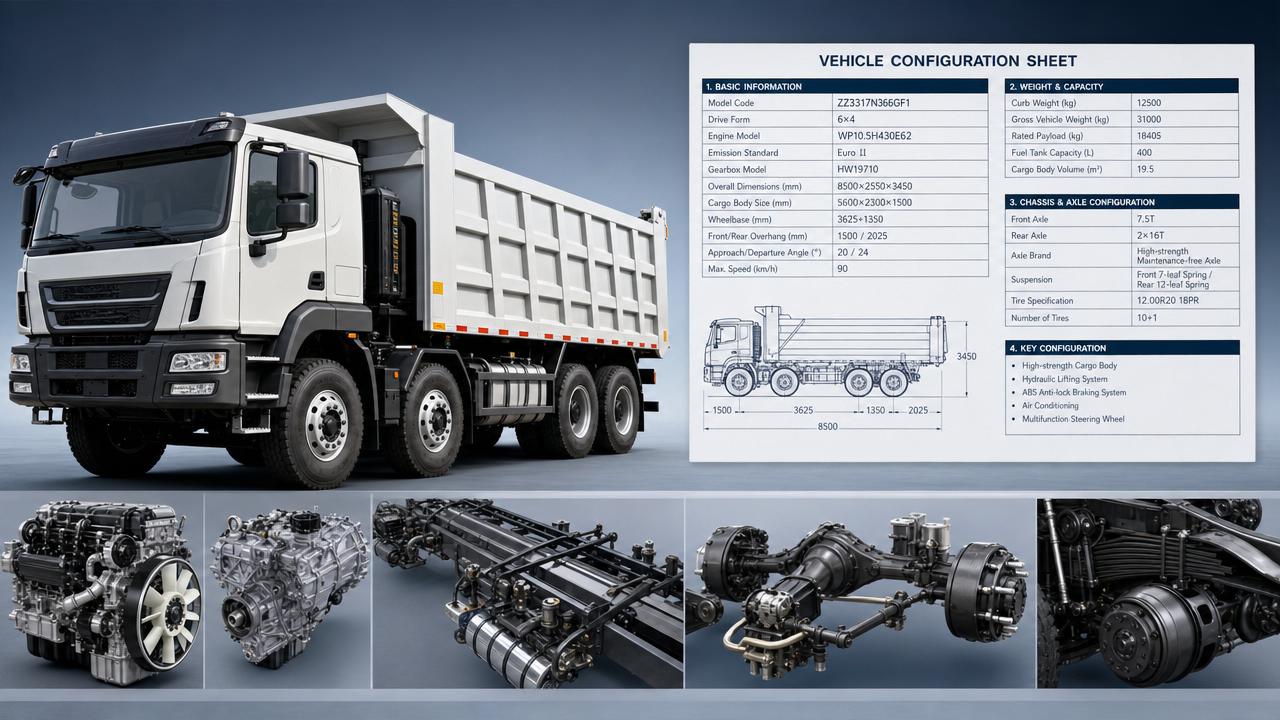
Reading a Cangshan Vehicle Configuration List correctly is a practical skill in commercial vehicle sourcing. In engineering vehicle projects, one wrong assumption about axle ratio, payload, cab type, or emission standard can affect cost, compliance, and delivery planning.
The list is more than a product sheet. It is the technical basis for comparing models, confirming suitability, and preventing disputes after order placement. A careful reading also helps separate standard equipment from optional items.
That matters even more when vehicles are being exported across markets with different road conditions, fuel quality, climate demands, and legal requirements. A configuration that works well in one region may be inefficient or unusable in another.
What the Cangshan Vehicle Configuration List actually tells you
At its core, the Cangshan Vehicle Configuration List is a structured summary of a vehicle’s technical and commercial setup. It usually combines model identity, performance data, major assemblies, and equipment details in one document.
For engineering vehicles, that often includes chassis specifications, engine output, transmission type, axle capacity, suspension structure, tire size, body dimensions, and working-device information where applicable.
It may also show optional packages, local adaptation notes, and remarks on available modifications. In many transactions, this list becomes the reference document for quotation confirmation and production follow-up.
Simple model names are not enough. Two vehicles with similar names can have meaningful differences in horsepower, cabin layout, tank capacity, or frame thickness. The Cangshan Vehicle Configuration List helps uncover those differences early.
Why the industry pays close attention to configuration details
Engineering vehicle procurement is rarely only about unit price. Total operating value depends on whether the configuration matches the jobsite, the route, the load pattern, and maintenance capability.
A dump truck for mining roads, for example, needs a different specification from a tipper used in municipal construction. Ground clearance, tire pattern, axle housing strength, and gearbox calibration may all matter.
The same logic applies to mixers, cargo chassis, and tractor heads used in heavy-duty projects. A short reading of the Cangshan Vehicle Configuration List may look efficient, but it often creates hidden cost later.
Current market conditions also increase the importance of precision. Freight rates, lead times, customs documentation, and local registration rules leave less room for configuration mistakes than before.
Start with the model code, not the sales description
Many reading errors begin at the top of the page. The sales name may sound familiar, but the model code usually carries the real technical meaning. It can indicate drive type, series, wheelbase family, and engine pairing.
When reviewing a Cangshan Vehicle Configuration List, compare the model code against the quotation, homologation document, and supplier confirmation sheet. If one digit differs, the entire configuration may differ as well.
This is especially important in multi-brand sourcing. Authorized dealers handling FOTON, SHACMAN, and SINOTRUK usually work with several closely related model variants. Accurate code matching avoids confusion between similar platforms.
Key identity items worth checking first
- Vehicle model code and series designation
- Drive form such as 4x2, 6x4, or 8x4
- Wheelbase and overall dimensions
- Gross vehicle weight and rated payload
- Production standard or export adaptation note
How to read major assemblies without missing the real risks
The engine line should be read beyond horsepower. Check emission level, torque, displacement, fuel type, and whether the engine calibration suits altitude, heat, or low-quality diesel conditions.
Transmission details deserve equal attention. Manual and automated options can change driver adaptation, maintenance complexity, and spare parts planning. Gear ratio spread also affects climbing ability and fuel consumption.
Axles are often underestimated on the Cangshan Vehicle Configuration List. Look at front axle load, rear axle load, reduction type, and final drive ratio. These items directly affect carrying performance and road suitability.
Suspension and frame specifications matter in rough engineering environments. Reinforced leaf springs, frame thickness, and chassis layout can influence durability more than cosmetic equipment ever will.
Standard equipment and options should never be mixed
One of the most common mistakes is assuming every listed feature is included in the base price. In practice, the Cangshan Vehicle Configuration List may combine standard items, selectable options, and market-specific upgrades.
Air conditioning, sleeper configuration, PTO, differential locks, camera systems, fuel tank capacity, and tire brand are often handled differently across markets. A supplier note or option code can change the quotation significantly.
Read the remarks column carefully. If a configuration line says “optional,” “subject to actual order,” or “export version adjustment,” confirm it in writing before issuing a purchase confirmation.
Items that often create misunderstandings
- Cabin trim and sleeping arrangement
- Tire quantity, pattern, and brand
- Hydraulic system or bodywork scope
- Toolkits, warning devices, and spare wheel
- ABS, ESC, and regional safety fittings
Context matters more than isolated numbers
A correct reading of the Cangshan Vehicle Configuration List always depends on usage context. The same specification can be economical in one application and unsuitable in another.
For road-based construction transport, fuel efficiency and legal axle load may be more important than maximum power. For quarry use, reinforced structure and low-speed traction may take priority instead.
Export transactions add another layer. Local registration standards, right-hand drive needs, climate packages, and service-part availability should all be checked against the listed configuration before final approval.
This is where experienced exporters add value. Companies such as Shandong Livol Truck International Trade Co., Ltd. support vehicle selection, customization, documentation, customs clearance, and logistics in one process, which reduces interpretation gaps.
With authorized access to FOTON, SHACMAN, and SINOTRUK resources, plus domestic 4S networks and inventory support, configuration confirmation can be tied more closely to real supply and delivery conditions.
A practical way to review the Cangshan Vehicle Configuration List
A useful review process begins with operational requirements, not the supplier sheet. Define the route type, expected load, body application, annual mileage, local regulation, and maintenance environment first.
Then read the Cangshan Vehicle Configuration List line by line against those requirements. Highlight all items that affect compliance, structural durability, driver use, and maintenance frequency.
After that, compare the list with the commercial quotation and delivery promise. If an item is technically critical but commercially unclear, it should not be left for later discussion.
A simple review checklist
- Match model code across all documents
- Check major assemblies and ratio combinations
- Separate standard and optional equipment
- Confirm export adaptation and compliance notes
- Verify bodywork, accessories, and exclusions
- Request written confirmation before order locking
Reading correctly leads to better decisions later
The Cangshan Vehicle Configuration List should be treated as a decision tool, not just an attachment. When read carefully, it helps control technical risk, purchasing cost, and delivery reliability at the same time.
It also creates a stronger basis for comparing different Chinese commercial vehicle platforms fairly. That is especially useful when evaluating alternatives from FOTON, SHACMAN, and SINOTRUK for engineering vehicle applications.
Before moving to the next quotation round, it is worth building an internal comparison sheet based on the Cangshan Vehicle Configuration List. That makes later approvals faster and reduces surprises after production begins.
A well-read list does not guarantee a perfect purchase, but it makes the decision process far more controlled. The next sensible step is to align the document with real operating conditions, supply capability, and after-sales support expectations.
Search Starts Here