
News
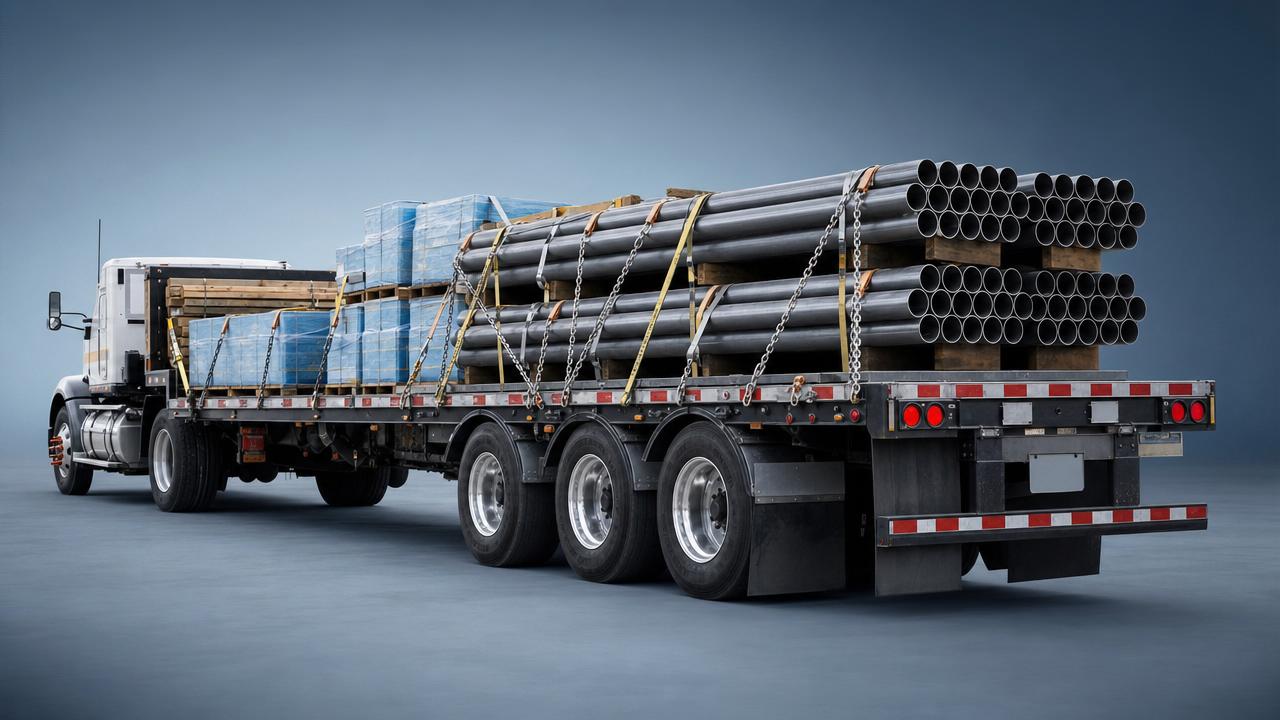
Cargo shift on a Flatbed Semi-Trailer can lead to damaged goods, unsafe driving and costly delays. For operators and transport users, knowing how to secure loads correctly is essential for both road safety and delivery efficiency. In this guide, we will explain practical ways to prevent cargo movement, improve load stability and reduce transport risks in daily flatbed operations.
The core issue is simple: cargo usually shifts because the load is not matched to the trailer, weight is poorly distributed, or securing equipment is used incorrectly. Preventing movement is less about one single strap and more about a complete loading process.
For operators, the most effective approach is to check the trailer condition, understand the cargo’s shape and weight, use the right securing method, and inspect the load again during transport. Small mistakes at loading can become major safety problems on the road.
Why cargo shift happens on a Flatbed Semi-Trailer
Before improving load security, operators need to understand why cargo moves in the first place. Most cargo shift incidents happen during braking, cornering, lane changes, uneven road travel, or sudden avoidance maneuvers.
A Flatbed Semi-Trailer has no enclosed sides to help contain freight. That means the full stability of the cargo depends on friction, weight balance, blocking, and tie-down equipment working together.
If the cargo is loaded on a dirty or wet deck, friction drops. If heavy items are placed too high or too far to one side, the center of gravity becomes unstable. If straps are loose, worn, or badly angled, they cannot restrain movement effectively.
Another common cause is choosing one securing method for every load type. Steel coils, timber, machinery, pallets, pipes, and construction materials all behave differently. Operators who treat all freight the same increase the risk of cargo shift.
Start with the right trailer and deck condition
Load security begins before cargo touches the deck. A flatbed in poor condition makes safe loading much harder, even if the straps and chains are new. Operators should inspect the trailer carefully before every loading task.
Check the deck surface for oil, water, mud, ice, loose debris, broken boards, or worn steel sections. A clean and dry deck improves friction and gives mats, blocks, and tie-downs a better working surface.
Look at anchor points, side rails, winches, chain binders, and stake pockets. If any securing point is bent, cracked, corroded, or loose, it may fail under force. A damaged tie-down point can turn a minor load shift into a serious accident.
Operators should also confirm that the trailer size and load rating match the cargo. An overloaded or undersized Flatbed Semi-Trailer is much harder to secure, less stable during travel, and more likely to suffer tire or suspension problems.
Know the cargo before choosing a securing method
One of the biggest loading mistakes is securing cargo before fully understanding its physical behavior. Shape, weight, packaging, fragility, and surface texture all affect how the load should be restrained.
For example, palletized cargo may appear stable but can still slide if the pallets are weak, uneven, or wrapped poorly. Machinery may be heavy and compact, but it often has an offset center of gravity that makes it prone to tipping.
Long items such as pipes, beams, and timber can roll or creep forward under braking if they are not blocked properly. Smooth steel products may have very low friction, which means tie-down force alone may not be enough.
Operators should ask key questions before loading: Is the cargo top-heavy? Can it roll? Can it settle during travel? Is the packaging strong enough to handle strap pressure? These answers determine whether to use straps, chains, friction mats, blocking, or combined methods.
Why weight distribution matters more than many operators think
Even strong tie-downs cannot fully compensate for poor weight distribution. If the load is placed incorrectly on the trailer, the vehicle may become difficult to steer, unstable in braking, or overloaded on one axle group.
Heavier cargo should generally be placed low and distributed evenly across the deck. Keeping the center of gravity low improves rollover resistance and reduces side-to-side movement on curves or uneven roads.
Weight should also be balanced from left to right. If one side of the Flatbed Semi-Trailer carries more weight, tire loading becomes uneven and the trailer may lean, especially when cornering or traveling over rough surfaces.
Front-to-rear placement is equally important. Too much weight forward can overload the tractor drive axles or kingpin area. Too much weight to the rear may reduce steering control and increase trailer sway. Always follow legal axle limits and loading guidelines.
Choose the right securing equipment for the cargo
Straps are common, but they are not always the best solution for every type of freight. Operators should choose tie-down equipment based on load weight, surface, shape, and the forces expected during transport.
Webbing straps are useful for many finished goods, pallet loads, and lighter cargo because they are quick to handle and less likely to damage surfaces. However, they can be cut by sharp edges and may not provide enough restraint for heavy industrial cargo.
Chains are often better for steel, heavy machinery, and dense construction materials. They offer high strength and durability, but they must be matched with proper binders and rated anchor points.
Edge protectors help prevent strap damage and keep pressure more evenly distributed. Anti-slip mats increase friction between the cargo and the deck, reducing the force that tie-downs must absorb. Blocking and dunnage can help stop rolling or sliding.
The key is not to rely on one tool. For many loads, the safest method combines friction improvement, direct restraint, and physical blocking. This layered approach provides better protection if road conditions become severe.
Use proper tie-down techniques, not just more straps
Many operators respond to risk by adding extra straps. More straps can help, but only if they are positioned correctly, tensioned properly, and working in the right direction against expected movement.
Downward tie-downs increase friction by pressing cargo onto the deck. Direct tie-downs, including loop and diagonal lashings, actively restrain the load from moving forward, backward, or sideways. Different cargo types may require different combinations.
Strap angle matters. If the angle is too shallow, the securing force becomes less effective. If the strap contacts a sharp edge without protection, it may be damaged during travel. Loose straps can also lose more tension as the load settles.
For heavy equipment, secure designated lashing points rather than weak structural parts. For bundled cargo, make sure the bundle itself is stable. Securing an unstable bundle tightly does not fix the internal movement risk.
Operators should tighten tie-downs evenly and inspect all contact points. A properly secured load should resist forward shift under braking, rearward movement during acceleration, and lateral movement during turns or lane corrections.
Prevent rolling, tipping, and settling during transport
Different cargo movement patterns require different controls. Rolling cargo such as pipes, drums, or cylindrical products should be placed in cradles, chocks, or blocked sections so that rotation is physically restricted.
Top-heavy machinery, tanks, or tall units need special attention because tipping can begin with only a small shift in base position. Use low placement, direct restraint, and enough lateral control to keep the center of gravity stable.
Settling is another overlooked problem. Timber, bagged materials, and some palletized goods may compress or shift slightly after the vehicle starts moving. When that happens, straps lose tension and the cargo becomes less secure.
This is why initial load checks are not enough. Operators should expect some loads to settle and plan an early stop for reinspection. Catching tension loss in the first stage of transport can prevent much bigger problems later.
Driving style plays a major role in load stability
Even a well-secured Flatbed Semi-Trailer load can be stressed by aggressive driving. Cargo restraint systems are designed to manage normal transport forces, not unnecessary shock caused by poor driving habits.
Harsh braking is one of the most common triggers of forward cargo shift. Sudden steering inputs can create strong lateral forces, especially on high or uneven loads. Fast cornering increases rollover risk and can strain one side of the securing system.
Operators should accelerate smoothly, leave enough following distance, reduce speed before turns, and anticipate road hazards early. Controlled driving reduces force spikes and helps the load remain stable throughout the trip.
Road selection matters too. Rough roads, steep cambers, and repeated potholes can gradually loosen tie-downs or shift cargo position. When possible, choose routes that reduce severe vibration and repeated impact loading.
Inspect the load during the journey, not only before departure
A common mistake in flatbed operations is assuming that once the cargo is secured at departure, the job is finished. In reality, load security must be monitored throughout the trip, especially on long-distance routes.
Make the first stop shortly after departure, according to company policy and local regulations. Check strap tension, chain binders, edge protection, blocking, and any signs of load settling, leaning, or packaging damage.
Continue inspecting after heavy braking events, rough road sections, severe weather exposure, or major elevation changes. Rain can reduce friction. Wind can affect light but bulky freight. Vibration can shift dunnage or weaken tie-down tension.
Good operators treat load inspection as an active process. These checks protect the cargo, improve road safety, and reduce the chance of claims, fines, delays, or emergency roadside adjustments.
Common loading mistakes that lead to cargo shift
Many cargo shift incidents come from repeated basic errors rather than unusual situations. Recognizing these mistakes helps operators improve daily performance and avoid preventable risks.
One mistake is using damaged or underrated straps and chains. Another is placing tie-downs over weak packaging instead of around or against structurally stable parts of the cargo. Both errors reduce real securing strength.
Other common problems include poor deck cleaning, uneven dunnage height, ignoring low-friction surfaces, overreliance on stretch wrap, and failing to protect straps from sharp edges. These issues often seem minor until the trailer is moving.
Some operators also forget to consider how unloading will happen at the destination. If the load is secured in a way that encourages unsafe release or partial movement during unloading, the risk simply shifts from transport to delivery.
How better flatbed loading improves safety and operating efficiency
Preventing cargo shift is not only about avoiding accidents. It also improves delivery reliability, protects product quality, reduces downtime, and helps operators work with more confidence every day.
A stable load puts less stress on the vehicle, reduces emergency adjustments during transit, and lowers the risk of customer complaints about damaged goods. It also supports compliance with road safety and cargo securing requirements.
For transport users and fleet operators, better load security means fewer disruptions, more predictable delivery outcomes, and lower total operating risk. The value is practical and immediate, not just theoretical.
When choosing a trailer and transport solution, it helps to work with suppliers who understand real-world cargo applications. Reliable trailer specification, stable quality, and professional support all contribute to safer flatbed transport.
Conclusion
The best way to prevent cargo shift on a Flatbed Semi-Trailer is to control the entire loading process: start with a sound trailer, understand the cargo, distribute weight correctly, use the right securing equipment, and inspect the load during transit.
Operators should focus less on simply adding more straps and more on using the correct method for each load type. In flatbed work, safe transport depends on planning, discipline, and attention to detail at every stage.
When these basics are handled properly, cargo stays stable, road safety improves, and deliveries become more efficient. For anyone working with flatbed transport, strong load security is not optional. It is a daily operating standard.
Search Starts Here