
News
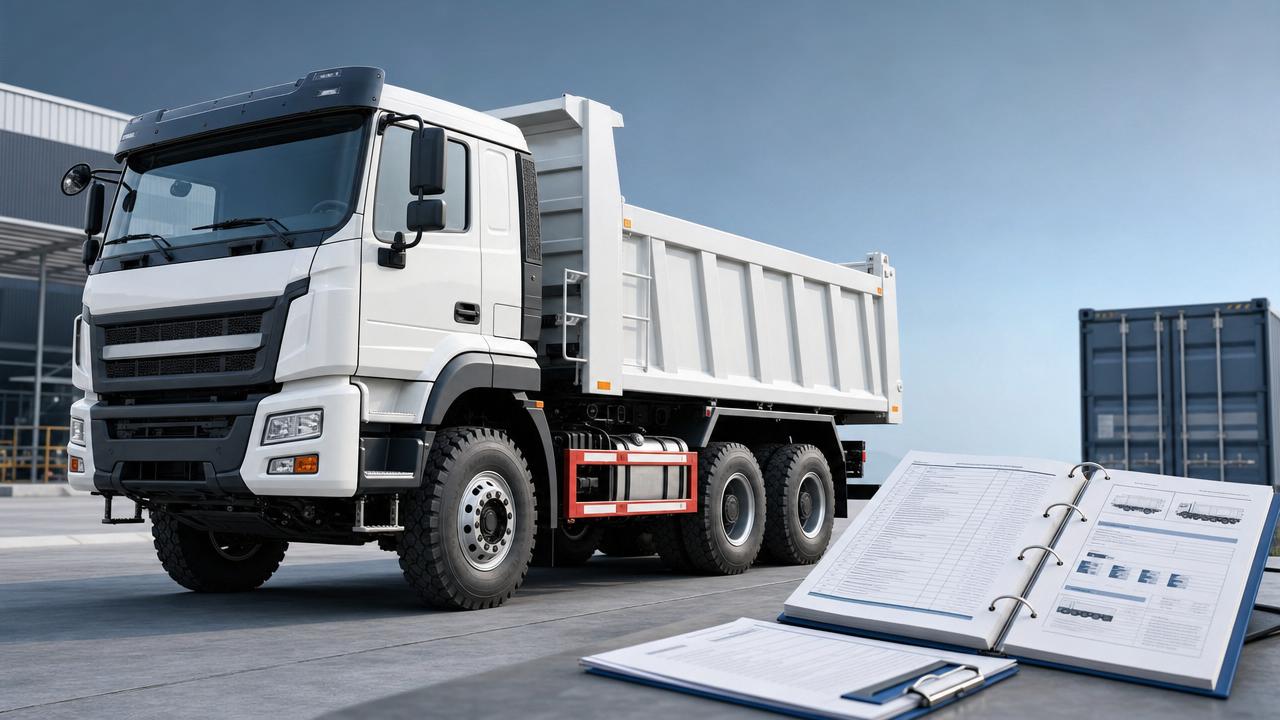
Before placing an order, reviewing the Cangshan Vehicle Configuration List is essential for business evaluators who need to balance cost, performance and operational suitability. From chassis specifications and powertrain options to loading capacity, safety features and export compliance, every detail can affect long-term value. This guide helps you identify the key checkpoints that support smarter procurement decisions and reduce risks in commercial vehicle purchasing.
Why does the Cangshan Vehicle Configuration List matter before procurement approval?
For engineering vehicle procurement, a configuration sheet is not just a technical attachment. It is the basis for commercial evaluation, operating cost forecasting, compliance review, and delivery planning.
Many purchasing risks start when buyers compare only price, body appearance, or engine power. A proper review of the Cangshan Vehicle Configuration List helps evaluators confirm whether the vehicle truly matches jobsite duty cycles, road conditions, payload targets, and import requirements.
For business evaluators, the main questions are practical. Will the axle ratio support hill climbing under load? Does the suspension fit mixed-road operations? Are tire specifications suitable for local maintenance networks? Can the final configuration pass destination market checks without rework?
These questions become more important in cross-border purchasing, where the wrong specification can cause customs delays, extra modification cost, or lower residual value after delivery.
- Configuration affects total cost of ownership, including fuel use, maintenance intervals, parts availability, and downtime exposure.
- Configuration determines operational fit, especially for construction hauling, municipal engineering, mining support, and mixed fleet deployment.
- Configuration influences export readiness, such as documentation accuracy, conformity with destination requirements, and shipment planning.
What business evaluators usually need to verify first
At an early review stage, decision-makers should focus on high-impact items rather than reading the entire specification sheet line by line. This creates a faster approval path while reducing the chance of overlooking costly mismatches.
What key items should you check on the Cangshan Vehicle Configuration List?
The table below highlights the core checkpoints that should appear in a serious review of the Cangshan Vehicle Configuration List for engineering vehicle purchasing.
A useful Cangshan Vehicle Configuration List should make these items easy to compare. If a supplier cannot explain the relationship between these specifications and your operating environment, approval should be delayed until the technical basis is clear.
Technical review points that often affect long-term value
Engine horsepower alone is not enough. Commercial value depends on torque output under working load, gearbox matching, and axle ratio. A vehicle that looks stronger on paper may actually consume more fuel on short-haul construction routes.
Likewise, higher nominal payload does not always mean better economics. Over-specifying the truck may increase purchase cost, tire wear, and empty-load fuel consumption without creating matching revenue gain.
How should you match configuration to engineering vehicle application scenarios?
The Cangshan Vehicle Configuration List should always be evaluated against real operating scenarios. Engineering vehicles work under very different conditions, and one configuration rarely fits all duty profiles.
Typical scenarios and configuration logic
- Urban infrastructure projects usually require tighter turning radius, stable stop-and-go performance, and attention to legal dimensions and emission expectations.
- Mining or quarry support often needs reinforced chassis, stronger suspension, robust cargo body materials, and dependable traction on uneven roads.
- Highway-linked construction transport may prioritize fuel efficiency, cruising stability, and balanced axle matching for medium to long-haul routes.
- Remote site operations should place more weight on serviceability, common spare parts, and simpler configurations that local workshops can maintain.
If evaluators skip scenario matching, they may approve a unit that is technically compliant but commercially inefficient. That is why configuration review should include route type, altitude, climate, loading pattern, and maintenance capability at destination.
The next table can be used as a fast selection reference when reviewing the Cangshan Vehicle Configuration List across different engineering applications.
This comparison shows that reviewing the Cangshan Vehicle Configuration List without a scenario lens creates hidden cost. The right decision is not the most expensive configuration or the highest number on the sheet. It is the specification that aligns with actual operating conditions.
Which cost factors are often missed during configuration comparison?
Commercial vehicle buyers often compare ex-factory price first. However, business evaluators should review how the Cangshan Vehicle Configuration List changes downstream cost over the full service cycle.
Hidden cost areas to evaluate
- Fuel consumption under real payload. A higher-output engine may improve job efficiency, but only if route and loading intensity justify it.
- Tire replacement frequency. Tire size and load rating should match local road quality and replacement availability.
- Maintenance complexity. Advanced or uncommon systems can increase downtime if destination workshops lack experience or parts.
- Body wear and hydraulic repairs. For dump or engineering transport applications, upper body material thickness and cylinder selection have direct cost impact.
- Import adaptation cost. Any mismatch in dimensions, safety devices, or paperwork may lead to port delay or corrective modification.
A lower-priced unit can become the more expensive choice if it requires frequent repairs, consumes more fuel on route, or fails to fit the local spare parts ecosystem. Cost analysis should therefore combine purchase price with expected operating profile.
How can you reduce compliance and export risks before ordering?
For international buyers, a Cangshan Vehicle Configuration List should be checked not only by technical teams but also by documentation and logistics teams. Configuration affects declared data, shipping arrangement, and destination acceptance.
Key compliance checkpoints
- Confirm whether the engine emission level and safety equipment match destination expectations or project tender requirements.
- Verify dimensions, gross vehicle weight, axle loads, and body structure against import and road use limits in the target market.
- Ensure the commercial invoice, packing data, VIN-related records, and technical description are consistent with final configuration.
- Check whether optional equipment changes shipping volume, disassembly needs, or container versus ro-ro planning.
This is where an experienced exporter adds real value. Shandong Livol Truck International Trade Co., Ltd. supports customers through vehicle selection, customization, documentation, customs clearance, and logistics coordination, helping reduce the gap between factory specification and import execution.
Because the company is an official authorized domestic and overseas dealer for FOTON, SHACMAN and SINOTRUK, and operates multiple authorized 4S stores in China, buyers can discuss brand direction, stock availability, and practical delivery planning with a supply-side team familiar with commercial vehicle export operations.
What is a practical procurement workflow for reviewing the Cangshan Vehicle Configuration List?
Business evaluators usually need a review method that is fast enough for procurement timelines and detailed enough for investment decisions. The workflow below is effective for engineering vehicle ordering.
Recommended review process
- Define the operating scenario, including payload, terrain, trip distance, climate, and maintenance capability.
- Collect the Cangshan Vehicle Configuration List and mark non-negotiable items such as axle load, body dimensions, and compliance needs.
- Compare at least two specification options, not just one base model, to understand where cost and performance diverge.
- Request confirmation on inventory status, lead time, customization boundaries, and documentation support before internal approval.
- Finalize the order only after configuration, commercial terms, and logistics conditions are aligned in writing.
This process is especially useful when procurement teams must coordinate engineering, finance, and import departments. It keeps the review disciplined and makes supplier communication more efficient.
Common mistakes buyers make when reading a Cangshan Vehicle Configuration List
Mistake 1: Treating all heavy-duty specifications as better
Over-specification often raises capital cost and operating expense. Unless the vehicle will work continuously in severe duty conditions, a balanced setup may deliver stronger commercial returns.
Mistake 2: Ignoring parts and service conditions at destination
A technically advanced configuration may look attractive, but if common service parts are hard to source locally, fleet uptime can suffer. Review serviceability as carefully as headline performance.
Mistake 3: Confirming price before confirming exact specification
Quotation comparison without configuration alignment is misleading. Small changes in axle type, tire specification, cargo body thickness, or cabin features can materially change both price and value.
Mistake 4: Separating technical review from export execution
In international trade, configuration and documentation are linked. If the approved unit differs from the declared or shipped specification, delays and disputes may follow.
FAQ about the Cangshan Vehicle Configuration List
How detailed should a Cangshan Vehicle Configuration List be before I request a final quote?
It should be detailed enough to define chassis, powertrain, axles, tires, body structure, cabin scope, and safety equipment. If these are still vague, the final quote may not represent the actual deliverable vehicle.
Which items most often affect delivery time?
Inventory status, brand availability, body customization, tire changes, and special documentation requirements often influence lead time. Suppliers with sufficient stock and active dealership networks can usually support faster planning.
Is it better to choose one standard configuration for the whole fleet?
Standardization helps with maintenance and parts control, but only if operating conditions are similar. If routes and payload patterns vary widely, a two-tier specification strategy may be more efficient than a single fleet standard.
What should I ask an exporter besides the specification sheet?
Ask about stock condition, customization range, documentation support, customs handling experience, shipping method, and after-sales coordination. These factors often determine whether the transaction remains smooth after purchase approval.
Why choose us for engineering vehicle configuration review and export support?
For business evaluators, speed matters, but accuracy matters more. Shandong Livol Truck International Trade Co., Ltd. combines commercial vehicle supply capability with export process support, helping customers move from configuration review to delivery with fewer uncertainties.
As an official authorized domestic and overseas dealer for FOTON, SHACMAN and SINOTRUK, with multiple authorized 4S stores and sufficient vehicle inventory, the company can support practical discussions on model selection, available stock, and delivery rhythm rather than offering only broad catalog advice.
Its professional export team supports the full process, including vehicle selection, customization, documentation, customs clearance, and logistics. This is especially valuable when your procurement team must confirm technical details, delivery schedule, and import readiness at the same time.
- Consult on Cangshan Vehicle Configuration List review for your target application and budget.
- Ask for support on parameter confirmation, axle and engine matching, and body customization options.
- Discuss lead time, stock availability, shipping method, and export documentation requirements.
- Request guidance on suitable FOTON, SHACMAN, or SINOTRUK solutions for engineering vehicle procurement.
If you are comparing specifications before placing an order, contact us with your operating scenario, target market, payload requirement, and preferred delivery timeline. We can help you review the Cangshan Vehicle Configuration List, identify fit-for-purpose options, and support quote communication with clearer technical and commercial alignment.
Search Starts Here