
News
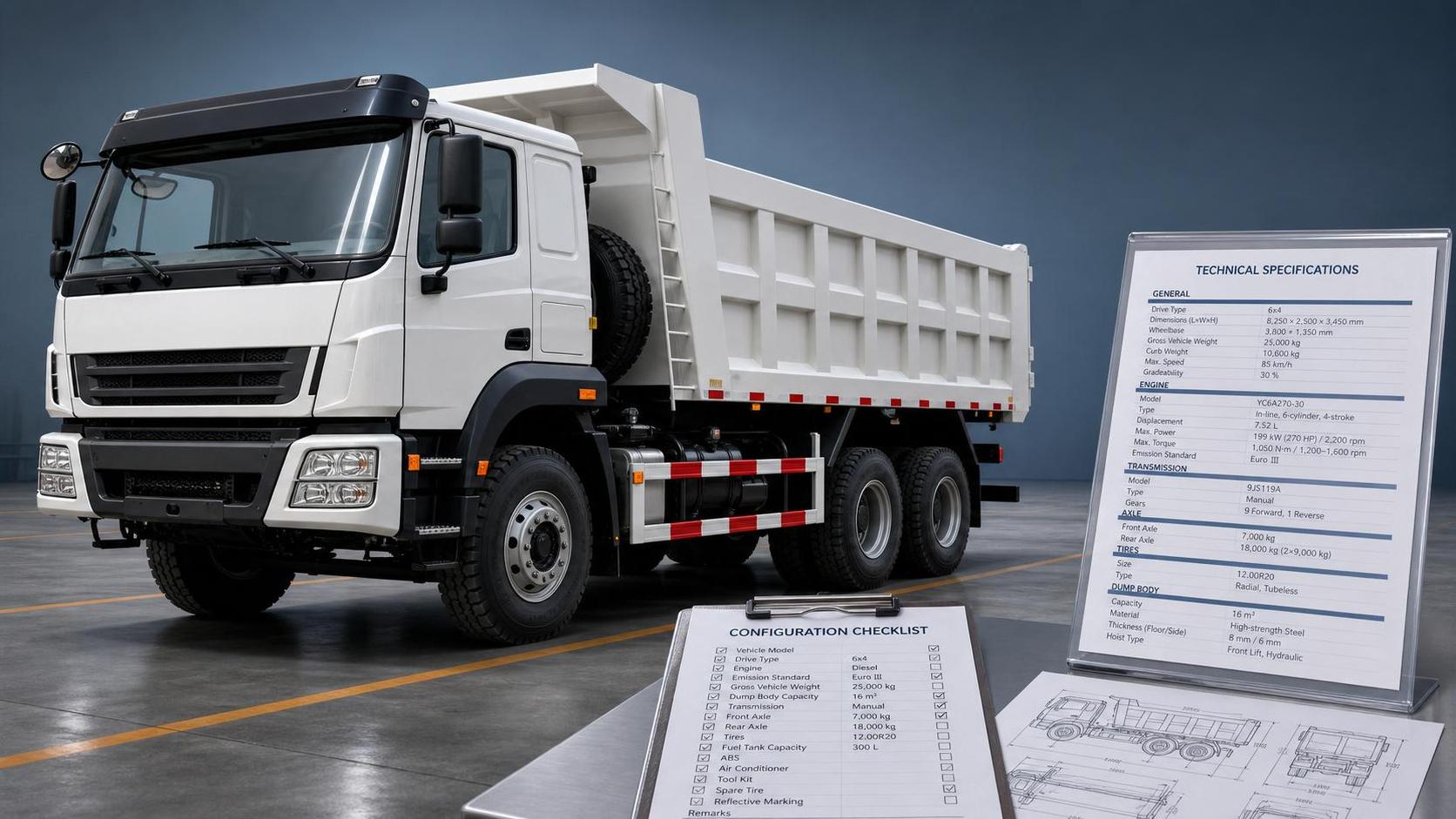
Why does the Cangshan Vehicle Configuration List matter before asking for a quote?
A price request looks simple, but engineering vehicles rarely fail on price alone.
More often, problems begin when the quoted unit does not match the real workload, road condition, or compliance target.
That is why the Cangshan Vehicle Configuration List should be reviewed before any serious quotation stage.
It gives a structured view of payload, axle layout, engine output, transmission, dimensions, suspension, braking, and optional equipment.
In practical sourcing, this list helps separate a workable machine from a risky one.
It also makes supplier comparison much cleaner, especially when several brands offer similar bodies with different chassis foundations.
A useful Cangshan Vehicle Configuration List is not just technical paperwork.
It is the base document for judging operating fit, total cost, lead time, and future serviceability.
This becomes even more important for export orders, where changing the configuration after production can delay shipment and add cost.
Suppliers with strong inventory depth and export handling experience can reduce those risks, especially when documentation and specification alignment must stay precise.
Which specifications deserve the closest attention on a Cangshan Vehicle Configuration List?
The answer depends on application, but several items should always be checked first.
If these are unclear, even a competitive quote may hide operational problems.
- Gross vehicle weight and rated payload: confirm legal carrying capacity and jobsite suitability.
- Axle configuration: 4x2, 6x4, 8x4, or all-wheel solutions affect traction and loading stability.
- Engine power and torque curve: horsepower alone is not enough for steep or soft terrain.
- Transmission type and gear ratio: important for climbing ability, fuel use, and driver control.
- Wheelbase and overall dimensions: these decide turning radius, body match, and road access.
- Suspension, tires, and ground clearance: critical for rough surfaces and overloaded conditions.
- Brake system and safety options: especially relevant for downhill routes and heavy-duty cycles.
A common mistake is to focus on the upper structure only.
For example, buyers may compare dump body volume but overlook axle rating or frame strength.
That usually creates higher maintenance, unstable loading, or premature chassis fatigue.
The better approach is to read the Cangshan Vehicle Configuration List from chassis to application, not the other way around.
A quick judgment table for early comparison
When several offers look similar, the table below helps identify which specification deserves extra verification.
How do you match the Cangshan Vehicle Configuration List to real jobsite conditions?
This is where many sourcing decisions become more realistic.
A vehicle that works well on paved access roads may struggle at quarry entrances, mining haul roads, or narrow municipal projects.
So the Cangshan Vehicle Configuration List should always be tested against actual operating conditions.
Start with the material being moved.
Sand, crushed stone, wet soil, demolition waste, and mixed aggregate do not behave the same inside the same body volume.
Then look at cycle distance.
Short shuttle work with frequent stops requires different gearing and brake priorities than long-distance site transfer.
Terrain matters just as much.
On steep grades, the useful indicator is not only engine output but the combined effect of torque, axle ratio, and tire setup.
In soft ground conditions, traction and weight distribution often matter more than top speed.
If the project includes urban access, total height, turning radius, and emissions can become deciding factors.
That is why experienced exporters usually ask detailed application questions before confirming the final specification sheet.
Teams that handle vehicle selection, documentation, customs, and logistics together can often catch these issues earlier.
What differences between similar models usually affect the final decision?
Two engineering vehicles can look nearly identical in pictures and still behave very differently in service.
This is where the Cangshan Vehicle Configuration List becomes a comparison tool, not just a reference sheet.
One key difference is chassis origin and platform maturity.
Vehicles built on proven heavy-duty platforms often show better parts support and more predictable maintenance intervals.
Another difference is drivetrain matching.
A strong engine paired with an unsuitable gearbox ratio may still deliver poor real-world efficiency.
Cabin configuration also deserves attention.
Visibility, seat layout, driver fatigue control, and access convenience matter on long or repetitive shifts.
Then there is service support.
The best specification on paper still needs stable supply, clear export documents, and dependable parts channels.
In many markets, authorized access to leading brands such as FOTON, SHACMAN, and SINOTRUK simplifies comparison because platform data is clearer and options are easier to trace.
That also helps when a project needs fast delivery from available inventory rather than a long custom production cycle.
A practical way to compare similar offers
- Check whether the quoted body size matches legal payload, not just volume expectations.
- Compare axle brand, axle rating, and frame reinforcement details.
- Confirm if tires, suspension, and differential locks suit the destination terrain.
- Review whether spare parts and service documents follow the same configuration code.
- Ask if the unit is stock-based, production-based, or partially customized.
What mistakes appear most often when using a Cangshan Vehicle Configuration List?
The first mistake is treating the list as a formality.
If nobody checks the details against the site plan, the document loses its value.
Another common issue is using general model names instead of confirmed configuration codes.
That can create confusion in production, customs filing, and parts replacement later.
Some buyers also compare quotations without normalizing the specification baseline.
One offer may include heavy-duty tires, reinforced suspension, and export packing, while another does not.
The lower price is not always the lower landed cost.
Emission and compliance mismatch is another avoidable risk.
A unit suitable for one market may face registration problems in another if standards are not confirmed early.
There is also the timing issue.
If the final Cangshan Vehicle Configuration List is approved too late, delivery can shift because technical changes trigger new production or revised export paperwork.
The safer route is to freeze the critical specifications before asking suppliers for final commercial terms.
How should the next step be organized before moving from specs to quotation?
A good next step is to convert the Cangshan Vehicle Configuration List into a decision checklist.
That keeps technical, operational, and delivery questions in one place.
Begin with the non-negotiable items.
These usually include payload target, drive form, dimensions, emission level, and body application.
Then separate preferred options from mandatory ones.
This avoids paying for features that add little field value.
It also helps suppliers respond faster with a realistic offer.
Where export delivery is involved, it is useful to confirm inventory status, production timing, documentation scope, and logistics arrangement together.
Suppliers with established domestic dealer authorization, available stock, and integrated export service can usually support that process more efficiently.
In the end, the Cangshan Vehicle Configuration List is most valuable when it supports a clear decision, not just a faster quote.
Review the workload, compare specification gaps, confirm compliance, and lock the final configuration before price discussions move forward.
That sequence reduces rework, protects delivery schedules, and improves long-term operating value.
Search Starts Here