
News
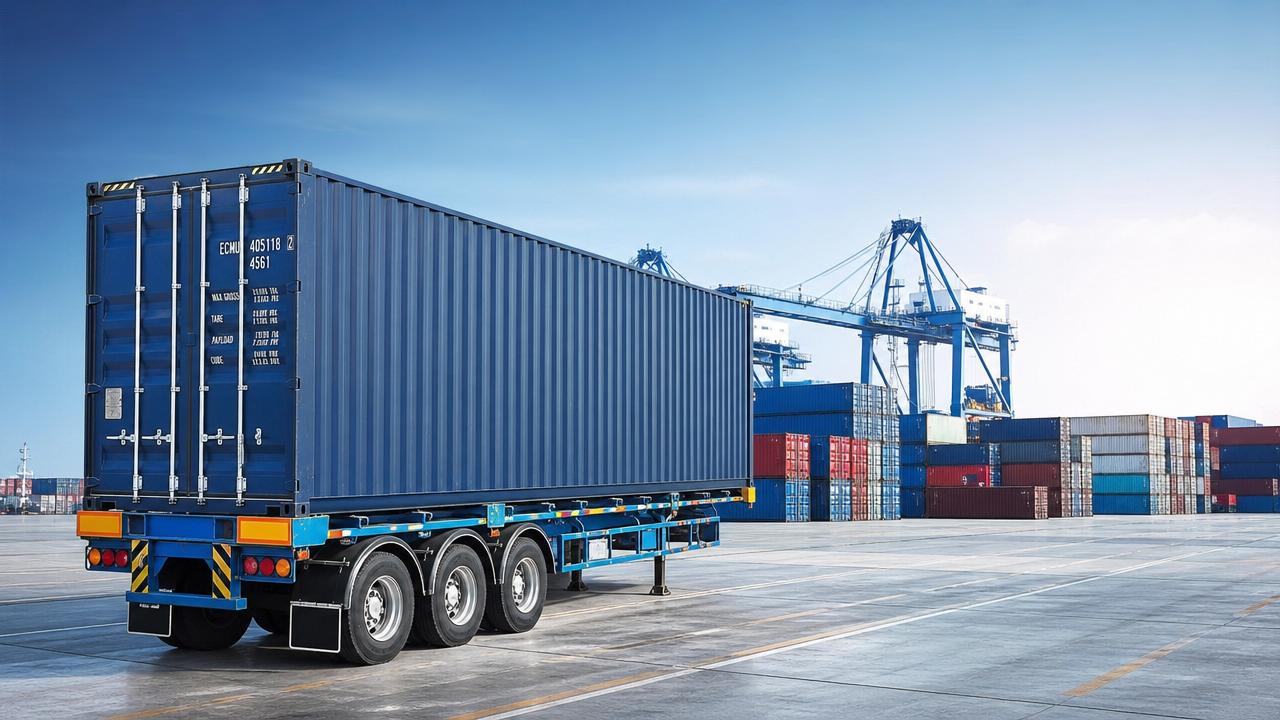
For cost-focused decision makers, a Skeleton (Container) Semi-Trailer can become the smarter shipping investment when efficiency, payload optimization, and operational flexibility directly affect total transport cost. Beyond the purchase price, factors such as maintenance, turnaround speed, and container compatibility often determine long-term value. Understanding when this trailer type delivers lower overall shipping expense is essential for making a financially sound fleet or procurement decision.
In engineering vehicle logistics, trailer selection is rarely just a transport department issue. Finance approvers often evaluate payback period, utilization rate, repair frequency, residual value, and the hidden cost of operational delays. A Skeleton (Container) Semi-Trailer is not the right answer for every load type, but in the right transport model it can lower cost per container movement, reduce idle time, and simplify fleet planning across domestic and cross-border operations.
For importers, contractors, port service providers, and fleet operators moving 20ft, 40ft, or mixed container loads, the decision usually comes down to one practical question: when does the structure, weight, and workflow of a skeleton trailer outperform more enclosed or general-purpose alternatives? The answer depends on route density, loading discipline, chassis durability, and the expected annual transport cycle.
Why a Skeleton (Container) Semi-Trailer Can Reduce Total Shipping Cost
A Skeleton (Container) Semi-Trailer is designed specifically for container transport. Unlike flatbeds or cargo platforms that carry a wider range of freight, this trailer uses a simplified frame structure with container locking points, giving it a lower tare weight and faster loading compatibility for standardized containers. In many engineering and industrial logistics operations, that specialization creates measurable savings over a 3-year to 5-year ownership period.
1. Lower tare weight means better payload efficiency
One of the most direct financial advantages is reduced dead weight. A skeleton trailer usually weighs less than a full deck alternative built for mixed cargo duty. Even a weight reduction of 800 kg to 2,000 kg can matter when fleets run high-frequency container trips, especially on routes with axle load control or fuel-sensitive cost models. More payload efficiency can translate into better compliance and fewer compromises between cargo weight and legal road limits.
Where finance sees the value
- Lower fuel consumed per useful ton moved over long-distance lanes
- Higher legal payload margin on repeat container routes
- Less structural material to repair compared with heavier general-purpose trailers
- Better cost allocation when the trailer is used only for container business
2. Faster turnaround improves asset utilization
For many fleets, the larger cost problem is not purchase price but underutilization. A Skeleton (Container) Semi-Trailer supports faster docking, locking, and dispatch for standardized boxes. If loading and unloading time drops by even 20 to 40 minutes per trip, a fleet operating 2 to 4 trips per day can recover a significant number of working hours each month. That directly affects trailer productivity and revenue generation.
In port drayage, depot transfer, and industrial project supply chains, faster turnaround also reduces queue exposure. A trailer that spends less time waiting under manual securing processes can deliver better trip consistency. For finance teams, consistency matters because it improves forecasting accuracy for labor, fuel, and vehicle scheduling.
3. Simpler structure can reduce maintenance burden
A skeleton chassis has fewer deck components than many multi-purpose trailers. That does not eliminate maintenance, but it often reduces the number of wear points related to flooring, side structures, or non-essential fittings. Routine inspections still need to cover twist locks, cross-members, landing gear, suspension, brake system, electrical lines, and weld integrity, yet the maintenance scope is typically easier to standardize across the fleet.
The table below shows where cost differences usually appear when comparing a Skeleton (Container) Semi-Trailer with a more general-purpose trailer in container-focused operations.
The key takeaway is that cost advantage comes from operating fit, not from a simple lower invoice price. If more than 70% of trailer usage is container-based and route planning is stable, a dedicated Skeleton (Container) Semi-Trailer often creates better long-term economics than a compromise solution.
When the Lower-Cost Option Becomes Clear for Finance Approvers
Finance teams typically approve commercial vehicle investments by comparing capital expense with expected operating return. In this context, a Skeleton (Container) Semi-Trailer becomes the lower-cost shipping option when at least 4 business conditions align: high trailer utilization, standardized container flows, predictable load dimensions, and limited need for mixed cargo flexibility.
High-frequency container movement
If the trailer is expected to handle containers on a near-daily basis, the cost spread becomes easier to justify. For example, fleets running 25 to 60 container moves per month per unit usually gain more from dedicated equipment than low-frequency users running fewer than 10 moves monthly. The more often the trailer is used in its intended application, the faster any efficiency gains are converted into financial value.
Multi-container compatibility without reconfiguration delays
Operations that switch between 20ft and 40ft containers need a trailer layout that supports practical locking positions and stable load distribution. In engineering vehicle supply chains, imported components, heavy spare parts, and project materials often move through standardized container systems. If each dispatch avoids unnecessary reconfiguration or manual adaptation, hidden labor and delay costs decline over time.
Cross-border, port, or inland terminal workflows
A Skeleton (Container) Semi-Trailer is particularly effective in logistics models involving ports, ICD yards, bonded zones, border crossings, and inland depots. In these environments, standardized loading equipment and fixed workflows reward trailer simplicity. Every avoided handling step reduces risk exposure, and fewer process interruptions help maintain delivery rhythm over 7-day, 15-day, or monthly shipping cycles.
Lower need for non-container cargo versatility
The dedicated nature of a skeleton trailer is also its main limitation. If more than 30% to 40% of annual demand requires bulk materials, steel structures, machinery without containers, or palletized open-deck cargo, a mixed fleet strategy may be more economical. But if non-container work is occasional, using a specialized trailer for the core business usually protects operating efficiency better than buying one unit to do every task imperfectly.
The following table helps finance approvers identify the business threshold where a Skeleton (Container) Semi-Trailer tends to become the better cost choice.
For finance approvers, the table shows a simple principle: the more repeatable the container flow, the stronger the case for a dedicated Skeleton (Container) Semi-Trailer. The less standardized the business, the more versatility may outweigh pure transport efficiency.
Key Evaluation Criteria Before Purchase Approval
Approving the right trailer requires more than accepting a supplier quote. Buyers in the engineering vehicle sector should review at least 6 core factors before comparing offers: axle configuration, suspension type, frame strength, container lock layout, service support, and delivery reliability. Missing even one of these factors can erase expected savings after the unit enters service.
Axle and load configuration
A common selection point is whether a 2-axle or 3-axle layout better fits the target route. The right choice depends on local road regulations, gross combination weight, container type, and trip distance. Heavier routes, rougher roads, or frequent 40ft container work often justify more robust running gear. A lower initial price on a lighter configuration may lead to higher tire, suspension, or frame stress later.
Twist lock reliability and frame durability
Because the trailer is dedicated to containers, locking point reliability is central to safety and efficiency. Finance reviewers should ask practical questions: how many lock positions are included, what inspection routine is recommended every 5,000 km to 10,000 km, and how easy is replacement in export markets? Structural weld quality, cross-member design, and anti-corrosion treatment are equally important, especially for coastal, humid, or heavy-duty road conditions.
Spare parts and after-sales response
Purchase cost becomes secondary if spare parts are difficult to source after delivery. Decision makers should evaluate whether the exporter can support documentation, parts coordination, and technical communication across time zones. This is especially relevant in Africa, the Middle East, Southeast Asia, and Latin America, where equipment uptime depends not only on product quality but also on supply chain responsiveness.
A useful pre-approval checklist
- Confirm the main container sizes to be transported over the next 12 months.
- Estimate monthly trip volume per trailer and expected annual utilization days.
- Match axle count and suspension to legal road load and route surface conditions.
- Review wear parts replacement intervals for brakes, tires, locks, and electrical systems.
- Check exporter support scope for customs documents, logistics coordination, and after-sales follow-up.
- Compare total lifecycle cost, not only unit purchase price.
Procurement Risk Control and Supplier Selection in Export Business
In international procurement, the trailer itself is only one part of the cost equation. Delays in production scheduling, incomplete export paperwork, poor specification matching, or weak post-sale communication can all increase total landed cost. For finance approvers, supplier selection should therefore combine product review with export execution capability.
Why integrated export support matters
A reliable exporter should be able to support vehicle selection, customization, documentation, customs clearance, and logistics arrangement as one coordinated process. This reduces the risk of mismatch between ordered configuration and destination-country operating needs. Even a 1-week to 3-week delay caused by documentation errors can affect customer commitments, yard costs, and cash flow planning.
What buyers should look for in a commercial vehicle exporter
Shandong Livol Truck International Trade Co., Ltd., based in Shandong, China, operates as a professional commercial vehicle exporter with experience in global trade and full-process customer support. As an authorized domestic and overseas dealer for FOTON, SHACMAN, and SINOTRUK, supported by authorized 4S stores and available vehicle inventory, the company is positioned to help buyers manage not only supply but also speed of response and export coordination.
For buyers evaluating a Skeleton (Container) Semi-Trailer together with tractors or broader fleet solutions, this kind of integrated support is practical. It means discussions can cover vehicle matching, customization options, shipping schedules, required documents, and after-sales communication in one workflow rather than through multiple disconnected vendors.
Common mistakes that increase actual cost
- Buying for the lowest quotation without checking route suitability and legal load limits
- Ignoring corrosion protection for humid ports, coastal roads, or rainy construction regions
- Overlooking spare parts availability for locks, brake components, and suspension items
- Failing to define whether the trailer will handle only containers or mixed engineering cargo
- Approving purchase before confirming shipping documentation and delivery lead time
How to Build a Stronger Business Case Internally
When presenting a purchase request, finance approvers often need a short but evidence-based internal justification. The strongest case for a Skeleton (Container) Semi-Trailer combines 3 dimensions: operating suitability, expected utilization, and risk-controlled supply. Instead of arguing from product preference, teams should frame the decision around cost per trip, time saved per dispatch, and expected service continuity over 12 to 36 months.
A practical internal approval model
Start with current transport data: average trips per month, current loading time, payload restrictions, and maintenance interruptions. Then compare those metrics with the expected performance of a dedicated Skeleton (Container) Semi-Trailer. If the model shows improved utilization, reduced handling time, and manageable maintenance requirements, the proposal becomes easier to defend both operationally and financially.
Questions that should be answered before sign-off
- Will the unit be used for containers at least 70% of the time?
- Can faster turnaround create 1 to 2 additional trips per week or reduce queue losses?
- Does lower tare weight improve legal payload flexibility on key routes?
- Is after-sales support clear enough to protect uptime after delivery?
- Does the supplier have the export coordination capability to avoid preventable delay costs?
A Skeleton (Container) Semi-Trailer becomes the lower-cost shipping option when the business is container-centered, dispatch frequency is stable, and the trailer is selected with the right axle, frame, and support package. For finance-led procurement, the most important insight is that cost savings come from lifecycle fit: lower dead weight, better turnaround, simpler maintenance scope, and fewer workflow inefficiencies.
If your operation involves repeat container transport in engineering vehicle, industrial, port, or cross-border logistics scenarios, a dedicated evaluation can reveal whether this trailer type will improve both cost control and operational reliability. To discuss specifications, customization, export documentation, and integrated vehicle supply solutions, contact Shandong Livol Truck International Trade Co., Ltd. today to get a tailored proposal and learn more solutions for your market.
Search Starts Here