
News
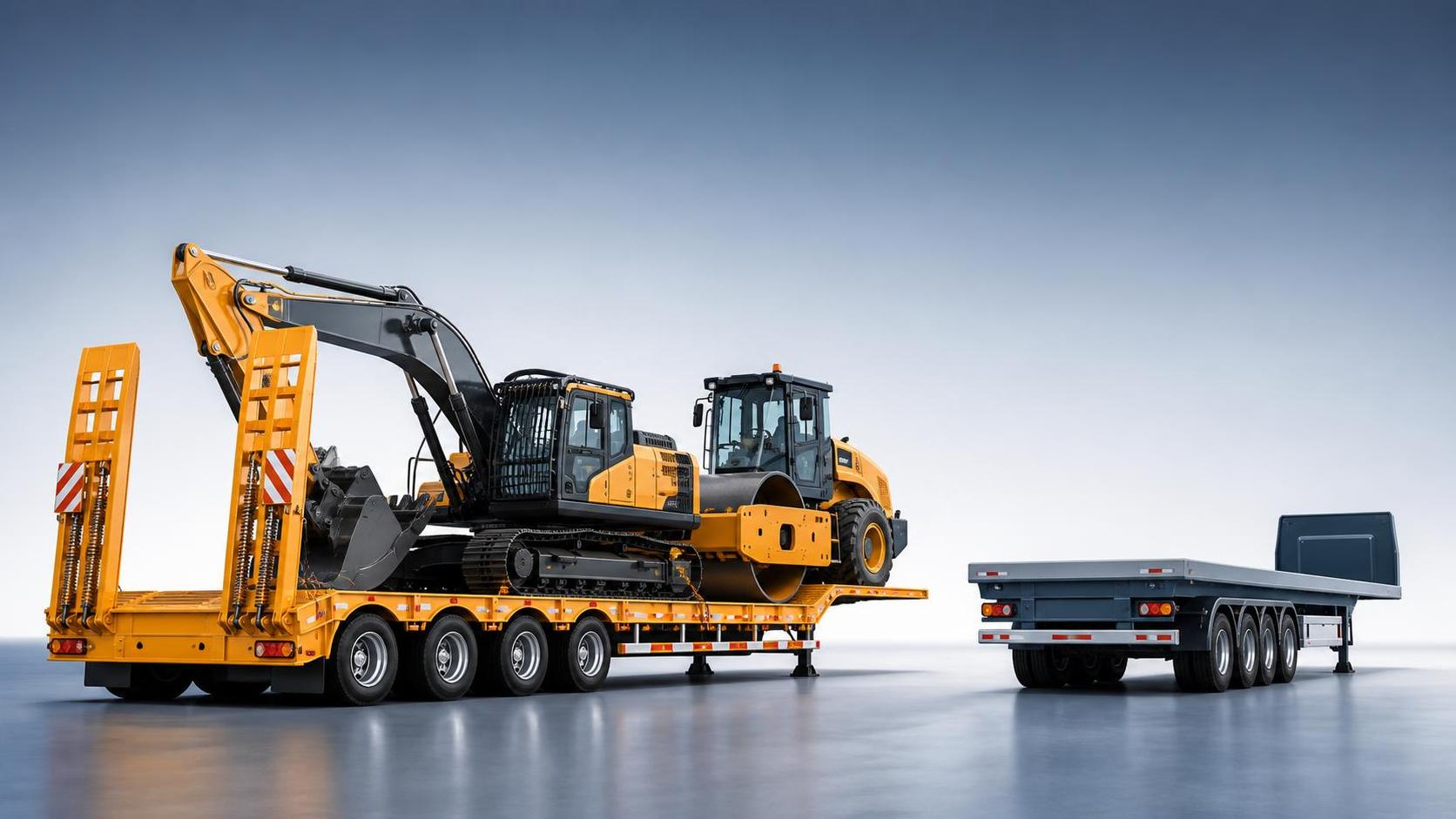
Choosing the right trailer can directly affect safety, efficiency, and project costs. For oversized machinery, heavy construction equipment, and height-sensitive cargo, a Low Plate trailer often performs better than a standard semi-trailer. Understanding which jobs require this specialized transport solution helps project managers reduce loading risks, meet road regulations, and keep engineering schedules on track.
In engineering transport, the wrong trailer choice usually does not fail at the purchasing stage. It fails later—when the machine cannot clear a bridge, when loading takes half a day longer than planned, when axle loads trigger permit issues, or when a jobsite crane must be hired just to recover from a poor transport setup. That is why the practical question is not whether a Low Plate trailer is “better” in general. The real question is which jobs make a standard semi-trailer inefficient, risky, or non-compliant.
What makes a Low Plate trailer different in project transport
A Low Plate trailer is designed with a lower deck height than a standard semi-trailer, allowing heavy or tall equipment to be carried with a lower overall center of gravity and reduced total transport height. In many markets, the term is used broadly for low-deck or low-bed style engineering transport trailers, though local terminology can differ. For project managers, the naming matters less than the operational effect: lower loading height, improved stability for heavy equipment, and better suitability for cargo that creates height or weight-distribution problems on conventional trailers.
Standard semi-trailers remain effective for palletized goods, containers, steel products, bagged materials, and general freight with predictable dimensions. Problems begin when cargo is self-propelled, top-heavy, over-width, or difficult to load by forklift or crane. In those cases, the trailer is no longer just a transport platform. It becomes part of the handling and risk-control system.
The jobs where a standard semi-trailer becomes the wrong tool
There are several recurring project scenarios where a Low Plate trailer is not a preference but a practical requirement.
1. Transporting excavators, loaders, rollers, and other self-propelled construction equipment
This is the most common use case. Crawler excavators, wheel loaders, road rollers, compactors, graders, and similar machines are typically easier and safer to load onto a lower deck. The lower approach angle reduces the chance of undercarriage contact during loading, especially for tracked equipment and machines with long wheelbases or attachments that affect balance.
A standard semi-trailer can sometimes carry smaller units, but loading often becomes more difficult. Ramps need more careful setup, climbing angles increase, and operator error risk rises. On muddy or uneven project sites, those risks become more pronounced. For project teams moving equipment frequently between sites, the time lost during repeated loading and unloading can quickly outweigh any apparent savings from using a general-purpose trailer.
2. Height-sensitive cargo moving under strict route limitations
Some transport jobs fail not because cargo is too heavy, but because it is too tall once loaded. This is common with drilling equipment, crushing units, certain agricultural or mining machines, industrial tanks, transformers with mounting bases, and prefabricated plant modules.
When route clearance is limited by bridges, overhead utility lines, tunnels, gantries, or temporary roadworks, lowering the cargo deck may be the only realistic way to move the load without changing the route entirely. For cross-regional engineering projects, route changes can have major consequences: longer transit times, additional permits, higher escort costs, and reduced schedule predictability.
In these jobs, a Low Plate trailer is often selected not for load capacity alone, but because it preserves route options.
3. Heavy equipment with a high center of gravity
Machines that are not exceptionally tall can still be unstable in transport if much of their mass sits high above the chassis. This applies to certain concrete machinery, drilling rigs, mobile processing units, and equipment with mounted booms, masts, or enclosed power systems.
Using a lower deck improves transport stability, particularly during cornering, braking, and uneven road movement. Project managers sometimes focus on rated tonnage while underestimating dynamic transport risk. A trailer that can technically carry the weight may still be a poor choice if the cargo behaves unpredictably on the road.
Lower deck height does not eliminate the need for proper load securing, axle balancing, and route planning, but it gives the transport plan a much safer starting point.
4. Projects involving repeated mobilization of machinery between short-duration sites
In road construction, utility installation, wind farm civil works, quarry development, and municipal works, machines may be relocated frequently. In these operations, transport efficiency is not measured only by highway performance. It is measured by the full handling cycle: loading time, unloading time, site accessibility, and redeployment speed.
A Low Plate trailer often improves this cycle because equipment can be loaded more directly and with fewer adjustments. That becomes valuable when site teams are under pressure to clear one location and reopen work at the next with minimal downtime.
If a project plan includes frequent machine transfers, the trailer decision affects equipment utilization. Delayed transport often means idle operators, missed concrete windows, disrupted paving plans, or out-of-sequence subcontractor activity.
5. Cargo that cannot be easily craned into place
Some machinery is not designed for straightforward crane lifting, or lifting on site may be impractical due to limited access, safety restrictions, or crane unavailability. In those cases, roll-on and roll-off loading becomes the preferred approach.
Low Plate trailers support this better than standard semi-trailers because they reduce ramp steepness and loading stress. This is relevant for used machinery transfers, emergency equipment dispatch, after-sales field service replacements, and remote site deliveries where handling resources are limited.
Jobs where a standard semi-trailer is usually still sufficient
Not every engineering shipment needs a specialized trailer. Project managers can overspecify transport equipment and add unnecessary cost. A standard semi-trailer usually remains suitable when the cargo:
- fits legal road height and width limits comfortably;
- has a stable footprint and low center of gravity;
- can be loaded by forklift, crane, or dock equipment without difficulty;
- does not require repeated roll-on/roll-off handling;
- travels on routes with good clearance and road conditions.
Examples include bagged cement additives, steel coils with proper securing arrangements, boxed spare parts, generators in standard frames, construction materials, and many containerized site supplies. In these cases, the flexibility and lower operating cost of a standard trailer often make more sense.
The decision is usually driven by constraints, not by cargo category alone
A common mistake in project logistics is choosing a trailer based only on equipment type. Two excavators of the same class may require different transport solutions depending on attachment configuration, local axle rules, road conditions, and how often they need to move.
For practical planning, the better decision method is to evaluate five constraints together:
Overall transport height
If cargo on a standard semi-trailer creates route clearance risk, a Low Plate setup becomes a strong candidate. This is often the first trigger in real projects.
Loading and unloading method
If the machine must drive on and off repeatedly, lower deck geometry improves safety and speed.
Weight distribution and axle compliance
Total weight is only part of compliance. Axle load concentration matters, and local road authorities may focus heavily on it. Permit requirements vary by country and region, so teams should verify applicable thresholds and escort requirements in advance. Specific legal limits should be treated as jurisdiction-dependent and confirmed locally.
Route and site conditions
Poor access roads, temporary haul roads, steep entry points, and congested urban approaches can all change trailer suitability. A transport plan that works on paper may fail at the final 500 meters into the site.
Move frequency
If the trailer will support repeated project mobilizations, lifecycle efficiency matters more than one-time freight price.
Common selection mistakes on engineering projects
One of the most expensive errors is assuming that “if it fits, it ships.” Physical fit is only a small part of transport suitability. Problems usually arise from operational details: machine swing during loading, attachment overhang, deck stress concentration, ramp angle, site turning radius, and permit timing.
Another mistake is separating transport planning from project scheduling. A machine may be available, the operator may be ready, and the destination site may be prepared, but if the trailer arrangement requires extra approvals or a less direct route, the transport lead time changes the critical path.
There is also a tendency to compare only daily hire rates between trailer types. That comparison is too narrow. A Low Plate trailer may cost more to allocate than a standard semi-trailer, but if it reduces escort complications, loading delays, damage risk, and route detours, the total project cost may be lower.
What project managers should check before deciding
Before assigning a trailer, project teams should confirm the actual transport condition of the cargo—not just catalog specifications. Operating weight may differ from shipping weight once buckets, breakers, arms, booms, protective frames, tires, or fuel conditions are considered.
It is also important to verify:
- loaded height from road surface to highest point;
- loaded width including attachments and side protection requirements;
- center-of-gravity concerns for transport configuration;
- whether the machine can self-load safely;
- ramp and deck compatibility;
- site access conditions at both origin and destination;
- permit and escort lead times for oversized or overweight moves.
For international or cross-border engineering operations, one more layer matters: transport assumptions made in the exporting country may not match enforcement practice in the destination market. Route control, police escort requirements, holiday driving bans, and axle enforcement can differ significantly. That is why experienced exporters and local logistics partners should validate the final transport plan together.
When a Low Plate trailer adds strategic value beyond the single shipment
On large projects, transport assets influence more than logistics. They affect equipment deployment strategy. If a contractor expects frequent repositioning of earthmoving fleets, pavement equipment, or support machinery, access to the right low-deck transport capacity can improve the way work packages are sequenced.
For example, a contractor may be able to centralize fewer machines and redeploy them across multiple sections instead of assigning duplicate equipment to each zone. That reduces idle asset time. In this sense, the Low Plate trailer is not just a hauling solution; it can support leaner fleet utilization.
This matters especially in projects where imported equipment is expensive, spare unit availability is limited, and machine uptime has a direct effect on milestone payments.
The practical threshold: when to move away from the standard trailer assumption
As a rule, project managers should stop assuming a standard semi-trailer is enough when any of the following is true:
- the cargo approaches route height limits after loading;
- the machine is self-propelled and must be loaded frequently;
- the cargo has poor transport stability on a higher deck;
- site conditions make steep ramp loading unsafe;
- permit complexity or route restrictions would be reduced by a lower deck;
- delays in loading or relocation would affect the project critical path.
That threshold is operational, not theoretical. In real engineering work, the trailer decision should serve schedule certainty, safety control, and compliance—not simply freight convenience.
Final judgment
A Low Plate trailer is most justified in jobs involving heavy machinery, height-sensitive cargo, repeated equipment mobilization, and loads where loading geometry or transport stability creates risk. A standard semi-trailer still has a clear place in general engineering freight, but once cargo begins to challenge clearance, ramp angle, balance, or route compliance, the standard option can become a false economy.
For project managers, the best trailer choice is rarely the one with the lowest visible transport cost. It is the one that protects the schedule, avoids preventable handling risk, and fits the real operating constraints of the job. In engineering transport, those constraints are exactly where the case for a Low Plate trailer usually becomes clear.
Search Starts Here