
News
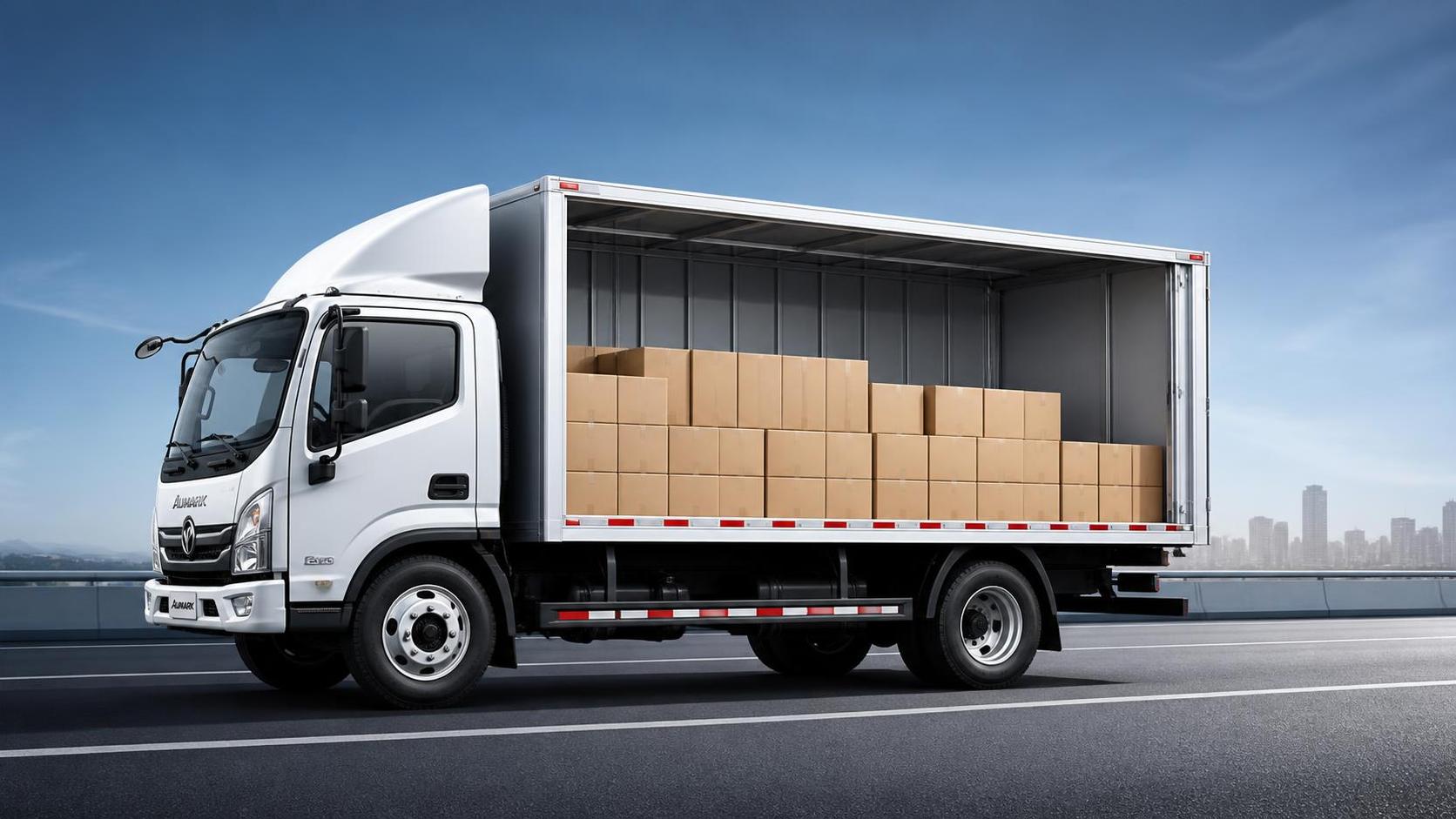
For operators and fleet users, the practical answer is this: a 4_2 Cargo Truck usually delivers the best fuel economy when it runs at a moderate working load rather than at either extreme. In most real operations, carrying about 60% to 85% of the truck’s legal payload capacity gives the best balance between transport efficiency, engine load, tire wear and fuel use.
That range is not a universal number, because fuel economy changes with road conditions, body size, axle ratio, engine torque, driving style and cargo type. Still, for daily transport work, it is a useful starting point for deciding how much payload a truck can carry before fuel cost per trip begins to rise faster than the revenue gained from extra cargo.
For users choosing a 4_2 Cargo Truck, the real goal is not simply loading as much as possible. The smarter goal is finding the payload level where every liter of fuel moves more saleable cargo, without pushing the vehicle into inefficient operation, slower trip times or higher maintenance costs.
What operators really want to know before loading a 4_2 Cargo Truck
When people search for payload and fuel economy together, they are usually not looking for a textbook definition. They want to know how heavy they can load the truck in daily work before fuel consumption, wear or reliability starts to work against profit.
That means the most useful question is not “What is the maximum rated payload?” but “What payload still keeps the truck economical on my routes?” The difference matters, because the legal limit and the economic sweet spot are rarely exactly the same.
A 4_2 Cargo Truck can often carry its rated load safely when correctly configured, but operating at the upper end every day may increase fuel use sharply in stop and go traffic, on gradients, poor roads or long-distance routes with frequent speed changes.
For owner-operators and fleet users, the best decision comes from looking at payload in relation to route profile, average speed, cargo density, loading frequency and expected turnaround time. In short, payload should be planned as an efficiency target, not only as a technical limit.
Why fuel economy changes as payload increases
More payload always requires more energy. The truck needs extra power to accelerate, climb slopes and maintain speed. As total vehicle weight rises, rolling resistance also rises, and the engine spends more time working in higher load conditions.
However, fuel economy should be judged in two ways. First is fuel consumed per 100 kilometers. Second is fuel consumed per ton-kilometer. A loaded truck may burn more fuel per distance, yet still become more efficient in terms of cargo moved.
This is why a lightly loaded 4_2 Cargo Truck is not automatically the most economical choice. If the truck carries too little, fuel use per trip may look low, but the cost per ton delivered can actually be worse because the truck’s own weight still consumes fuel.
At the other extreme, loading too close to the upper limit every day can push the engine, gearbox and tires into less efficient conditions. Frequent downshifting, longer braking distances and reduced cruising stability all contribute to higher real-world fuel costs.
The best operating point is usually the middle ground where the truck carries enough cargo to justify the trip, while still allowing smooth acceleration, steady cruising and efficient engine speed on the route it regularly serves.
What payload range usually protects fuel economy best
For many medium-duty applications, the most economical range is around 60% to 85% of legal payload capacity. This range often gives a good compromise between revenue load and stable operating efficiency, especially on mixed urban and regional routes.
For example, if a 4_2 Cargo Truck is legally configured for a payload of 8 tons, many users will find that carrying about 5 to 6.8 tons produces better long-term operating results than pushing 7.5 to 8 tons on every trip.
That does not mean heavier loads are always wrong. If the route is flat, the road surface is good, stops are limited and the engine and gearbox are matched properly, a truck can run close to rated payload without a major fuel penalty.
But if the route includes city congestion, repeated braking, mountain roads, loose surfaces or irregular loading, the practical economic payload may sit much lower. In those conditions, overloading the daily plan by even a small margin can reduce efficiency quickly.
Operators should also remember that fuel economy is only one cost line. A load plan that saves one trip each week but causes more tire wear, clutch stress or brake service may look efficient on paper and still reduce overall profit.
How route conditions change the ideal load for a 4_2 Cargo Truck
Route profile is one of the biggest factors in deciding how much a 4_2 Cargo Truck should carry. A truck that performs well at high payload on highways may become noticeably less economical on urban delivery routes with constant stopping and starting.
Flat highway transport usually allows a higher payload without a dramatic fuel penalty because the truck can remain in a stable speed range. Engine torque is used more efficiently, gear changes are fewer and braking losses are lower.
In contrast, hilly or mountainous roads increase the cost of every additional ton. The truck needs more power on climbs and often loses the fuel-saving advantage of steady cruising. On steep descents, brake wear and safety margins also become more important.
Poor road surfaces create a similar problem. Rough roads increase rolling resistance and reduce speed stability. A heavily loaded truck on damaged roads typically consumes more fuel than expected and places extra stress on suspension and frame components.
For fleet planning, the right approach is to match payload targets to route type. The same truck may have one economical load range for long highway work and another for regional delivery, construction supply or agricultural transport.
How truck specification affects the payload and fuel balance
Not all 4_2 Cargo Truck models behave the same under load. Vehicle specification has a direct effect on how much cargo can be carried efficiently. Engine torque, gearbox ratios, rear axle ratio, chassis weight and body type all matter.
A truck with strong low-speed torque can handle working loads more smoothly, especially in traffic or on gradients. That can reduce unnecessary throttle input and gear hunting, both of which often raise fuel consumption in real operation.
Axle ratio also deserves careful attention. A short ratio may improve pulling power with heavy loads, but it can increase engine speed at cruising velocity. A long ratio may save fuel on highways, but it can feel strained under heavier cargo on mixed terrain.
Body and cargo box design make a difference too. A taller or less aerodynamic body increases drag, especially at speed. Even when payload stays the same, poor aerodynamic conditions can make a truck seem less economical than its chassis specification suggests.
Vehicle tare weight is another key factor. A lighter but durable chassis leaves more legal payload available without increasing gross vehicle weight. That improves the truck’s ability to carry profitable cargo while preserving better efficiency per ton delivered.
How cargo type changes the practical answer
The ideal payload depends not only on weight, but also on the type of cargo being carried. Dense materials such as steel parts, bagged minerals or beverages can reach weight limits before the cargo body is full.
In these cases, the fuel economy question becomes highly sensitive because each additional ton has a direct effect on drivetrain load. Users carrying dense cargo should pay close attention to axle loading, start-stop frequency and climb performance.
Bulk but lighter goods create a different picture. Parcel distribution, consumer products, textiles or packaged agricultural goods may fill the body before reaching the maximum legal weight. In such work, aerodynamic drag and trip frequency can matter more than raw payload.
Liquid or shifting cargo also affects efficiency and safety. Even when total weight is legal, unstable load movement can increase throttle corrections, braking events and driver fatigue. Proper load securing and body selection are therefore part of fuel management.
For operators, this means there is no useful payload rule without reference to cargo type. The truck should be evaluated for how it carries your actual goods, not just according to a catalog capacity figure.
How to find the most economical payload in daily operation
The most reliable method is to track your own operating data. Start by recording fuel use, payload weight, route type, trip time and average speed for several weeks. This quickly shows where heavier loads stop improving overall transport efficiency.
A practical trial method is to compare performance at three loading bands, such as 60%, 75% and 90% of legal payload. Measure fuel per 100 kilometers, fuel per ton-kilometer, average trip duration and any obvious changes in vehicle behavior.
If fuel use rises only slightly while tonnage rises clearly, the higher band may still be economical. But if speed drops, downshifting increases, idle time grows during climbs or maintenance concerns appear, the heavier load is probably past the efficient point.
Driver feedback should be included in the analysis. Operators often notice early signs of inefficient loading before the data becomes obvious, such as weak gradeability, unstable braking, poor launch response or frequent engine strain in normal traffic.
Simple route segmentation helps too. Separate urban, regional and highway trips instead of averaging everything together. A load level that works well in one pattern may be the wrong choice in another, even with the same truck and driver.
Driving habits that help preserve fuel economy under load
Even the correct payload can become expensive if driving habits are poor. Smooth acceleration, early anticipation of traffic flow and stable cruising speed are essential when a 4_2 Cargo Truck is working near its normal operating load.
Hard launches consume fuel quickly because the engine must overcome both vehicle mass and inertia. Frequent unnecessary braking has the same effect, since the energy used to gain speed is then lost and must be rebuilt again.
Keeping tires at the correct pressure is especially important under load. Underinflated tires increase rolling resistance and heat buildup, which harms both fuel economy and tire life. Alignment and brake drag checks also make a measurable difference.
Load distribution matters as well. Uneven loading affects handling, steering stability and axle efficiency. A properly balanced truck is easier to control smoothly, which helps the driver maintain a more economical rhythm over the whole route.
Regular maintenance supports all of this. Clean filters, correct lubricants and healthy injectors allow the powertrain to do its job efficiently. Many users focus on payload alone, while the real fuel loss comes from neglected operating basics.
What to look for when choosing a truck for payload efficiency
If you are buying or renewing a vehicle, focus on specification matching rather than headline capacity alone. The right 4_2 Cargo Truck for fuel-efficient work is the one whose engine, transmission and axle setup fit your real payload band and route pattern.
Ask practical questions before purchase. What is the truck’s usual cargo density? How many stops are made per trip? What percentage of work is highway versus urban? Is the body optimized for volume, weight or mixed use?
It is also important to evaluate service support and parts availability. A truck that looks efficient on paper can become costly if downtime is long or after-sales support is weak. Reliability is part of true operating economy.
For international buyers and fleet users, working with an experienced commercial vehicle supplier helps reduce this risk. Access to brands, specification options, documentation support and export coordination can make it easier to choose the right truck the first time.
Companies with strong manufacturer links and practical export experience, such as authorized suppliers of FOTON, SHACMAN and SINOTRUK, are often better positioned to recommend a configuration that supports payload efficiency instead of overselling unnecessary capacity.
Conclusion: the best payload is the one that keeps the whole operation efficient
The best fuel-saving payload for a 4_2 Cargo Truck is usually not the empty truck and not the maximum truck. For most users, the most economical working zone is a moderate to high load level, commonly around 60% to 85% of legal capacity.
That range should then be adjusted according to route conditions, cargo type, vehicle configuration and driving discipline. A truck on flat highways may work efficiently near the upper end, while stop-start or hilly routes often reward a more moderate load plan.
For operators, the smart decision is to judge payload by total transport efficiency, not by weight alone. When fuel use, trip time, maintenance and vehicle behavior are considered together, the right load target becomes much clearer.
In practical terms, a well-matched 4_2 Cargo Truck should carry enough to maximize productive output without forcing the vehicle into inefficient operation. That is the balance that protects fuel economy, supports reliability and delivers stronger long-term operating value.
Search Starts Here