
News
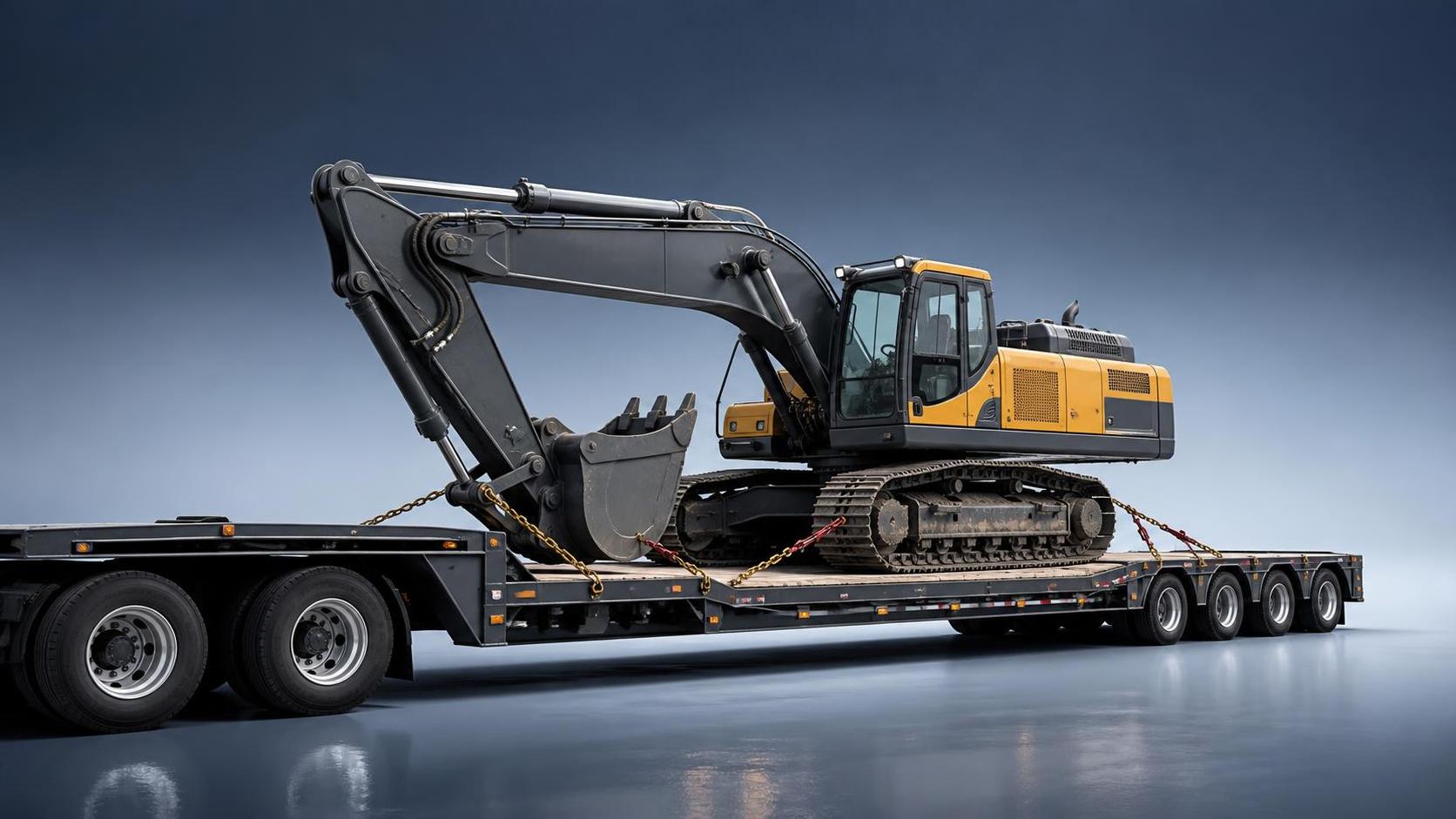
Repeated deck bending on a flatbed semi-trailer is rarely caused by one overload event alone. In most field cases, the deck starts to lose its original profile because heavy loads are applied again and again in ways the structure does not distribute well. For after-sales maintenance teams, that distinction matters. A trailer with a bent deck is not just a cosmetic issue or an “old unit” problem. It is usually a signal that load paths, structural stiffness, operating practice, and inspection discipline are no longer aligned.
For maintenance staff, the practical question is not “can steel bend under weight?” It is “why is this trailer bending earlier than expected, and is the cause in the structure, the operation, or both?” If that is not diagnosed correctly, repairs become temporary and the same unit returns with recurring deformation, cracked welds, uneven tire wear, or cargo stability complaints.
Why repeated heavy loads become a structural problem
A flatbed deck is designed to carry weight through a defined structural system: deck plate or floor members, cross members, side rails, main beams, suspension mounting areas, and kingpin region. Under normal service, these parts flex within an allowable range. Under repeated heavy loads, especially concentrated or dynamic loads, local flexing can move beyond elastic behavior and begin accumulating permanent deformation.
That accumulation is what maintenance teams often see as “deck sag,” “center dip,” “wheel track depression,” or “twist.” The important point is that repeated loading does two things at the same time: it stresses the metal, and it cycles the stress. Even when a single load event does not appear catastrophic, high cycle loading can weaken critical areas over time, particularly around weld toes, beam transitions, suspension brackets, and cross-member connections.
In other words, deck bending is often a fatigue-and-distribution problem before it becomes an obvious overload problem.
The most common root cause: poor load distribution
In workshop discussions, overload is often blamed first. That is understandable, but incomplete. Many trailers operate below nominal gross limits and still develop deck deformation because the real issue is how the load sits on the platform.
Concentrated loading creates local stress peaks that the deck was not meant to absorb repeatedly. This is common when transporting machinery with narrow track contact, steel coils without adequate load spreaders, blocks or containers positioned too close to mid-span, or equipment whose support points do not align with the trailer’s stronger structural zones.
When a heavy machine places most of its weight through two track lines or four small contact pads, the effective stress on the deck can be much higher than the total cargo weight suggests. If timber mats, steel spreader plates, or proper blocking are not used, cross members and deck plate areas between the main beams begin to take damage first. The visible symptom may start on top, but the real structural loss is often underneath.
Maintenance teams should be cautious with units that repeatedly carry:
- construction machines with narrow track spacing,
- point-loaded industrial cargo,
- unevenly supported prefabricated components,
- loads positioned consistently in the same deck zone.
A trailer that always carries “the same legal cargo” can still bend if that cargo always loads the same weak span in the same way.
Dynamic loading does more damage than static weight suggests
Another reason deck bending is underestimated is that operators often think in terms of static tonnage. But trailers on real roads do not experience static conditions. Braking, potholes, curb transitions, off-road site entries, uneven ramps, and torsional movement between tractor and trailer all introduce impact and cyclic loading.
A load that is technically within rated capacity can generate much higher momentary forces when the trailer encounters rough surfaces or when the cargo is not well secured and shifts slightly. In maintenance investigations, this is one of the most overlooked factors. The trailer may not be “overloaded” on paper, but service conditions amplify the stress enough to accelerate bending.
This is especially relevant in engineering vehicle logistics, where routes often include quarry roads, temporary site access, port yards, or partially improved roads. Repeated chassis twist under those conditions can lead to deck distortion, particularly if the trailer frame design is optimized for highway transport rather than mixed terrain service.
Main beams are not the whole story
When a deck bends, attention often goes straight to the main beams. They are critical, but they are not the only determinant of deck shape retention. A flatbed can develop deck deformation even when the main beams have not visibly failed.
Cross members, outriggers, deck plate thickness, beam web quality, reinforcement around landing gear and suspension zones, and welding consistency all influence how loads are shared. If cross members are too widely spaced for the actual cargo profile, or if local stiffness is insufficient around common load contact areas, the deck will start deforming locally first and then progressively affect the global structure.
For after-sales teams, this means inspection should not stop once the main beam flange looks acceptable. In many repeat-failure cases, the sequence is:
- local deck depression begins,
- cross-member connections loosen or crack,
- load path shifts toward adjacent members,
- main beam stress rises unevenly,
- permanent deck sag becomes visible.
By the time the overall deck line is visibly bent, the structural imbalance has usually been developing for some time.
Fatigue starts where geometry changes
Repeated heavy loading rarely damages a trailer uniformly. It attacks transition zones. Areas where section thickness changes, where reinforcements begin or end, where brackets are welded on, or where cut-outs exist are more likely to become fatigue initiation points.
Typical high-risk locations include the neck area, the kingpin-to-main-beam transition, suspension hanger zones, cross-member weld ends, and any area that has already been repaired. If the trailer has undergone previous straightening or welding, those spots deserve even closer attention because residual stress and altered stiffness can change how future loads are carried.
This is why two trailers of similar specification can age very differently in service. Material grade matters, but so do fabrication accuracy, weld quality, alignment, and the consistency of stress flow through the frame.
Operating practices that accelerate deck bending
Some deformation patterns point less to design weakness and more to repetitive operating habits. Maintenance teams usually see these patterns before operations does. The problem is that they are often normalized until structural damage becomes expensive.
- Loading cargo too far forward or too far rearward, causing repeated bending moments outside the intended balance zone.
- Using the same loading position on every trip, without rotating cargo placement when possible.
- Driving tracked or wheeled machines onto the deck without adequate ramp alignment, introducing impact at entry points.
- Using undersized timber or worn spreaders that no longer distribute pressure effectively.
- Allowing cargo shift due to poor securing, which creates secondary impact loads during braking and cornering.
- Operating on uneven ground during loading, so the frame is already twisted before full cargo weight is applied.
These are not minor details. On a trailer under repeated heavy service, operational inconsistency often determines whether the deck lasts through its intended life cycle or begins deforming early.
How to tell normal deflection from developing damage
Not every visible deck movement under load is a failure. A trailer frame is supposed to flex to some degree. The maintenance challenge is distinguishing recoverable deflection from permanent deformation.
The first sign worth tracking is whether the unloaded deck returns to its original line. If the trailer shows persistent sag after unloading, especially in the center span or near repeated contact points, that is no longer normal working flex. A second sign is asymmetry. One-sided depression, twist, or uneven height between left and right side rails often indicates that loading practice, suspension condition, or prior repair has altered the structure.
Other warning signs usually appear before severe bending becomes obvious:
- new cracks in deck welds or cross-member joints,
- paint flaking at stress zones,
- loose fasteners around structural attachments,
- uneven tire wear linked to frame distortion,
- cargo securing difficulty because anchor geometry has shifted,
- abnormal ride behavior under familiar loads.
Once these signs appear together, the trailer should not simply be straightened and returned to service without a cause review.
Inspection priorities for after-sales maintenance teams
A useful deck-bending inspection is not just a visual walkaround. It needs to connect the deformation pattern with the trailer’s duty cycle. That means asking what cargo is carried, where it sits, how often it is repeated, what road conditions are typical, and whether the trailer has already been repaired.
In practical terms, inspection should focus on three layers: geometry, connections, and load history.
If available, simple dimensional records taken during scheduled service are far more useful than relying on memory. A trailer rarely “suddenly” bends; in many cases the workshop simply lacks earlier measurements to prove the progression.
Why repairs fail when the original duty does not change
One common mistake is treating deck bending as a straightening job only. Straightening may restore shape, and local plating or reinforcement may make the trailer look stronger, but if the original loading pattern remains unchanged, the structure will often fail again, sometimes faster.
This happens because repairs can create local stiffness mismatches. A reinforced patch may shift stress to the edge of the repair zone, where cracking starts next. Similarly, replacing a damaged section without addressing weak adjacent members can leave the underlying fatigue network untouched.
For that reason, repair decisions should be tied to the trailer’s future duty, not only its current visible damage. If the unit will continue carrying repeated heavy machinery or concentrated industrial cargo, the repair strategy may need to include reinforcement redesign, revised load distribution requirements, or operating restrictions.
When the issue is specification mismatch, not maintenance failure
After-sales teams are often asked to “solve” a deck bending problem that actually began with a specification mismatch. A trailer selected for nominal payload may not be suitable for the true load shape, contact pattern, route condition, or loading frequency. This is especially common in export and mixed-market operations, where duty assumptions may vary between buyer, distributor, and end user.
In such cases, blaming maintenance alone misses the larger lesson. The correct question is whether the trailer configuration matched the operating reality: beam section, cross-member layout, deck material, axle arrangement, suspension type, and reinforcement strategy. Capacity labels by themselves are not enough for engineering cargo applications.
For fleets sourcing trailers internationally, this is where a technically competent supplier matters more than a low headline price. An exporter or dealer with real commercial vehicle experience can help align specification with use case, provided the buyer gives an accurate duty profile. Without that, even a reputable platform can be pushed into the wrong service envelope.
What maintenance teams should push for internally
If deck bending is recurring, the maintenance department should resist handling it as an isolated workshop defect. The better approach is cross-functional: maintenance, operations, loading staff, and procurement need the same failure picture.
In practice, the most useful actions are usually these:
- record deformation patterns by trailer number and cargo type,
- identify repeated load contact zones on the deck,
- review whether spreaders or blocking are sufficient for actual contact pressure,
- check whether loading on uneven ground is routine,
- evaluate whether repaired trailers returned to the same duty without restrictions,
- feed failure data back into future trailer selection and body specification.
This is how maintenance moves from repair cost center to reliability input. A bent deck is field evidence. Used well, it improves future equipment decisions.
The practical judgment
When a flatbed semi-trailer deck bends under repeated heavy loads, the root cause is usually a combination of stress concentration, cyclic fatigue, dynamic loading, and operating habits. In some cases, the trailer is overloaded. In many others, it is being loaded in a way the structure does not tolerate repeatedly, even if the gross weight appears acceptable.
For after-sales maintenance personnel, the priority is to stop treating deck bending as a simple shape defect. It is a structural signal. The earlier the team links that signal to load distribution, route condition, and frame design, the better the chance of preventing a more expensive failure in service.
That is the real value of understanding deck bending: not just repairing steel, but deciding whether the trailer, the loading method, and the duty cycle still belong together.
Search Starts Here