
News
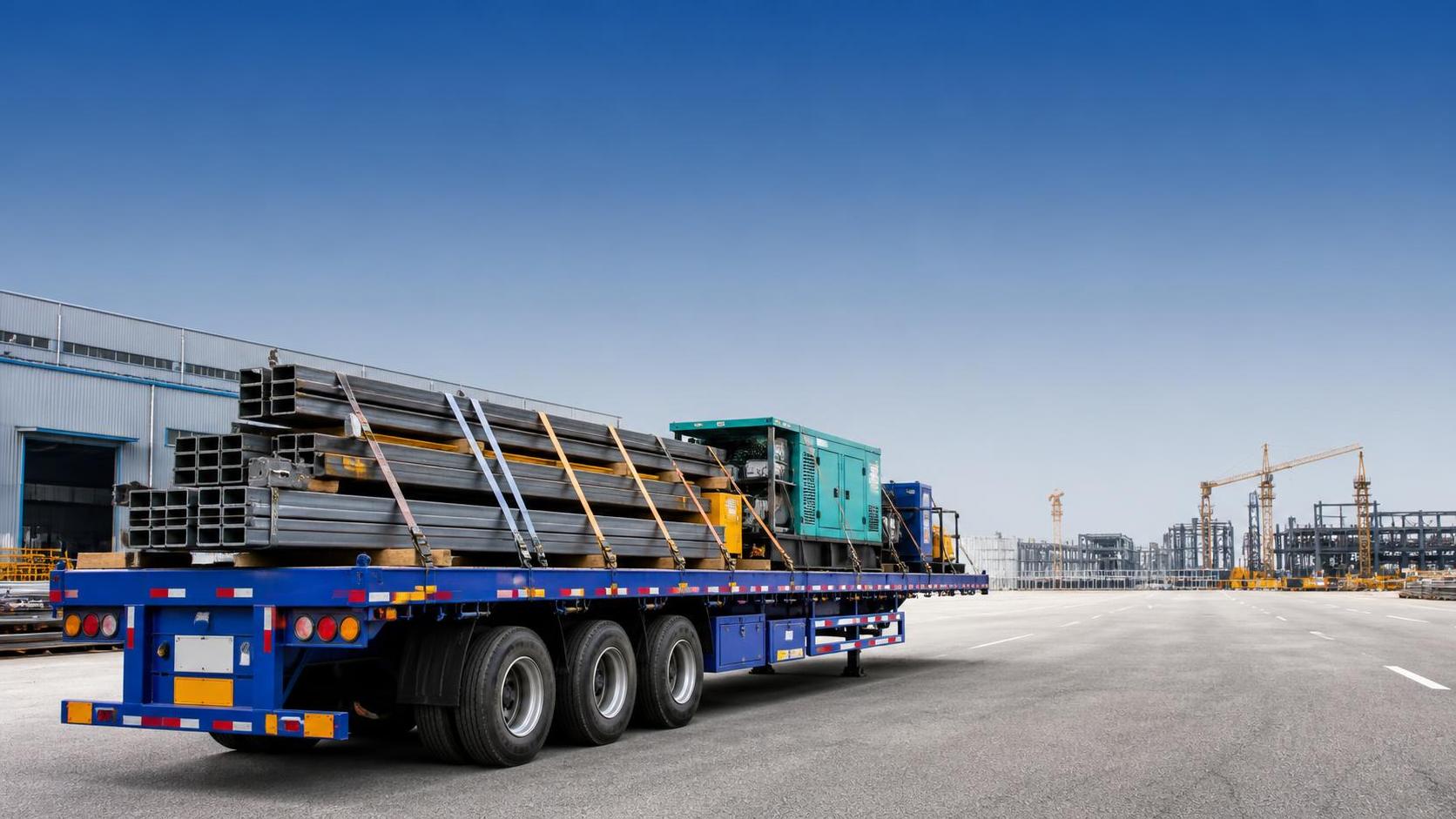
A flatbed semi-trailer can look like a simple purchase until the cargo plan is placed on the table. A few feet of extra deck length may reduce the number of trips for long structural materials, yet it can also create maneuvering difficulties, increase empty running costs, or complicate compliance on certain routes. A deck that is too short, on the other hand, can force awkward loading arrangements and leave procurement teams dependent on permits or additional trailers.
For buyers sourcing a Flatbed Semi-Trailer, deck length should be evaluated as part of the transport system rather than as an isolated specification. The right choice depends on the cargo envelope, axle loading, loading equipment, destination conditions, and the percentage of trips that involve return loads. This guide compares the common deck lengths and provides a practical framework for choosing a configuration that fits real operating conditions.
Start with the cargo profile, not the trailer catalogue
Procurement teams often begin by comparing 40-foot, 45-foot, 48-foot, and 53-foot trailers. That comparison matters, but the more useful first question is: what actually occupies the deck?
Measure the typical cargo in the way it will be transported, including pallets, dunnage, cradles, coil racks, loading frames, and any overhang restrictions. A machine that is technically 11 metres long may require more space once its attachments are secured. Steel products may be compact in length but need deliberate placement to keep axle loads balanced. Precast components, pipes, wind-energy sections, timber, and construction equipment all create different demands on usable deck space.
It is also important to distinguish between the “usual” load and the “critical” load. If 80 percent of shipments are standard building materials but 20 percent involve long beams, choosing a very long trailer for every trip may not be the most economical answer. In some fleets, a standard deck paired with occasional subcontracted transport or a specialised extendable unit is more sensible than operating oversized equipment on every route.
How common Flatbed Semi-Trailer deck lengths are used
These lengths describe common market categories rather than a universal rule. Actual usable deck length can vary with the neck design, rear structure, bumper arrangement, stake pockets, bulkhead, and local manufacturing practice. Buyers should request a dimensional drawing rather than relying solely on the headline length.
The 40-foot deck: a practical choice for varied daily work
A 40-foot flatbed is often the most adaptable option for fleets that carry a changing mix of cargo. It provides enough platform for many common construction and industrial loads while remaining easier to position at constrained sites, urban depots, warehouses, and project locations with limited turning space.
For example, a contractor supplying bagged cement, reinforcement bundles, formwork, brick pallets, compact machinery, or fabricated components may find that a 40-foot unit covers most assignments without excess deck space. When loads are dense and heavy, usable payload and legal axle distribution are usually more important than gaining additional length.
This category deserves careful consideration when the truck-trailer combination must work on secondary roads or frequently enter job sites. The shortest trailer is not automatically the safest, but a manageable combination can reduce the stress placed on drivers, loading crews, and schedules. It may also reduce the likelihood that a long trailer is dispatched half empty simply because no shorter equipment is available.
When 45 or 48 feet creates better commercial value
The move from 40 feet to 45 or 48 feet can be justified when cargo regularly includes long bundles, modular materials, prefabricated assemblies, or equipment that leaves too little clearance on a shorter platform. It can also improve loading flexibility where customers prefer cargo arranged in separate zones—for example, one section for structural steel and another for accessories, packaging, or spare parts.
A 48-foot Flatbed Semi-Trailer is widely associated with longer general freight because it can accommodate substantial cargo lengths without immediately requiring a specialised trailer. For many buyers, it represents a middle ground: enough deck for demanding loads, but still familiar to workshops, drivers, and loading facilities in many markets.
However, a longer deck does not automatically mean a higher payload. The trailer’s tare weight, axle arrangement, suspension configuration, kingpin setting, tractor specification, and legal limits all affect the payload that can be carried. A procurement decision based only on deck length can therefore produce a trailer that looks productive but is inefficient for dense cargo such as steel coils, stone, or heavy machinery.
53-foot platforms: useful capacity, but only when the operation supports them
A 53-foot platform can be attractive for long, relatively light cargo, large quantities of palletised materials, timber, pipes, fabricated structures, or oversized equipment that remains within the relevant legal dimensions. The additional deck area can reduce wasted space and may allow a shipment that would otherwise require two loads to travel on one unit.
That benefit should be tested against the route. Longer trailers need more room at factory gates, loading bays, roundabouts, fuel stations, border facilities, and customer yards. A route that appears straightforward on a map may become difficult when it includes narrow village roads, steep approaches, temporary construction diversions, or congested industrial estates.
Before ordering a 53-foot flatbed, ask operations staff for real route feedback rather than relying only on theoretical access. Drivers often know where the tight turns, poor surfaces, and awkward unloading points are. Their input can prevent a costly mismatch between a trailer’s paper capacity and its everyday usability.
Length is only one part of load security
The selected deck should support a secure, repeatable loading method. Cargo that fits physically may still be unsuitable if there are not enough effective tie-down positions, if the stakes are incorrectly placed, or if the load must be positioned too close to the front or rear of the platform.
When reviewing a Flatbed Semi-Trailer quotation, consider the complete restraint environment:
- Number, type, and placement of lashing rings or rope hooks
- Stake pockets and removable stakes for pipe, timber, or bundled products
- Headboard or front bulkhead requirements
- Deck material and anti-slip characteristics
- Availability of coil wells, container locks, ramps, or equipment-specific supports
- Clear space needed for chains, straps, edge protectors, and dunnage
A longer platform may require more securement points and a more disciplined loading plan. With long materials, small movement during transport can build into a major risk if the restraint arrangement is poorly designed. This is particularly relevant for export buyers who may operate across different regulatory environments and need equipment that can be adapted to local cargo-control practices.
Check weight distribution before deciding on extra deck space
Deck length and axle loading are closely connected. A heavy load placed too far forward can overload the tractor’s drive axles or exceed kingpin limits; the same load positioned too far rearward can create problems at the trailer axles and affect handling. The allowable range changes with trailer geometry and the tractor used to pull it.
Procurement teams should provide the supplier with representative cargo weights and loading positions. A useful discussion is not simply “we need a 48-foot trailer,” but “we carry equipment weighing approximately this amount, usually loaded at this distance from the front, with these supporting frames.” That information allows the supplier to recommend an axle spacing, suspension, deck reinforcement, and kingpin layout that suit the application.
Do not assume that an extra-long deck can carry heavy cargo across its full length. Concentrated loads may require reinforced sections, additional beams, or a different trailer type altogether. If machinery is loaded by ramps, the rear approach angle and concentrated rear-deck strength should be assessed early, not after the trailer arrives.
Route rules can change the correct answer
Legal dimensions, gross combination weights, axle limits, overhang rules, and permit procedures vary widely by country and sometimes by region. A trailer specification that is routine in one market may require special operating conditions in another. Cross-border fleets have an additional challenge: the configuration must work not just at the origin port or warehouse, but throughout the full transport corridor.
Review the following before finalising deck length:
- Maximum permitted trailer and combination length on planned routes
- Rules for front and rear cargo overhang
- Restrictions on axle groups, spacing, and gross weight
- Permit requirements for project cargo or abnormal loads
- Access rules at ports, mines, construction sites, and customer facilities
- Availability of service support and replacement parts in the operating region
For buyers importing equipment, documentation matters as much as configuration. Dimensional drawings, axle data, chassis identification details, and component information should be available in a form that supports customs clearance, registration, inspection, and internal fleet records.
A procurement checklist that avoids expensive compromises
Before issuing a purchase order, create a short cargo-and-route brief for each candidate trailer. Include the longest regular load, heaviest regular load, cargo height, loading method, annual trip pattern, typical return cargo, and most restrictive destination. This converts a general buying conversation into an evaluable specification.
Then compare the options on total operational fit. A 40-foot deck may win on access and utilisation. A 48-foot deck may reduce handling for long construction materials. A 53-foot design may be the best option for volume-focused routes with suitable infrastructure. The right answer is the one that performs well on the largest share of profitable work—not the one with the largest number printed in the brochure.
Ask for confirmation of deck dimensions, tare weight, payload basis, axle configuration, suspension type, tyre specification, braking system, landing gear, and available cargo-control accessories. If the trailer will work with a new tractor unit, confirm fifth-wheel height and coupling compatibility as well. A trailer and tractor should be specified as one working combination.
Choosing with an export partner in mind
International procurement adds practical questions about lead time, pre-delivery checks, shipping preparation, spare parts, and after-sales communication. Shandong Livol Truck International Trade Co., Ltd. supports commercial vehicle buyers with vehicle selection, configuration coordination, export documentation, customs-related processes, and logistics arrangements. As an authorized dealer for FOTON, SHACMAN, and SINOTRUK, the company can also help buyers consider how trailer selection aligns with tractor availability and intended fleet operations.
The most productive purchasing conversation begins with cargo realities: drawings, dimensions, weights, route conditions, and loading photos where available. With that information, a Flatbed Semi-Trailer can be specified for the work it must do every day—carrying cargo safely, fitting the roads it must travel, and delivering value over its operating life.
Search Starts Here