
News
When is a low plate trailer worth the extra cost?
In engineering vehicle transport, the cheapest trailer is not always the least expensive choice. A standard flatbed may look attractive on paper, but once the cargo gets taller, heavier, or more sensitive to stability, the math changes. That is where a low plate trailer starts to make sense.
The real question is not whether a Low Plate trailer costs more. It usually does. The better question is whether that added cost is offset by safer loading, fewer transport restrictions, less damage risk, and better fleet utilization. For many buyers, the answer depends on the type of equipment being moved and how often it moves.
The cases where it pays for itself faster than people expect
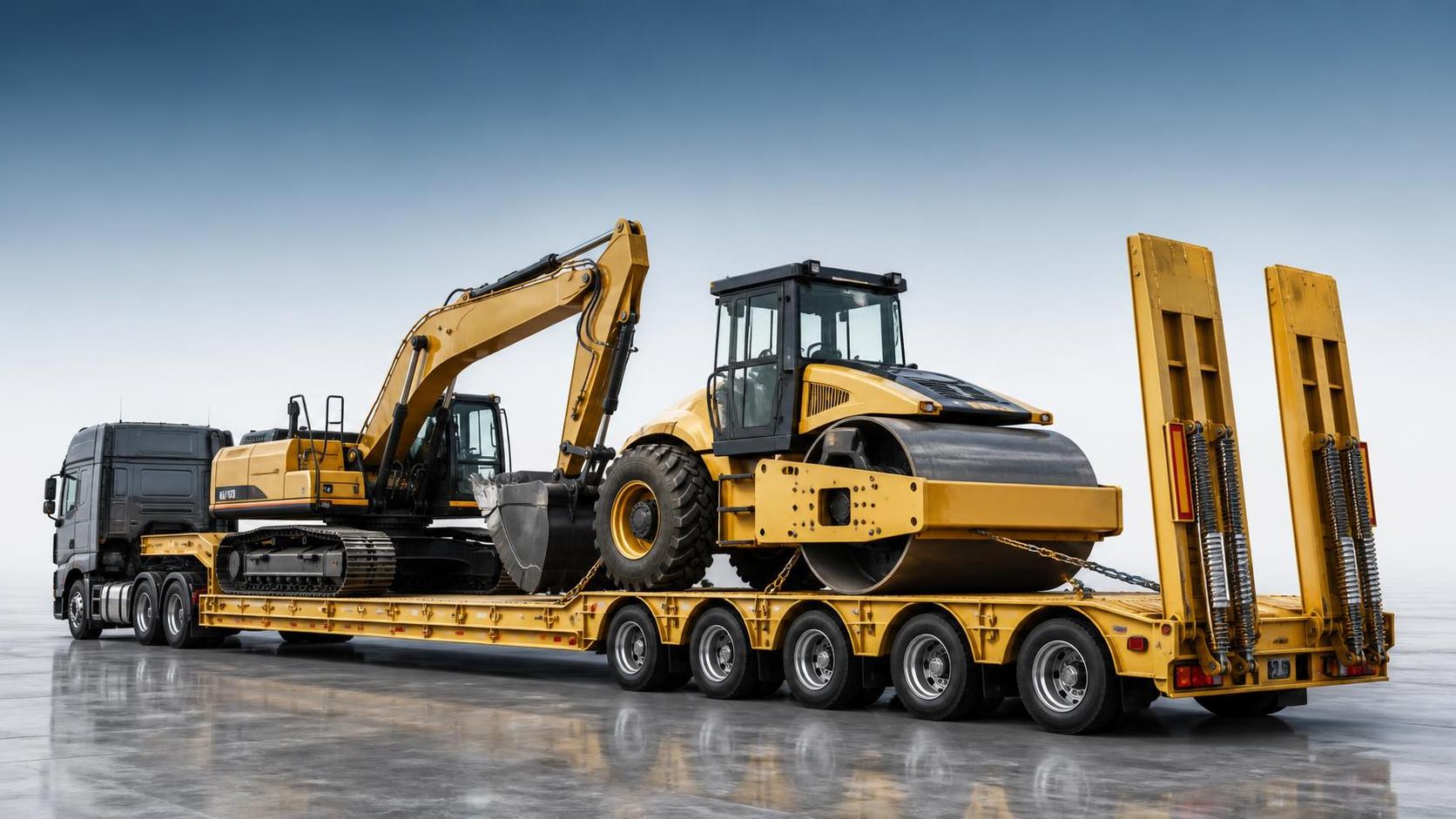
A low plate trailer is often worth paying extra for when the cargo has a high center of gravity or an awkward shape. Excavators, road rollers, drilling equipment, wheel loaders, and certain oversized components can sit more securely when the loading deck is lower to the ground. That lower deck is not just a comfort feature; it can reduce rollover risk during transport and make ramp loading less stressful for the operator.
It also becomes easier to stay within legal height limits. In many markets, oversize transport is tightly controlled, and a trailer that sits too high can force route changes, permit issues, or even a complete redesign of the loading arrangement. If the vehicle itself is already tall, every centimeter matters. In that situation, the extra trailer cost is often cheaper than repeated permit work, escort requirements, or rejected shipments.
Another common case is mixed project work. Some fleet owners only move standard machines occasionally, but others rotate between multiple sites and transport different categories of equipment every week. If the job profile keeps changing, a low plate trailer gives more flexibility. That flexibility has value because it reduces the chance that one project becomes “too tall” or “too heavy” for the available trailer.
Where the extra money is harder to justify
If the cargo is relatively low, uniform, and easy to secure, a low plate trailer may be more trailer than you need. For example, if a company mainly moves standard building materials, smaller machines, or containers with predictable dimensions, the benefit may be marginal. In that case, what matters more is payload capacity, tire wear, maintenance access, and local serviceability.
There is also a maintenance angle people sometimes underestimate. A more specialized trailer can mean more careful inspection, more attention to suspension and deck components, and sometimes a longer lead time for parts. If your fleet operates in remote areas or under rough-road conditions, that matters. A low plate trailer that is perfect on a specification sheet may not be the best option if downtime is costly and support is thin.
So the decision is not “premium versus basic.” It is whether the added capability will be used often enough to justify ownership, inspection, and operating complexity. That is a practical procurement question, not a branding question.
What experienced buyers look at before signing
The first check is cargo profile. Not just gross weight, but height, width, axle load distribution, and how the equipment is loaded. Some machinery looks manageable until you actually calculate loading height with ramps, deck thickness, and tie-down space included. That is where a low plate trailer can solve a problem that a standard trailer cannot.
The second check is route reality. A trailer choice that works on a smooth industrial park route may fail on uneven roads, bridge restrictions, or urban height limits. Buyers who move engineering vehicles across different countries or regions often need to think beyond the depot. Customs clearance, local transport rules, and road conditions can all influence whether a low plate design becomes a cost saver or just an expensive option.
The third check is loading efficiency. If operators need fewer repositioning steps, less shimming, and less time fighting clearance issues, the trailer improves throughput. That may sound minor, but across repeated projects it can reduce labor strain and scheduling delays. In transport work, small delays often become expensive because they hit equipment rental windows, site access times, and project sequencing.
Why procurement teams should think beyond purchase price
A low plate trailer can look expensive in a quote comparison, especially if the buyer is focused on unit price alone. But in engineering transport, ownership cost is shaped by more than the invoice. If the trailer helps you avoid route exceptions, rework, unstable loading, or damage claims, the real cost picture changes quickly.
This is also where supply reliability matters. Buyers in commercial vehicle procurement often need not only the right trailer, but the right delivery timing, documentation, and after-sales support. Shandong Livol Truck International Trade Co., Ltd., based in Shandong, China, works in that kind of environment every day, supplying commercial vehicles and export solutions with attention to selection, customization, documentation, customs clearance, and logistics. For fleet buyers, the practical value is not just “getting a trailer,” but getting the right configuration delivered on time and ready for work.
That matters even more when the trailer is part of a wider fleet strategy. Some buyers want a trailer that can support multiple brands of equipment, different hauling tasks, and changing overseas project demands. In those cases, a low plate design is less of a premium add-on and more of a risk-control tool.
The simplest way to decide
If the trailer will regularly carry tall, heavy, or high-value equipment, the extra cost is usually easier to defend. If it only moves standard loads, the premium may never be recovered. That sounds obvious, but many purchasing mistakes happen when buyers guess instead of mapping the cargo they actually move.
A good decision usually comes down to three checks: whether the cargo height is close to legal or operational limits, whether loading stability is a concern, and whether the trailer will be used often enough to justify the premium. If the answer is yes to two of those, a Low Plate trailer deserves serious consideration.
For engineering fleets, this is rarely a cosmetic choice. It is a transport efficiency choice, and sometimes a safety choice. When the project is demanding enough, the extra cost is not extra at all—it is the price of avoiding bigger problems later.
Search Starts Here