
News
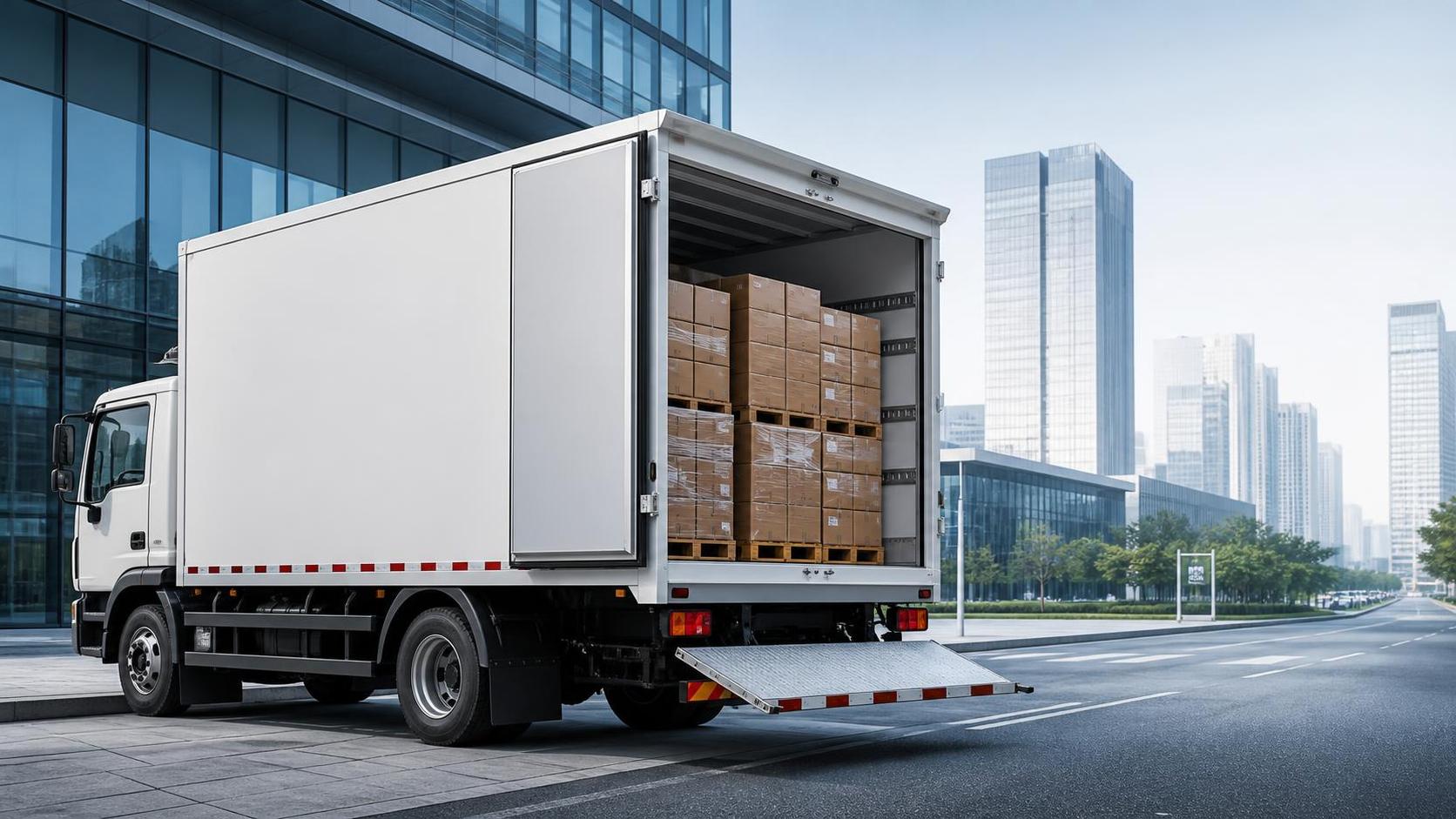
If you are trying to figure out how much a 4_2 Cargo Truck can carry on urban delivery routes, the short answer is this: there is no single payload number that fits every truck. In city work, usable payload depends on the truck’s gross vehicle weight rating, body type, curb weight, axle limits, cargo density, and the rules on the roads you actually run. A truck that looks big enough on paper can still become the wrong choice if it is too heavy once fitted with a box body, tail lift, refrigeration unit, or extra reinforcement.
That is usually where people get caught. They compare brochure figures, see one payload number, and assume that is what the truck will deliver every day in real city service. In practice, urban delivery is less forgiving. Stop-and-go traffic, narrow access roads, loading docks, low bridges, curbside unloading, and local enforcement all affect how much weight you can handle safely and legally.
A practical rule is to treat payload as a working number, not a marketing number. The legal and efficient payload of a 4x2 cargo truck on urban routes often ends up lower than the maximum figure some buyers expect, especially after the truck is configured for the actual job.
What payload really means on a 4_2 Cargo Truck
Payload is the weight of the cargo the truck can carry after you subtract the truck’s own ready-to-run weight from its permitted gross vehicle weight. That sounds simple, but the ready-to-run weight changes more than many operators think.
For example, the same chassis can have very different usable payload depending on whether it is built as a flatbed, stake truck, closed van, insulated body, or refrigerated body. Add a tail lift, toolboxes, spare tire carrier, sleeper equipment, or stronger side panels, and the curb weight rises again. Fuel, driver, helper, and even commonly carried loading gear also take away from payload.
So when someone asks, “How much can this truck carry?” the right response is usually, “Which body, which route, and which cargo?”
That matters even more in urban logistics because city cargo is often mixed. One day the truck may carry packaged food, the next day building supplies, parcels, retail stock, or bottled goods. Volume may limit one job; axle weight may limit the next.
Why urban routes change the answer
Highway transport and urban delivery are not the same loading environment. In city operations, payload is shaped by conditions that do not always show up in a spec sheet.
First, there are axle restrictions. A truck may be within total gross weight and still be overloaded on one axle because the cargo sits too far forward or too far back. This is common with dense palletized goods and short loading platforms.
Second, there is route quality. Repeated braking, turning, climbing ramps, crossing rough access roads, and entering tight yards all put more stress on suspension, brakes, tires, and body structure. Even if a truck can technically carry a certain load, it may not do so comfortably every day on congested urban routes.
Third, there are local regulations. Some cities set restrictions on entry time, emissions class, vehicle size, or gross weight. In some markets, legal limits also depend on road category and bridge control. That is why any payload decision should be checked against local transport rules and official registration data.
And then there is delivery frequency. A truck doing 20 drops a day with constant loading and unloading needs a different balance than a truck doing two warehouse-to-warehouse runs. In dense city work, a slightly lower payload with better maneuverability and easier access can produce better daily output.
The biggest mistake: confusing “can move” with “should carry”'
Many drivers and small fleet operators have seen a truck carry more than its rated working load. That does not make it a good practice. A truck may still move, but the cost shows up elsewhere: weak braking feel, faster tire wear, hot running components, unstable cornering, spring fatigue, damaged floors, and more downtime.
Overloading is especially risky in urban traffic because the truck spends so much time reacting. Pedestrians, motorcycles, parked vehicles, sudden lane changes, and repeated intersections leave very little margin for poor brake balance or longer stopping distance.
This is also where “light but bulky” and “small but dense” cargo behave very differently. Cartons of household goods may fill the body before weight becomes a problem. Tiles, beverages, hardware, paper products, or bagged materials can reach axle limits quickly, sometimes before the body looks full. Operators who judge load by visual space alone usually get into trouble.
What usually determines usable payload in real work
When people compare trucks for city delivery, I usually suggest they focus on five things before looking at headline payload claims.
- Gross vehicle weight rating: This sets the legal upper boundary, subject to local regulation.
- Actual curb weight after body installation: A finished truck can weigh far more than the base chassis figure.
- Axle layout and axle ratings: Front and rear axle limits matter as much as total weight.
- Cargo type and load distribution: Dense cargo changes everything.
- Route pattern: Tight city work often favors a realistic buffer instead of loading to the maximum every trip.
That buffer is not wasted capacity. It protects drivability, compliance, and equipment life. For operators running daily urban loops, a truck loaded slightly below its maximum rated limit often performs better over time than one pushed to the edge on every trip.
Not every 4x2 truck is built for the same city job
The phrase 4_2 Cargo Truck covers a wide range of configurations. Some are intended for lighter distribution, some for heavier regional cargo, and some sit in the middle. Two trucks with the same wheel arrangement can feel completely different in service because of wheelbase, frame strength, suspension tuning, engine output, gearbox matching, body dimensions, and tire specification.
That is why buyers should be careful with generic advice. A truck chosen for parcel and retail replenishment may be efficient, low in operating cost, and easy to maneuver, but it may not be suitable for dense industrial loads. On the other hand, a heavier-duty setup may carry more, yet become less efficient if the route includes tight inner-city streets, frequent reversing, and low daily payload density.
A good match starts with the cargo profile. Ask these questions first:
- Is the load limited by weight or by volume?
- Does the truck need a closed body, insulated body, or tail lift?
- How many drops are made per shift?
- Are roads smooth, mixed, or rough?
- Is easy cab access and visibility more important than maximum load?
Those answers usually reveal more than a single payload figure ever will.
How experienced operators judge the right load
Experienced operators rarely talk only about maximum payload. They look at stable payload: the load a truck can carry repeatedly, safely, and without making the job harder. That is a better way to think about urban delivery.
Stable payload means the truck still brakes predictably, turns without excessive sway, clears local road restrictions, and does not punish the driver through constant strain. It also means loading crews can place cargo correctly, not just stack it wherever space remains.
One useful habit is to verify the loaded vehicle on a certified weighbridge, especially after a new body is installed or when the cargo mix changes. Many operators are surprised by the result. The finished body, fuel, crew, and common accessories often eat into payload more than expected.
If the work involves mixed freight, it also helps to calculate the average load per trip across a normal week, not just the heaviest day. A truck selected only for occasional peak loads may be oversized for the rest of the operation.
When a 4_2 Cargo Truck is the right fit, and when it is not
A 4x2 cargo truck is often a good fit for urban and near-urban distribution where operators need a balance between payload, maneuverability, operating cost, and access. It makes sense for retail delivery, packaged food, e-commerce linehaul into city zones, spare parts distribution, light industrial supply, and many warehouse-to-store routes.
It becomes a weaker fit when the job regularly involves very dense loads, rough site access, extreme body modifications, or roads with unusual weight distribution demands. In those cases, the truck may still be usable, but only if the specification is chosen carefully and the real payload expectation is adjusted.
That is also why fleet buyers often consult suppliers who know both the chassis and the export configuration process. Companies such as Shandong Livol Truck International Trade, which works with FOTON, SHACMAN, and SINOTRUK models and supports vehicle selection, customization, documentation, and delivery, can be useful at the comparison stage. The value is not just access to stock. It is having someone check whether the selected chassis-body combination actually matches the route and cargo instead of relying on a broad catalog description.
Before you decide, confirm these points
If you are comparing options for city logistics, do not stop at the advertised payload. Confirm the registered gross vehicle weight, the actual curb weight of the finished truck, axle ratings, body dimensions, and any added equipment. Then compare those numbers with the cargo you carry most often, not the cargo you carry once in a while.
Also check the road reality. A truck that works well on a wide industrial route may be frustrating in old city districts with tight turns, low canopies, and frequent curbside unloading. Driver comfort and visibility matter here more than some buyers expect, because urban delivery is repetitive and fatiguing work.
If you need one simple answer to keep in mind, it is this: the best payload for a 4_2 Cargo Truck on urban delivery routes is the highest load it can carry legally, safely, and repeatedly in its finished working configuration, with enough margin for the route conditions you face every day.
FAQ
Can I use the manufacturer’s maximum payload figure as my daily working load?
Not without checking the finished body weight, axle limits, and local road rules. The published number is only a starting point.
Why does my truck reach the limit before the cargo box is full?
Your cargo is likely density-limited rather than volume-limited. Dense goods such as paper, beverages, hardware, or building materials can hit weight limits early.
Does a longer cargo body always mean better urban delivery capacity?
No. A longer body may help with volume, but it can also affect turning, parking, load distribution, and access on narrow city routes.
Is a tail lift worth the extra weight?
Often yes for multi-drop city work, but it reduces usable payload. The trade-off depends on how often you unload without dock support.
What should I check first before buying?
Start with your actual cargo profile, the route restrictions, and the finished truck weight after body installation. That usually prevents the biggest buying mistakes.
Internal link anchor text suggestions
- 4x2 cargo truck body types: body configuration guide
- urban delivery truck axle load basics: compliance and loading tips
- how to choose a FOTON SHACMAN or SINOTRUK cargo chassis: model comparison page
- truck customization for export: body, tail lift, and refrigerated options
- commercial vehicle shipping documents: export process overview
External authority source directions
- Government transport or road safety regulator pages covering gross vehicle weight and axle load rules
- Brand official technical documentation for chassis curb weight, axle ratings, and body installation limits
- Industry association guidance on urban freight operations, loading safety, and vehicle compliance
Search Starts Here