
News
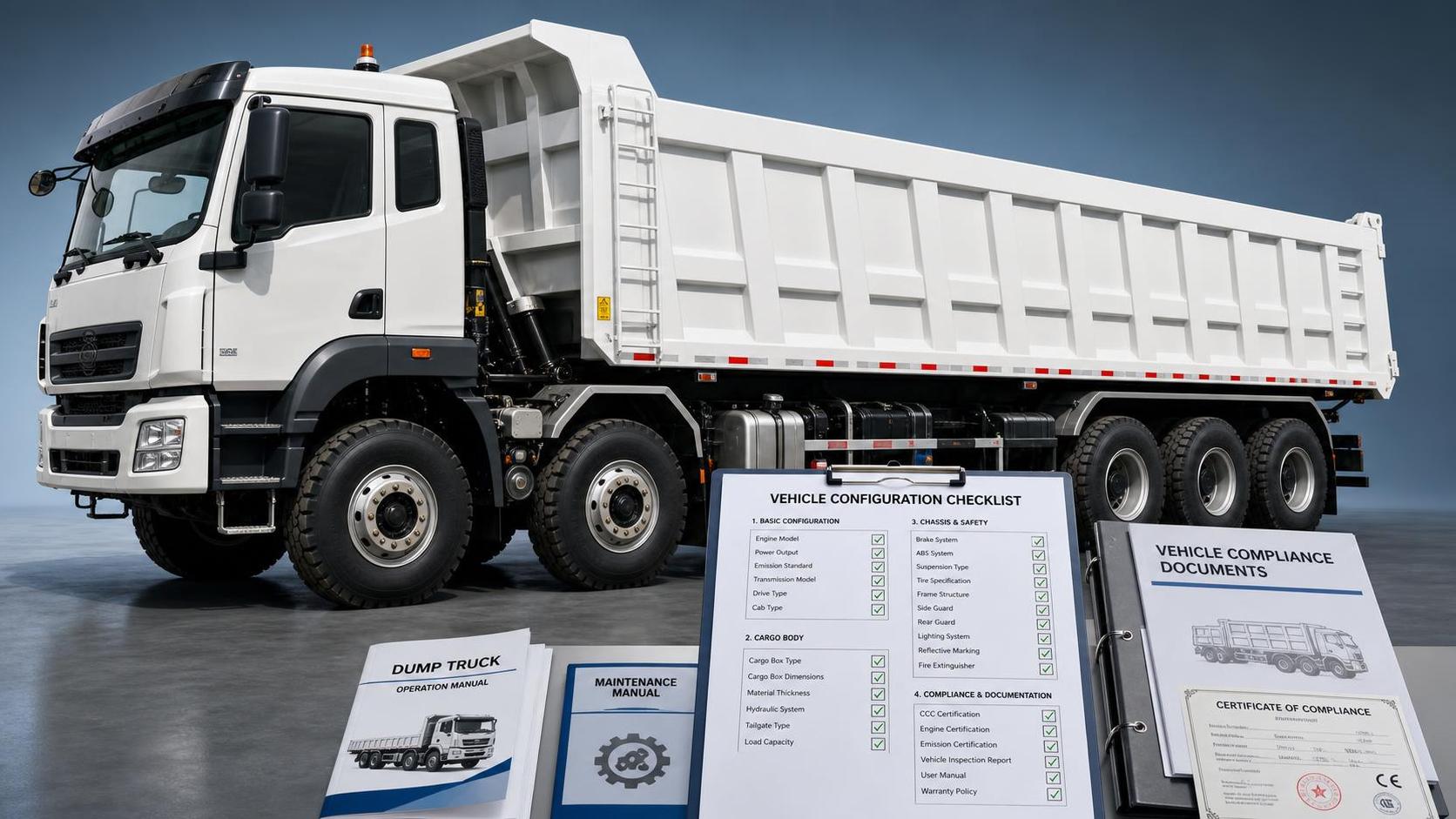
Before approving procurement or deployment, quality control and safety teams should review the Cangshan Vehicle Configuration List carefully to confirm compliance, equipment accuracy, load suitability and operational safety. A complete check helps identify missing safety features, specification mismatches and configuration risks early, reducing downtime, avoiding regulatory issues and ensuring the vehicle can perform reliably in demanding engineering applications.
What Is the Real Search Intent Behind a Cangshan Vehicle Configuration List?
When users search for the Cangshan Vehicle Configuration List, they usually do not want a simple definition. They want a practical inspection standard.
For quality control personnel and safety managers, the main concern is whether the listed vehicle matches operational, legal and safety requirements before delivery or use.
In most engineering vehicle purchases, the configuration sheet is more than a sales attachment. It is a risk control document that supports acceptance, deployment and accountability.
That is why the most useful answer is not broad product promotion. It is a structured checklist showing what must be verified and why each point matters.
What Do Quality and Safety Teams Care About Most?
The first priority is specification accuracy. If the configuration list does not match the actual vehicle, later problems can affect load performance, site safety and compliance.
The second priority is suitability for the working environment. A vehicle that looks correct on paper may still be unsuitable for terrain, climate, load cycles or road conditions.
The third concern is hidden omission. Missing braking options, tire grade, axle details or warning systems can create risks that only appear after deployment.
Finally, teams want traceable proof. They need clear data that can be checked against contracts, inspection records, maintenance planning and internal approval processes.
Start with Basic Identity and Model Verification
The first section of any Cangshan Vehicle Configuration List should be checked against the vehicle’s identity data. This includes model code, chassis number, engine number and production batch.
These details sound basic, but they prevent a common procurement problem: receiving a similar vehicle rather than the exact approved configuration for the project.
Check whether the listed model variant matches the intended application, such as tipper use, heavy hauling, municipal work or construction material transport.
If the vehicle comes from a multi-brand or export supply channel, identity consistency becomes even more important because specification differences may exist between batches or markets.
Confirm the Chassis and Structural Capacity
For engineering vehicles, chassis details are central to safety and service life. The configuration list should clearly state frame strength, wheelbase and gross vehicle weight rating.
Quality teams should confirm whether the chassis layout supports the actual body, payload and operating conditions expected in the field.
A mismatch here can lead to frame fatigue, unstable handling, uneven axle loading and accelerated wear under repeated construction duty.
Look closely at suspension type, reinforcement measures and frame design. These items are especially important for rough roads, quarry transport and stop-start operations.
If the vehicle will carry dense material such as sand, gravel or stone, underestimating structural demands creates a direct safety and maintenance risk.
Check Engine, Transmission and Driveline Matching
One of the most important parts of the Cangshan Vehicle Configuration List is the powertrain section. Engine output alone is not enough for a reliable judgment.
Quality and safety personnel should review horsepower, torque, emission standard, fuel type and cooling arrangement together, not as isolated values.
Then check whether the transmission, clutch, axle ratio and driveline layout are matched to the intended duty cycle and terrain.
A truck operating on steep grades, overloaded routes or soft ground may require very different gearing from one used on paved urban roads.
If the configuration list shows a high payload body but a light-duty driveline, that is a warning sign. The vehicle may operate, but reliability and safety margins will be weak.
Review Axles, Tires and Braking System in Detail
Many operational failures in engineering vehicles come from components that are treated as secondary during purchasing review. Axles, tires and brakes should never be secondary.
The list should state front and rear axle ratings clearly, including load capacity, reduction type and intended application category.
Tire size, ply rating, tread pattern and brand specification should also be checked carefully because tire selection affects grip, stability and carrying performance.
For site vehicles, tire mismatch can increase rollover risk, reduce braking efficiency and cause rapid failure under heavy or uneven loads.
Brake system verification should include service brake type, parking brake, auxiliary braking and any anti-lock or electronic safety systems listed.
If the vehicle will travel between off-road sites and public roads, the braking package must suit both low-speed heavy work and legal road use.
Do Not Overlook Body Configuration and Load Compatibility
In many engineering projects, the body or upper structure determines actual working value. The Cangshan Vehicle Configuration List should specify body dimensions, material and mechanism design.
For dump or transport applications, check body thickness, floor material, tipping system, cylinder arrangement and tailgate structure.
These factors directly affect carrying efficiency, wear resistance and unloading safety. A body that is too light for abrasive material will create long-term cost and hazard issues.
Also verify whether the body volume matches legal and practical payload limits. Oversized volume can encourage overloading even if the chassis cannot safely support it.
Where customization is involved, quality teams should check that every modified item appears explicitly in the list rather than being treated as a verbal promise.
Evaluate Safety Equipment as a Mandatory Review Area
Safety managers should treat the configuration list as an early warning tool. It should clearly identify all active and passive safety equipment included on the vehicle.
This includes lighting, reflective markings, reversing alarms, rearview systems, seat belts, fire extinguishing provisions and emergency stop-related features where applicable.
For construction and industrial environments, additional visibility aids may be essential, especially when vehicles operate in confined or mixed-traffic zones.
It is also important to verify cabin safety features such as structural protection, driver visibility, mirror coverage and alert interfaces.
If the list is vague on safety items, request clarification before acceptance. Ambiguous wording often leads to disputes when vehicles are delivered without expected equipment.
Check Legal Compliance and Export Documentation Alignment
A sound engineering vehicle is still a poor procurement choice if it cannot pass compliance review in the destination market or worksite environment.
For that reason, the Cangshan Vehicle Configuration List should be reviewed alongside homologation, emission, weight and roadworthiness requirements.
Quality personnel should confirm that the listed engine standard, dimensions, lighting setup and safety devices match the regulations of the importing country or operating region.
Documentation consistency matters as much as physical configuration. The specification sheet, sales contract, invoice and shipping documents should describe the same vehicle.
Any mismatch can delay customs clearance, registration or final acceptance, even if the vehicle itself is mechanically acceptable.
Why Accessory and Optional Items Need Extra Attention
Optional items are often where misunderstandings happen. Buyers may assume they are included, while suppliers may treat them as extra-cost additions.
That is why every accessory in the configuration list should be marked clearly as standard, optional, deleted or customized.
Common examples include spare tires, tool kits, cameras, air conditioning, reinforced suspension, PTO systems and body liners.
For safety management, optional does not mean unimportant. Some options may be essential for the intended operating environment and should be treated as mandatory internally.
During review, separate cosmetic choices from operationally critical options. This helps the team focus approval decisions on function and risk, not appearance.
How to Spot High-Risk Gaps in a Configuration List
Some warning signs appear repeatedly in problematic purchases. One is incomplete technical data, especially where key capacities are replaced by general marketing language.
Another is inconsistent terminology between the body description, axle rating and total vehicle weight. These inconsistencies often signal copied or outdated specification sheets.
Be cautious when critical items are described vaguely, such as “heavy-duty axle” or “enhanced brake system,” without numerical or model-level detail.
Missing supplier confirmation on customized items is another major risk. If a requirement is not written into the approved list, later claims become difficult to support.
Quality teams should also compare similar units in the same procurement batch. Unexplained variation may indicate uncontrolled substitution.
A Practical Review Method for QC and Safety Teams
The most effective approach is to review the Cangshan Vehicle Configuration List in three layers: identity, technical suitability and compliance readiness.
First, confirm the vehicle is exactly the approved model and batch. Second, evaluate whether the technical configuration fits actual engineering tasks.
Third, confirm that listed equipment supports legal operation, internal safety policy and destination market documentation requirements.
Create a simple acceptance matrix with columns for listed specification, required standard, verification source and risk note.
This method helps teams move beyond informal review and creates traceable evidence for procurement signoff, supplier discussion and pre-delivery inspection.
Why Supplier Capability Also Matters in Configuration Accuracy
Even a strong checklist has limited value if the supplier cannot control configuration consistency across sourcing, assembly, export and delivery stages.
That is why many buyers prefer working with experienced commercial vehicle exporters that understand factory specifications, customization control and document alignment.
Companies with authorized brand relationships, stable inventory and export process experience are usually better positioned to deliver vehicles that match approved lists accurately.
For buyers sourcing FOTON, SHACMAN or SINOTRUK engineering vehicles, supplier support can also help clarify variant differences, optional equipment and market-specific requirements.
This reduces the risk that QC and safety teams discover preventable problems only after shipment or site arrival.
Final Judgment: What Should Be Checked Most Carefully?
If there is one clear conclusion, it is this: the Cangshan Vehicle Configuration List should be treated as a technical control document, not a routine attachment.
The most critical checks are model identity, chassis strength, powertrain matching, axle and tire capacity, braking performance, body suitability, safety equipment and compliance consistency.
For quality control personnel, the goal is to confirm that the delivered vehicle matches the approved specification without hidden substitution or omission.
For safety managers, the goal is to ensure the vehicle can perform its intended work without creating avoidable operational, legal or personnel risk.
A careful review before procurement and deployment saves far more than time. It protects reliability, compliance, cost control and safe project execution over the full service life of the vehicle.
Search Starts Here