
News
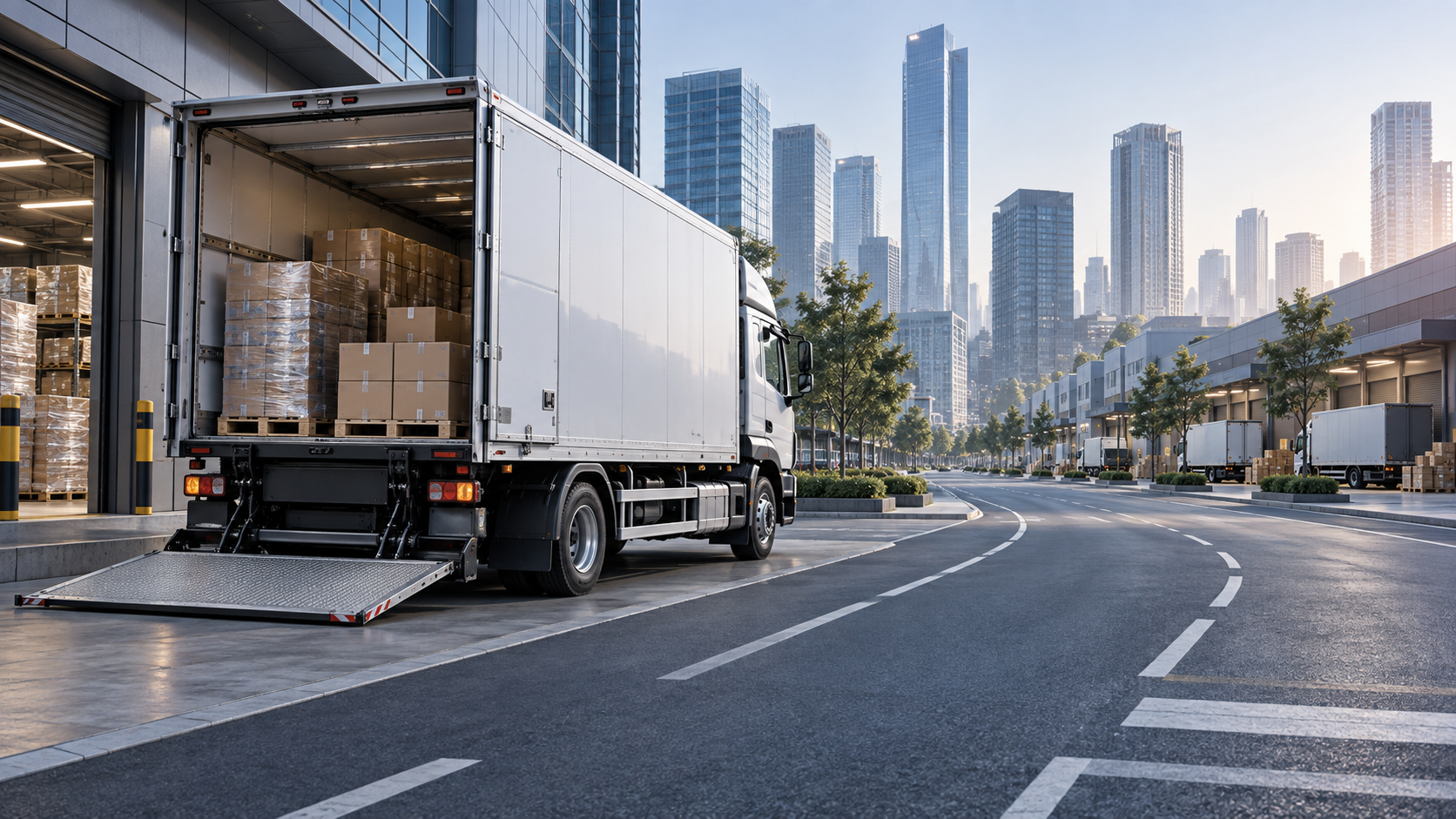
A 4_2 Cargo Truck is the right fit for urban deliveries when a business needs more payload and body volume than a light van can provide, but still needs a vehicle that can enter city streets, serve multiple stops, and work within loading-zone constraints. It is especially useful for regional distributors, retailers, food and beverage suppliers, parts networks, building-material merchants, and e-commerce operators running repeat routes from a warehouse or cross-dock into dense commercial areas.
The configuration works best when the delivery model depends on a practical balance: enough carrying capacity to consolidate shipments, yet compact enough to avoid turning every delivery into a maneuvering problem. For many fleets, the question is less about whether a 4x2 truck can carry the load and more about whether its dimensions, body type, route pattern, and legal weight limits match the daily job.
Where a 4x2 truck earns its place
Urban distribution often sits between two inefficient choices. A small vehicle may be easy to park and operate, but it can require too many trips when shipment size grows. A heavier multi-axle truck can reduce trips, but it may be harder to route through narrow streets, access customer premises, or comply with local delivery restrictions. A 4x2 Cargo Truck fills the middle ground when deliveries are substantial but still frequent, local, and stop-intensive.
It is generally well suited to operations with a predictable distribution radius. The truck leaves a central depot with a mixed load, visits several customers, and returns within the same day. Its single drive axle and relatively straightforward chassis layout can make it more manageable than larger rigid trucks in commercial districts, industrial parks, wholesale markets, and suburban delivery corridors.
The strongest use cases usually share several characteristics:
- Loads are too bulky, heavy, or numerous for vans to move efficiently.
- Routes involve repeated stops rather than one long-distance point-to-point haul.
- Delivery sites have reasonable truck access, even if space is limited.
- Most travel occurs on paved roads with normal traction requirements.
- The cargo can be organized in a box body, curtain-side body, stake body, refrigerated body, or another urban-distribution format.
- Daily mileage allows the vehicle to return to a base for loading, inspection, and routine service.
A beverage distributor delivering palletized stock to shops is a typical example. So is a parts supplier replenishing repair centers, or a contractor moving packaged materials from a local yard to multiple job sites. In each case, the vehicle can carry far more useful volume than a van while remaining more operationally flexible than a large heavy-duty truck.
Payload alone should not decide the vehicle
A common procurement mistake is to select a truck by advertised payload capacity and then discover that the real operating constraint is elsewhere. In city distribution, the usable payload is shaped by the legal gross vehicle weight limit, the truck’s curb weight, the selected body, added equipment, fuel, driver, and cargo-handling accessories.
A refrigerated box, tail lift, reinforced floor, shelving, pallet jack storage, or side-loading equipment can all reduce the payload available for saleable goods. That does not make those additions undesirable. It means the vehicle must be specified around the delivery process rather than around a headline chassis figure.
Volume can become the limiting factor before weight does. Furniture, packaging materials, consumer goods, and certain food products may fill the body while the truck remains below its maximum permissible weight. By contrast, metal components, bottled products, tiles, paper, and dense construction supplies can reach weight limits well before the body is full. A fleet carrying both types of freight should review actual load records, not assume that one body size will suit every route.
The most useful starting point is a simple route-level review: what is loaded in the morning, what remains after each major stop, and which constraint causes the truck to reach its practical limit first? The answer may be payload, cubic volume, loading time, access restrictions, or the inability to combine freight safely. A 4x2 configuration is a good candidate when those routes regularly exceed van capacity but do not justify the complexity of a larger truck.
Urban access can matter more than engine power
City deliveries impose conditions that are easy to underestimate during vehicle selection. A truck may have sufficient carrying capacity and still lose time because it cannot enter a customer lane, reverse safely into a loading area, turn into a service road, or remain within the permitted delivery window.
Before specifying wheelbase and body length, fleet managers should map the restrictive points on a typical route. These can include underground loading docks, low bridges, tight industrial entrances, residential streets, market lanes, narrow rear access roads, and limited curbside loading zones. The largest building on the route is not the only concern. One difficult stop can determine whether the vehicle is viable for the whole run.
Wheelbase selection deserves particular attention. A longer wheelbase may support a longer body and better load volume, but it also increases turning requirements and can make reversing in congested areas slower. A shorter wheelbase usually improves maneuverability, though it may reduce body length and affect load distribution. The right balance depends on the actual delivery geography, not on the maximum body size that can physically be mounted on the chassis.
Height is another frequent source of disruption. Box bodies, refrigeration units, roof-mounted equipment, and high-cube designs can limit access to certain facilities. Companies serving supermarkets, shopping centers, city-center warehouses, or older industrial buildings should check clearance points before finalizing the specification. This review should include the planned body, not only the bare chassis.
The best route pattern is dense, repeatable, and reasonably balanced
A 4x2 cargo truck is most productive when its route produces a meaningful load factor in both directions or across the full delivery cycle. A vehicle that leaves the depot fully loaded, makes a short number of efficient drops, and returns empty may still be the correct choice, but the business should understand the cost of that empty return. High vehicle capacity only lowers unit cost when the route regularly uses it.
Dense stop patterns can favor this truck type because one loaded departure can replace several smaller-vehicle trips. That benefit weakens when deliveries are scattered across distant areas, loading times are unpredictable, or vehicles spend long periods waiting for access. In those situations, smaller vehicles may offer more routing flexibility, while larger trucks may be justified only for consolidated trunk movements between depots.
For decision-making, route data should be separated into practical groups rather than averaged across the whole fleet. A city-center route with many short drops should not be assessed in the same way as a suburban route serving warehouses with loading docks. The first may require a shorter body, tighter turning capability, and easier curbside access. The second may benefit from greater cargo volume and loading equipment.
Useful questions include:
- How many stops does the vehicle make on a normal day?
- What is the longest, widest, and heaviest load unit it must handle?
- Does each delivery site have a dock, forklift, ground-level unloading area, or only curbside access?
- How often does the truck return to the depot for a second load?
- Are delivery windows fixed, restricted, or subject to congestion?
- Will drivers need to reverse into customer sites without a banksman or designated loading bay?
These questions reveal whether the truck will act as a productive distribution asset or an oversized vehicle that loses its advantage at the last mile.
Body design often determines whether the solution works
The chassis is only part of the urban-delivery system. The body must support the way freight is loaded, secured, accessed, and unloaded. A mismatch between body type and cargo flow can add handling time at every stop, creating more cost than a slightly higher purchase price ever would.
A dry box body can protect general freight and provide a secure enclosed space, but rear-only access may slow down multi-stop deliveries when items for different customers are loaded deep inside. A curtain-side body can improve side access for palletized goods, provided local conditions allow safe side loading. A stake or dropside body may suit materials that need forklift access from multiple directions, although weather protection and cargo security must be considered. Refrigerated bodies require closer attention to payload loss, insulation thickness, cooling-unit placement, and door-open time during frequent drops.
For urban routes, the loading method should be examined as carefully as the body volume. If receivers lack forklifts, a tail lift may be essential. Yet a tail lift adds weight, changes rear overhang, and takes time to deploy at each stop. If most sites have docks, it may be unnecessary. If deliveries involve loose cartons, internal shelving or load-securing systems can improve stop efficiency, though they reduce usable space for other cargo.
Load restraint is not a secondary detail. Mixed loads become less stable as deliveries are made, especially when the remaining cargo shifts toward the rear or one side of the body. The body layout should allow goods to be secured in stages, with heavy freight positioned appropriately and delivery sequence considered during loading. A truck that is technically compliant but difficult to unload safely will create avoidable pressure on drivers and receivers.
When a 4x2 configuration is the wrong answer
The same qualities that make a 4x2 truck practical in urban service can make it unsuitable elsewhere. It is less attractive when loads are consistently near the upper end of legal weight limits, when cargo density is high enough to demand more axle capacity, or when the business needs a much larger body to reduce long-distance trips. In those cases, a heavier configuration or a different distribution model may be more appropriate.
It is also a poor fit for routes with persistent low-traction conditions, difficult unpaved access, steep work sites, or frequent operations away from maintained roads. A single driven rear axle is usually appropriate for standard paved urban and regional work, but the operating environment should dictate the traction requirement.
Another warning sign is irregular demand. If vehicle loads vary sharply from small parcels one day to very dense freight the next, assigning one 4x2 truck to every route can create either underutilization or recurring overload risk. A mixed fleet may be more economical: smaller vehicles for restricted access and light drops, 4x2 cargo trucks for mainstream distribution routes, and heavier vehicles for depot transfers or unusually dense loads.
Check compliance at route level, not only at registration
Urban vehicle rules are often more specific than national registration requirements. Restrictions may relate to gross weight, axle load, vehicle length, height, emission category, delivery time, road class, or access to central zones. A truck that is legal to operate can still be excluded from the streets or delivery periods that matter most to the business.
Decision-makers should verify the rules applicable to the planned operating city and the routes used to reach key customers. This review should happen before the body specification is finalized, because a small change in body length, refrigeration equipment, or axle loading can alter practical access. Cross-border operations require the same discipline, as dimensional rules, documentation expectations, and operating restrictions can differ between markets.
The driver environment also affects compliance and productivity. Good visibility, suitable mirror coverage or camera systems, manageable cab access, and controls that reduce fatigue can matter on routes involving frequent stops and repeated maneuvering. These features do not replace driver training, but they can support safer operation in areas shared with pedestrians, cyclists, parked vehicles, and loading crews.
A practical decision test before purchase
A business should consider a 4_2 Cargo Truck when its delivery routes are routinely constrained by van capacity, yet its operating geography still rewards maneuverability and moderate vehicle dimensions. The decision becomes stronger when shipments can be consolidated into scheduled runs, receiver access is known, and the body can be configured around the actual unloading process.
Before placing an order, review a representative set of routes and build loads from real shipment patterns. Confirm legal weights after the intended body and equipment are installed. Measure difficult access points, identify the least accessible customer locations, and determine whether a tail lift, side access, refrigeration, or special internal layout is genuinely required. Finally, compare the cost of one properly utilized truck with the number of smaller-vehicle trips it can realistically replace.
When those checks align, a 4x2 cargo truck can become the core vehicle in an urban distribution fleet: large enough to consolidate work, compact enough to complete it, and flexible enough to support repeatable daily operations without forcing the business into a heavier vehicle class than the route requires.
Search Starts Here