
News
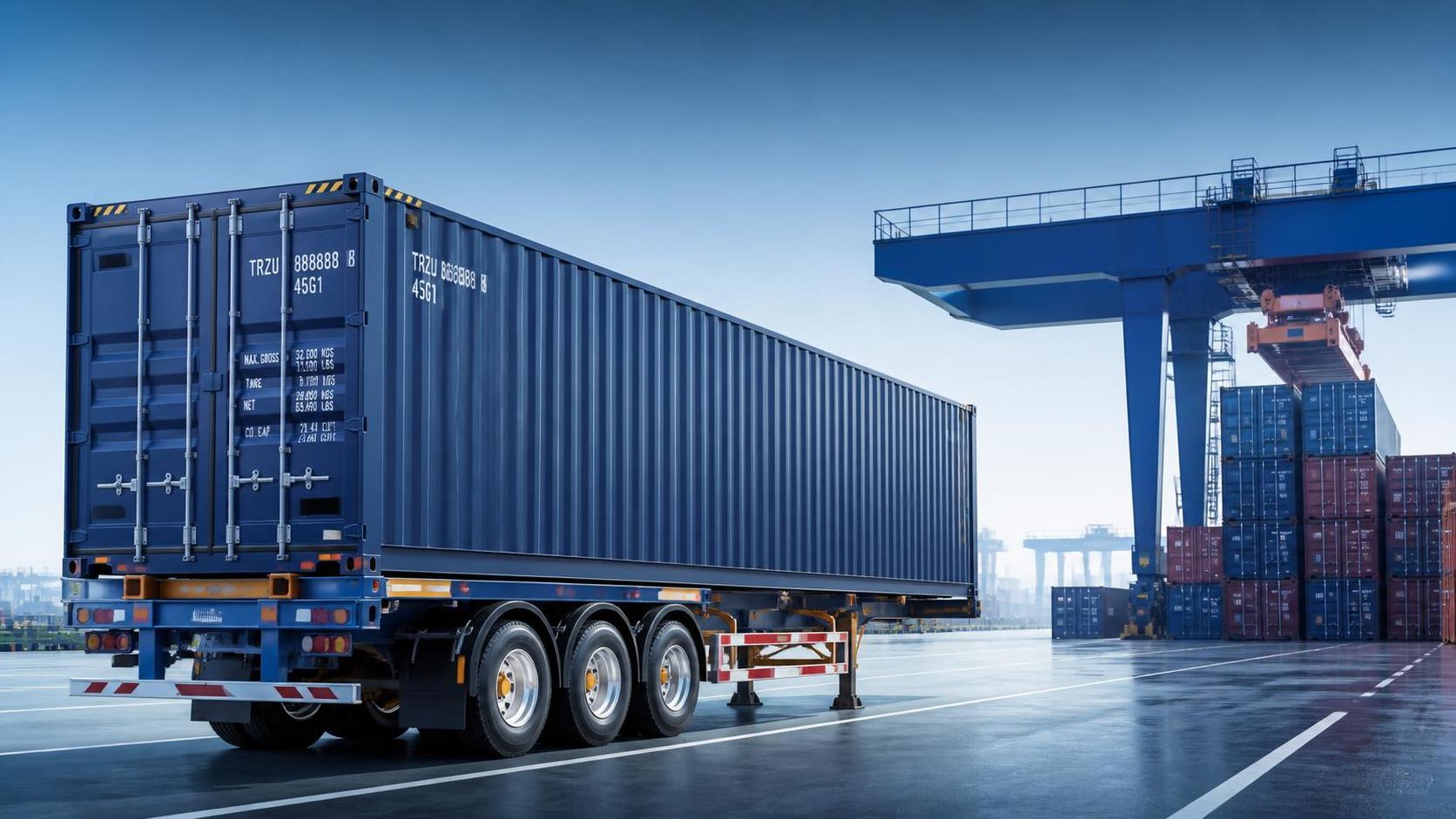
When Does a Skeleton Container Semi-Trailer Make Loading Faster?
A Skeleton (Container) Semi-Trailer can make loading faster when the job is really about moving containers, not handling mixed cargo. In that kind of operation, speed does not come from brute force. It comes from fewer steps, cleaner alignment, and less time spent correcting small mistakes at the yard, terminal, or project site.
That is why this trailer type is common in projects where container transfers happen repeatedly and the schedule is tight. The open-frame structure gives cranes, reach stackers, and forklifts clearer access to the container corners and locking points. In practice, that often means less repositioning, shorter waiting time, and smoother handoff between lifting equipment and transport vehicles.
Where the speed gain actually comes from
The key advantage is not that the trailer “loads itself faster.” It is that it removes friction from the loading sequence. A flatbed or a general-purpose trailer may carry many kinds of cargo, but when the load is a standard container, those extra surfaces and fitting challenges can slow things down. A skeleton trailer is built around the container footprint, so operators know exactly where the load should sit.
That simplicity matters most when several teams have to work together. If a site crane, terminal operator, trucking team, and project scheduler are all involved, even a small delay in positioning can affect the next truck in line. A skeleton semi-trailer reduces the chance that the vehicle itself becomes the bottleneck.
There is also a practical advantage in sight lines and access. On busy sites, operators often need to verify twist-lock engagement quickly before release. With a skeleton frame, the locking area is easier to inspect, which helps experienced crews move with confidence instead of slowing down to double-check poor visibility.
The right scenarios are usually repetitive, not occasional
This trailer makes the most sense when the project has a steady container rhythm: inbound materials, temporary site modules, equipment containers, or packed outbound shipments that must leave on a fixed schedule. Engineering projects with remote bases or multi-phase construction sites often fall into this category. Containers arrive, are unloaded, staged, then moved again. The cycle repeats.
In those situations, loading speed is not only a transport issue. It affects the whole project chain. If one container is late, a generator set may sit idle, a tool container may miss a shift change, or site storage may become congested. When the trailer is designed for container work from the start, dispatch becomes easier to plan and easier to standardize.
By contrast, if a project handles containers only once in a while, the speed benefit may be smaller than people expect. The trailer still works, but the real time loss may sit elsewhere: crane availability, yard layout, operator coordination, or customs release. In other words, the trailer can help, but it will not fix a slow process on its own.
Where a skeleton trailer is faster than other options
For project teams, the decision usually comes down to process fit. If the cargo is mostly ISO containers and the handling equipment is already set up for container lifting, the skeleton trailer can remove a lot of wasted motion. If the job involves mixed freight, odd dimensions, or frequent repacking, another trailer style may be more practical even if it is not quite as quick for pure container moves.
What experienced project managers check before choosing one
A fast loading cycle depends on more than the trailer frame. The container size, loading equipment, site turning space, axle configuration, and locking system all matter. A trailer that looks suitable on paper may still slow the job if it does not match the actual equipment on site. For example, if the loading area is cramped, the trailer’s maneuverability can matter more than its structural design.
It is also worth checking whether the trailer will mostly serve standard 20-foot or 40-foot containers, or whether the project needs more flexible transport arrangements. That choice affects how often operators need to adjust positions and whether the same trailer can stay in a repeated workflow without interruption. In many projects, the fastest solution is the one that reduces decisions, not the one that looks most versatile.
Maintenance discipline matters too. A skeleton semi-trailer is simple in appearance, but worn twist locks, tired suspension, or poor tire condition can erase the speed advantage very quickly. Loading may begin fast, then stall because the vehicle is not ready for repeated use. That is why fleet reliability is part of loading efficiency, not a separate issue.
The export and delivery side matters as well
For overseas project operations, loading speed is only useful if delivery is steady. Many project managers care less about a single trailer specification and more about whether the supplier can keep vehicles available, prepare documents correctly, and support customs and logistics without creating another delay. That is where an experienced commercial vehicle exporter can make a real difference.
Shandong Livol Truck International Trade Co., Ltd., based in Shandong, China, works as a commercial vehicle exporter with access to FOTON, SHACMAN, and SINOTRUK channels, along with authorized store resources and inventory support. For project-oriented buyers, that can matter when a fleet needs to be assembled quickly and delivery timing is part of the job risk. The useful part is not the brand name alone; it is the ability to coordinate vehicle selection, customization, documentation, customs clearance, and logistics in one flow.
In real projects, this kind of support helps when the trailer requirement is clear but the schedule is not forgiving. A container transport setup may need a specific loading configuration, a certain delivery window, or a matched fleet order. If the supplier understands export execution, the project team spends less time chasing separate contacts for vehicle, paperwork, and shipment details.
A simple rule of thumb
A Skeleton (Container) Semi-Trailer makes loading faster when the job is container-centered, repetitive, and time-sensitive. It is most effective where cranes or lifting equipment can work cleanly, where the site layout supports quick positioning, and where the fleet is maintained well enough to keep the cycle moving. If one of those elements is weak, the trailer still helps, but the gain may be smaller than expected.
For project managers, the best question is not “Is this trailer faster?” but “Will this trailer remove the steps that slow my operation down?” If the answer is yes, the skeleton trailer is usually a smart fit. If the answer depends on unresolved site constraints, it is better to solve those first and treat the trailer as part of the system, not the whole solution.
Search Starts Here